How Many Calories in Hummus?
 FoodIdentifier.com
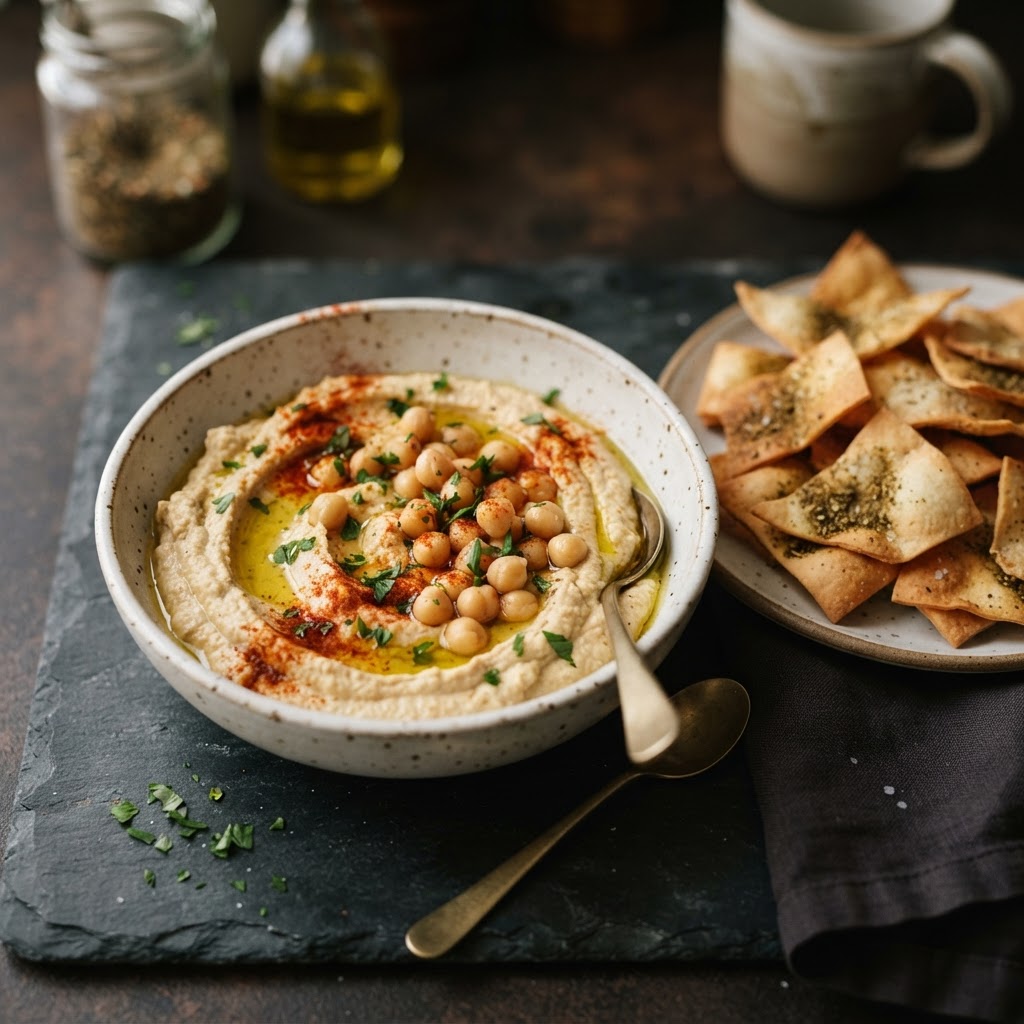
Two tablespoons (30g) of commercial hummus has about 53 calories. Per USDA FoodData Central, commercial hummus provides about 166–217 kcal per 100g depending on brand and oil content (a representative value is about 177 kcal per 100g), with 8g of protein, 14.3g of carbs, and 6g of fiber per 100g. A 1/4-cup serving (60g) has about 106 calories. These are standard USDA reference values.
🔬 Nutrition Facts — Per 2 Tablespoons (30g)
Source: USDA FoodData Central · 2026
🥗 Key Ingredients & Nutrients at a Glance
📊 Quick Facts
- •2 tbsp commercial (30g): 53 calories | 2.4g protein | 4.3g carbs | 1.8g fiber | 3.2g fat
- •Per 100g (USDA): ~177 kcal | 8g protein | 14.3g carbs | 6g fiber | 10.5g fat
- •1/4 cup (60g): ~106 calories — a common serving
- •Commercial range: 166–217 kcal per 100g depending on brand and oil
- •Homemade (less oil): ~120–140 kcal per 100g
- •Store-bought (more oil): often 200+ kcal per 100g
- •Glycemic Index: 6 (very low) | Glycemic Load: ~1 per 2 tbsp
- •Fiber per 100g: 6g — a good source
- •Plant protein: 8g per 100g — from chickpeas + tahini
- •Sodium per 2 tbsp: ~114mg (varies by brand)
🚨 Top Problems — Solved
Scan Any Dip, Snack or Meal — Get Calories in Seconds
Snap a photo of any food and get instant calories, macros, and nutrition facts. No app download. No sign-up.
📸 Try Free Food ScannerCalories in Hummus — Why Brand and Oil Content Change Everything
Hummus is a chickpea-and-tahini dip that is nutritious but calorie-dense for a dip. Two tablespoons (30g) of commercial hummus has about 53 calories. Per USDA FoodData Central, commercial hummus provides about 166–217 kcal per 100g depending on brand and oil content — a representative value is about 177 kcal per 100g, with 8g of protein, 14.3g of carbs, 6g of fiber, and 10.5g of fat. The biggest calorie sources in hummus are the olive oil and tahini, not the chickpeas. Store-bought hummus often has more oil than homemade to keep it creamy and extend shelf life. A 1/4-cup serving (60g) has about 106 calories. These are generic USDA values — brands vary widely.
Why Hummus Is Filling — But Easy to Overeat
Hummus has 8g of protein and 6g of fiber per 100g — both of which make it filling for its calories. The chickpeas provide slow-digesting carbohydrate and the tahini adds healthy fat and protein. A 2016 study in the American Journal of Clinical Nutrition ranked chickpeas and hummus among the most satiating foods. But hummus is calorie-dense for a dip: at 177 kcal per 100g, it has more calories than tzatziki (about 97 kcal per 100g) and salsa (about 40 kcal per 100g). The catch is portion size — eating straight from the container makes it easy to eat 1/2 cup (212 cal) without noticing. Pair it with vegetables, not pita chips, to keep calories low.
🥣 Full Nutrition Facts — Commercial Hummus (Per 100g and Per 2 tbsp 30g)
Complete nutrition facts for commercial hummus, based on USDA FoodData Central reference values. Values are representative — brands vary by oil and tahini content.
| Nutrient | Per 100g | Per 2 tbsp (30g) | % Daily Value (per 2 tbsp) |
|---|---|---|---|
| Calories | 177 kcal | 53 kcal | — |
| Protein | 8.0 g | 2.4 g | 5% |
| Total Carbohydrate | 14.3 g | 4.3 g | 2% |
| • Dietary Fiber | 6.0 g | 1.8 g | 6% |
| • Total Sugars | 1.0 g | 0.3 g | — |
| Total Fat | 10.5 g | 3.2 g | 4% |
| • Saturated Fat | 1.2 g | 0.4 g | 2% |
| Sodium | 380 mg | 114 mg | 5% |
| Iron | 1.6 mg | 0.5 mg | 3% |
| Magnesium | 42 mg | 13 mg | 3% |
| Folate | 83 µg | 25 µg | 6% |
🥣 Hummus Calories by Portion — Per 2 tbsp vs 1/4 Cup vs 100g
The calorie count scales with portion size. A standard serving on nutrition labels is 2 tablespoons (30g), but many people eat 1/4 cup (60g) or more. Note: values are representative USDA-based estimates — brands vary by oil and tahini content.
| Portion | Weight | Calories | Protein | Carbs | Fat |
|---|---|---|---|---|---|
| 2 tablespoons | 30g | ~53 kcal | 2.4g | 4.3g | 3.2g |
| 1/4 cup | 60g | ~106 kcal | 4.8g | 8.6g | 6.3g |
| 1/2 cup | 120g | ~212 kcal | 9.6g | 17.2g | 12.6g |
| 1 cup | 240g | ~425 kcal | 19.2g | 34.3g | 25.2g |
| Per 100g | 100g | ~177 kcal | 8.0g | 14.3g | 10.5g |
🥣 Homemade vs Store-Bought Hummus — Calories Per 100g
The calorie difference between homemade and store-bought hummus comes down to oil and tahini. Store-bought hummus often has more oil than homemade to keep it creamy and extend shelf life. Store-bought hummus often has more oil — say so plainly. Standard ranges:
| Type | Calories/100g | Calories/2 tbsp (30g) | Notes |
|---|---|---|---|
| Homemade (less oil) | ~120–140 kcal | ~36–42 kcal | 1 tbsp olive oil, less tahini |
| Homemade (standard) | ~150–180 kcal | ~45–54 kcal | 2–3 tbsp olive oil, standard tahini |
| Store-bought (light) | ~150–170 kcal | ~45–51 kcal | Reduced-oil varieties |
| Store-bought (regular) | ~166–217 kcal | ~50–65 kcal | Sabra, Tribe, Cedar's — often more oil |
| Store-bought (oil-topped) | ~200–250 kcal | ~60–75 kcal | Olive oil layer on top |
Why the range? Commercial hummus calorie counts depend on how much oil and tahini the brand uses. A "light" store-bought hummus can be 150 kcal per 100g, while an oil-topped variety can be 250 kcal per 100g. Homemade hummus with less oil (1 tablespoon) can be as low as 120 kcal per 100g. For the lowest-calorie hummus, make it at home with less oil — or check the label and choose a "light" variety. See also our calories in hummus and macros in hummus pages.
Track Every Snack — Instantly
Snap a photo of any food to get instant calories, macros, and nutrition facts. No app download. No sign-up.
📸 Scan Your Food Free🥣 Hummus vs Other Dips — Calories, Fat, Protein Per 100g
Per 100g, hummus (177 kcal) has fewer calories than ranch dressing (约 354 kcal), guacamole (约 150 kcal), and mayonnaise (约 680 kcal), with more fiber and protein than any of them. For a lower-calorie dip, tzatziki (约 97 kcal per 100g) and salsa (约 40 kcal per 100g) are lighter. For weight loss, hummus is a solid choice in measured portions — but tzatziki and salsa are even lower in calories.
| Dip (per 100g) | Calories | Fat | Protein | Fiber |
|---|---|---|---|---|
| 🥣 Hummus ★ | 177 kcal | 10.5 g | 8.0 g | 6.0 g |
| 🥑 Guacamole | ~150 kcal | ~13 g | ~2 g | ~5 g |
| 🥒 Tzatziki | ~97 kcal | ~8 g | ~1.5 g | ~0.5 g |
| 🥗 Ranch dressing | ~354 kcal | ~37 g | ~1 g | ~0 g |
| 🥫 Salsa | ~40 kcal | ~0.2 g | ~1.5 g | ~1.0 g |
| 🥚 Mayonnaise | ~680 kcal | ~75 g | ~1 g | ~0 g |
Practical Tips for Eating Hummus
- Measure your portion: A serving is 2 tablespoons (30g, 53 cal). Spoon it into a small bowl instead of eating from the container — a standard tub has about 13 servings (690 cal total).
- Pair with vegetables, not pita chips: Raw cucumber, carrots, bell peppers, and cherry tomatoes add almost no calories (about 15 per cup) vs pita chips at about 130 calories per ounce. This keeps the snack under 100 calories.
- Make it at home with less oil: Homemade hummus with 1 tablespoon of olive oil (instead of 3) drops to about 120–140 kcal per 100g. Use chickpeas, tahini, lemon, garlic, and water to thin it instead of more oil.
- Read store-bought labels: A "serving" is 2 tablespoons (50–70 cal). Choose "light" varieties (about 150 kcal per 100g) and avoid oil-topped tubs (200–250 kcal per 100g). Check sodium — some brands have 400+mg per serving.
- Use 1/4 cup as a snack serving: A 1/4-cup serving (60g, 106 cal) with raw vegetables is a filling snack under 150 calories. It provides 4.8g of protein and 3.6g of fiber.
Hummus and Weight Loss — Next Steps
Hummus can be part of a weight-loss diet in measured portions — it is filling, high in fiber and plant protein, and lower in calories than ranch or mayo. Here's how to use it effectively:
- Stick to 2–4 tablespoons: 2 tablespoons (53 cal) is a serving; 1/4 cup (106 cal) is a generous snack. Eating from the container makes it easy to hit 1/2 cup (212 cal) without noticing.
- Swap pita chips for vegetables: 2 ounces of pita chips (260 cal) plus 4 tablespoons of hummus (106 cal) is 366 calories. Raw vegetables (about 15 cal per cup) let the hummus be the main calorie source.
- Choose lighter dips when you can: Tzatziki (29 cal per 2 tbsp) and salsa (12 cal per 2 tbsp) are even lower in calories than hummus (53 cal per 2 tbsp) — good alternatives for everyday snacking.
- Don't rely on hummus for protein: A 1/4-cup serving has 4.8g of protein — pair it with eggs, chicken, lentils, or Greek yogurt to hit protein targets without overeating calories.
For your daily calorie and protein targets, use the Calorie Calculator and Protein Calculator. This is not medical advice — talk to your doctor.
Scan Any Dip, Snack or Meal — Get Calories in Seconds
Snap a photo of any food and get instant calories, macros, and nutrition facts. No app download. No sign-up.
Keep tracking your nutrition
Compare hummus to other dips, calculate your daily targets, and build a simple daily habit streak to stay consistent.

Ask Lana
The questions everyone asks
Real answers, like a friend would give them — warm, honest, and always with your next tiny step.
Educational only — not medical advice. Talk to your doctor.
Get Your 30-Day AI Weight Loss Meal Plan Bundle
Pre-calculated calorie targets, smart snack portions, dip-friendly snack guides, and grocery lists — all in one PDF bundle.
Get Meal Plan Bundle — $19.99 →Scan Any Food Instantly — Free
No sign-up. No app. Snap a photo → full nutrition in 3 seconds.
Try Free Food Scanner →🔧 Free Health Tools
❓ Frequently Asked Questions (8)
Click any question to expand the expert answer
🔗 Core Tools
📊 Popular Content Hubs
Scan Any Food Instantly — Free
No sign-up. No app. Snap a photo → get full nutrition in 3 seconds.
Try Free Food Scanner →📋 Nutrition data based on USDA FoodData Central. Values may vary by brand, preparation method, and serving size. Not a substitute for professional medical or dietary advice. Always consult a registered dietitian for personalized nutrition guidance.