 FoodIdentifier
Gut Health Foods 2026: The Complete Science-Backed Guide — Top 20 Foods, Probiotics, Prebiotics, Leaky Gut Protocol & 30-Day Microbiome Reset
100 trillion bacteria live in your gut and control your immunity, mood, weight, serotonin, and disease risk. This definitive guide covers every food that heals or harms your microbiome, the complete fermented and prebiotic food rankings, leaky gut healing protocol, and the 30-day reset plan — all backed by the latest 2026 clinical research.

This article is general information only — not medical advice. Talk to your doctor about your own situation.
⚡ Quick Answer for Busy People
The most powerful gut health strategy: eat 30+ different plant foods per week (strongest predictor of microbiome diversity), add 2 daily servings of fermented foods (kefir is best — 30+ bacterial strains), consume 25-35g prebiotic fiber daily, and eliminate ultra-processed foods (emulsifiers destroy the gut mucus layer). Microbiome shifts begin within 72 hours. Significant symptom improvements in 4-6 weeks. Scan any food free → to check its gut health impact instantly.
What Your Gut Microbiome Actually Controls — The Full Picture
Most people think of the gut as simply a digestion organ — a tube that breaks down food and absorbs nutrients. The reality, revealed by a decade of microbiome research, is profoundly more complex: your gut microbiome is simultaneously a second brain, a second immune system, a metabolic regulator, and a neurochemical factory that shapes your mood, cognition, body weight, and disease risk every single day of your life.
Your 100 trillion gut microorganisms from over 1,000 species collectively weigh about 3.3 pounds — more than your brain. These microorganisms extract 150-200 additional calories from identical food compared to people with less efficient microbiomes (explaining why two people eating the same diet can have very different weight outcomes), synthesize 90% of your serotonin and 50% of your dopamine, produce short-chain fatty acids (SCFAs — butyrate, propionate, and acetate) that fuel your colon lining, prevent colon cancer, and directly regulate systemic inflammation, house 70% of all immune cells in a structure called the gut-associated lymphoid tissue (GALT), communicate bidirectionally with your brain through the vagus nerve (with 80% of signals travelling FROM gut TO brain, not the other way), synthesize vitamins K2 and B12, produce neurochemicals that regulate sleep and circadian rhythm, and form the primary defense line against pathogenic bacteria and viruses.
The landmark American Gut Project — the world's largest citizen science microbiome study with over 20,000 participants across 45 countries — found that the single most powerful predictor of microbiome diversity is not whether someone is vegan or carnivore, organic or conventional, or what supplements they take. It is the number of different plant foods consumed per week. People eating 30+ different plants per week had dramatically more diverse, more resilient microbiomes than those eating fewer than 10 — regardless of every other dietary variable. This finding is the most immediately actionable piece of gut health research published in the past decade.
A 2021 Cell study from Stanford University directly compared two dietary approaches for microbiome health: a high-fiber diet and a high-fermented-food diet. The fermented food group showed increased microbiome diversity and decreased levels of 19 different inflammatory proteins within 10 weeks. The fiber group showed more variable results depending on baseline microbiome composition. The conclusion: for most people starting from a standard Western diet, fermented foods produce faster microbiome improvements than fiber alone — though both are essential long-term.
12 Warning Signs Your Gut Microbiome Needs Immediate Help
Your gut communicates dysfunction through multiple body systems simultaneously. These 12 signs indicate your microbiome needs immediate dietary intervention — and in most cases, the dietary fixes in this guide will produce measurable improvements within 4-8 weeks:
- ▶1. Chronic Bloating & Gas (Most Common): Occurring most days — not occasionally after specific foods — indicates gut dysbiosis, SIBO, or insufficient digestive enzymes. The gas is produced by bacteria fermenting undigested carbohydrates in the wrong part of the intestine.
- ▶2. Alternating Constipation & Diarrhea: Dysbiosis disrupts the enteric nervous system that controls gut motility. A healthy microbiome produces the SCFAs that regulate both water absorption and muscular contractions of the colon.
- ▶3. Intense, Frequent Sugar Cravings: Pathogenic gut bacteria (particularly Candida) produce compounds that directly stimulate sugar cravings to feed themselves — one of the most ignored facts about food cravings in conventional health advice.
- ▶4. Persistent Fatigue Despite Adequate Sleep: Inflammatory cytokines produced by a dysbiotic gut cross the blood-brain barrier and suppress mitochondrial function. Gut-derived LPS (lipopolysaccharides) from pathogenic bacteria create systemic low-grade inflammation that manifests as unrelenting fatigue.
- ▶5. Skin Inflammation — Acne, Eczema, Psoriasis, Rosacea: The gut-skin axis is a well-established bidirectional connection. 70% of immune cells reside in the gut — when gut immunity is dysregulated, inflammatory skin conditions are one of the most common systemic manifestations.
- ▶6. Anxiety, Low Mood, or Depression: 90% of serotonin is produced in the gut, not the brain. Dysbiosis directly reduces serotonin synthesis and disrupts the vagal nerve signals that regulate stress response. Multiple studies show gut-targeted dietary interventions outperform standard therapy for mild-moderate depression.
- ▶7. Food Intolerances Developing in Adulthood: Leaky gut (intestinal hyperpermeability) allows undigested food proteins to cross the intestinal lining and enter the bloodstream, triggering immune responses. This creates new food sensitivities that did not previously exist.
- ▶8. Autoimmune Conditions Worsening: 70% of immune system education occurs in the gut. Dysbiosis miseducates immune cells — creating T-cell populations that attack the body's own tissues. Autoimmune flares are frequently preceded by microbiome disruptions from antibiotics, infections, or stress.
- ▶9. Frequent Infections & Slow Recovery: Paradoxically, chronic gut immune over-activation depletes the immune resources needed for acute threats. People with chronic dysbiosis get more frequent colds, take longer to recover, and respond less robustly to vaccines.
- ▶10. Unexplained Weight Gain: Certain Firmicutes-dominant microbiome profiles extract 150-200 more calories from identical food than Bacteroidetes-dominant profiles. This is a real, measurable biological difference — not a willpower or calorie counting problem.
- ▶11. Brain Fog & Poor Memory: Gut-derived inflammatory signals reduce BDNF (brain-derived neurotrophic factor), impair hippocampal neuroplasticity, and reduce blood flow to the prefrontal cortex. Dietary microbiome improvements measurably improve cognitive performance in clinical trials.
- ▶12. Sleep Disturbances & Insomnia: The gut produces melatonin precursors and regulates circadian rhythm through tryptophan-serotonin-melatonin pathways. Dysbiosis disrupts this production chain — causing sleep initiation and maintenance problems that are frequently misattributed to stress.
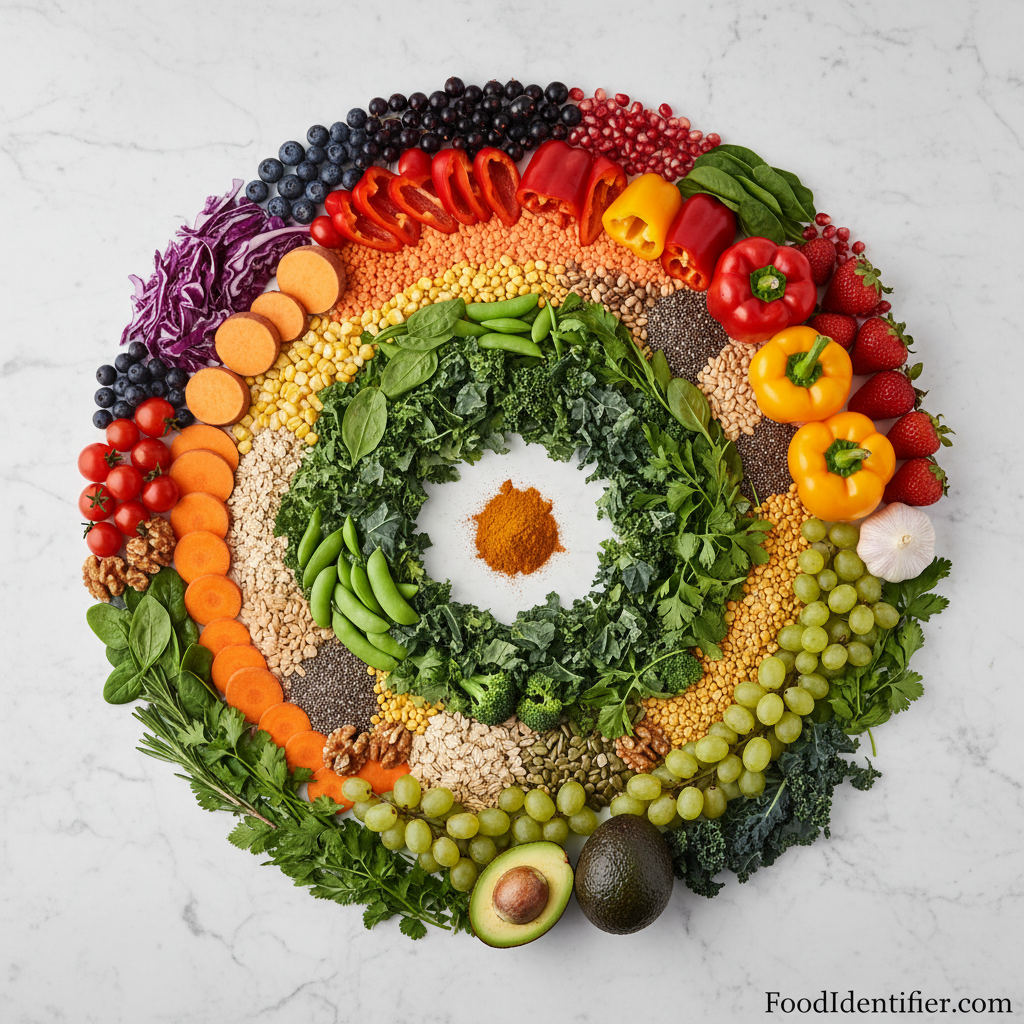
Top 20 Best Foods for Gut Health Ranked by Clinical Evidence
These rankings are based on the strength, size, and consistency of human clinical trial evidence — specifically studies that measure direct microbiome changes, SCFA production, intestinal permeability, or inflammatory biomarkers in human participants. Use FoodIdentifier's free Food Health Score to check the gut health rating of any food instantly.
Scan any food photo and instantly see fiber content, prebiotic value, and gut health score. Free, no signup.
Get Food Health Score →Scan Any Food Free →The 30 Plants Per Week Rule — How to Do It Practically
The American Gut Project's 30-plants-per-week finding sounds daunting until you understand the definition. "Plants" includes every vegetable, fruit, whole grain, legume, nut, seed, herb, and spice — and each different variety counts as a separate plant. A blueberry and a strawberry count as two plants. A walnut and an almond count as two plants. Basil and oregano count as two plants.
Here's what a realistic day looks like: Breakfast — overnight oats (1) with mixed berries: blueberry (2), strawberry (3), raspberry (4), chia seeds (5), walnuts (6), cinnamon (7) = 7 plants before 9am. Lunch — large salad with spinach (8), arugula (9), cherry tomatoes (10), cucumber (11), bell pepper red (12), bell pepper yellow (13), sunflower seeds (14), hemp seeds (15), EVOO (16) = 9 more plants. Dinner — stir-fry with broccoli (17), snap peas (18), mushrooms (19), red onion (20), garlic (21), ginger (22) over brown rice (23) = 7 more plants. Total: 23 plants in one day without extraordinary effort. Add a different snack (handful of mixed nuts — almonds (24), cashews (25), pistachios (26)) and you're at 26 by one day's end.
Practical rotation strategies: buy a different variety of apple or pear each week (Gala, Fuji, Pink Lady, Bosc all count separately). Mix different colored bell peppers rather than one color. Use mixed grain blends (farro, quinoa, bulgur) instead of just one grain. Add different herbs to each cooking session — parsley, dill, mint, cilantro, chives all count. Rotate your legumes — lentils one day, chickpeas the next, black beans the day after. These simple substitutions accumulate dramatically without requiring any major overhaul to your existing eating pattern.
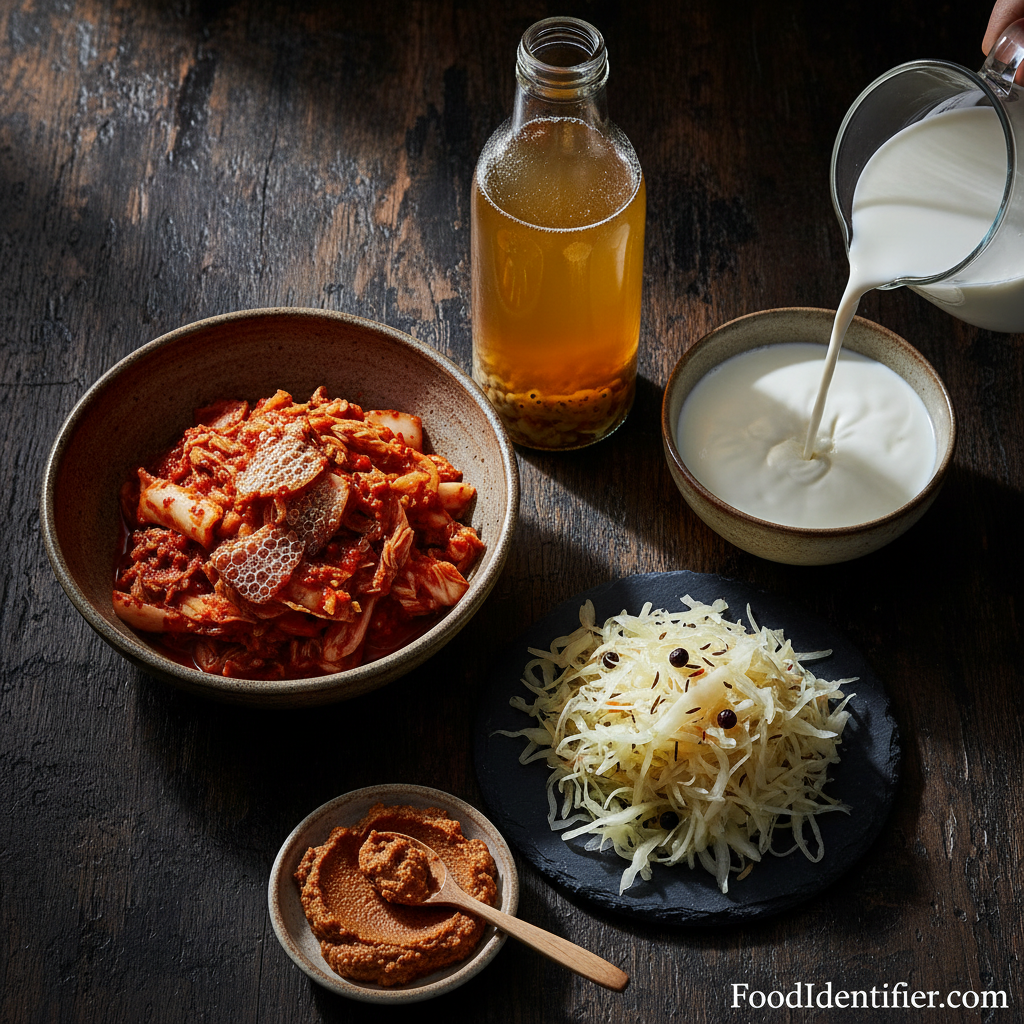
Top 12 Fermented Foods Ranked by Bacteria Count & Diversity
Not all fermented foods are created equal. The bacterial diversity and count varies enormously between fermented foods — and preparation method (pasteurized vs raw) determines whether any live bacteria survive at all. This ranked list covers what the research actually shows about bacteria count, strain diversity, and clinical effectiveness.
The Complete Prebiotic Fiber Master List — 25 Foods
Prebiotic fibers are non-digestible carbohydrates that selectively feed and grow beneficial bacteria in the colon. They are the most important long-term gut health investment because while probiotics add bacteria temporarily, prebiotics sustainably grow the populations already present. The hierarchy of prebiotics: inulin and FOS (fructooligosaccharides) are the most studied. Beta-glucan from oats is the most evidence-backed. Resistant starch from cooling cooked foods is highly efficient for butyrate production.

The 10 Worst Foods for Gut Health — Eliminate These First
Eliminating gut-damaging foods produces faster microbiome improvements than adding gut-supporting foods when done simultaneously. The reason: several of these compounds actively destroy the gut mucus layer (the foundation of microbiome health) and kill beneficial bacteria — directly counteracting every probiotic and prebiotic you consume at the same time.
Leaky Gut (Intestinal Permeability) — Causes, Signs & Healing Foods
Leaky gut — formally called intestinal hyperpermeability — describes a state where tight junction proteins that normally seal the gaps between intestinal cells become loose or damaged. When this happens, undigested food particles, bacterial toxins (LPS — lipopolysaccharides), and pathogens can cross the intestinal lining into the bloodstream, triggering systemic immune responses and chronic inflammation throughout the body.
The term "leaky gut" is sometimes dismissed as pseudoscience — but intestinal permeability is a well-established clinical phenomenon measurable by the lactulose-mannitol urine ratio test and the zonulin blood test. Elevated zonulin is a validated marker of intestinal permeability and is associated with multiple inflammatory conditions including autoimmune disease, type 1 diabetes, celiac disease, and non-alcoholic fatty liver disease.
Root causes of leaky gut: Gluten in genetically susceptible individuals (triggers zonulin release, which opens tight junctions), emulsifiers in ultra-processed foods, chronic NSAID use (ibuprofen, aspirin), stress and elevated cortisol, antibiotics (eliminate protective bacteria that maintain tight junctions), alcohol, and a low-fiber diet that starves the mucus-producing Akkermansia muciniphila bacteria.
Foods that specifically heal intestinal permeability: Bone broth (glycine and collagen peptides repair tight junction proteins), glutamine-rich foods (cabbage, spirulina, asparagus — glutamine is the primary fuel for intestinal cells), zinc-rich foods (pumpkin seeds, beef, lentils — zinc directly strengthens tight junction integrity), omega-3 fatty acids (salmon, sardines — reduce gut inflammation), fermented foods (restore the mucus-layer-protecting bacteria), and extra virgin olive oil (oleic acid and polyphenols both directly support intestinal barrier function).
The Gut-Brain Axis — How Your Microbiome Controls Mood & Cognition
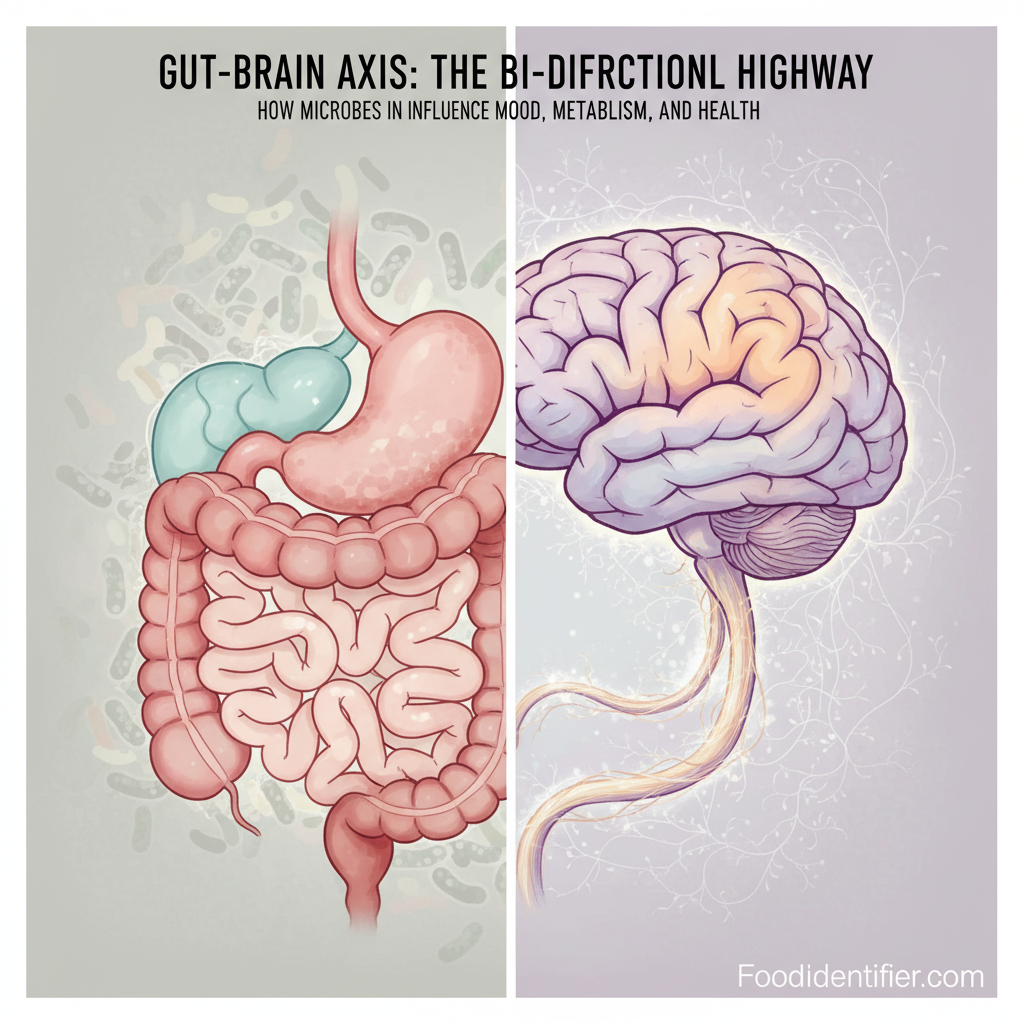
The gut-brain axis is one of the most profound and under-discussed connections in human biology. Your gut and brain are connected by the vagus nerve — a direct two-way communication highway. But here's the critical fact that most people and most doctors don't know: 80% of the signals on the vagus nerve travel FROM the gut TO the brain, not the other way around. Your gut is not passively responding to your brain. It is actively sending information upward that shapes your mood, stress response, cognitive function, and even personality.
Your gut microbiome produces: 90% of your serotonin (the primary regulator of mood, appetite, and social behavior), 50% of your dopamine (motivation, reward, pleasure), significant quantities of GABA (the main calming neurotransmitter), acetylcholine (memory and learning), and norepinephrine (alertness and focus). These gut-produced neurotransmitters influence brain function both through vagal nerve signals and directly through the bloodstream when the gut lining becomes permeable.
The clinical evidence for dietary gut-brain interventions is now substantial: The SMILES trial (2017) — the first RCT of dietary intervention for major depressive disorder — found Mediterranean diet adherence produced remission in 32% of patients vs 8% in the social support control group. The Food & Mood Centre at Deakin University demonstrated that a Mediterranean diet reduced depression relapse risk by 45% over 12 months. A 2023 meta-analysis of 34 probiotic trials found probiotic supplementation reduced anxiety scores by 18% compared to placebo. The mechanism is not simply "eating healthy makes you feel better psychologically" — these are specific biochemical pathways with measurable biomarker changes.
The best foods specifically for the gut-brain axis: Kefir (best probiotic producer of mood-relevant neurotransmitter precursors), fermented foods in general (directly increase serotonin precursor tryptophan bioavailability), omega-3 fatty acids from fatty fish (DHA is the primary structural component of brain synaptic membranes), dark chocolate 85%+ (increases Lactobacillus and Bifidobacterium which produce GABA precursors), green tea with L-theanine (crosses blood-brain barrier, modulates GABA directly), and leafy greens (folate is essential for serotonin and dopamine synthesis — deficiency directly impairs neurotransmitter production).
Sleep, Stress & Cortisol — The Hidden Gut Health Destroyers
Diet is the most powerful lever for gut microbiome health, but two non-dietary factors can completely undermine even the most perfect gut health diet: chronic stress and sleep deprivation. Understanding these is essential because many people eat well but still have persistent gut symptoms — and sleep or stress is frequently the overlooked cause.
How chronic stress destroys gut health: Cortisol — the stress hormone — directly increases intestinal permeability by disrupting tight junction proteins. High cortisol also reduces intestinal secretory IgA, the primary immune antibody that protects the gut lining and prevents pathogenic bacteria from colonizing the intestinal wall. Stress shifts blood flow away from the digestive system, reducing digestive enzyme production and motility. Psychosocial stress produces microbiome changes measurable within hours — increasing pathogenic species and reducing Lactobacillus and Bifidobacterium populations. This is the biological mechanism behind "nervous stomach" and IBS flares during stressful periods.
How sleep deprivation disrupts gut health: Your gut microbiome operates on a circadian rhythm synchronized with your sleep-wake cycle. Less than 7 hours of sleep disrupts the circadian regulation of gut bacteria populations, reduces intestinal motility (causing constipation or reflux), increases gut permeability, and shifts microbiome composition toward inflammatory profiles within just 2 nights of sleep restriction. Research from the Weizmann Institute found that shift workers — whose circadian rhythm is chronically disrupted — have dramatically less diverse microbiomes than day workers eating identical diets.
Practical stress and sleep protocols for gut health: Magnesium glycinate (400mg before bed) both improves sleep quality and directly reduces gut inflammation. Phosphatidylserine (300mg) blunts the cortisol spike from chronic stress. Ashwagandha (600mg KSM-66) reduces cortisol by 27% in clinical trials and measurably improves microbiome diversity in stressed individuals. Diaphragmatic breathing for 5 minutes before meals activates the parasympathetic "rest-and-digest" state, dramatically improving digestive enzyme release and gut motility. These are not optional additions to gut health — they are essential interventions for anyone experiencing persistent symptoms despite good dietary practice.
30-Day Gut Reset Protocol — Week by Week
This evidence-based protocol produces measurable microbiome diversity increases and symptom improvements within 30 days when followed consistently. It is built around the Stanford Cell 2021 study framework — the most rigorous dietary gut health RCT published to date.
Remove the top gut-damaging substances in priority order: (1) All ultra-processed foods with emulsifiers, (2) Artificial sweeteners entirely, (3) Refined sugar — replace with whole fruit, (4) Excess alcohol — max 1 drink per day, (5) Seed oils — replace with EVOO and avocado oil. Simultaneously: begin drinking 3L water daily (gut lining requires constant hydration), add 1 tbsp apple cider vinegar with mother to 8oz water before main meals. Track all bloating and digestive symptoms daily on a scale of 1-10. Most people see measurable bloating reduction by day 5-7 from elimination alone.
Add one serving of fermented food daily — start with whichever is most accessible and palatable: Greek yogurt with live cultures, kefir, or sauerkraut. Do NOT start all fermented foods simultaneously — gas and bloating will be intense. Add garlic and onions to at least 2 meals daily. Add 2 tablespoons ground flaxseeds to breakfast daily. Begin the 30-plants-per-week count — keep a simple running list. Most people hit 15-20 plants this week without trying. Document any digestive discomfort from new fermented foods — mild bloating from new probiotics is normal and resolves in 3-5 days.
Target: reach 30 plants this week by consciously diversifying. Add one food you have never eaten before (jicama, kohlrabi, kimchi if not started, kefir if not started, miso). Add extra virgin olive oil to every meal. Try bone broth if dealing with leaky gut symptoms — 1 cup daily minimum. Begin cooling and reheating cooked grains (rice, potatoes) — this increases resistant starch content dramatically for free, feeding butyrate-producing bacteria. Sleep: commit to 7-8 hours minimum every night this week. The gut microbiome operates on circadian rhythm — sleep consistency matters as much as diet.
Your gut is measurably healthier than 3 weeks ago. Fine-tune for permanent habit formation: increase fiber to 30-35g/day if not already there, add a prebiotic-rich food to every meal, maintain at least 2 fermented food servings daily permanently, keep the 30-plants/week target as your non-negotiable baseline. Measure improvement: bloating frequency down? Energy improved? Sugar cravings reduced? Skin clearer? Sleep quality improved? Most people report 3-5 measurable improvements in these markers by day 30. Take a microbiome test (Viome or Zoe) at day 30 vs baseline for objective data on what shifted.
Our AI Nutrition Coach creates a fully personalized gut reset meal plan based on your symptoms, foods you like, and dietary restrictions. Completely free.
Get My Gut Reset Plan →Scan Food for Gut Score →Free AI Tools to Check Your Food's Gut Health Impact
Q: What is the single best food for gut health?
A: Kefir is the single most gut-beneficial food by bacterial diversity — it contains 30+ different probiotic strains versus 2-7 in most yogurts and 1-3 in most supplements. A landmark Stanford 2021 Cell study found fermented food consumption — with kefir being the most effective — increased microbiome diversity and decreased 19 inflammatory protein markers more effectively than any other dietary intervention tested, including high-fiber diets.
Q: How do I know if my gut is unhealthy?
A: The 5 most reliable signs: (1) Chronic bloating or gas on most days — not just after specific meals, (2) Intense frequent sugar cravings — pathogenic bacteria drive cravings to feed themselves, (3) Skin problems (acne, eczema) developing or worsening — the gut-skin axis is well established, (4) Mood instability, anxiety, or low mood — 90% of serotonin is made in the gut, (5) Food intolerances developing in adulthood — indicates leaky gut allowing food proteins to trigger immune responses.
Q: Does intermittent fasting improve gut health?
A: Yes — significantly. The fasting period activates migrating motor complexes (MMC) every 90-120 minutes — gut-cleaning waves that sweep bacteria from the small intestine and dramatically reduce SIBO risk. This MMC only activates during fasting — it stops the moment you eat or drink anything caloric. 16:8 fasting also gives the gut lining 16 hours to repair intestinal permeability, reduces chronic gut inflammation, and improves microbiome diversity markers in multiple clinical trials.
Q: Can gut health affect weight loss?
A: Yes — microbiome composition directly affects calorie extraction from food. Firmicutes-dominant microbiomes extract 150-200 more calories from identical food than Bacteroidetes-dominant microbiomes. Multiple studies show obese individuals have less diverse microbiomes with more Firmicutes. Improving microbiome diversity through fermented foods and prebiotic fiber measurably improves weight loss outcomes. This is a real biological mechanism — not a pseudoscientific claim.
Q: What is the fastest way to heal the gut microbiome?
A: The fastest evidence-based approach combines four simultaneous actions: (1) Eliminate ultra-processed foods with emulsifiers immediately — the gut mucus layer begins recovering within 1-2 weeks, (2) Add 2 servings of fermented foods daily — Stanford showed diversity improvements within 10 weeks, (3) Eat 30+ different plants per week — microbiome shifts begin within 72 hours of diet changes, (4) Optimize sleep to 7-8 hours — gut circadian rhythm restoration begins within days. Doing all four simultaneously produces results 2-3 times faster than any single approach.
Answer Engine Optimization · AI-Ready Answers
Gut Health Foods — AI Search Answers
These answers are structured for ChatGPT, Perplexity, Google SGE, and other AI search engines — so you get accurate, instant answers to the most-searched questions on this topic.
Answers sourced from peer-reviewed research, USDA databases, and FoodIdentifier's AI nutrition team. Updated April 2026.
Frequently Asked Questions — Gut Health Foods 2026 (12 Questions)
Know what you eat. Match it to what your microbiome needs. Repeat daily.
Free forever · No signup required · Used by 50,000+ people daily
👉 Start Free at FoodIdentifier.com →Get AI Gut Reset Plan →Check Food Health Score →Related Searches
📚 Related Guides You'll Find Helpful