How Many Calories in Blueberries?
 FoodIdentifier.com
One cup of raw blueberries (148g) has 84 calories, 21g carbs, 1.1g protein, 3.6g fiber, and 15g sugar. Per USDA FoodData Central, raw blueberries provide 57 kcal per 100g. A cup delivers 14.4mg of vitamin C (16% Daily Value), 28.6mcg of vitamin K (24% Daily Value), and 114mg of potassium. Ten medium blueberries (~15g) have about 9 calories. These are standard USDA reference values.
🔬 Nutrition Facts — Per 1 Cup Raw Blueberries (148g)
Source: USDA FoodData Central · 2026
🥗 Key Ingredients & Nutrients at a Glance
📊 Quick Facts
- •1 cup raw (148g): 84 calories | 21g carbs | 15g sugar | 3.6g fiber
- •Per 100g (USDA): 57 kcal | 14.5g carbs | 9.7g sugar | 0.3g protein
- •10 medium blueberries (~15g): ~9 calories
- •1 cup frozen unsweetened (155g): ~88 calories
- •Water content: 84% — hydrating
- •Vitamin C per cup: 14.4mg (16% Daily Value)
- •Vitamin K per cup: 28.6mcg (24% Daily Value) — among the best fruit sources
- •Glycemic Index: 53 (low) | Glycemic Load: ~5 per cup (low–moderate)
- •Sugar per cup: 15g — similar to an apple (19g), less than grapes (23g)
- •Dried blueberry warning: 350–400 kcal per 100g — about 6–7x fresh blueberries
🚨 Top Problems — Solved
Scan Any Fruit or Meal — Get Calories in Seconds
Snap a photo of any food and get instant calories, macros, and nutrition facts. No app download. No sign-up.
📸 Try Free Food ScannerCalories in Blueberries (Per 100g, Per Cup, Per 10 Berries)
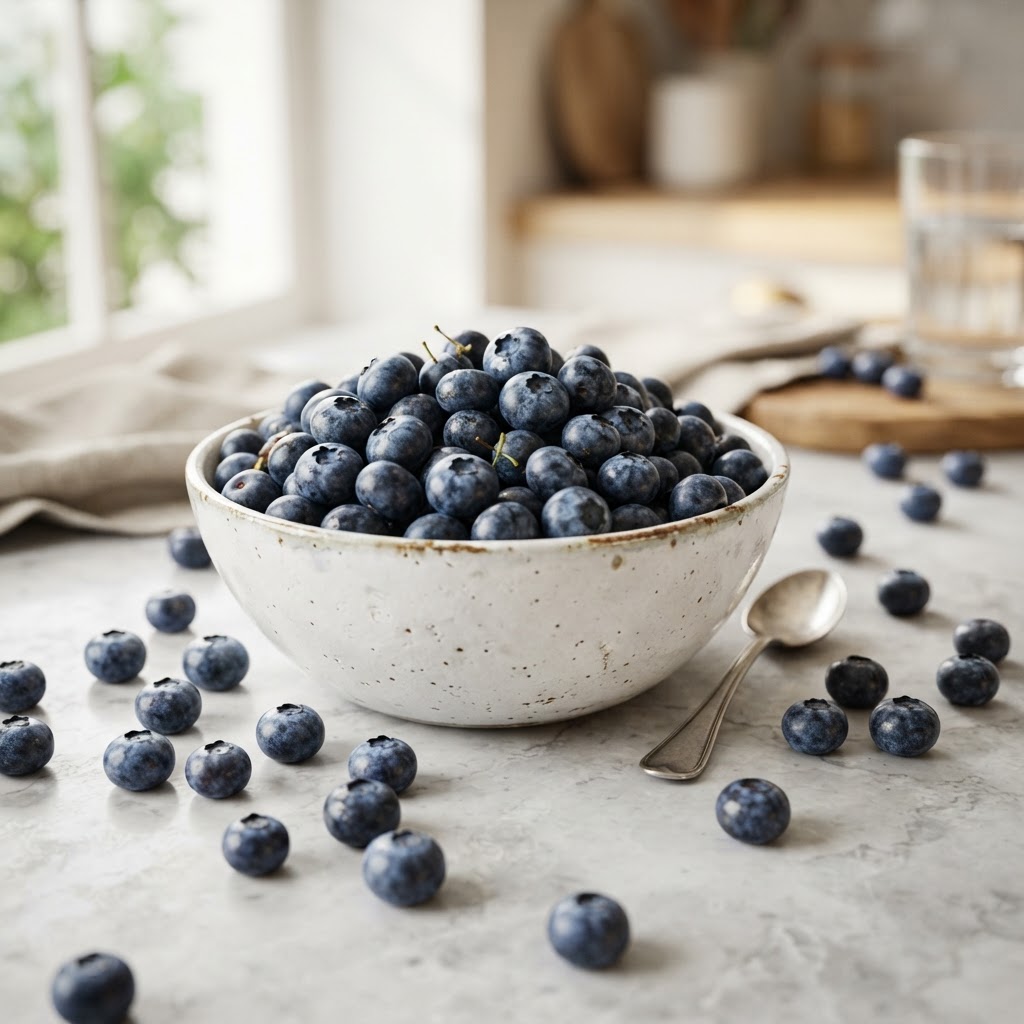
Blueberries are one of the most antioxidant-rich fruits you can eat. One cup of raw blueberries (148g) has 84 calories, 21g carbs, and 15g of natural sugar. Per USDA FoodData Central, raw blueberries provide 57 kcal per 100g — a moderate-calorie fruit, higher than strawberries (32) but lower than grapes (69). A cup delivers 14.4mg of vitamin C (16% of your Daily Value), 28.6mcg of vitamin K (24% Daily Value — among the best fruit sources of vitamin K), 3.6g of fiber, and 114mg of potassium. Ten medium blueberries (~15g) have about 9 calories. These are generic USDA values — varieties vary slightly.
Why Blueberries Are the Antioxidant Superfruit
Blueberries are famous for their anthocyanins — the pigments that give them their deep blue color and are among the most powerful antioxidants in the food supply. A USDA study ranked blueberries among the top sources of antioxidants of any common food. The anthocyanins are linked in research to improved brain function, reduced inflammation, better heart health, and improved insulin sensitivity. A 2010 study in The Journal of Nutrition found that daily blueberry intake improved insulin sensitivity in adults with insulin resistance. At 57 calories per 100g and 84 per cup, blueberries deliver more antioxidants per calorie than almost any other fruit. The 2.4g of fiber per 100g and 84% water content also make them filling for their calorie cost. While strawberries win on calories and vitamin C, blueberries win on antioxidants and vitamin K — both are excellent choices.
🫐 Full Nutrition Facts — Raw Blueberries (Per 100g and Per Cup 148g)
Complete nutrition facts for raw blueberries, based on USDA FoodData Central reference values. Blueberries are one of the best fruit sources of vitamin K and manganese.
| Nutrient | Per 100g | Per Cup (148g) | % Daily Value (per cup) |
|---|---|---|---|
| Calories | 57 kcal | 84 kcal | — |
| Protein | 0.3 g | 1.1 g | 2% |
| Total Carbohydrate | 14.5 g | 21.0 g | 8% |
| • Dietary Fiber | 2.4 g | 3.6 g | 13% |
| • Total Sugars | 9.7 g | 15.0 g | — |
| Total Fat | 0.3 g | 0.5 g | 1% |
| Sodium | 1 mg | 1 mg | 0% |
| Vitamin C | 9.7 mg | 14.4 mg | 16% |
| Vitamin K | 19.3 mcg | 28.6 mcg | 24% |
| Potassium | 77 mg | 114 mg | 2% |
| Manganese | 0.3 mg | 0.5 mg | 20% |
🫐 Blueberry Calories by Portion — Per 100g, Per Cup, Per 10 Berries
| Portion | Weight | Calories | Carbs | Sugar | Vitamin C |
|---|---|---|---|---|---|
| Per 100g | 100g | 57 kcal | 14.5g | 9.7g | 9.7mg |
| 1 cup raw ★ | 148g | 84 kcal | 21.0g | 15.0g | 14.4mg |
| 1 cup frozen unsweetened | 155g | 88 kcal | 22.5g | 15.0g | 15.0mg |
| 10 medium blueberries | 15g | 9 kcal | 2.2g | 1.5g | 1.5mg |
| 5 medium blueberries | 8g | 5 kcal | 1.2g | 0.8g | 0.8mg |
Fresh vs frozen unsweetened: Plain frozen blueberries have the same 57 calories per 100g as fresh — freezing does not add calories. A cup of frozen (155g) is about 88 calories. Sweetened frozen blueberries (with added sugar syrup) have about 90 kcal per 100g — over 50% more calories. Always check the label: if the only ingredient is blueberries, it matches fresh. Dried blueberries: About 350–400 kcal per 100g — roughly 6 to 7 times the calories of fresh blueberries because the water is removed and sugar is often added. A quarter-cup (40g) has 140 calories and 28g of sugar — more sugar than a full cup of fresh blueberries (15g). Dried blueberries are essentially candy with a health halo.
Track Every Snack — Instantly
Snap a photo of any food to get instant calories, macros, and nutrition facts. No app download. No sign-up.
📸 Scan Your Food Free🫐 Blueberries vs Strawberries vs Raspberries — Full Comparison (Per 100g)
All three berries are excellent low-calorie, high-antioxidant choices, but they differ in key nutrients. Strawberries have the most vitamin C (58.8mg — 65% DV) and the fewest calories (32 per 100g). Raspberries have the most fiber (6.5g per 100g — the highest of any common fruit) and the fewest carbs (11.9g). Blueberries have the most antioxidants (anthocyanins) and the most vitamin K (19.3mcg per 100g). For weight loss, strawberries win on calories and vitamin C; for fiber, raspberries win; for antioxidants and vitamin K, blueberries win. All three are among the best fruit choices for any diet. See also our calories in strawberries page.
| Berry (per 100g) | Calories | Carbs | Sugar | Fiber | Vit C |
|---|---|---|---|---|---|
| 🫐 Blueberries ★ | 57 kcal | 14.5 g | 9.7 g | 2.4 g | 9.7 mg |
| 🍓 Strawberries | 32 kcal | 7.7 g | 4.9 g | 2.0 g | 58.8 mg |
| 🫐 Raspberries | 52 kcal | 11.9 g | 4.4 g | 6.5 g | 26.2 mg |
Practical Tips for Eating Blueberries
- Eat them plain or with protein: A cup of plain blueberries is 84 calories. Pair 1 cup with a half-cup of Greek yogurt (90 cal, 10g protein) for a 174-calorie snack with 11g protein that keeps you full for hours.
- Choose fresh or frozen unsweetened: Both have 57 kcal per 100g. Avoid sweetened frozen blueberries (90 kcal per 100g — over 50% more) and dried blueberries (350–400 kcal per 100g — 6–7 times). Check the ingredient list: if it says only 'blueberries,' it is plain.
- Use them as a natural sweetener: Add blueberries to plain oatmeal, yogurt, or seltzer instead of honey or sugar. You get sweetness plus 14.4mg of vitamin C, 28.6mcg of vitamin K, and 3.6g of fiber — nutrients that refined sugar does not provide.
- Don't rinse until ready: Blueberries have a protective bloom (the whitish coating) that keeps them fresh. Rinse only right before eating to extend shelf life from 3 days to 7–10 days in the fridge.
- Eat 1 cup per day: One cup covers 24% of your daily vitamin K and 16% of your daily vitamin C for 84 calories, plus a powerful dose of anthocyanin antioxidants linked to brain and heart health.
Blueberries and Weight Loss — Next Steps
Blueberries are an excellent weight-loss fruit — moderate in calories, high in fiber and antioxidants, and linked to improved insulin sensitivity. Here's how to use them effectively:
- Use them as a high-volume, low-calorie snack: 1 cup of blueberries (84 calories) is the same calories as a single small cookie (85 calories) — but with 3.6g of fiber, 24% of your daily vitamin K, and a full serving of antioxidants. For hunger between meals, blueberries are hard to beat.
- Replace higher-calorie desserts: A cup of blueberries (84 cal) has fewer calories than a single scoop of ice cream (137 cal), a chocolate bar (210 cal), or a blueberry muffin (425 cal) — with 3.6g of fiber and powerful anthocyanin antioxidants.
- Swap dried for fresh: A quarter-cup of dried blueberries (40g, 140 cal, 28g sugar) has more sugar than a full cup of fresh blueberries (15g sugar). Use fresh or frozen blueberries on oatmeal or yogurt instead of dried for the same sweetness with far fewer calories.
- Don't fear the sugar: At 15g per cup, blueberries have a glycemic load of about 5 — low to moderate. The 3.6g of fiber slows the sugar absorption so much that the real blood sugar impact is minimal, and the anthocyanins actively improve insulin sensitivity.
For your daily calorie and protein targets, use the Calorie Calculator and Protein Calculator. This is not medical advice — talk to your doctor.
Scan Any Fruit or Meal — Get Calories in Seconds
Snap a photo of any food and get instant calories, macros, and nutrition facts. No app download. No sign-up.
Keep tracking your nutrition
Compare blueberries to other foods, calculate your daily targets, and build a simple daily habit streak to stay consistent.

Ask Lana
The questions everyone asks
Real answers, like a friend would give them — warm, honest, and always with your next tiny step.
Educational only — not medical advice. Talk to your doctor.
Get Your 30-Day AI Weight Loss Meal Plan Bundle
Pre-calculated calorie targets, smart fruit portions, grocery lists, and blueberry-friendly snack guides — all in one PDF bundle.
Get Meal Plan Bundle — $19.99 →Scan Any Food Instantly — Free
No sign-up. No app. Snap a photo → full nutrition in 3 seconds.
Try Free Food Scanner →🔧 Free Health Tools
❓ Frequently Asked Questions (8)
Click any question to expand the expert answer
🔗 Core Tools
📊 Popular Content Hubs
Scan Any Food Instantly — Free
No sign-up. No app. Snap a photo → get full nutrition in 3 seconds.
Try Free Food Scanner →📋 Nutrition data based on USDA FoodData Central. Values may vary by brand, preparation method, and serving size. Not a substitute for professional medical or dietary advice. Always consult a registered dietitian for personalized nutrition guidance.