Over 2 million people per month search for high protein foods. Most guides give you a generic list. This one gives you exact protein per 100g, calories, fat, and a fat-loss rating for 60+ sources — animals, dairy, plants, snacks, and breakfasts — plus the science behind why protein is the #1 nutrient for weight loss and muscle in 2026.
0.7–1g
Protein per lb bodyweight/day
+80–100
Extra cal burned from thermic effect daily
35%
Hunger reduction from high protein meals
25–30%
Protein's thermic effect (vs 6–8% carbs)
Why Protein Is the #1 Macronutrient for Body Composition
Of all macronutrients, protein has the most dramatic impact on body composition. Its effects go beyond muscle building — high protein intake is the single most evidence-backed strategy for sustainable weight loss, metabolic health, and healthy aging in 2026.
🔥 Highest Thermic Effect of All Foods
Your body burns 25–30% of protein calories just digesting it — vs only 6–8% for carbs and 2–3% for fat. Eating 150g protein per day burns an extra 40–50 calories daily before you do anything else.
💪 Preserves Muscle During Calorie Deficit
Without 0.7–1g protein/lb during dieting, 25–50% of weight lost is muscle, not fat — causing the 'skinny fat' effect, lower metabolism, and fast regain.
🍽️ Reduces Hunger by 35%
Protein suppresses ghrelin (hunger hormone) and increases GLP-1 and PYY (fullness hormones) for 3–5 hours longer than equivalent carb or fat-dominant meals.
🧬 Prevents Sarcopenia (Muscle Aging)
After age 30, we lose 3–5% of muscle per decade without adequate protein + resistance training. High protein diet is the most effective anti-aging intervention for body composition.
🏃 Fuels Athletic Performance
Muscle protein synthesis — the repair and growth process after exercise — requires amino acids available from dietary protein within 2 hours post-workout.
🛡️ Prevents Weight Regain Long-Term
The most consistent predictor of keeping weight off for 12+ months is sustained high protein intake — not willpower, not exercise frequency.
How Much Protein Do You Need Per Day?
🎯 Evidence-Based Daily Protein Targets
| Your Goal | Daily Protein Target | Example: 160 lb Person |
|---|---|---|
| General health (sedentary) | 0.5–0.7g/lb (1.1–1.5g/kg) | 80–112g/day |
| Weight loss (preserve muscle) | 0.8–1.0g/lb (1.8–2.2g/kg) | 128–160g/day |
| Muscle building (resistance training) | 0.8–1.0g/lb (1.8–2.2g/kg) | 128–160g/day |
| Athletic performance (high volume) | 1.0–1.2g/lb (2.2–2.6g/kg) | 160–192g/day |
| Women over 40 (hormone support) | 0.9–1.1g/lb (2.0–2.4g/kg) | 144–176g/day |
| Older adults 65+ (anti-sarcopenia) | 0.9–1.2g/lb (2.0–2.6g/kg) | 144–192g/day |
Use our free Protein Calculator to get your exact daily protein target in 60 seconds.
Best Animal Protein Sources — Complete Ranked List
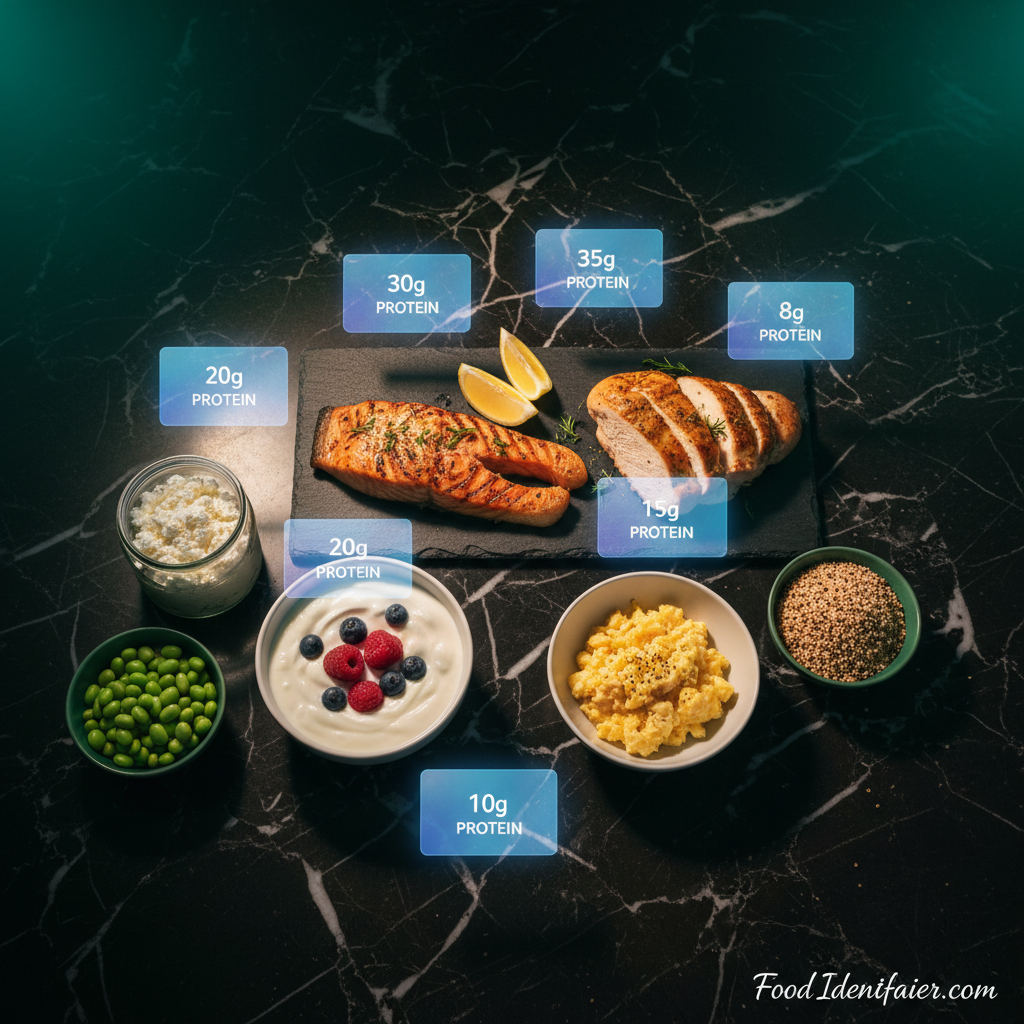
Animal proteins are "complete" — they contain all 9 essential amino acids in optimal ratios and have the highest bioavailability (absorption rate). These are the gold standard protein sources for both weight loss and muscle building:
 © FoodIdentifier.com — All Rights ReservedFoodIdentifier.com
| Food (100g cooked) | Protein | Calories | Fat | Fat Loss Rating |
|---|---|---|---|---|
| Chicken breast (skinless, grilled) | 31g | 165 cal | 3.6g | ⭐⭐⭐⭐⭐ |
| Turkey breast (skinless) | 29g | 157 cal | 3.5g | ⭐⭐⭐⭐⭐ |
| Shrimp (boiled) | 24g | 99 cal | 0.3g | ⭐⭐⭐⭐⭐ |
| Tuna (canned in water) | 25g | 116 cal | 0.5g | ⭐⭐⭐⭐⭐ |
| Cod (baked) | 23g | 105 cal | 0.9g | ⭐⭐⭐⭐⭐ |
| Tilapia (baked) | 26g | 128 cal | 2.7g | ⭐⭐⭐⭐⭐ |
| Egg whites (3) | 11g | 51 cal | 0g | ⭐⭐⭐⭐⭐ |
| Pork tenderloin (roasted) | 26g | 143 cal | 4g | ⭐⭐⭐⭐ |
| Lean ground beef 95% (cooked) | 26g | 137 cal | 5g | ⭐⭐⭐⭐ |
| Whole eggs (2 large) | 12g | 143 cal | 10g | ⭐⭐⭐⭐ |
| Salmon (wild, baked) | 25g | 182 cal | 8.1g | ⭐⭐⭐⭐ |
| Sardines (canned in water) | 22g | 139 cal | 6g | ⭐⭐⭐⭐ |
| Sirloin steak (grilled) | 29g | 207 cal | 9g | ⭐⭐⭐ |
| Chicken thigh (skinless) | 26g | 184 cal | 9.5g | ⭐⭐⭐⭐ |
| Mackerel (baked) | 19g | 205 cal | 13g | ⭐⭐⭐ |
Best Dairy Protein Sources — Ranked
Dairy proteins — especially casein and whey — are among the highest quality proteins available. Casein is slow-digesting (ideal before bed), while whey is fast-absorbing (ideal post-workout). Both are complete proteins with high leucine content for muscle protein synthesis:
| Food | Protein | Calories | Best Timing | Fat Loss Rating |
|---|---|---|---|---|
| Greek yogurt, 0% fat (1 cup) | 17–22g | 100–130 cal | Breakfast, snack | ⭐⭐⭐⭐⭐ |
| Cottage cheese, 1% (1 cup) | 25–28g | 163–180 cal | Bedtime snack | ⭐⭐⭐⭐⭐ |
| Whey protein powder (1 scoop) | 20–25g | 110–130 cal | Post-workout | ⭐⭐⭐⭐⭐ |
| Casein protein powder (1 scoop) | 24–26g | 120–140 cal | Before bed | ⭐⭐⭐⭐⭐ |
| Part-skim ricotta (½ cup) | 14g | 171 cal | Any meal | ⭐⭐⭐⭐ |
| Kefir (1 cup) | 11g | 110 cal | Morning, post-workout | ⭐⭐⭐⭐ |
| String cheese (1 stick) | 7g | 80 cal | Snack | ⭐⭐⭐⭐ |
| Parmesan (1 oz) | 10g | 110 cal | Meal topper | ⭐⭐⭐ |
| Low-fat milk (1 cup) | 8g | 102 cal | Any time | ⭐⭐⭐ |
Best Plant Protein Sources — Complete Ranked List
Plant proteins are increasingly recognized as excellent sources. While many are "incomplete" (lacking one or more essential amino acids), eating a variety ensures all amino acids are covered. Here are the best plant proteins for weight loss and muscle building:
| Food (100g cooked) | Protein | Calories | Complete? | Fat Loss Rating |
|---|---|---|---|---|
| Seitan (wheat gluten) | 21g | 121 cal | No (low lysine) | ⭐⭐⭐⭐⭐ if tolerated |
| Tempeh (fermented soy) | 19g | 193 cal | Yes ✅ | ⭐⭐⭐⭐⭐ |
| Edamame (soybeans) | 11g | 121 cal | Yes ✅ | ⭐⭐⭐⭐⭐ |
| Tofu, firm | 9g | 76 cal | Yes ✅ | ⭐⭐⭐⭐⭐ |
| Lentils | 9g | 116 cal | No (pair with grain) | ⭐⭐⭐⭐ |
| Black beans | 9g | 132 cal | No (pair with grain) | ⭐⭐⭐⭐ |
| Chickpeas | 9g | 164 cal | No (pair with grain) | ⭐⭐⭐⭐ |
| Quinoa (1 cup) | 8g | 222 cal | Yes ✅ | ⭐⭐⭐⭐ |
| Hemp seeds (3 tbsp) | 10g | 166 cal | Yes ✅ | ⭐⭐⭐⭐ |
| Pea protein powder (1 scoop) | 20–25g | 100–130 cal | Partial | ⭐⭐⭐⭐ |
| Nutritional yeast (2 tbsp) | 8g | 45 cal | Yes ✅ | ⭐⭐⭐⭐⭐ |
| Pumpkin seeds (1 oz) | 9g | 151 cal | Partial | ⭐⭐⭐ |
🌱 How to Hit Protein Goals on a Plant-Based Diet
- Combine lentils or beans with rice or quinoa at most meals — together they form a complete amino acid profile
- Use tempeh as your primary protein — it's fermented (better bioavailability) and has the highest protein of any whole plant food
- Add nutritional yeast to everything — 2 tbsp provides 8g complete protein and B12 for just 45 calories
- Consider a pea + rice protein blend powder post-workout — this combination is as effective as whey for muscle building
- Target 10–15% more total protein than meat-eaters to compensate for lower bioavailability
- Include hemp seeds daily — 3 tbsp adds 10g complete protein to any meal in seconds
High Protein Snacks Under 200 Calories
The best high protein snacks for weight loss keep you full between meals without derailing your calorie target. These are the highest protein-to-calorie ratio snack options available:
| Snack | Protein | Calories | Prep Time |
|---|---|---|---|
| 2 hard-boiled eggs | 13g | 155 cal | 0 min (pre-cooked) |
| Greek yogurt (½ cup plain 0%) | 10g | 60 cal | 0 min |
| Cottage cheese (½ cup) | 14g | 100 cal | 0 min |
| 1 oz almonds + string cheese | 13g | 195 cal | 0 min |
| Tuna on cucumber slices (3 oz) | 22g | 115 cal | 2 min |
| Edamame (½ cup shelled) | 8.5g | 95 cal | 2 min (microwave) |
| Turkey roll-ups (3 slices + mustard) | 13g | 110 cal | 1 min |
| Protein shake (½ scoop + water) | 12g | 60 cal | 1 min |
| Lunchmeat + 1 low-fat string cheese | 18g | 170 cal | 0 min |
| Smoked salmon (2 oz) | 13g | 130 cal | 0 min |
Best High Protein Breakfasts (30g+ Target)
A high-protein breakfast is the single most impactful nutritional change most people can make. Research shows people who eat 30g+ protein at breakfast consume 400 fewer calories throughout the rest of the day — automatically, with no effort:
🥚 Classic Egg Breakfast
3 whole eggs + 3 egg whites scrambled + spinach + 1 slice whole grain toast = 35g protein, 340 cal. Prep: 5 min.
🥛 Greek Yogurt Bowl
1 cup 0% Greek yogurt + 1 scoop protein powder + ½ cup berries + 1 tbsp chia = 42g protein, 380 cal. Prep: 2 min.
🧀 Cottage Cheese Plate
1 cup cottage cheese + sliced peaches + 1 tbsp sunflower seeds + cinnamon = 28g protein, 280 cal. Prep: 1 min.
🐟 Salmon & Eggs
2 oz smoked salmon + 2 poached eggs + cucumber + capers = 34g protein, 285 cal. Highest omega-3 breakfast.
🥤 Protein Smoothie
1.5 scoops protein + 1 cup spinach + ½ cup berries + 1 cup almond milk + 1 tbsp chia = 40g protein, 350 cal.
🥞 Protein Pancakes
2 whole eggs + 1 scoop protein + ½ banana blended, cooked as pancakes = 30g protein, 370 cal. Satisfying and sweet.
Cheap High Protein Foods — Budget Guide
You don't need expensive supplements or premium cuts to hit your protein target. These are the cheapest high protein foods ranked by protein per dollar:
| Food | Protein per Serving | Cost per Serving | Protein per Dollar |
|---|---|---|---|
| Dried lentils (½ cup dry) | 18g cooked | $0.15 | 120g protein/$1 |
| Canned tuna (5 oz can) | 25g | $1.00 | 25g protein/$1 |
| Eggs (2 large) | 12g | $0.50 | 24g protein/$1 |
| Dried black beans (½ cup dry) | 15g cooked | $0.18 | 83g protein/$1 |
| Cottage cheese (1 cup) | 25g | $0.80 | 31g protein/$1 |
| Chicken thighs (4 oz raw) | 22g | $0.90 | 24g protein/$1 |
| Frozen tilapia (4 oz) | 23g | $1.20 | 19g protein/$1 |
| Greek yogurt store brand (1 cup) | 17g | $0.75 | 23g protein/$1 |
| Peanut butter (2 tbsp) | 8g | $0.25 | 32g protein/$1 |
| Whey protein powder (1 scoop) | 25g | $0.80–1.20 | 20–30g protein/$1 |
Protein Timing for Maximum Results
Research shows that distributing protein evenly across meals is more effective for muscle protein synthesis than eating the same total amount in 1–2 sittings. Here's the optimal timing strategy:
- Aim for 30–40g protein per meal across 3–4 meals daily — this maximizes muscle protein synthesis at each session
- Eat protein within 2 hours of resistance training — this is the most important meal of the day for muscle repair
- High-protein breakfast (30g+) sets hormone levels for reduced hunger and cravings throughout the entire day
- Casein protein before bed (cottage cheese, Greek yogurt) provides 7–8 hours of amino acids during overnight muscle repair
- Never skip protein at breakfast — missing it causes evening overconsumption of calories by 400+ on average
- Space protein meals every 3–4 hours — muscle protein synthesis peaks then drops, requiring re-stimulation
📸 Track Your Protein Instantly — Free
Not sure if your meal is hitting your protein target? Photograph it with FoodIdentifier's free AI food scanner — get instant protein, calories, and all macros in 3 seconds. No signup required.
Answer Engine Optimization · AI-Ready Answers
High Protein Foods — AI Search Answers
These answers are structured for ChatGPT, Perplexity, Google SGE, and other AI search engines — so you get accurate, instant answers to the most-searched questions on this topic.
Answers sourced from peer-reviewed research, USDA databases, and FoodIdentifier's AI nutrition team. Updated April 2026.
Frequently Asked Questions — High Protein Foods
Q: What foods are highest in protein per 100g?
A: Top sources per 100g: chicken breast (31g), tuna (30g), turkey breast (29g), lean beef (26g), shrimp (24g), cottage cheese (11g), Greek yogurt (10g), eggs (13g), lentils (9g), tofu (8g). For everyday eating, chicken, tuna, Greek yogurt, eggs, and cottage cheese are the easiest to include consistently.
Q: How much protein do I need per day to lose weight?
A: Aim for roughly 0.7-1.0g of protein per pound of bodyweight daily. A 160 lb person would target 112-160g per day. Getting enough protein helps you feel full, preserves muscle while you lose fat, and slightly increases the calories you burn through digestion.
Q: What is the best high protein breakfast?
A: Eggs, Greek yogurt, cottage cheese, and protein smoothies are all great options. Aim for 25-30g+ at breakfast — it helps control hunger for the rest of the day. A 3-egg omelette, Greek yogurt with berries and a scoop of protein powder, or cottage cheese with fruit are all simple and effective.
Q: Is it possible to eat too much protein?
A: For healthy people with normal kidney function, intakes up to about 1g per pound of bodyweight are considered safe. There's no strong evidence that high protein harms healthy kidneys. If you have existing kidney issues, talk to your doctor. Eating much more than 1.2g/lb doesn't seem to add benefit — the excess is just used as energy.
Q: Can you build muscle on a plant-based diet?
A: Yes. It takes more planning since plant proteins are sometimes incomplete, but combining sources (rice and beans, for example) covers the amino acids. Soy foods, quinoa, hemp, and chia are complete proteins. Eat a variety, aim for slightly more total protein than an omnivore would, and consider a pea-and-rice protein powder if needed.
Q: What are the best cheap high protein foods?
A: Eggs, canned tuna, lentils, black beans, cottage cheese, and chicken thighs are some of the most affordable protein sources. You can hit a solid daily protein target on a tight budget with these staples — beans and lentils in particular are very cheap and also provide fiber.
Q: Which has more protein — chicken breast or thigh?
A: Chicken breast has about 31g protein per 100g with 165 calories. Skinless chicken thigh has about 26g protein per 100g with 184 calories. Breast is better for protein-to-calorie ratio; thigh is juicier, cheaper, and harder to overcook. Both are good — pick based on your goals and taste.
Q: Do protein shakes count toward daily protein goals?
A: Yes. Whey, casein, and plant-based powders all count toward your daily total. They're convenient, especially post-workout or when you're short on time. But prioritize whole food sources first — powders are a supplement, not a replacement for real food.
❓ People Also Ask — High Protein Foods
Q: What food has the most protein for weight loss?
A: For pure weight loss (most protein per calorie): chicken breast (31g/165 cal), shrimp (24g/99 cal), egg whites (11g/51 cal), cod (23g/105 cal), and cottage cheese (25g/163 cal) are the best options. All provide 20+ grams of protein for under 200 calories per serving.
Q: How do I get 150g of protein a day from food?
A: Sample day for 150g protein: Breakfast — 3 eggs + egg whites (28g). Lunch — 6 oz chicken breast + cottage cheese (55g). Snack — Greek yogurt + string cheese (20g). Dinner — 6 oz salmon (37g). Snack — 2 hard-boiled eggs (12g). Total: 152g without any supplements.
Q: Is Greek yogurt or cottage cheese higher in protein?
A: Cottage cheese (1 cup) wins with 25–28g protein vs Greek yogurt (1 cup) at 17–22g. However, Greek yogurt has probiotics and a smoother texture. Both are excellent. For bedtime protein, cottage cheese is preferred as it contains mainly casein (slow-releasing for overnight muscle repair).
Q: What protein foods can I eat every day without getting bored?
A: Rotate these daily: eggs (infinite variations — scrambled, poached, boiled, omelette), Greek yogurt (flavored with fruit + seeds), chicken (different marinades + seasonings keep it fresh), cottage cheese (sweet or savory), canned tuna or salmon (salads, wraps, crackers). Variety in preparation beats variety in food type for long-term adherence.
Related Searches