How Many Calories in Chocolate? (Dark, Milk, White & Full Nutrition)
 FoodIdentifier.com
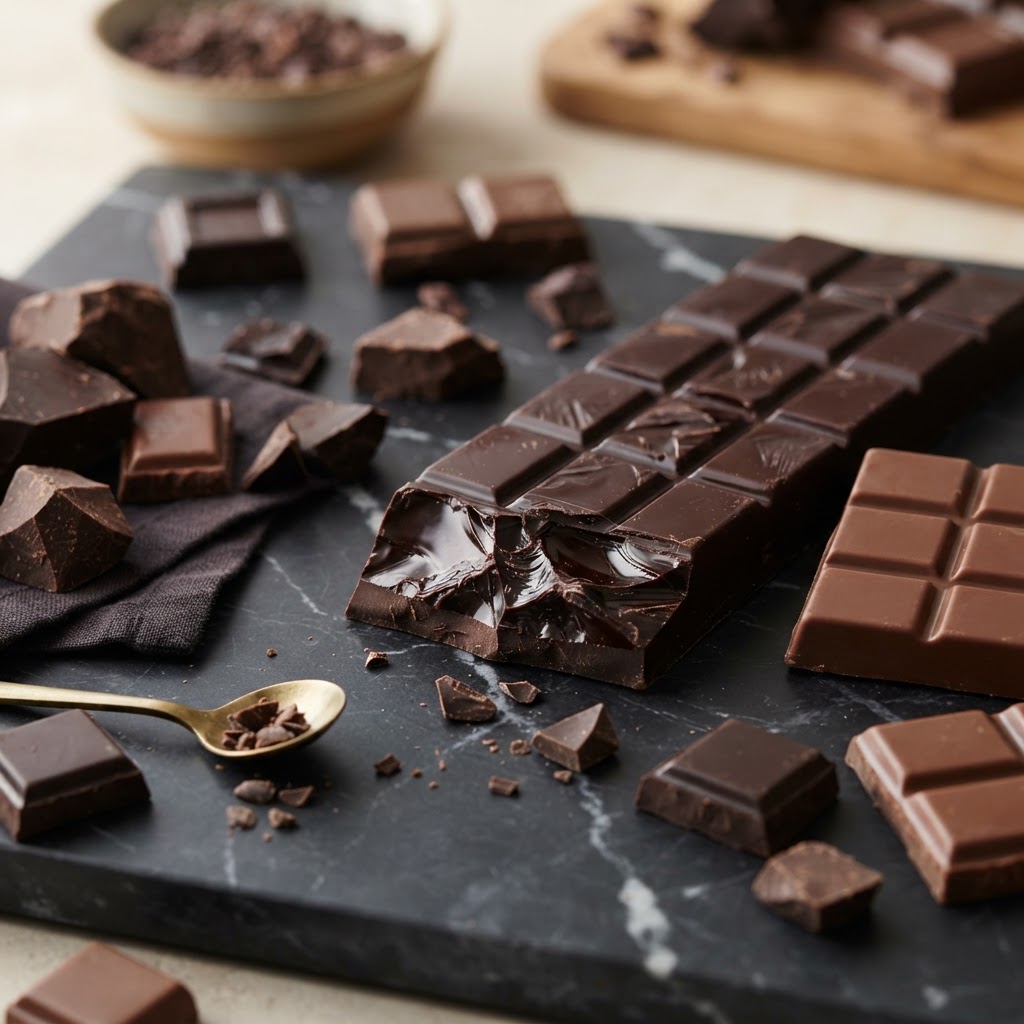
One ounce (28g) of dark chocolate (70–85% cacao) has about 170 calories, 7.8g protein, 12.9g carbs, and 11.9g fat. Per USDA FoodData Central, dark chocolate provides 598 kcal per 100g, 7.8g protein, 45.9g carbs, 10.9g fiber, and 11.9mg iron. Milk chocolate has 535 kcal per 100g (150 per oz); white chocolate has 539 kcal per 100g (151 per oz). These are generic USDA values — brands vary, so check the label.
🔬 Nutrition Facts — Per 1 oz Dark Chocolate (28g)
Source: USDA FoodData Central · 2026
🥗 Key Ingredients & Nutrients at a Glance
📊 Quick Facts
- •1 oz dark chocolate (28g): 170 calories | 12.9g carbs | 3.1g fiber ← common serving
- •1 square (10g): ~60 calories (dark) | ~54 (milk/white)
- •1 standard bar (43g): ~257 cal (dark) | ~230 (milk) | ~232 (white)
- •Dark chocolate per 100g: 598 kcal | 10.9g fiber | 11.9mg iron
- •Milk chocolate per 100g: 535 kcal | 3.4g fiber | 51.5g sugar
- •White chocolate per 100g: 539 kcal | 2.3g fiber | 52g sugar
- •Iron in dark chocolate: 11.9mg per 100g (66% Daily Value)
- •Best for weight loss? 1–2 squares of 70%+ dark (60–120 cal)
- •Glycemic Index: ~40 (dark, low) vs ~45 (milk, low-moderate)
🚨 Top Problems — Solved
Scan Any Chocolate or Meal — Get Calories in Seconds
Snap a photo of any food and get instant calories, macros, and nutrition facts. No app download. No sign-up.
📸 Try Free Food ScannerCalories in Chocolate (Dark, Milk, White — Per Ounce, Per Bar, Per 100g)
Chocolate is one of the most calorie-dense foods you can eat. One ounce (28g) of dark chocolate has about 170 calories, while a standard 43g bar has about 257 calories. Per USDA FoodData Central, dark chocolate (70–85% cacao) provides 598 kcal per 100g, milk chocolate provides 535 kcal per 100g, and white chocolate provides 539 kcal per 100g. The calorie differences between types are modest, but the sugar, fiber, and iron content vary dramatically. These are generic USDA values — brands vary, so check the label.
Why Chocolate Is So Calorie-Dense
Chocolate's high calorie count comes from cocoa butter — the natural fat in cocoa beans. Cocoa butter is 100% fat, and dark chocolate is 42.6% fat by weight. At 9 calories per gram, fat more than doubles the calorie density of carbs or protein (4 cal/g). This is why even a small square of chocolate (10g) packs 60 calories. The tradeoff: cocoa butter also gives chocolate its smooth texture and slow-melting mouthfeel, and in dark chocolate, it carries beneficial flavonoids and minerals.
🍫 Full Nutrition Facts — Dark Chocolate (Per 100g and Per Ounce 28g)
Complete nutrition facts for dark chocolate (70–85% cacao), based on USDA FoodData Central reference values. Dark chocolate is notably high in iron, magnesium, and fiber.
| Nutrient | Per 100g | Per Ounce (28g) | % Daily Value (per oz) |
|---|---|---|---|
| Calories | 598 kcal | 170 kcal | — |
| Protein | 7.8 g | 2.2 g | 4% |
| Total Carbohydrate | 45.9 g | 12.9 g | 5% |
| • Dietary Fiber | 10.9 g | 3.1 g | 11% |
| • Total Sugars | 24 g | 6.7 g | — |
| Total Fat | 42.6 g | 11.9 g | 15% |
| Sodium | 20 mg | 6 mg | 0% |
| Iron | 11.9 mg | 3.3 mg | 18% |
| Magnesium | 228 mg | 64 mg | 15% |
🍫 Dark vs Milk vs White Chocolate — Per 100g, Per Ounce, Per Bar
Note: Brands vary. Cacao percentage, added sugar, and fillers change the exact values — check the label.
| Type | Per 100g | Per Ounce (28g) | Per Bar (43g) | Best For |
|---|---|---|---|---|
| 🍫 Dark (70–85%) ★ | 598 kcal | 170 kcal | 257 kcal | Most fiber, iron, antioxidants |
| 🍫 Milk chocolate | 535 kcal | 150 kcal | 230 kcal | Sweet, creamy — most sugar |
| 🍫 White chocolate | 539 kcal | 151 kcal | 232 kcal | No cocoa solids — least nutrients |
🍫 Chocolate Calories by Portion — Complete Chart
| Portion | Weight | Dark (cal) | Milk (cal) | White (cal) |
|---|---|---|---|---|
| 1 square | 10g | 60 | 54 | 54 |
| 1 mini / fun-size | 14g | 84 | 75 | 75 |
| 1 oz ★ | 28g | 170 | 150 | 151 |
| 1 standard bar | 43g | 257 | 230 | 232 |
| 1 large bar | 100g | 598 | 535 | 539 |
Track Every Treat — Instantly
Snap a photo of any food to get instant calories, macros, and nutrition facts. No app download. No sign-up.
📸 Scan Your Food Free🍫 Dark vs Milk vs White Chocolate — Full Nutrition Comparison (Per 100g)
All three chocolate types are similar in calories, but they differ dramatically in sugar, fiber, and iron. Dark chocolate has more than triple the fiber of white chocolate (10.9g vs 2.3g) and nearly 12 times the iron (11.9mg vs 1mg). Milk chocolate has the most sugar (51.5g per 100g). For a deeper look, see Is Dark Chocolate Healthy? and Is Milk Chocolate Bad for You?
| Nutrient | Dark (70–85%) | Milk | White |
|---|---|---|---|
| Calories | 598 kcal | 535 kcal | 539 kcal |
| Total Fat | 42.6 g | 29.7 g | 32 g |
| Total Carbs | 45.9 g | 59.4 g | 59.5 g |
| • Sugar | 24 g | 51.5 g | 52 g |
| • Fiber | 10.9 g | 3.4 g | 2.3 g |
| Protein | 7.8 g | 7.6 g | 5.9 g |
| Iron | 11.9 mg | 3.4 mg | 1 mg |
| Sodium | 20 mg | 79 mg | 90 mg |
Chocolate and Weight Loss — Practical Tips
Chocolate can fit into a weight-loss plan, but portion control is everything. Here's how to enjoy it without overeating:
- Choose 70%+ dark chocolate: It has more fiber (10.9g vs 3.4g per 100g) and less sugar (24g vs 51.5g) than milk chocolate, so it satisfies with less.
- Count squares, not bars: One square (10g) is about 60 calories — a reasonable treat. A full bar is 257–598 calories.
- Pair with nuts: Eat 1 square of dark chocolate with 10 almonds (70 calories) — the protein and fat slow the sugar response and keep you full.
- Avoid white chocolate: It has no cocoa solids, so it lacks the fiber, iron, and antioxidants of dark chocolate — it's essentially sweetened cocoa butter.
- Store out of sight: Studies show people eat 50% more chocolate when it's visible on a desk vs stored in a drawer.
For your daily calorie target, use the Calorie Calculator. This is not medical advice — talk to your doctor.
Does Higher Cacao Mean Fewer Calories?
Not necessarily. Higher cacao means more cocoa butter (fat) and less sugar, but since both fat and sugar are calorie-dense, the total calories stay similar across cacao percentages. 70% dark chocolate and 90% dark chocolate both have about 600 kcal per 100g. The real benefit of higher cacao is less sugar and more fiber and antioxidants — not fewer calories.
Scan Any Chocolate or Meal — Get Calories in Seconds
Snap a photo of any food and get instant calories, macros, and nutrition facts. No app download. No sign-up.
Keep tracking your nutrition
Compare chocolate to other foods, calculate your daily targets, and build a simple daily habit streak to stay consistent.

Ask Lana
The questions everyone asks
Real answers, like a friend would give them — warm, honest, and always with your next tiny step.
Educational only — not medical advice. Talk to your doctor.
Get Your 30-Day AI Weight Loss Meal Plan Bundle
Pre-calculated calorie targets, smart treat strategies, grocery lists, and chocolate-friendly portion guides — all in one PDF bundle.
Get Meal Plan Bundle — $19.99 →Scan Any Food Instantly — Free
No sign-up. No app. Snap a photo → full nutrition in 3 seconds.
Try Free Food Scanner →🔧 Free Health Tools
❓ Frequently Asked Questions (8)
Click any question to expand the expert answer
🔗 Core Tools
📊 Popular Content Hubs
Scan Any Food Instantly — Free
No sign-up. No app. Snap a photo → get full nutrition in 3 seconds.
Try Free Food Scanner →📋 Nutrition data based on USDA FoodData Central. Values may vary by brand, preparation method, and serving size. Not a substitute for professional medical or dietary advice. Always consult a registered dietitian for personalized nutrition guidance.