How Many Calories in an Orange? (Sizes, Juice & Full Nutrition)
 FoodIdentifier.com
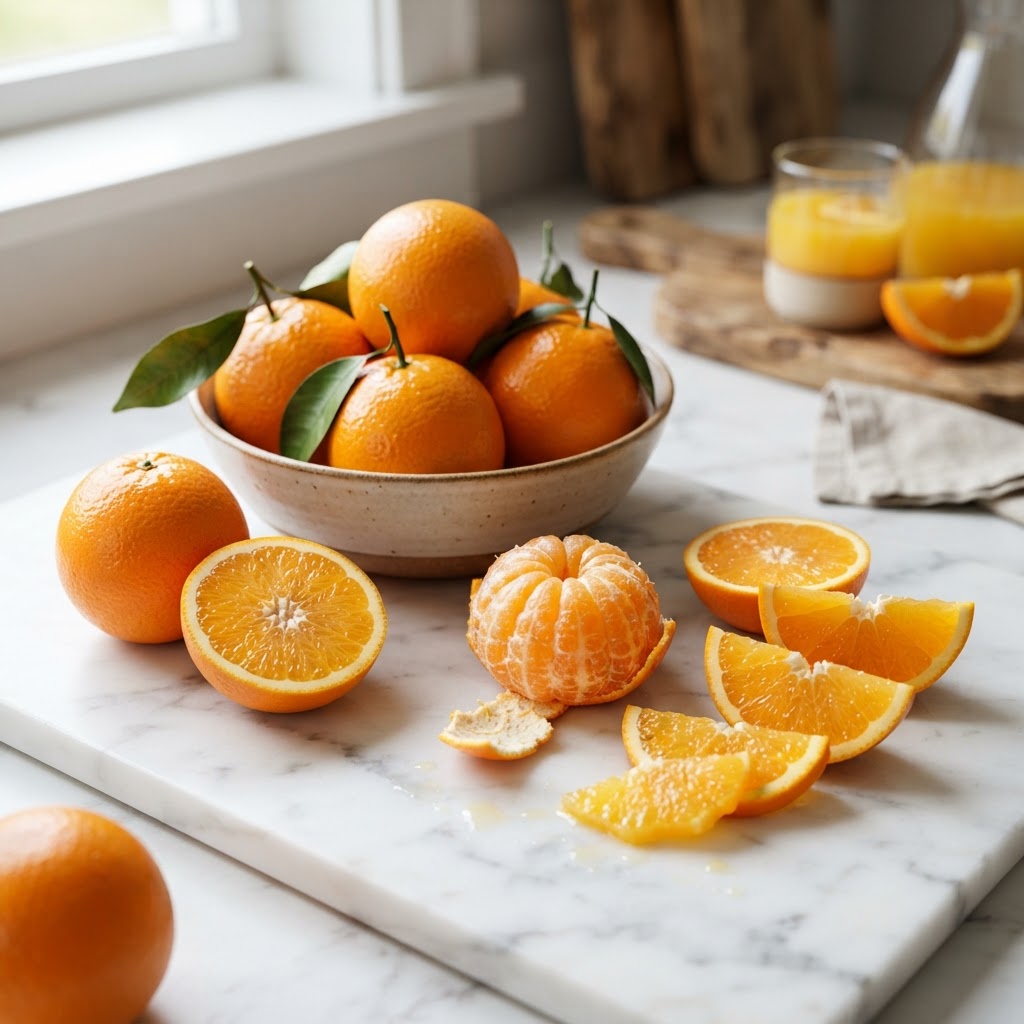
A medium orange (131g) has about 62 calories, 15.4g carbs, 3.1g fiber, and 70mg vitamin C. Per USDA FoodData Central, raw orange provides 47 kcal per 100g, 0.9g protein, 9.4g natural sugar, and 53.2mg vitamin C. One medium navel orange covers nearly 80% of your daily vitamin C needs.
🔬 Nutrition Facts — Per 1 Medium Orange (131g)
Source: USDA FoodData Central · 2026
🥗 Key Ingredients & Nutrients at a Glance
📊 Quick Facts
- •Small orange (96g): ~45 calories | 11g carbs | 2.3g fiber
- •Medium orange (131g): 62 calories | 15.4g carbs | 3.1g fiber ← most common
- •Large orange (184g): ~87 calories | 22g carbs | 4.4g fiber
- •Vitamin C: 70mg per medium orange (78% Daily Value)
- •Glycemic Index: 40–45 (low to medium)
- •Keto? ❌ No — ~12g net carbs per medium orange
- •Diabetic-friendly? ✅ In moderation — low GI, pair with protein
- •Best time to eat: Morning or pre-workout for vitamin C and natural energy
- •Paired with: 🥜 Almonds or Greek yogurt for blood sugar stability
🚨 Top Problems — Solved
Scan Any Orange or Meal — Get Calories in Seconds
Snap a photo of any food and get instant calories, macros, and nutrition facts. No app download. No sign-up.
📸 Try Free Food ScannerCalories in an Orange (Small, Medium, Large)
Orange calories depend almost entirely on size. A small orange (96g) has about 45 calories, a medium orange (131g) has 62 calories, and a large orange (184g) has about 87 calories. Variety matters less than size — navel, Valencia, and blood oranges of the same weight are within a few calories of each other.
Vitamin C in an Orange
A medium orange (131g) provides about 70mg of vitamin C, covering roughly 78% of the daily value (90mg for adults). Per 100g, raw orange contains 53.2mg. Vitamin C is water-soluble, so your body does not store it — eating one orange a day is a reliable way to meet your needs. Vitamin C supports immune function, collagen synthesis, and helps your body absorb iron from plant foods.
Carbs and Sugar in an Orange
A medium orange has about 15.4g of total carbohydrates, including 3.1g of fiber and 12.2g of natural sugars (mainly sucrose, fructose, and glucose). Subtract the fiber and you get roughly 12.3g of net carbs. That is moderate for most diets but too high for strict keto. The fiber in a whole orange slows sugar absorption — one reason whole oranges have a gentler blood sugar response than juice.
🍊 Full Nutrition Facts — Per 100g and Per Medium Orange
Complete nutrition facts for raw orange, based on USDA FoodData Central reference values:
| Nutrient | Per 100g | Per Medium Orange (131g) | % Daily Value (per fruit) |
|---|---|---|---|
| Calories | 47 kcal | 62 kcal | — |
| Protein | 0.9 g | 1.2 g | 2% |
| Total Carbohydrate | 11.8 g | 15.4 g | 6% |
| • Dietary Fiber | 2.4 g | 3.1 g | 11% |
| • Total Sugars | 9.4 g | 12.2 g | — |
| Total Fat | 0.1 g | 0.2 g | 0% |
| Sodium | 0 mg | 0 mg | 0% |
| Vitamin C | 53.2 mg | 70 mg | 78% |
| Folate | 30 mcg | 39 mcg | 10% |
| Potassium | 181 mg | 237 mg | 5% |
| Thiamin (B1) | 0.087 mg | 0.11 mg | 9% |
🍊 Orange Calories by Size — Complete Chart
| Size | Weight | Calories | Carbs | Sugar | Fiber | Vitamin C |
|---|---|---|---|---|---|---|
| Small | 96g (2.5 in) | 45 | 11g | 9g | 2.3g | 51mg |
| Medium ★ | 131g (3 in) | 62 | 15.4g | 12.2g | 3.1g | 70mg |
| Large | 184g (3.5 in) | 87 | 22g | 17g | 4.4g | 98mg |
| Sliced (1 cup) | 180g | 85 | 21g | 17g | 4.3g | 96mg |
| Juice (1 cup) | 248g | 112 | 26g | 21g | 0.5g | 124mg |
🍊 Orange Varieties — Navel vs Valencia vs Mandarin vs Blood Orange
Different orange varieties vary slightly in size, sweetness, and vitamin C, but calorie differences are driven mainly by weight, not by type. Mandarins and clementines are smaller, so they have fewer calories per fruit — but similar calories per 100g.
| Variety | Typical Weight | Calories per Fruit | Carbs | Vitamin C | Best For |
|---|---|---|---|---|---|
| 🍊 Navel | 140g | 66 | 16.5g | 74mg | Eating fresh, peeling easily |
| 🍊 Valencia | 131g | 62 | 15.4g | 70mg | Juicing, smoothies |
| 🍊 Blood orange | 140g | 66 | 16.5g | 74mg | Antioxidants (anthocyanins) |
| 🍊 Mandarin/Clementine | 88g | 41 | 10.4g | 47mg | Snacks, kids, portion control |
🍊 Orange Juice vs Whole Orange — Calorie Comparison
Orange juice concentrates the sugar from multiple oranges and removes most of the fiber. A single cup of juice (248g) has about 112 calories — nearly double a medium whole orange — with 21g of sugar and less than 0.5g of fiber. For weight management, blood sugar control, or satiety, a whole orange is the better choice. For hydration or quick post-workout carbs, juice can work, but measure the portion.
| Form | Serving | Calories | Carbs | Sugar | Fiber | Vitamin C |
|---|---|---|---|---|---|---|
| Whole orange | 1 medium (131g) | 62 | 15.4g | 12.2g | 3.1g | 70mg |
| Fresh juice | 1 cup (248g) | 112 | 26g | 21g | 0.5g | 124mg |
| Store-bought juice | 1 cup (248g) | 110 | 26g | 22g | 0.5g | 85mg |
| Mandarin (canned) | 1/2 cup (125g) | 45 | 11g | 9g | 1.3g | 25mg |
Track Every Orange and Meal — Instantly
Snap a photo of any food to get instant calories, macros, and nutrition facts. No app download. No sign-up.
📸 Scan Your Food Free🍊 vs Other Fruits — Calorie & Nutrition Comparison (Per 100g)
| Fruit | Calories | Carbs | Sugar | Fiber | Vitamin C |
|---|---|---|---|---|---|
| 🍊 Orange | 47 | 11.8g | 9.4g | 2.4g | 53.2mg |
| 🍌 Banana | 89 | 22.8g | 12.3g | 2.6g | 8.7mg |
| 🍎 Apple | 52 | 13.8g | 10.4g | 2.4g | 4.6mg |
| 🍇 Grapes | 69 | 18g | 16g | 0.9g | 3.2mg |
| 🍓 Strawberries | 32 | 7.7g | 4.9g | 2g | 58.8mg |
| 🫐 Blueberries | 57 | 14.5g | 10g | 2.4g | 9.7mg |
| 🍉 Watermelon | 30 | 7.6g | 6.2g | 0.4g | 8.1mg |
| 🥭 Mango | 60 | 15g | 13.7g | 1.6g | 36.4mg |
Oranges for Weight Loss
Oranges are a solid weight-loss fruit. At about 62 calories per medium orange with 3.1g of fiber, they offer reasonable satiety for the calories. The fiber and water content (87% water by weight) help you feel full. Where oranges can backfire is in juice form — a 16 oz glass can pack 220+ calories with almost no fiber, so you can drink a lot without feeling full. For weight loss, stick to whole oranges, pair one with a protein source (Greek yogurt, almonds, or cottage cheese), and count it toward your daily calorie total like any other food. Use the Calorie Calculator to find your daily target, and the Protein Calculator to balance your macros.
Oranges and Blood Sugar
A medium orange has a glycemic index of about 40–45 (low to medium) and a glycemic load of roughly 5, making it gentler on blood sugar than bananas (GI 51–62), watermelon (GI 72), or pineapple (GI 59). If you have diabetes, prediabetes, or are monitoring glucose for any reason, a few practical steps help: choose whole oranges over juice, eat one small or medium orange at a time, and pair it with protein or fat (such as a handful of almonds or a cheese stick) to flatten the glucose curve. This is not medical advice — talk to your doctor. Your individual blood sugar response depends on many factors, including medication, activity level, and what else you eat in the meal.
Storage and Ripeness Tips
Oranges do not ripen further after picking — they stay at the same sugar and calorie level from the day you buy them. Store them at room temperature for up to a week, or refrigerate them for up to a month. Cold storage preserves vitamin C better than room temperature. Juice your oranges right before drinking to minimize vitamin C oxidation, which begins within minutes of juicing.
Scan Any Orange or Meal — Get Calories in Seconds
Snap a photo of any food and get instant calories, macros, and nutrition facts. No app download. No sign-up.
Keep tracking your nutrition
Compare oranges to other fruits, calculate your daily targets, and build a simple daily habit streak to stay consistent.

Ask Lana
The questions everyone asks
Real answers, like a friend would give them — warm, honest, and always with your next tiny step.
Educational only — not medical advice. Talk to your doctor.
Get Your 30-Day AI Weight Loss Meal Plan Bundle
Pre-calculated calorie targets, high-protein options, grocery lists, and fruit-friendly meal ideas — all in one PDF bundle.
Get Meal Plan Bundle — $19.99 →Scan Any Food Instantly — Free
No sign-up. No app. Snap a photo → full nutrition in 3 seconds.
Try Free Food Scanner →🔧 Free Health Tools
❓ Frequently Asked Questions (8)
Click any question to expand the expert answer
🔗 Core Tools
📊 Popular Content Hubs
Scan Any Food Instantly — Free
No sign-up. No app. Snap a photo → get full nutrition in 3 seconds.
Try Free Food Scanner →📋 Nutrition data based on USDA FoodData Central. Values may vary by brand, preparation method, and serving size. Not a substitute for professional medical or dietary advice. Always consult a registered dietitian for personalized nutrition guidance.