How Many Calories in Almonds?
 FoodIdentifier.com
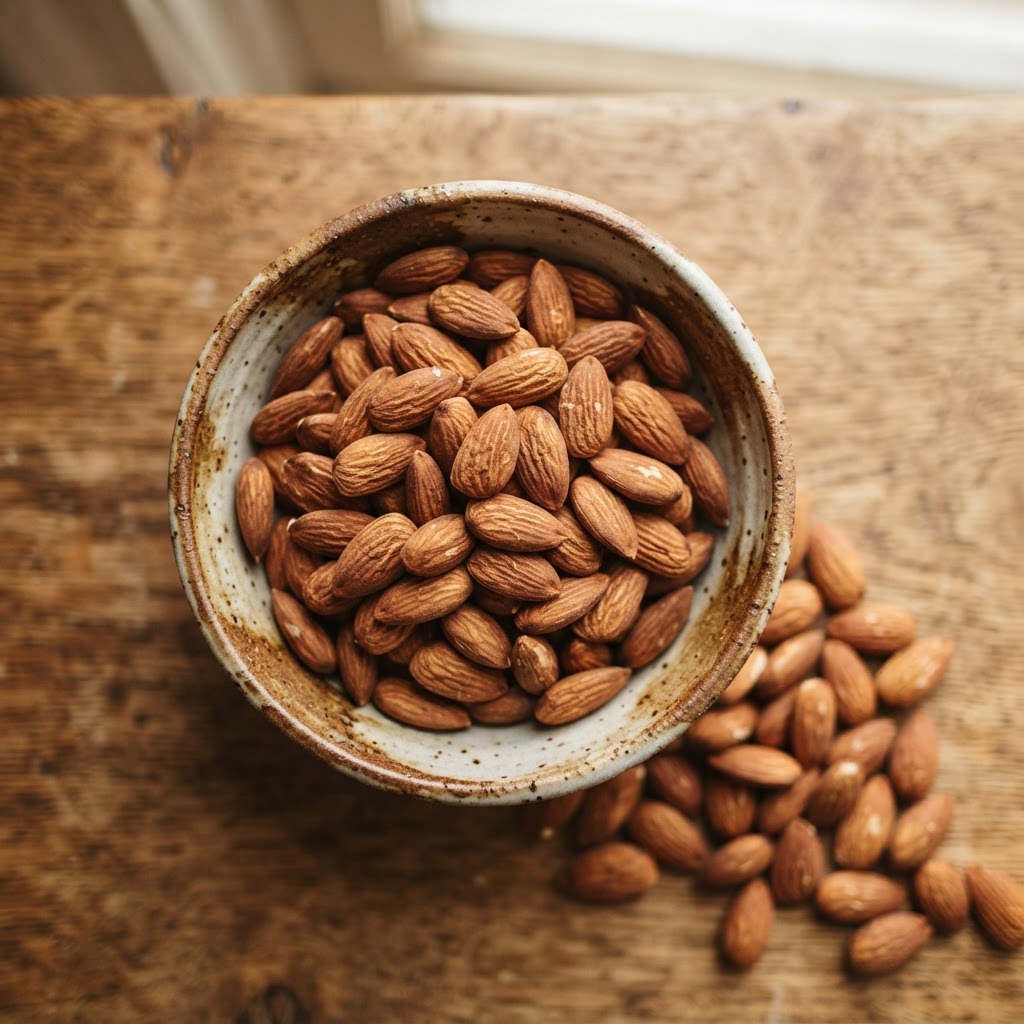
One ounce (28g) of raw almonds — about 23 nuts — has 164 calories, 6g protein, 6.1g carbs, 14.2g fat, and 3.5g fiber. Per USDA FoodData Central, raw almonds provide 579 kcal per 100g, 21.2g protein, 21.6g carbs, 49.9g fat, and 12.5g fiber. Dry-roasted almonds have 598 kcal per 100g; oil-roasted have 607. These are generic USDA values — brands vary, so check the label.
🔬 Nutrition Facts — Per 1 Oz Raw Almonds (28g)
Source: USDA FoodData Central · 2026
🥗 Key Ingredients & Nutrients at a Glance
📊 Quick Facts
- •1 oz raw almonds (23 nuts): 164 calories | 6g protein ← common serving
- •Per 100g (USDA): 579 kcal | 21.2g protein | 49.9g fat | 12.5g fiber
- •10 almonds (12g): ~70 calories
- •Dry-roasted per oz: 169 calories (5 more than raw)
- •Oil-roasted per oz: 172 calories (8 more than raw)
- •Almond butter per tbsp: 98 calories
- •Vitamin E per oz: 7.3mg (37% Daily Value)
- •Magnesium per oz: 76mg (18% Daily Value)
- •Glycemic Index: ~15 (very low — diabetes-friendly)
🚨 Top Problems — Solved
Scan Any Snack or Meal — Get Calories in Seconds
Snap a photo of any food and get instant calories, macros, and nutrition facts. No app download. No sign-up.
📸 Try Free Food ScannerCalories in Almonds (Raw, Roasted — Per Ounce, Per 100g)
Almonds are one of the most nutrient-dense foods you can eat. One ounce (28g) of raw almonds — about 23 nuts — has 164 calories, 6g protein, and 3.5g fiber. Per USDA FoodData Central, raw almonds provide 579 kcal per 100g, 21.2g protein, 49.9g fat, and 12.5g fiber. They are also rich in vitamin E (25.6mg per 100g — 128% of your Daily Value), magnesium (270mg), and calcium (269mg). The high calorie count comes from healthy monounsaturated fat — the same type found in olive oil. These are generic USDA values — brands vary, so check the label.
Why Almonds Are So Calorie-Dense (and Still Healthy)
Almonds are 49.9% fat by weight — mostly heart-healthy monounsaturated fat. At 9 calories per gram, fat more than doubles the calorie density of carbs or protein (4 cal/g). This is why a single ounce of almonds (28g) packs 164 calories. The tradeoff: this same fat, combined with 6g protein and 3.5g fiber per ounce, makes almonds one of the most satiating foods you can eat. Studies show almond eaters absorb about 20% fewer calories than the label states, because some fat passes through undigested when you chew whole nuts thoroughly.
🌰 Full Nutrition Facts — Raw Almonds (Per 100g and Per Ounce 28g)
Complete nutrition facts for raw almonds, based on USDA FoodData Central reference values. Almonds are exceptionally rich in vitamin E, magnesium, and manganese.
| Nutrient | Per 100g | Per Ounce (28g) | % Daily Value (per oz) |
|---|---|---|---|
| Calories | 579 kcal | 164 kcal | — |
| Protein | 21.2 g | 6.0 g | 12% |
| Total Carbohydrate | 21.6 g | 6.1 g | 2% |
| • Dietary Fiber | 12.5 g | 3.5 g | 13% |
| • Total Sugars | 4.4 g | 1.2 g | — |
| Total Fat | 49.9 g | 14.2 g | 18% |
| Sodium | 1 mg | 1 mg | 0% |
| Vitamin E | 25.6 mg | 7.3 mg | 37% |
| Magnesium | 270 mg | 76 mg | 18% |
| Calcium | 269 mg | 76 mg | 6% |
| Iron | 3.7 mg | 1.1 mg | 6% |
| Potassium | 733 mg | 208 mg | 4% |
| Phosphorus | 481 mg | 136 mg | 11% |
| Zinc | 3.1 mg | 0.9 mg | 8% |
🌰 Raw vs Dry-Roasted vs Oil-Roasted Almonds — Per Ounce and Per 100g
Note: Brands vary. Roasting method, added salt, and added oils change the exact values — check the label.
| Type | Per 100g | Per Ounce (28g) | Protein | Fat | Best For |
|---|---|---|---|---|---|
| 🌰 Raw almonds ★ | 579 kcal | 164 kcal | 21.2g | 49.9g | Lowest calorie — most nutrients |
| 🌰 Dry-roasted | 598 kcal | 169 kcal | 21.2g | 50.6g | Crunchier — 5 cal more per oz |
| 🌰 Oil-roasted | 607 kcal | 172 kcal | 21.2g | 52.0g | Added oil — 8 cal more per oz |
🌰 Almond Butter — Calories Per Tablespoon and Per 100g
Almond butter is more calorie-dense than whole almonds because grinding breaks the cell walls, making the fat fully bioavailable. Per USDA, almond butter provides about 614 kcal per 100g. A typical serving is 1 tablespoon (14g) at 98 calories — but most people spread 2 tablespoons on toast (196 calories). Choose almond butter with no added oil or sugar; the only ingredient should be almonds.
| Portion | Weight | Calories | Protein | Fat |
|---|---|---|---|---|
| 1 tablespoon | 14g | 98 kcal | 3.4g | 8.9g |
| 2 tablespoons | 28g | 196 kcal | 6.8g | 17.8g |
| ¼ cup | 64g | 393 kcal | 13.6g | 35.6g |
| Per 100g | 100g | 614 kcal | 21.2g | 56.0g |
🌰 Almonds Calories by Portion — Complete Chart
| Portion | Weight | Raw (cal) | Dry-Roasted (cal) | Oil-Roasted (cal) |
|---|---|---|---|---|
| 10 almonds | 12g | 70 | 72 | 73 |
| 1 oz / 23 almonds ★ | 28g | 164 | 169 | 172 |
| ¼ cup (slivered) | 27g | 156 | 161 | 164 |
| ½ cup | 57g | 330 | 341 | 346 |
| 1 cup (whole) | 143g | 828 | 855 | 868 |
Track Every Snack — Instantly
Snap a photo of any food to get instant calories, macros, and nutrition facts. No app download. No sign-up.
📸 Scan Your Food Free🌰 Almonds vs Walnuts vs Cashews vs Peanuts — Full Comparison (Per 100g)
Almonds have the most fiber (12.5g per 100g) and calcium (269mg) of the common nuts, and the second-highest protein. Walnuts have the most fat and omega-3s; cashews have the fewest calories; peanuts (technically a legume) have the most protein and the lowest cost. All four are healthy in moderation — the best nut is the one you'll eat consistently in a measured portion.
| Nut (per 100g) | Calories | Protein | Fat | Fiber | Per Ounce (cal) |
|---|---|---|---|---|---|
| 🌰 Almonds ★ | 579 kcal | 21.2 g | 49.9 g | 12.5 g | 164 |
| 🌰 Walnuts | 654 kcal | 15.2 g | 65.2 g | 6.7 g | 185 |
| 🌰 Cashews | 553 kcal | 18.2 g | 43.9 g | 3.3 g | 157 |
| 🌰 Peanuts | 567 kcal | 25.8 g | 49.2 g | 8.5 g | 161 |
Practical Tips for Eating Almonds
- Measure, don't pour: 1 cup of almonds (143g) has 828 calories — more than a Big Mac. Always measure 1 ounce (23 almonds) into a bowl, then put the bag away.
- Choose raw or dry-roasted: Oil-roasted almonds add 8 calories per ounce from cooking oil. Raw almonds have the fewest calories and the most intact nutrients.
- Pair with fruit: 1 oz almonds (164 cal) + 1 medium apple (95 cal) = a 259-calorie snack with 9g fiber and 7g protein. This combo keeps you full 3+ hours.
- Avoid flavored coatings: Honey-roasted, cocoa-dusted, and BBQ almonds add 10–30 calories and 3–8g sugar per ounce. Read the label — the only ingredients should be almonds and (optionally) salt.
- Chew thoroughly: Studies show that chewing almonds 40 times vs 10 times increases satiety and reduces hunger hormones, meaning you eat less later in the day.
Almonds and Weight Loss — Next Steps
Almonds can absolutely fit into a weight-loss plan, but portion control is the whole game. Here's how to use them effectively:
- Stick to 1 ounce per day: 23 almonds (164 calories) is the research-backed sweet spot — enough for heart health and satiety without overeating.
- Use the protein for satiety: 6g protein + 3.5g fiber per ounce makes almonds one of the most filling snacks per calorie. Eat them between meals, not with meals, to maximize satiety.
- Count them out: 10 almonds = 70 calories, 20 almonds = 140 calories, 23 almonds = 164 calories. Counting individual nuts is the easiest portion-control method for almonds.
- Don't drink your almonds: Almond milk has only 30–60 calories per cup — but also only 1g protein. Eat whole almonds for nutrition; use almond milk as a low-calorie beverage, not a protein source.
For your daily calorie and protein targets, use the Calorie Calculator and Protein Calculator. This is not medical advice — talk to your doctor.
Scan Any Snack or Meal — Get Calories in Seconds
Snap a photo of any food and get instant calories, macros, and nutrition facts. No app download. No sign-up.
Keep tracking your nutrition
Compare almonds to other foods, calculate your daily targets, and build a simple daily habit streak to stay consistent.

Ask Lana
The questions everyone asks
Real answers, like a friend would give them — warm, honest, and always with your next tiny step.
Educational only — not medical advice. Talk to your doctor.
Get Your 30-Day AI Weight Loss Meal Plan Bundle
Pre-calculated calorie targets, smart snacking strategies, grocery lists, and almond-friendly portion guides — all in one PDF bundle.
Get Meal Plan Bundle — $19.99 →Scan Any Food Instantly — Free
No sign-up. No app. Snap a photo → full nutrition in 3 seconds.
Try Free Food Scanner →🔧 Free Health Tools
❓ Frequently Asked Questions (8)
Click any question to expand the expert answer
🔗 Core Tools
📊 Popular Content Hubs
Scan Any Food Instantly — Free
No sign-up. No app. Snap a photo → get full nutrition in 3 seconds.
Try Free Food Scanner →📋 Nutrition data based on USDA FoodData Central. Values may vary by brand, preparation method, and serving size. Not a substitute for professional medical or dietary advice. Always consult a registered dietitian for personalized nutrition guidance.