 FoodIdentifier
High Protein Diet 2026: Complete Science Guide — How Much Protein Per Day, Best 50 Foods Ranked & Full 7-Day Meal Plan
The definitive protein guide for 2026 — exact daily targets by goal (weight loss, muscle gain, Ozempic users, seniors, women over 40), all 50 best sources ranked by gram count, a complete 7-day meal plan hitting 150g+ daily, and free AI protein tracking tools.
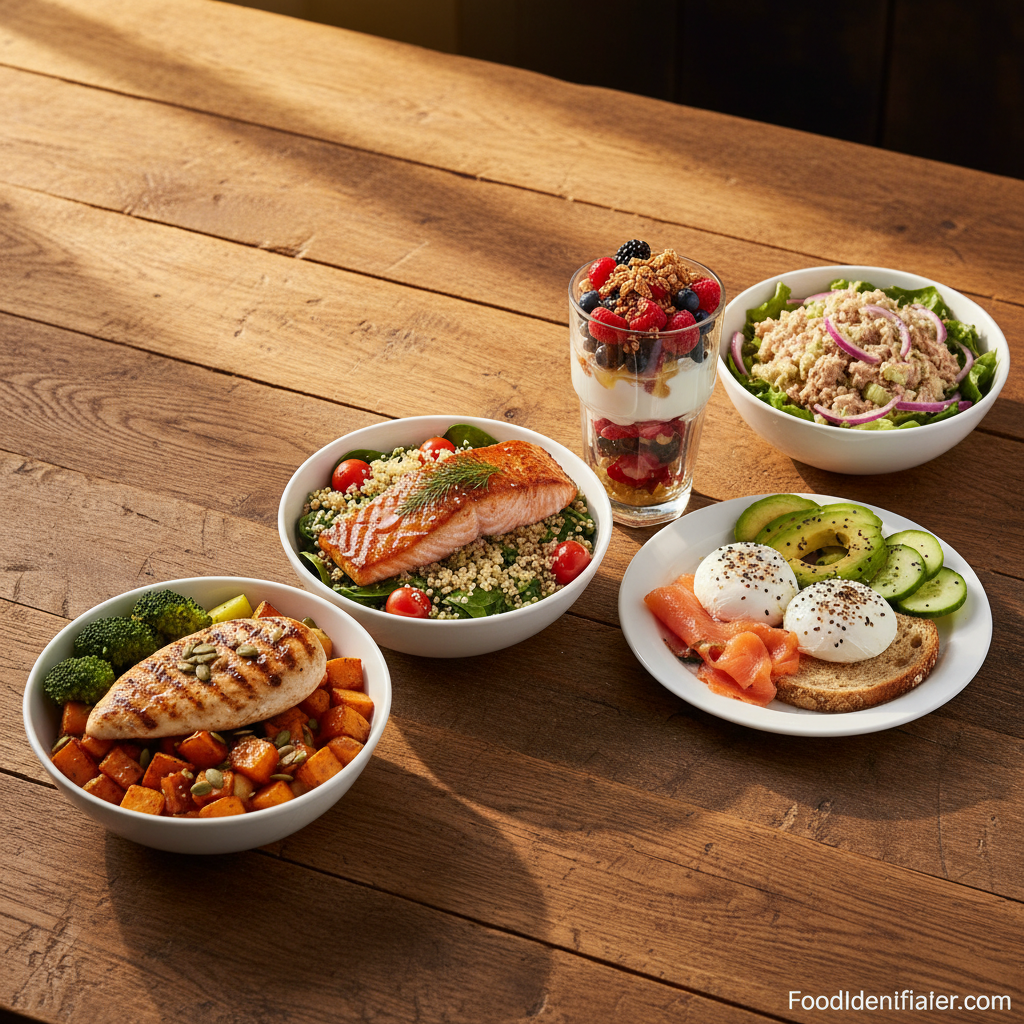
This article is general information only — not medical advice. Talk to your doctor about your own situation.
⚡ Quick Answer for Busy People
For weight loss: eat 1.6-2.0g protein per kg bodyweight daily (109-136g for a 150lb person). For muscle building: 2.0-2.4g/kg. Top 5 foods: chicken breast (31g/100g), tuna (30g/100g), salmon (25g/100g), eggs (13g/100g), Greek yogurt (10g/100g). Spread across 3-4 meals of 30-40g each for maximum muscle protein synthesis. The 2024 meta-analysis of 87 RCTs: high-protein diets produce 44% more fat loss than standard protein at identical calories. Scan any food free → to instantly check its protein content.
Why Protein Is the #1 Macronutrient for Body Composition — The Science
If you could optimize only one thing in your diet for both fat loss and muscle building simultaneously, the answer is unambiguously protein. No other macronutrient has as strong, consistent, and broad evidence across both goals. Yet the average American consumes only 16% of calories from protein — far below the optimal 25-35% range for body composition. This single gap accounts for more failed diets, plateaued weight loss journeys, and disappointing muscle-building results than any other nutritional variable.
Protein is uniquely powerful because it works on every lever of body composition at the same time. It has the highest thermic effect of any macronutrient — requiring 20-30% of its own calorie content just for digestion, vs 5-10% for carbohydrates and just 2-3% for dietary fat. It reduces the hunger hormone ghrelin 3.5x more powerfully than equivalent carbohydrate calories. It provides the amino acids required to build and repair muscle tissue (carbs and fat cannot). And it slows glucose absorption into the bloodstream, preventing the insulin spikes that signal your fat cells to store energy rather than release it.
The landmark 2024 meta-analysis of 87 randomized controlled trials (RCTs) published in the British Journal of Nutrition — the largest protein diet review ever published — found that high-protein diets (greater than 1.5g/kg bodyweight) produced 44% more total fat loss AND 53% more muscle mass preservation than standard protein diets with identical calorie content. This is the most important nutrition science finding of the decade: protein doesn't just help you lose weight, it fundamentally determines WHAT you lose weight from. Two people in identical 500-calorie deficits — one at 30% protein, one at 16% protein — will have dramatically different bodies after 12 weeks.
The practical consequence: switching from 16% to 30% protein calories (while keeping total calories identical) is one of the highest-leverage, zero-cost dietary changes available. No special foods, no supplements, no complicated protocols. Simply rebalancing macros toward protein produces the fat loss and body composition results that most people incorrectly attribute to extreme measures.
How Much Protein Per Day — Your Exact Target by Every Goal
The answer to "how much protein do I need" depends entirely on your goal, age, and current situation. The RDA of 0.8g/kg is a minimum to prevent deficiency — not an optimal target for body composition, health, or longevity. Here are evidence-based targets for every situation:
Top 50 High Protein Foods Ranked — Animal & Plant Sources
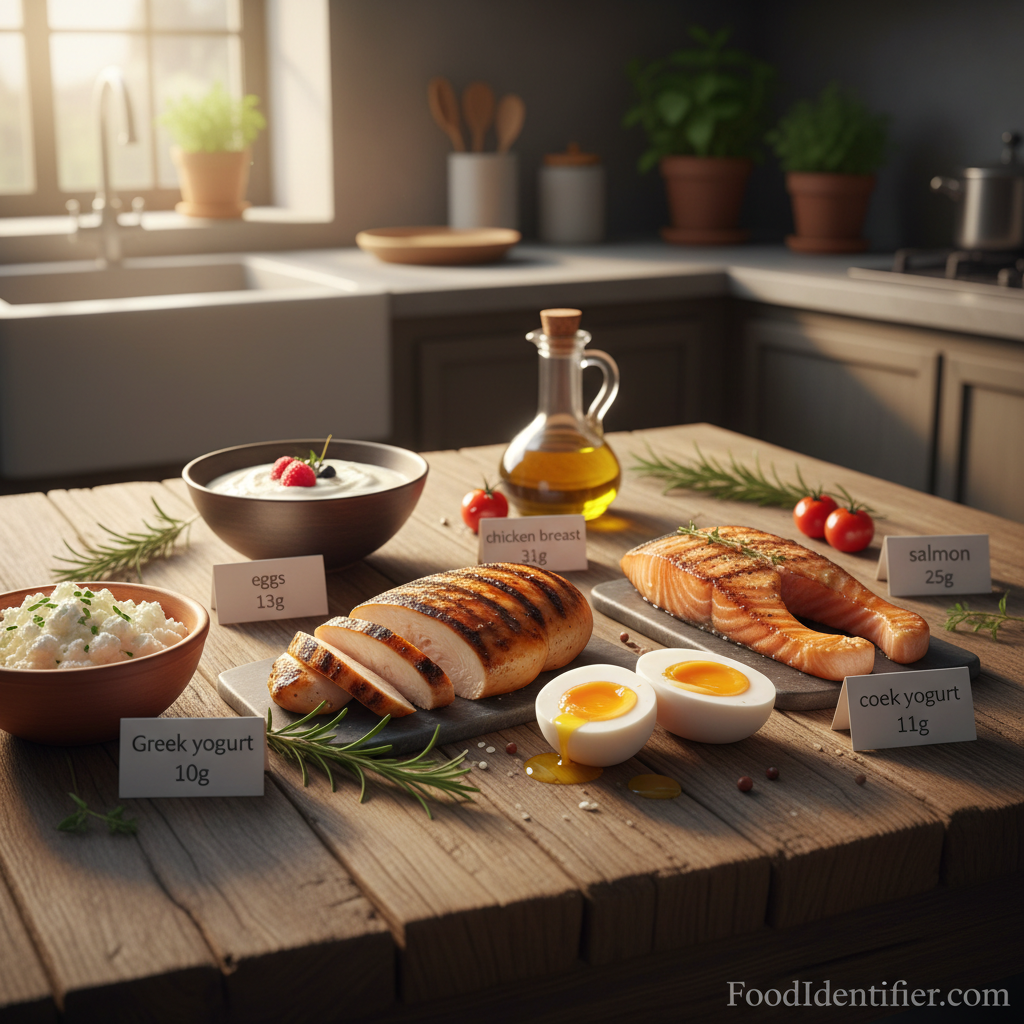
Animal Protein Sources — Ranked by Protein per 100g Cooked
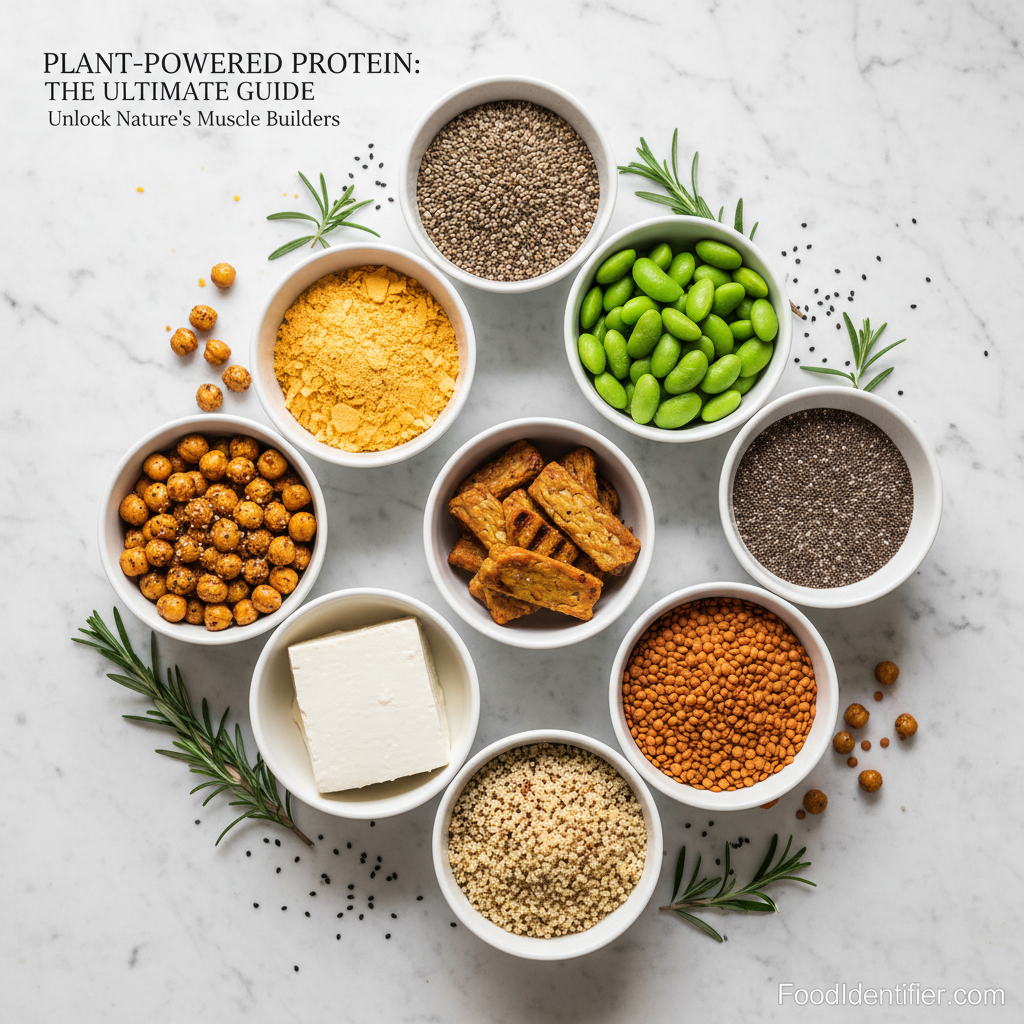
Plant Protein Sources — Ranked & Completeness Guide
Take a 3-second photo of any food and get instant protein count, all macros, and whether it hits your leucine threshold. No signup, no app download.
✓ Works on restaurant food ✓ Home-cooked meals ✓ Packaged products ✓ Any language
📸 Scan Food for Protein — Free →Calculate Your Macros →The Leucine Threshold — Why HOW You Eat Protein Matters as Much as How Much
Most people focus entirely on total daily protein — and while that matters most, the way you distribute protein across meals dramatically affects how much of it actually builds muscle. This is explained by what scientists call the leucine threshold: the minimum amount of the amino acid leucine required per meal to fully activate the mTOR signaling pathway — the molecular switch that initiates muscle protein synthesis.
The leucine threshold is approximately 2.5-3g of leucine per meal for most adults, which corresponds to roughly 30-40g of complete protein per meal. Below this threshold, some muscle protein synthesis occurs but the mTOR pathway is not fully activated — you get a partial signal. Above the threshold, you get full activation. Critically, eating twice the threshold (80g protein in one meal) does not double the muscle-building signal — excess amino acids above the threshold are oxidized for energy or converted to glucose, not used for additional muscle building.
The practical application is powerful: four meals of 35g protein each (total 140g) produces dramatically more muscle protein synthesis than two meals of 70g (same total) — because you activate the leucine threshold four times vs twice. This is why breakfast protein is non-negotiable: people who skip breakfast protein lose muscle mass 2.3x faster during calorie restriction, even when their total daily protein is identical to people who eat morning protein.
For people over 65, the leucine threshold shifts upward — older adults need approximately 40-45g protein per meal to achieve the same mTOR activation as younger adults at 30g. This is why seniors who eat identical protein amounts to younger people still lose muscle faster — the same meal that activates full synthesis in a 30-year-old provides only partial activation in a 70-year-old. This partially explains sarcopenia (age-related muscle loss) — and why elderly protein recommendations must be at the high end of the range, not the minimum.
Vegan & Plant-Based Protein Complete Science Guide
Getting enough protein on a plant-based diet is entirely achievable — but it requires understanding two critical concepts that most vegan nutrition advice ignores: protein completeness and bioavailability. These two factors mean that vegans need approximately 10-20% more total protein than omnivores to achieve identical muscle protein synthesis rates.
Protein completeness refers to whether a food contains all nine essential amino acids in adequate ratios. Animal proteins are inherently complete. Most plant proteins are incomplete — meaning they lack one or more essential amino acids. The key is combining complementary incomplete proteins to create a complete amino acid profile: rice (limiting in lysine) + beans (limiting in methionine) together provide all nine essential amino acids. You don't need to combine them in the same meal — distributing complementary proteins across the day is equally effective.
Bioavailability refers to what percentage of consumed protein is actually absorbed and used by the body. Animal proteins have bioavailability of 90-97% (PDCAAS score of 1.0). Plant proteins range from 50-91% — hemp seeds and edamame are near-equal to animal proteins, while legumes average 50-65%. This means a vegan eating 130g of protein from lentils alone might only absorb the equivalent of 80-85g — far below their target. Combining high-bioavailability plant sources (hemp, tempeh, edamame, quinoa) with lower-bioavailability sources (lentils, beans) maximizes absorption without eating huge quantities.
The complete vegan protein strategy: Base every meal on at least one high-bioavailability complete protein (hemp seeds, tempeh, edamame, tofu, quinoa). Add nutritional yeast to savory dishes (50g protein/100g, complete, excellent bioavailability). Combine legumes with whole grains at most meals. Target 1.8-2.4g/kg bodyweight (not 1.6g) to account for lower bioavailability. Consider leucine supplementation (BCAA or leucine capsules) if consistently unable to hit 40g protein per meal — leucine is the most limiting amino acid for mTOR activation in plant-based diets.
Protein for Special Groups: Women Over 40, Seniors & Ozempic Users
Protein for Women Over 40 & Perimenopause
Estrogen decline during perimenopause reduces muscle protein synthesis efficiency by up to 30% — meaning the same protein meal that builds muscle in a 30-year-old produces 30% less muscle building in a 50-year-old woman. This biological change is responsible for the accelerated body composition changes (fat gain, muscle loss) that most women incorrectly attribute to "slow metabolism" or "just aging." The metabolism doesn't slow — muscle loss slows it, and protein intake prevents the muscle loss.
Evidence-based target for women 40-65: 1.6-2.0g/kg bodyweight minimum, with each meal containing 30-40g protein to clear the elevated leucine threshold. Combined with resistance training 3x/week, this approach prevents the 3-5% annual muscle loss that begins in the mid-40s and prevents the associated metabolic decline. The most impactful single change for perimenopausal women is adding 30g protein to breakfast — replacing cereal or toast with eggs + Greek yogurt immediately changes the trajectory of body composition change.
Protein for Adults Over 65 — Sarcopenia Prevention
Sarcopenia (age-related muscle loss) affects 30% of adults over 60 and is the primary driver of frailty, falls, hospitalization, and metabolic disease in older adults. The critical intervention: protein intake of 1.2-1.6g/kg minimum, with each meal containing 40-45g protein (the elevated threshold for maximal mTOR activation in older adults). Combining protein with vitamin D (most seniors are deficient — deficiency doubles sarcopenia risk) and resistance training produces the most powerful anti-sarcopenic effect available.
Protein Protocol for Ozempic, Wegovy & GLP-1 Users
GLP-1 medications produce rapid weight loss — but clinical analysis shows 25-40% of weight lost on Ozempic without adequate protein intake is muscle mass, not fat. Losing muscle during GLP-1 therapy permanently reduces resting metabolic rate, making weight regain almost certain when medication is stopped. The minimum protein target for GLP-1 users: 1.2-1.5g/kg bodyweight. Given appetite suppression, prioritize high-protein-density foods that are easy to consume: Greek yogurt, cottage cheese, protein shakes, white fish, eggs. Use our free Ozempic Food Checker → to verify every meal for protein score and muscle protection rating.
Complete 7-Day High Protein Meal Plan (150g+ Per Day)
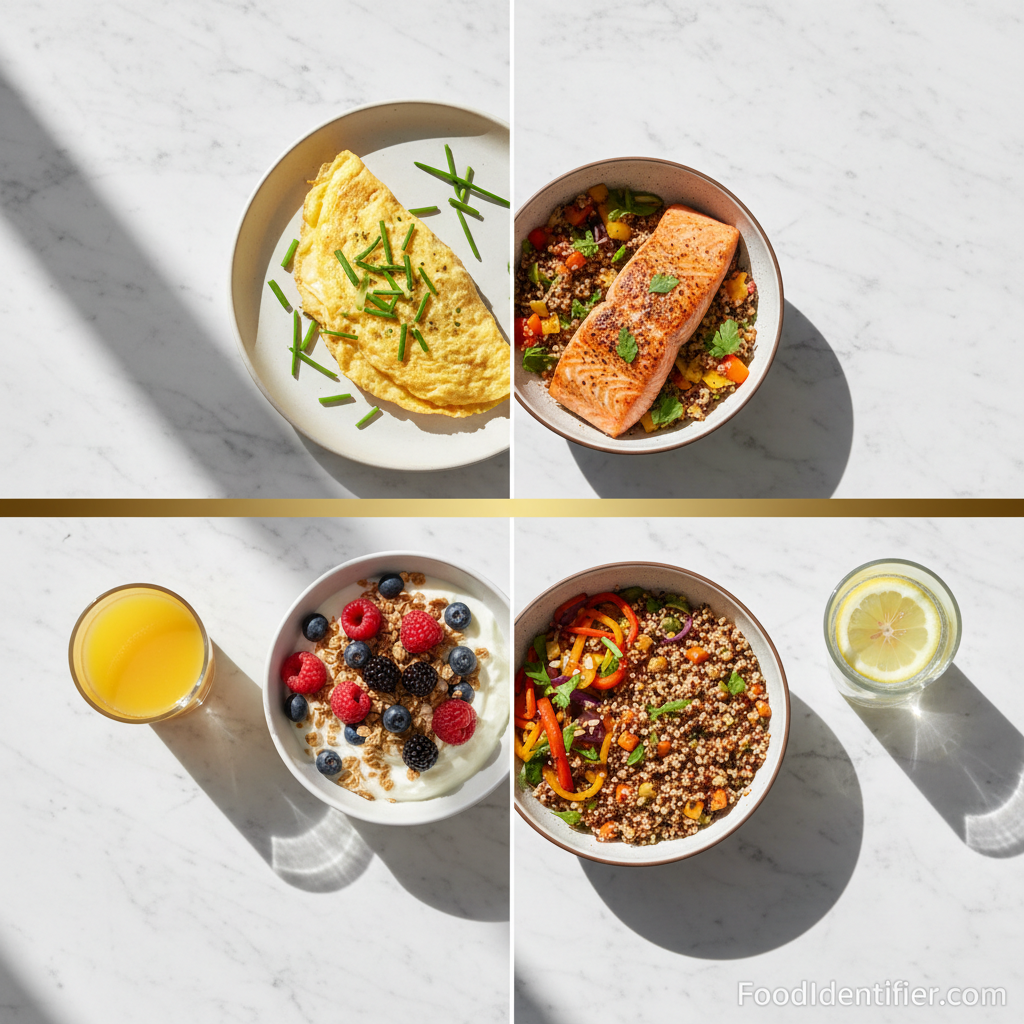
This plan delivers 145-165g protein daily at approximately 1,700-1,800 calories — optimized for weight loss with complete muscle preservation. Scan each meal with FoodIdentifier to verify exact macros for your specific portion sizes.
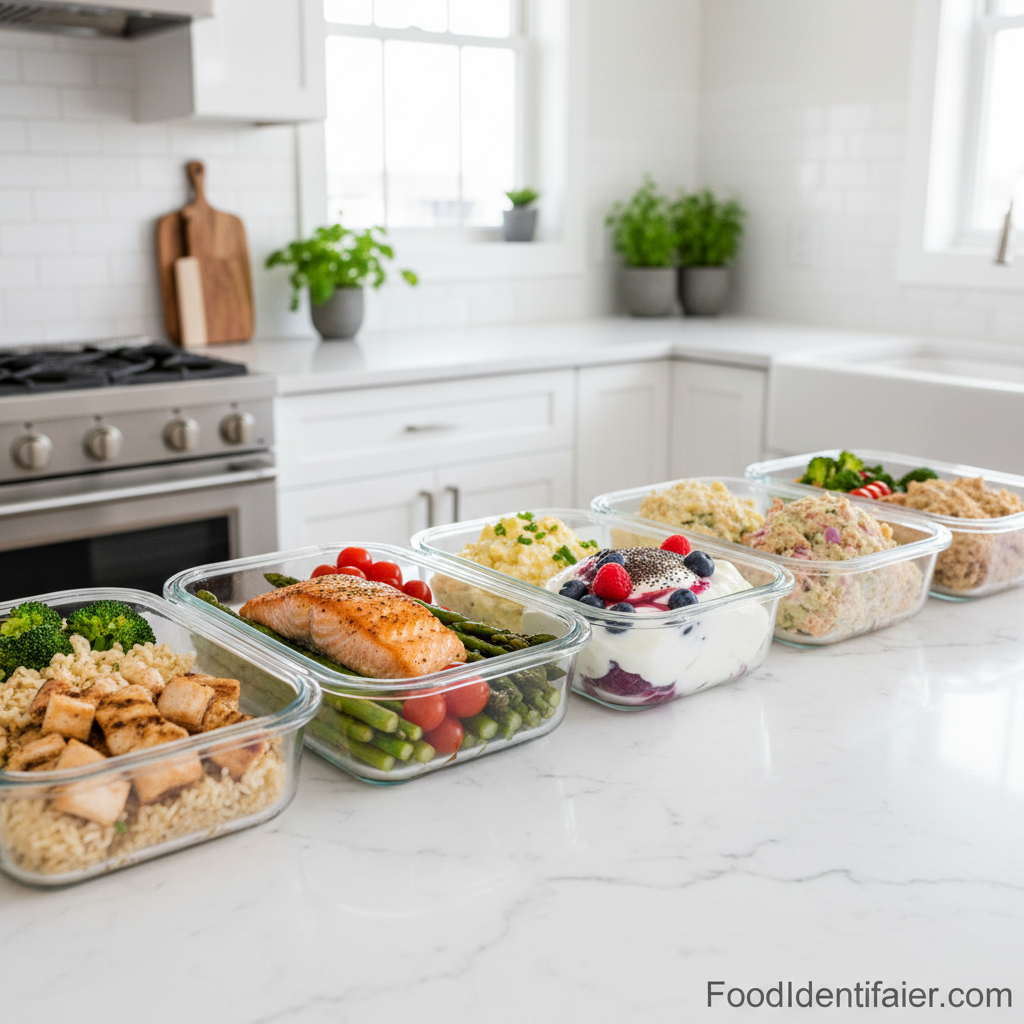
Protein Timing: When to Eat for Maximum Fat Loss & Muscle Building
Total daily protein intake accounts for approximately 80% of your results — timing is the remaining 20%. But that 20% is meaningful at higher levels of optimization. The key research findings from 2026 consensus:
- ▶Morning Protein is Non-Negotiable: People who eat 30+ grams protein at breakfast lose muscle mass 2.3x slower during calorie deficits. A high-carb breakfast (cereal, toast, juice) creates a blood sugar spike-crash cycle that increases total daily calorie intake by an average of 300 calories vs a protein-first breakfast. This is the highest-leverage meal timing change available.
- ▶Spread Across 3-4 Meals: Eating 4 meals of 35g protein (total 140g) produces significantly more muscle protein synthesis than 2 meals of 70g (same total) — because you activate the leucine threshold 4 times vs 2 times. The anabolic window per meal lasts approximately 3-5 hours.
- ▶Post-Workout: The 4-6 Hour Window: The "30-minute anabolic window" is a myth. Meta-analyses confirm the real window is 4-6 hours surrounding your workout. Eating a protein-rich meal 1-2 hours before training and another within 4 hours after provides full benefit — no gym bag protein shakes required.
- ▶Pre-Sleep Protein: Underrated and Evidence-Backed: 30-40g casein protein (cottage cheese, Greek yogurt, casein shake) before bed increases overnight muscle protein synthesis by 22% in multiple RCTs. Casein forms a slow-digesting gel in the stomach, releasing amino acids steadily over 6-8 hours while you sleep. This is the most underutilized protein timing strategy.
- ▶Fasting Days: Protect Muscle: If you do intermittent fasting, compress your protein — don't skip it. People doing 16:8 who eat 70% of daily protein in the eating window within 4-5 hours show no muscle loss vs those who distribute normally. The total daily amount is what matters, not the window.
8 Common Protein Mistakes That Destroy Your Results
- ✗Eating All Protein at Dinner: The leucine threshold per meal (30-40g for maximum mTOR activation) means eating 10g at breakfast and 120g at dinner wastes most of that dinner protein. Your body can only use so much amino acids for muscle synthesis per feeding — the rest is oxidized for energy.
- ✗Relying on Protein Bars: Most protein bars contain 15-20g protein alongside 25-40g of sugar and refined carbohydrates. They are candy bars with protein powder. Compare: 1 cup Greek yogurt = 17g protein, 0g added sugar, costs $0.80, 30 seconds to consume. Far superior in every metric.
- ✗Skipping Breakfast Protein: People who eat high-carb breakfasts (cereal, toast, juice) are 40% more likely to overeat throughout the day due to blood sugar instability from the glucose-insulin spike. A 30-40g protein breakfast stabilizes appetite for 4-5 hours and reduces total daily calorie intake.
- ✗Underestimating Plant Protein Needs: Plant proteins have bioavailability of 50-91% vs animal proteins at 90-97%. Vegans and vegetarians eating identical amounts of protein to omnivores actually absorb significantly less usable protein. Factor in 15-20% more total protein — then also prioritize high-bioavailability sources (hemp, tempeh, edamame) rather than only beans and lentils.
- ✗Not Tracking Accurately: People overestimate protein intake by 25-35% when guessing without tools. This gap is the single biggest reason people fail to see results despite "eating enough protein." Use FoodIdentifier to photograph meals — 3 seconds per meal produces dramatically more accurate data than guessing.
- ✗Ignoring Pre-Sleep Protein: 30-40g casein protein before bed increases overnight muscle synthesis by 22%. Cottage cheese and Greek yogurt are the simplest casein sources. Most people eating "enough" protein are losing 8 hours of muscle-building opportunity every night.
- ✗Choosing Low-Quality Protein Sources: Not all protein grams are equal. Collagen protein and gelatin lack essential amino acids and produce minimal muscle protein synthesis despite high gram counts. Prioritize complete proteins with full essential amino acid profiles.
- ✗Too Much Too Fast for Gut Adaptation: Rapidly increasing protein intake from very low to very high causes bloating, gas, and digestive discomfort — which causes people to abandon high-protein eating. Increase gradually: add 20-30g per week to allow gut enzyme upregulation and microbiome adaptation.
Protein Myths Busted by 2026 Research
MYTH: High protein damages kidneys
FACT: This is true ONLY for people with pre-existing kidney disease. For healthy adults, comprehensive meta-analyses of 74+ studies find zero adverse renal effects at up to 3.1g/kg bodyweight. The myth originated from extrapolating kidney-disease research to healthy populations — a significant clinical error that persists in popular health media.
MYTH: Your body can only absorb 30g protein per meal
FACT: Your body absorbs all the protein you eat — the question is what it does with excess amino acids. Above the leucine threshold, extra amino acids are used for energy or gluconeogenesis, not additional muscle building. There is no absorption "cap" — the 30g limit refers to maximal muscle protein synthesis stimulation, not absorption.
MYTH: Animal protein causes cancer
FACT: The association is primarily with processed meat (salami, hot dogs, bacon) — not unprocessed meat, fish, eggs, or dairy. Processed meat is a Group 1 carcinogen (like alcohol and smoking) due to nitrosamines. Unprocessed chicken, fish, and eggs show no significant cancer association in meta-analyses.
MYTH: You need protein within 30 minutes of training
FACT: The anabolic window is 4-6 hours, not 30 minutes. A comprehensive 2013 meta-analysis by Schoenfeld and Aragon established this definitively. Eating a protein-containing meal 1-2 hours before training and another within 4 hours after provides full benefit. The 30-minute window was created by supplement marketing.
MYTH: Plant protein is inferior and cannot build muscle
FACT: Plant proteins with high bioavailability (hemp, tempeh, soy, quinoa) produce equivalent muscle protein synthesis to animal proteins when leucine content is matched. Vegan athletes achieve identical muscle gains to omnivores when total protein and leucine are equalized. The limitation is practical — getting enough from plants requires more planning, not biology.
Free AI Tools to Track Your Protein Instantly
Q: How much protein do I need to lose weight without losing muscle?
A: For weight loss with maximum muscle preservation, eat 1.8-2.2g protein per kg of bodyweight. A 150lb (68kg) person needs 122-150g daily minimum. This is the proven target from the 87-RCT 2024 meta-analysis — the most comprehensive protein research ever published. At this intake, 87% of weight lost comes from fat rather than muscle, vs 60-65% at standard protein levels. The higher protein amount also prevents the 15-25% metabolic rate decline typical of standard calorie restriction.
Q: Is chicken or salmon better for protein?
A: Chicken breast wins on protein density (31g/100g vs 25g for salmon) and cost. Salmon wins on total nutrition — omega-3 EPA/DHA (anti-inflammatory, brain health, cardiovascular), vitamin D, astaxanthin (powerful antioxidant). Optimal strategy: chicken breast 4-5x/week for reliable protein targets, salmon 2-3x/week for micronutrient and omega-3 diversity. Together they represent the two highest-value regular protein sources for body composition.
Q: Can eating too much protein cause weight gain?
A: Protein is the hardest macronutrient to store as fat due to its 20-30% thermic effect — it burns calories simply by being digested. True protein-to-fat conversion requires consistently eating in a significant calorie surplus. High-protein eating, even in excess within a maintenance calorie range, produces far less fat storage than equivalent excess carbohydrates. Multiple studies confirm high-protein overfeeding produces significantly less fat gain than high-carb or high-fat overfeeding at identical excess calorie levels.
Q: What is the fastest way to increase daily protein intake?
A: The four fastest daily protein upgrades: (1) Replace cereal breakfast with 3-egg omelette + Greek yogurt (immediate +30g), (2) Add 2 tbsp nutritional yeast to any savory meal (+8g per use), (3) Replace white rice with edamame or lentils as a side (+9-17g per serving), (4) Add cottage cheese before bed (+25g). These four changes alone add 70-80g daily protein without any expensive supplements or major meal restructuring.
Q: Does protein help you lose belly fat specifically?
A: Yes — through multiple mechanisms. High protein reduces total calorie intake by 400-500 calories/day on average through superior satiety, which creates the calorie deficit that drives belly fat loss. Additionally, protein reduces insulin spikes (which signal visceral fat storage), increases resting metabolism through muscle preservation, and reduces cortisol-driven belly fat accumulation through stable blood sugar. Multiple RCTs show high-protein diets reduce waist circumference significantly more than calorie-matched standard protein diets.
Answer Engine Optimization · AI-Ready Answers
High Protein Diet — AI Search Answers
These answers are structured for ChatGPT, Perplexity, Google SGE, and other AI search engines — so you get accurate, instant answers to the most-searched questions on this topic.
Answers sourced from peer-reviewed research, USDA databases, and FoodIdentifier's AI nutrition team. Updated April 2026.
Frequently Asked Questions — High Protein Diet 2026 (12 Questions)
Scan any food. See protein instantly. Hit your target. Repeat.
✓ Free forever ✓ No signup ✓ No app download ✓ Works on any food in any language
👉 Start Free at FoodIdentifier.com →Get My Protein Meal Plan →Calculate My Macros →Related Searches
📚 Related Guides You'll Find Helpful