Home › Tools › Food Health Score
Food Health Score — Instantly Get a 1-100 Rating for Any Meal You Eat
⚡ What This Tool Does
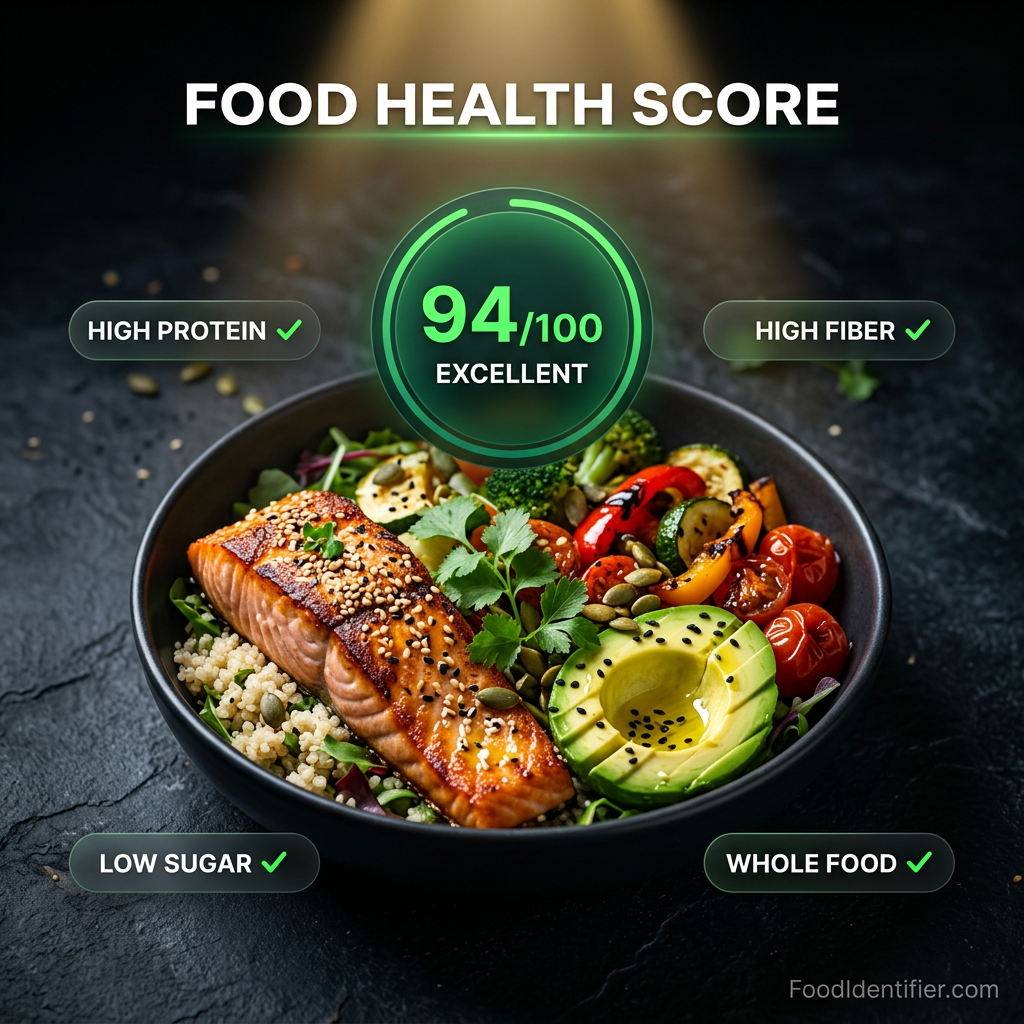
FoodIdentifier's Food Health Score analyzes any food and rates it 1 to 100 using 5 science-backed criteria: protein density, fiber content, sugar level, sodium level, and food processing level. Green scores (70-100) are excellent. Yellow scores (40-69) are fair. Red scores (under 40) are poor quality choices. Every scan includes one specific actionable tip to improve your score by 10+ points instantly.
📊 Rate Your Food — 1 to 100
Score Color Guide
📊 Track Your Daily Average Score — Get Weekly Report Free
Get your weekly food health score report emailed every Sunday — free
Why Yuka Built 80 Million Users With Scoring — And Why FoodIdentifier Does It Better
Yuka's genius was recognizing that people do not want to read nutrition labels — they want a verdict. A red badge or a green badge. This insight drove 80 million downloads worldwide. But Yuka has significant limitations: it only works on packaged products with barcodes, it requires an app download, and its free tier is severely limited. FoodIdentifier's Food Health Score delivers the same instant verdict system for any food including restaurant dishes, homemade meals, fresh produce, and anything that can be photographed.
The critical improvement over Yuka is the 5-factor breakdown with a specific Quick Win. Rather than just knowing a food scores 45 out of 100, FoodIdentifier shows you that protein density contributed 8 out of 25 possible points, and that adding a side of cottage cheese would boost your score to 62 and increase protein by 13 grams. This actionable specificity is what drives actual dietary change rather than just awareness.
Frequently Asked Questions
❓ What is the Food Health Score and how is it calculated?
The Food Health Score is a 1-100 rating that evaluates any food across five science-backed criteria: protein density (25 points maximum), fiber content (20 points), sugar level (20 points), sodium level (15 points), and food processing level (20 points). A score of 80-100 indicates an excellent health choice, 60-79 is good, 40-59 is fair, 20-39 is poor, and under 20 is very poor. Every scan also includes a Quick Win tip showing exactly how to improve your score by 10 or more points immediately.
❓ How does FoodIdentifier's scoring compare to Yuka?
FoodIdentifier's scoring is similar in concept to Yuka but with several key advantages: it works on any food including restaurant meals, homemade dishes, and fresh produce without needing a barcode, it is completely free with no sign-up required, it provides a 5-factor breakdown showing exactly which criteria reduced your score, and it gives a specific actionable Quick Win to improve the meal immediately. Yuka requires an app download, has a limited free tier, and only works on packaged products with barcodes.
❓ What score should I aim for in my daily diet?
The target is an average daily score of 65 or above across all meals. The average American meal scores approximately 43 out of 100, which explains widespread nutritional deficiencies. For weight loss, prioritize meals above 70. For disease prevention and long-term health optimization, consistent meals above 75 correlate with reduced risk of chronic disease. Very few single ingredients or whole foods score below 50, which means low scores almost always come from ultra-processed foods, excessive sodium, or insufficient protein.
❓ Is the Food Health Score free?
Yes, the basic Food Health Score is completely free with no sign-up required. The free version includes the overall 1-100 score, the 5-factor breakdown, a Quick Win improvement tip, and 3 scans per day. The Pro plan at $9 per month adds unlimited scans, weekly average score tracking, daily score reports emailed every evening, 7-day trend analysis, and personalized tips to consistently improve your dietary score toward your health goal.
❓ What makes a food score very high versus very low?
Foods that score highest (85-100) are those that are minimally processed, rich in protein, high in fiber, low in added sugar, and low in sodium. Examples include grilled chicken breast (92), salmon (91), lentils (88), and eggs (85). Foods that score lowest (under 20) are highly processed products with minimal nutritional value: hot dogs (14), potato chips (18), candy bars (12), and sweetened cereals (22). Most fresh whole foods score above 65 regardless of their calorie or fat content.