📋 Key Takeaways
- • Only 3% of Americans hit the daily potassium target of 4,700mg
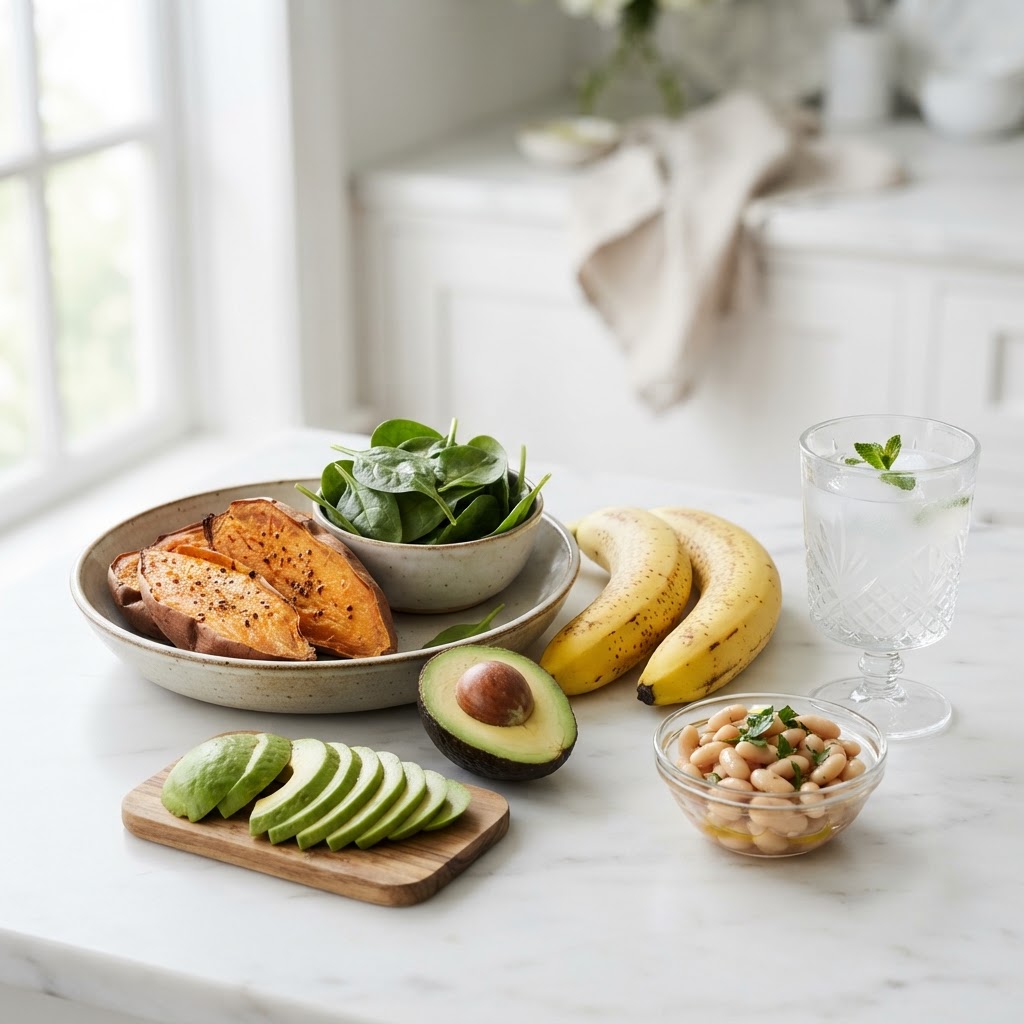
- • 21 specific foods are rich in potassium — sweet potatoes, avocados, spinach, and beans top the list
- • Potassium lowers blood pressure by 4-8 mmHg by helping your body excrete sodium
- • Increasing potassium reduces stroke risk by 24% according to meta-analysis of 11 studies
- • Bananas are NOT the best source — sweet potatoes, avocados, and spinach contain more potassium per serving
- • Scan any meal with FoodIdentifier to instantly see its potassium content
Potassium is the most underrated mineral in nutrition. While everyone talks about sodium, only 3% of Americans consume enough potassium — and this deficiency is a major driver of high blood pressure, muscle cramps, and stroke risk. In this complete 2026 guide, we cover the 21 best foods high in potassium, the science of how potassium lowers blood pressure, a 7-day potassium-boosting meal plan, and how to use AI food scanning to hit 4,700mg per day effortlessly.
Why Potassium Matters and How Deficiency Happens
Potassium is an essential mineral and electrolyte that your body needs for nerve function, muscle contraction, fluid balance, and — most importantly — blood pressure regulation. Potassium works in direct opposition to sodium: while sodium raises blood pressure by retaining water, potassium lowers it by helping your kidneys excrete excess sodium through urine and by relaxing blood vessel walls.
Potassium deficiency happens because of inadequate intake (most people eat only 2,500-3,000mg instead of 4,700mg), excess sodium (high-sodium diets deplete potassium), diuretic medications (water pills flush potassium), and processed food consumption (processed foods are low in potassium but high in sodium). The result: high blood pressure, muscle cramps, fatigue, and increased stroke risk. See: Foods That Lower Blood Pressure →
📊 Potassium Facts at a Glance
The 21 Best Foods High in Potassium
Here are the 21 potassium-richest foods, ranked by potassium content per serving. We've included both animal and plant sources, with specific amounts so you can plan your meals.
🥬 Top 10 Potassium Powerhouses
Beet greens
Cooked, lightly steamed
1,300mg
per cooked cup
White beans
Cannellini, navy, great northern
829mg
per cup cooked
Spinach
Cook down 3x volume
839mg
per cup cooked
Avocado
Also rich in healthy fats
708mg
per whole avocado
Sweet potato
Baked with skin for max potassium
542mg
per medium potato
Potato (white)
Baked with skin
926mg
per medium potato
Coconut water
Natural electrolyte drink
600mg
per cup
Tomato paste
Concentrated source
669mg
per 1/4 cup
Butternut squash
Roasted or mashed
582mg
per cup cooked
Banana
Convenient but not #1
422mg
per medium
🥩 Potassium-Rich Animal & Other Sources
Salmon
Also rich in omega-3
414mg
per 6oz fillet
Yogurt (Greek)
Plain, unsweetened
380mg
per cup
Clams
Also rich in B12
534mg
per 3oz
Halibut
Lean white fish
449mg
per 6oz
Pork chop
Lean cut
386mg
per 3oz
Carrots
Also rich in vitamin A
394mg
per cup raw
Orange juice
Fresh squeezed
496mg
per cup
Prunes
Also good for digestion
436mg
per 1/2 cup
Watermelon
Refreshing summer source
455mg
per 2 cups
Pistachios
Also rich in B6
295mg
per ounce
Mushrooms
Also rich in vitamin D
396mg
per cup cooked
How Potassium Lowers Blood Pressure
Potassium lowers blood pressure through three proven mechanisms:
- Sodium excretion: Potassium signals your kidneys to excrete more sodium through urine. For every 600mg increase in potassium, your body excretes an extra 320mg of sodium.
- Vessel relaxation: Potassium relaxes the smooth muscle lining your blood vessel walls, reducing resistance and lowering pressure. This effect is similar to some blood pressure medications.
- Fluid balance: Potassium balances fluid inside and outside your cells, preventing the water retention that sodium causes.
A landmark meta-analysis of 11 studies published in the Journal of the American College of Cardiology found that increasing potassium intake to 4,700mg/day lowered systolic blood pressure by 4-8 mmHg and reduced stroke risk by 24%. This effect was strongest in people with high blood pressure and high sodium intake.
7-Day Potassium-Boosting Meal Plan
Here's a simple 7-day meal plan that delivers 4,700mg+ of potassium per day:
Sweet potato + avocado + spinach salad + salmon + banana
White bean soup + baked potato + Greek yogurt + orange
Spinach omelet + butternut squash + clams + coconut water
Banana smoothie + sweet potato + chicken + pistachios
Avocado toast + bean salad + salmon + watermelon
Oatmeal + banana + spinach salad + pork chop + prunes
Greek yogurt + sweet potato + lentil soup + mushrooms
Potassium-Rich vs Low-Potassium Foods
See exactly how swapping common foods for healthier alternatives changes your nutrition
| Food Item | Calories | Protein | Carbs | Fat | Fiber |
|---|---|---|---|---|---|
| g | g | g | g | ||
| g | g | g | g | ||
| g | g | g | g | ||
| g | g | g | g | ||
| g | g | g | g | ||
| g | g | g | g | ||
Want to check the exact nutrition of any food? Scan it with FoodIdentifier and get instant calories, macros, and healthier swap suggestions.
Scan a Food NowHow FoodIdentifier Compares to MyFitnessPal, Cronometer & Yuka
See why 500,000+ users switched to the AI-powered food scanner
Feature-by-Feature Comparison
| Feature | FoodIdentifierAI-Powered | MyFitnessPal | Cronometer | Yuka |
|---|---|---|---|---|
AI Photo Food Scanner | Instant — snap any meal | No photo scan | No photo scan | Barcode only |
Barcode + Photo + Label Scan | All 3 methods | Barcode only | Manual entry | Barcode only |
AI Nutrition Coach | Personalized AI coach included | Generic tips | No coach | No coach |
Blood Sugar Impact Prediction | Per-meal glucose prediction | |||
Ozempic / GLP-1 Compatibility Check | Built-in checker | |||
0–100 Food Quality Score | Instant unified score | Yes (basic) | ||
Better Alternative Suggestions | AI recommends swaps | Basic | ||
Ingredient Safety Scanner | Additive + allergen detection | Yes | ||
Personal Safety Verdict | Based on your allergies + goals | |||
Free Scans (No Signup) | 3 free scans daily | Must create account | Must create account | Limited free scans |
Price | Free / $9.99 mo Pro | $19.99 mo Premium | $9.99 mo | Free / €1.99 mo |
FoodIdentifier is the only app that combines AI photo scanning, blood sugar prediction, Ozempic compatibility, and a personalized nutrition coach — all in one.
Scan Your First Meal Free →No credit card required · 3 free scans daily
Who Should Be Careful with Potassium
While potassium from food is safe for healthy adults, certain people need to limit intake:
- Kidney disease patients: Damaged kidneys can't excrete potassium efficiently. Limit to 2,000-3,000mg/day.
- ACE inhibitors / ARBs: These blood pressure medications retain potassium. Consult your doctor.
- Potassium-sparing diuretics: Medications like spironolactone can cause dangerous potassium buildup.
- Heart failure patients: Some heart medications interact with high potassium intake.
If you have any of these conditions, always consult your doctor before increasing potassium intake. For healthy adults, getting potassium from whole foods is safe — your kidneys will excrete any excess.
⚕️ Medical Disclaimer
This article is for educational purposes only and is not medical advice. If you have kidney disease, heart failure, or take blood pressure medications, consult your doctor before increasing potassium intake. High potassium levels (hyperkalemia) can cause dangerous heart arrhythmias. Always consult a qualified healthcare provider before making significant dietary changes.
Scan Any Meal. See Its Potassium Content.
Take a photo of any food and instantly see its potassium content and blood-pressure-lowering potential.
Try It Free — No Sign-Up Needed →