📋 Key Takeaways
- • 85% of Americans do not get enough omega-3 — the deficiency that causes inflammation
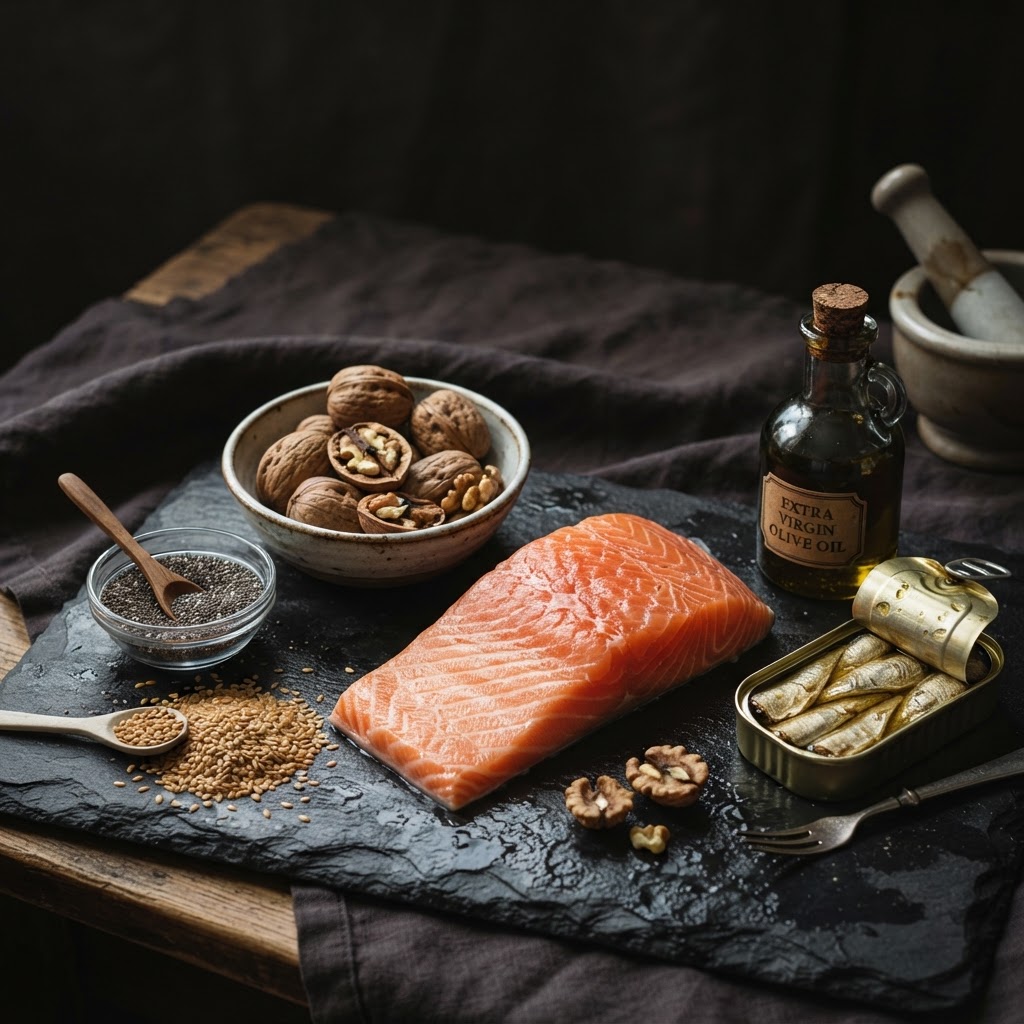
- • 21 specific foods are rich in omega-3 — salmon, sardines, flaxseeds, and walnuts top the list
- • Omega-3 reduces inflammation by 30% and joint pain by 50%
- • Omega-3 lowers Alzheimer risk by 26% and depression by 30%
- • Plant omega-3 converts to EPA/DHA at only 5-10% — vegans need algae supplements
- • Scan any meal with FoodIdentifier to instantly see its omega-3 content
Omega-3 fatty acids are the most powerful anti-inflammatory nutrients in your diet. They reduce heart disease risk, boost brain health, ease joint pain, and may prevent Alzheimer disease. Yet 85% of Americans do not get enough — and this deficiency is a major driver of chronic inflammation, the root cause of most modern diseases. In this complete 2026 guide, we cover the 21 best foods high in omega-3, the difference between plant and animal sources, a 7-day omega-3 meal plan, and how to use AI food scanning to hit your daily target.
Why Omega-3 Matters and How Deficiency Happens
Omega-3 fatty acids are essential fats — your body cannot make them, so you must get them from food. The three main types are: ALA (from plants, converted to EPA/DHA at 5-10% efficiency), EPA (anti-inflammatory, from fish), and DHA (brain-building, from fish). Omega-3s reduce inflammation, thin the blood, lower triglycerides, support brain cell membranes, and produce anti-inflammatory molecules called resolvins.
Omega-3 deficiency happens because of inadequate intake (most people eat 100-200mg instead of 1,600mg), excess omega-6 (vegetable oils, processed foods — the omega-6:3 ratio in the US is 20:1, should be 4:1), and poor conversion (ALA to EPA/DHA is only 5-10%). The result: chronic inflammation, dry skin, poor memory, joint pain, and increased heart disease risk. See: Anti-Inflammatory Diet Guide →
📊 Omega-3 Facts at a Glance
The 21 Best Foods High in Omega-3
🐟 Top 10 Omega-3 Powerhouses (EPA + DHA)
Mackerel
163% of daily need
2.6g
per 3oz
Salmon
144% of daily need
2.3g
per 6oz
Sardines
94% of daily need
1.5g
per 3oz
Anchovies
88% of daily need
1.4g
per 3oz
Herring
106% of daily need
1.7g
per 3oz
Trout
63% of daily need
1.0g
per 6oz
Tuna (bluefin)
88% of daily need
1.4g
per 3oz
Oysters
44% of daily need
0.7g
per 3oz
Sea bass
44% of daily need
0.7g
per 3oz
Shrimp
19% of daily need
0.3g
per 3oz
🌱 Plant-Based Omega-3 Sources (ALA)
Flaxseeds (ground)
144% of daily need (ALA)
2.3g
per tablespoon
Chia seeds
156% of daily need (ALA)
2.5g
per tablespoon
Walnuts
163% of daily need (ALA)
2.6g
per ounce
Hemp seeds
63% of daily need (ALA)
1.0g
per tablespoon
Edamame
19% of daily need (ALA)
0.3g
per cup
Kidney beans
13% of daily need (ALA)
0.2g
per cup
Soybean oil
56% of daily need (ALA)
0.9g
per tablespoon
Canola oil
81% of daily need (ALA)
1.3g
per tablespoon
Flaxseed oil
456% of daily need (ALA)
7.3g
per tablespoon
Perilla oil
219% of daily need (ALA)
3.5g
per tablespoon
Algae oil (supplement)
Direct DHA source for vegans
300-600mg DHA
per capsule
Plant vs Animal Omega-3: The Conversion Problem
There is a critical difference between plant and animal omega-3 sources:
- Fish (salmon, sardines): Contains direct EPA and DHA — immediately usable by your body. This is the most efficient source.
- Plants (flax, chia, walnuts): Contains ALA, which your body must convert to EPA and DHA. Conversion rate is only 5-10% — meaning you need 4-5x more ALA to get the same benefit.
- Algae oil: The one vegan source of direct DHA. Algae is where fish get their omega-3 in the first place. Take 300-600mg/day.
Bottom line: If you eat fish, aim for 2-3 servings of fatty fish per week. If you are vegan, eat 6-8g of ALA per day (4 tablespoons of ground flaxseeds) AND take an algae-based DHA supplement (300-600mg/day).
7-Day Omega-3-Boosting Meal Plan
Flaxseed oatmeal + salmon + walnuts + chia pudding
Chia smoothie + sardines + walnut salad
Hemp seed yogurt + mackerel + flax crackers
Walnut granola + salmon + chia pudding
Flax smoothie + trout + walnut snack
Chia oatmeal + sardines + hemp seeds
Walnut pancakes + salmon + flax dinner
Omega-3-Rich vs Low-Omega-3 Foods
See exactly how swapping common foods for healthier alternatives changes your nutrition
| Food Item | Calories | Protein | Carbs | Fat | Fiber |
|---|---|---|---|---|---|
| g | g | g | g | ||
| g | g | g | g | ||
| g | g | g | g | ||
| g | g | g | g | ||
| g | g | g | g | ||
| g | g | g | g | ||
Want to check the exact nutrition of any food? Scan it with FoodIdentifier and get instant calories, macros, and healthier swap suggestions.
Scan a Food NowHow FoodIdentifier Compares to MyFitnessPal, Cronometer & Yuka
See why 500,000+ users switched to the AI-powered food scanner
Feature-by-Feature Comparison
| Feature | FoodIdentifierAI-Powered | MyFitnessPal | Cronometer | Yuka |
|---|---|---|---|---|
AI Photo Food Scanner | Instant — snap any meal | No photo scan | No photo scan | Barcode only |
Barcode + Photo + Label Scan | All 3 methods | Barcode only | Manual entry | Barcode only |
AI Nutrition Coach | Personalized AI coach included | Generic tips | No coach | No coach |
Blood Sugar Impact Prediction | Per-meal glucose prediction | |||
Ozempic / GLP-1 Compatibility Check | Built-in checker | |||
0–100 Food Quality Score | Instant unified score | Yes (basic) | ||
Better Alternative Suggestions | AI recommends swaps | Basic | ||
Ingredient Safety Scanner | Additive + allergen detection | Yes | ||
Personal Safety Verdict | Based on your allergies + goals | |||
Free Scans (No Signup) | 3 free scans daily | Must create account | Must create account | Limited free scans |
Price | Free / $9.99 mo Pro | $19.99 mo Premium | $9.99 mo | Free / €1.99 mo |
FoodIdentifier is the only app that combines AI photo scanning, blood sugar prediction, Ozempic compatibility, and a personalized nutrition coach — all in one.
Scan Your First Meal Free →No credit card required · 3 free scans daily
⚕️ Medical Disclaimer
This article is for educational purposes only and is not medical advice. If you take blood thinners or have bleeding disorders, consult your doctor before increasing omega-3 intake. High-dose omega-3 supplements can interact with medications. Always consult a qualified healthcare provider before making significant dietary changes.
Scan Any Meal. See Its Omega-3 Content.
Take a photo of any food and instantly see its omega-3 content and anti-inflammatory potential.
Try It Free — No Sign-Up Needed →