He was eating chicken every day. Two eggs at breakfast. A protein bar after the gym. By any reasonable measure, he was getting his protein — or so he thought. But six months into his fitness program, the scale wasn't moving the way it should have, his arms weren't growing, and his trainer was asking an uncomfortable question: was he actually eating enough protein, or just thinking he was? When they finally tracked a full week of meals, the answer landed like a cold splash of water. He was averaging 82 grams of protein per day. For a 185-pound man trying to build muscle, he needed almost double that.
This story repeats in gyms and nutrition clinics every single day. People have a vague sense that they eat "high protein" but have never actually verified it. They don't realize that most foods they think of as protein sources — a handful of almonds, a bowl of oatmeal, a slice of deli meat — are delivering 4 to 8 grams per serving at best. And they definitely don't realize that the RDA recommendation of 0.8g of protein per kilogram of body weight — the number on every nutritional label in America — is calibrated for sedentary survival, not for anyone actually trying to change their body composition.
This guide fixes that. What follows is the definitive ranked list of 60+ high-protein foods for 2026, organized by category with exact protein per 100g, calorie density, and practical advice for actually hitting your targets. Use FoodIdentifier AI to photograph any meal and see its protein content in three seconds — no more guessing.
Section 1: Why Protein Is the Most Important Macro
Every credible sports nutrition organization — the ISSN, ACSM, AND — now ranks protein above carbohydrates and fat in importance for body composition. Here's the science behind why:
Muscle protein synthesis (MPS): Dietary protein provides the amino acids — particularly leucine — that directly trigger muscle building. Without adequate leucine delivery (typically from 30-50g high-quality protein), MPS is suboptimally stimulated regardless of how hard you train. A 2017 meta-analysis in British Journal of Sports Medicine confirmed that protein supplementation significantly increased muscle mass gains from resistance training, with benefits continuing up to 1.62g/kg/day.
Satiety: Protein is by far the most satiating macronutrient. A high-protein meal suppresses ghrelin (the hunger hormone) for 4-6 hours and increases peptide YY, a fullness signal. Studies consistently show people eating high-protein diets consume 400-500 fewer calories per day spontaneously — without counting or restricting.
Thermic effect of food (TEF): This is the least-known protein benefit. Your body burns 25-30% of protein's calories just digesting and metabolizing it. Carbs burn 5-10%, fat burns 2-3%. A 200-calorie serving of chicken effectively delivers only 140-150 net calories. Over a full day of high protein eating, this creates a 150-250 calorie passive deficit with zero effort. FoodIdentifier AI accounts for TEF automatically.
Metabolic rate preservation: During a calorie deficit, high protein intake signals your body to preserve lean muscle mass and burn fat preferentially. Low protein during weight loss causes 30-40% of weight lost to come from muscle — permanently lowering your resting metabolic rate.
Section 2: How Much Protein Do You Actually Need?
The FDA's 0.8g/kg RDA is designed to prevent protein deficiency in sedentary people — not to optimize body composition, athletic performance, or healthy aging. For anyone active or with physique goals, it's dangerously inadequate. Here's the evidence-based target table:
Protein per meal: Muscle protein synthesis is maximally stimulated by 30-50g of high-quality protein per meal. Spreading your daily target across 3-4 meals of 30-50g each is more effective than eating the same total in 2 meals. Track your protein per meal with FoodIdentifier AI.
Section 3: Top 20 Animal Protein Sources Ranked
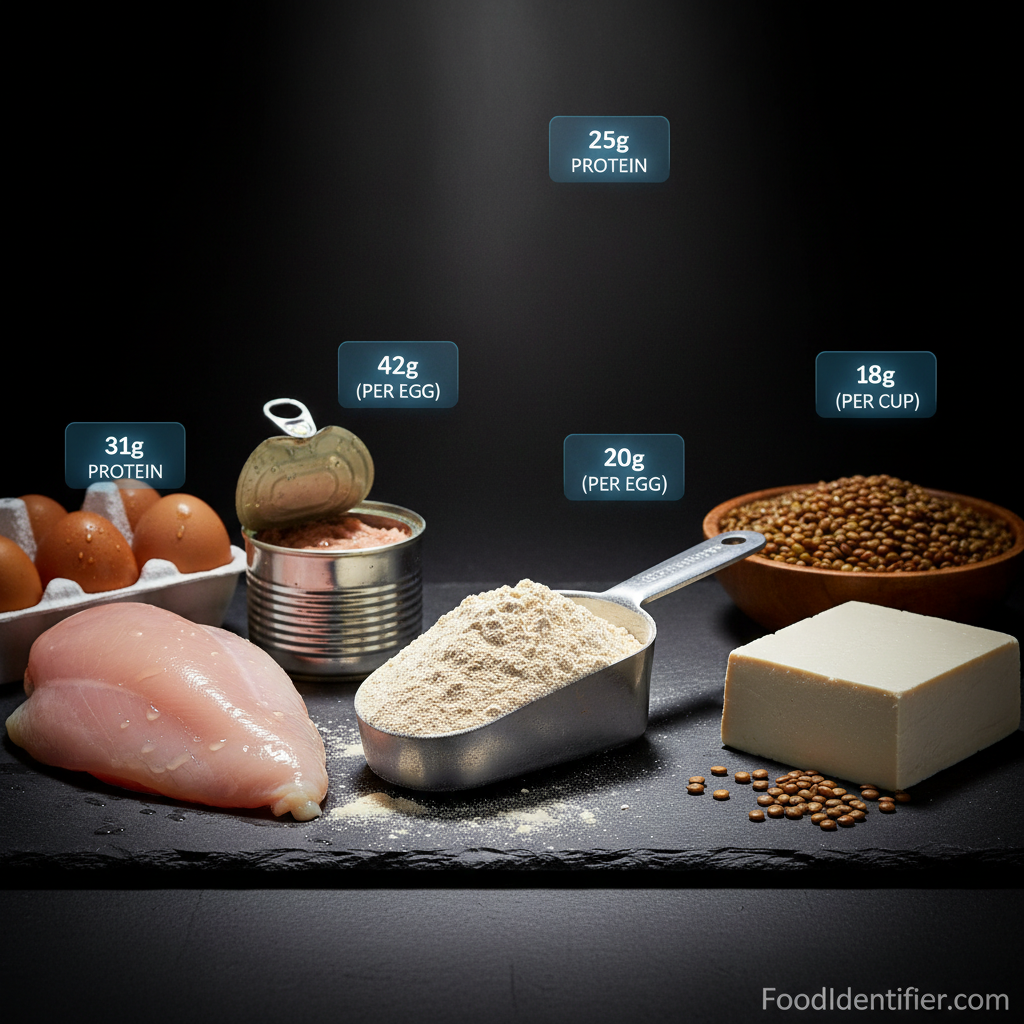
Animal proteins are "complete" proteins — they contain all 9 essential amino acids in proportions that closely match human muscle tissue. This makes them the most efficient proteins for muscle protein synthesis. Scan any animal protein with FoodIdentifier AI for exact macros.
Chicken Breast (31g/100g, 165 cal): The undisputed king of fitness nutrition. Boneless, skinless chicken breast delivers more protein per calorie than almost any whole food. It's essentially fat-free (3.6g/100g), making every calorie protein-efficient. Baked, grilled, or poached — never fried if you're optimizing macros. A single 6oz (170g) breast delivers 53g protein and 280 calories.
Venison (30g/100g, 158 cal): Deer meat is one of the highest-protein, lowest-fat meats available. Gram for gram, it outperforms chicken breast while delivering more iron, zinc, and B12. Increasingly available as ground venison at specialty stores and online.
Turkey Breast (29g/100g, 135 cal): Essentially tied with chicken breast in protein density, turkey breast is often lower in fat. Ground turkey (93% lean) is one of the most versatile high-protein cooking proteins.
Bison (28g/100g, 143 cal): Leaner than beef with a similar protein profile. Grass-fed bison is also higher in omega-3s. Available ground or as steaks at Whole Foods and online.
Canned Tuna in Water (26g/100g, 116 cal): The most protein-dense affordable food in most supermarkets. A single can provides 25-30g protein for under $1.50. The "mercury concern" is overblown for light tuna — 2-3 cans per week is well within FDA safe limits.
Section 4: Top 20 Plant Protein Sources Ranked
Plant proteins present two challenges: most are "incomplete" (lacking one or more essential amino acids), and protein density is generally lower than animal sources. The solution is variety — combining different plant proteins throughout the day ensures complete amino acid coverage. FoodIdentifier AI tracks your amino acid completeness automatically.
Complete plant proteins (contain all essential amino acids): quinoa, soy (tempeh, edamame, tofu), spirulina, hemp seeds, chia seeds, nutritional yeast, buckwheat. Incomplete but combinable: all legumes, all grains, all nuts and seeds — combine legumes + grains (rice and beans, lentil soup with bread) to create a complete amino acid profile.
Section 5: Top 10 Dairy Protein Sources
Dairy proteins are complete, highly bioavailable, and split between fast-digesting whey and slow-digesting casein — a combination that makes dairy uniquely useful for both post-workout recovery and overnight muscle synthesis. Note: if you're lactose sensitive, most aged cheeses are naturally very low in lactose. Greek yogurt and cottage cheese are also low enough in lactose that many sensitive individuals tolerate them well. Track your dairy protein with FoodIdentifier AI.
Section 6: 15 Best High-Protein Snacks Ranked
Snacking strategically is one of the highest-leverage ways to hit protein targets. The right snack delivers 15-25g protein, keeps you full for 2-3 hours, and fits in a lunchbox or gym bag. Scan any snack with FoodIdentifier AI for instant protein verification.
- Beef Jerky (33g/100g): Highest protein density of any shelf-stable snack. Choose low-sodium, no-sugar-added varieties. One 1oz serving = 9g protein, ~80 calories.
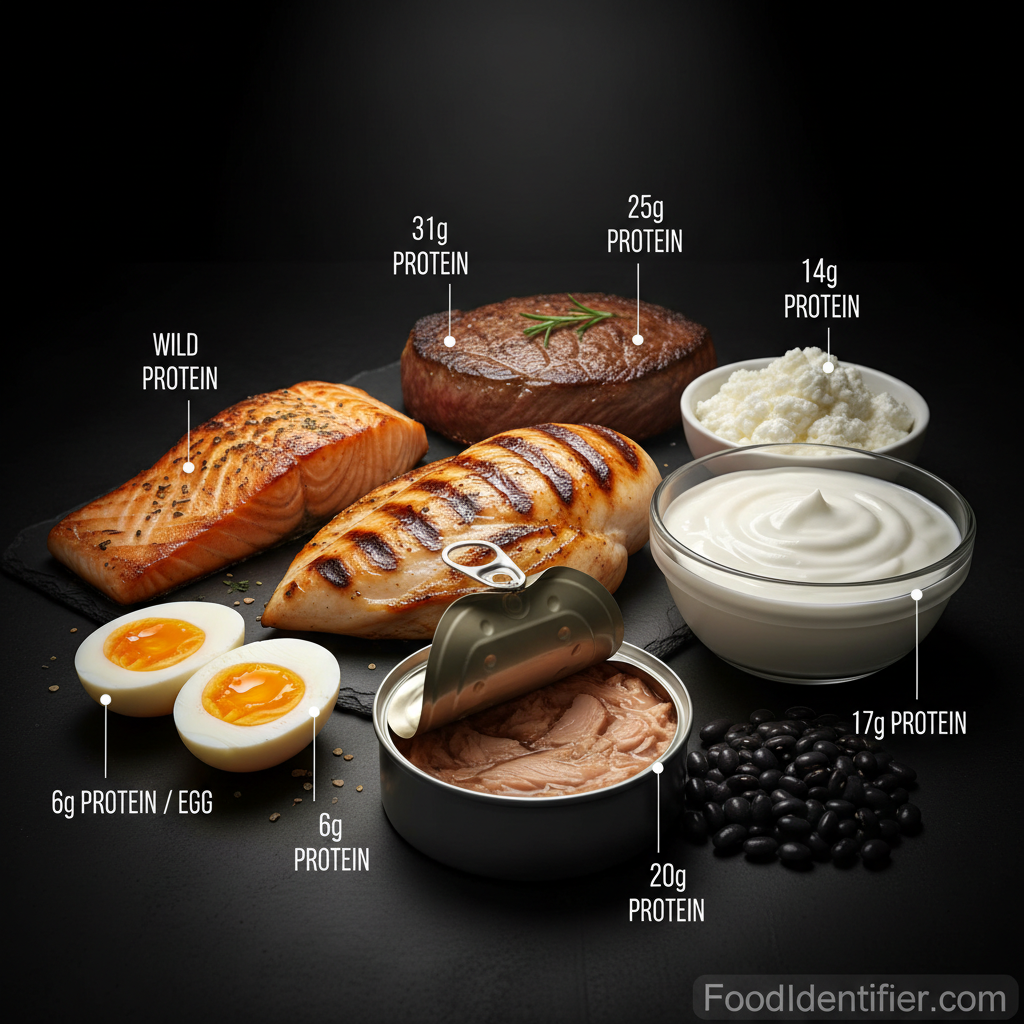
- Hard Boiled Eggs (2 eggs = 12g protein, 156 cal): Batch-cook 6 at once. The most portable complete protein.
- Plain 0% Greek Yogurt (170g = 17g protein, 100 cal): The easiest high-protein snack in existence. Add berries for flavor.
- Cottage Cheese (half cup = 14g protein, 90 cal): Slice cucumber or tomato into it. Slow-digesting casein = 3+ hours of satiety.
- Tuna Packet (3oz = 20g protein, 90 cal): No can needed. Spoon-ready. Keep 10 in your desk drawer.
- Edamame (half cup = 11g protein, 120 cal): Complete soy protein. Buy frozen in pods, microwave 3 minutes.
- Smoked Salmon (2oz = 12g protein, 80 cal): Omega-3 + protein combo. Eat with cucumber slices.
- Roasted Chickpeas (half cup = 7g protein, 140 cal): Crunchy, shelf-stable, fiber-rich. A far better crisp replacement.
- String Cheese (1 stick = 7g protein, 80 cal): Portable dairy protein. Choose part-skim mozzarella.
- Protein Shake (25g protein, 120-150 cal): Non-negotiable when you're behind on daily protein. 90-second prep.
- Pumpkin Seeds (1oz = 9g protein, 163 cal): Also high in zinc and magnesium. Best plant snack for protein density.
- Deli Turkey Slices (2oz = 14g protein, 60 cal): Roll around cucumber spears for a zero-carb, high-protein snack.
- Ricotta with Berries (half cup = 14g protein, 174 cal): Underrated protein snack. Add a drizzle of honey.
- PB2 Powder (2 tbsp = 5g protein, 45 cal): Mix with water or into yogurt. Much lower calorie than regular peanut butter.
- Skyr (170g = 17g protein, 107 cal): European-style strained yogurt now widely available in US Whole Foods.
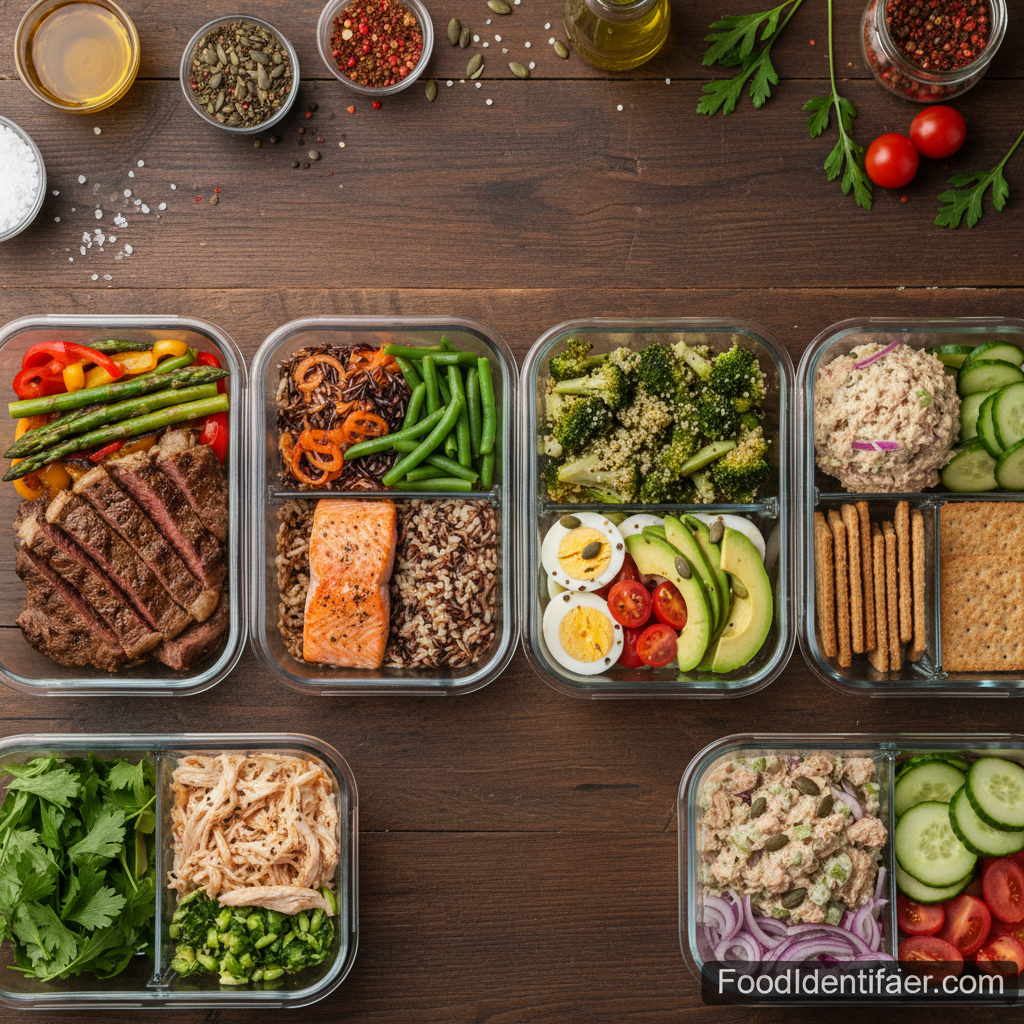
Section 7: 7-Day High Protein Meal Plan (Target: 150g/day)
Every day in this plan hits 140-160g protein at approximately 1,800-2,000 calories. Macros prioritize protein first, then vegetables, then complex carbs, then healthy fats. Get your personalized protein meal plan from FoodIdentifier AI.
Section 8: Protein Timing Matters — Here's What the Research Actually Says
The old "anabolic window" theory — that you must consume protein within 30 minutes post-workout or the muscle stimulus is lost — has been extensively updated by more recent research. A landmark 2013 meta-analysis in the Journal of the International Society of Sports Nutrition found the window is more like 4-6 hours around the workout, not 30 minutes. But timing still matters in practical ways: get your personalized protein timing guide from FoodIdentifier AI.
- Pre-workout (1-2 hours before): 20-40g protein from a moderate-digestion source (whole food meal or whey). Provides amino acids during the workout, reducing muscle protein breakdown during training. A chicken breast meal 90 minutes pre-workout is ideal.
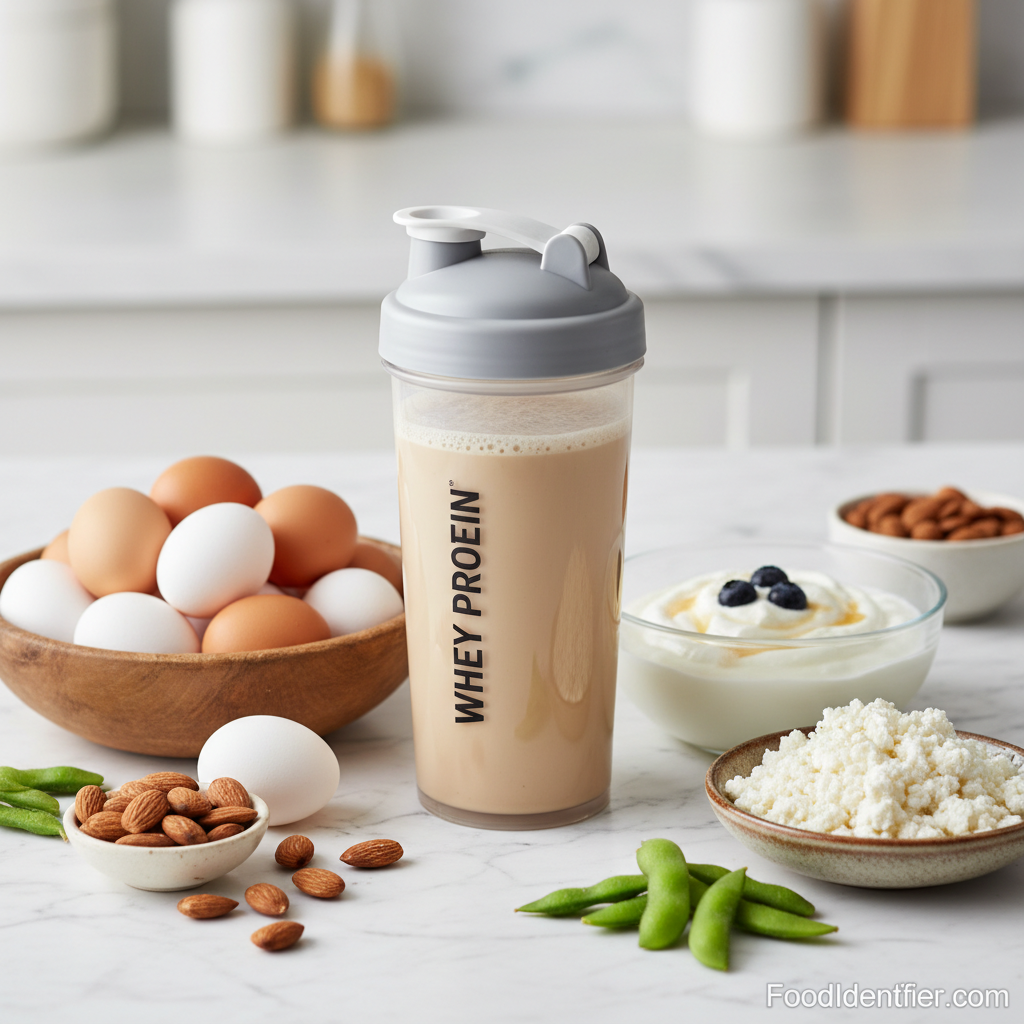
- Post-workout (within 2 hours): 30-50g high-quality, fast-absorbing protein. Whey protein isolate is optimal here — digests rapidly to deliver leucine to muscle cells while MPS is elevated from training stimulus. Don't overthink timing if you ate pre-workout — you're covered.
- Bedtime casein: One of the most underutilized protein strategies. A 2012 study in Medicine & Science in Sports & Exercise found 40g casein protein 30 minutes before sleep increased overnight muscle protein synthesis by 22% versus placebo. Use cottage cheese, Greek yogurt, or casein protein powder at night.
- Morning protein priority: Most people eat their lowest-protein meal at breakfast. Starting the day with 30-40g protein sets hormonal satiety signals for the entire day, reducing total caloric intake significantly.
Section 9: 10 Protein FAQs Answered by Nutrition Science
Q1: What is the highest protein food per 100g?
Spirulina leads whole foods at 57g/100g, followed by nutritional yeast (50g+). In the powder category, whey and casein isolates deliver 80g+/100g. Among foods you'd eat in a normal serving, chicken breast (31g), hemp seeds (31g), venison (30g), and beef jerky (33g) lead the rankings. Check any food's protein instantly at FoodIdentifier AI.
Q2: Can I get enough protein on a plant-based diet?
Yes — but it requires deliberate planning. Key plant proteins: seitan (25g/100g), tempeh (19g), hemp seeds (31g), pumpkin seeds (30g), peanuts (26g), nutritional yeast (50g+), pea protein powder (80g+). Combine different plant sources throughout the day to ensure complete amino acid coverage. FoodIdentifier AI tracks amino acid completeness for plant-based diets.
Q3: How much protein per meal can the body absorb?
The body can absorb all dietary protein — but muscle protein synthesis is maximally stimulated by 30-50g high-quality protein per meal. Eating 80g in a single sitting doesn't harm you, but the MPS benefit plateaus. Spreading protein across 3-4 meals of 30-50g each maximizes muscle-building stimulus throughout the day.
Q4: Is it bad to eat too much protein?
For healthy individuals, research consistently shows intakes up to 3.5g/kg/day are safe. The kidney damage concern only applies to people with pre-existing kidney disease. The main practical issue with very high protein is caloric displacement of other nutrients — not toxicity. 1.6–2.2g/kg is the optimal range.
Q5: What are the best high protein breakfast foods?
Greek yogurt 0% (17g/170g), cottage cheese (14g/half cup), 3 eggs + 2 whites (24g), smoked salmon (20g/3oz), protein oatmeal with whey (35-40g total). Starting with 30-40g protein at breakfast dramatically reduces hunger throughout the entire day. Get high-protein breakfast ideas from FoodIdentifier AI.
Q6: Do protein shakes count toward daily protein goals?
Completely — yes. Whey protein has a PDCAAS score of 1.0 (maximum possible). It's not a pharmaceutical supplement — it's concentrated dairy protein. One scoop provides 20-25g protein for 100-130 calories, counting identically to chicken or fish for muscle protein synthesis.
Q7: What high protein foods are low in calories?
Best high-protein, low-calorie foods: egg whites (11g/52 cal), canned tuna in water (26g/116 cal), shrimp (24g/99 cal), cod (23g/82 cal), chicken breast (31g/165 cal), plain 0% Greek yogurt (10g/59 cal per 100g), cottage cheese (11g/98 cal). These deliver the highest protein-per-calorie ratio of any whole foods. Scan meals to find the best protein-per-calorie options at FoodIdentifier AI.
Q8: Are eggs the best protein source?
Eggs have a biological value (BV) of 100 — the reference standard for protein quality. Complete, highly bioavailable amino acid profile. However, whole eggs are only 13g protein per 100g, moderate compared to chicken (31g) or tuna (26g). Their advantage is versatility, low cost, and exceptional micronutrients (choline, B12, D, selenium). Best overall? Depends on your caloric budget.
Q9: What high protein foods are good for weight loss?
Best high-protein weight loss foods combine high density with low calories: chicken breast, canned tuna, shrimp, egg whites, Greek yogurt 0%, cottage cheese, and white fish. Protein's thermic effect means you burn 25-30% of protein calories just digesting them. High-protein meals also reduce ghrelin for 4-6 hours post-meal, dramatically cutting total daily intake. Build your weight-loss protein plan at FoodIdentifier AI.
Q10: How do I track my protein intake accurately?
Most accurate 2026 method: photograph every meal with FoodIdentifier AI. It identifies every ingredient, estimates portions, and calculates exact protein in 3 seconds. For packaged foods, scan the barcode for 100% label accuracy. For home-cooked meals, the AI photo scan accounts for actual portion size visually — often more accurate than manual estimation.
Stop Guessing. Start Knowing.
You now have the full ranked list of 60+ high-protein foods, the science behind protein requirements, a 7-day meal plan to hit 150g daily, and answers to every question that's been slowing your progress. But the single biggest reason people fall short of protein targets isn't knowledge — it's the daily friction of actually verifying what you ate. Estimating protein from memory is unreliable. Manual logging is tedious. Both lead to the same outcome: gradual drift away from your targets.
That's precisely what FoodIdentifier AI eliminates. Photograph your meal — any meal, anywhere — and get the complete protein breakdown in three seconds. See exactly where you are against your daily target at every moment of the day. When you're 40g short at 3pm, you know before dinner. When a restaurant meal is actually lower in protein than it looked, you know before leaving satisfied with the wrong macros. Your protein goals are completely achievable with the right tools. Start tracking free at FoodIdentifier AI today.
💪 Track Every Gram of Protein — Free
Photograph any meal. See exact protein in 3 seconds. Hit 150g daily without guesswork.
→ Start with FoodIdentifier AI Free