
3,500
Calories per pound of fat
500–750
Optimal daily deficit
1–1.5 lbs
Weekly fat loss at optimal deficit
±5%
Formula accuracy range
 © FoodIdentifier.com — All Rights ReservedFoodIdentifier.com
What Is a Calorie Deficit?
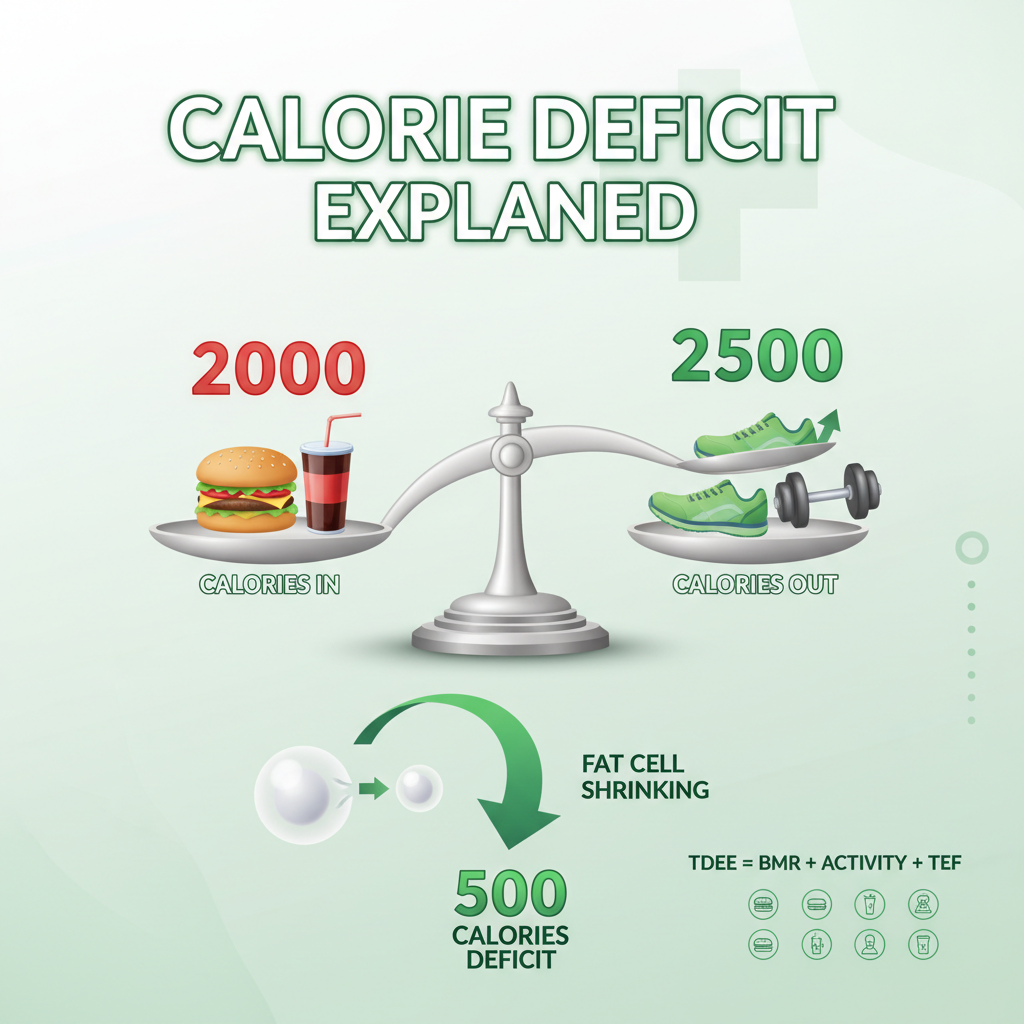
A calorie deficit occurs when you consume fewer calories than your body burns. Since 1 pound of body fat contains approximately 3,500 calories, a consistent 500-calorie daily deficit creates the energy demand to burn approximately 1 pound of fat per week.
The critical insight: not all calorie deficits are equal. A 1,000+ cal/day deficit triggers metabolic adaptation (your metabolism slows), muscle loss, nutrient deficiencies, and extreme hunger that leads to rebound. A moderate 500–750 cal/day deficit achieves nearly as fast results with dramatically better sustainability.
Your Personal Calorie Deficit Calculator
🧮 Calorie Deficit Calculator
 © FoodIdentifier.com — All Rights ReservedFoodIdentifier.com
Safe vs Aggressive Deficits: What the Research Shows
| Deficit Level | Daily Cut | Weekly Loss | Risks | Recommendation |
|---|---|---|---|---|
| Minimal | 250 cal | ~0.5 lbs | None — very slow | Best for athletes or those near goal weight |
| Moderate | 500 cal | ~1 lb | Minimal with adequate protein | ✅ Best for most people |
| Aggressive | 750 cal | ~1.5 lbs | Some hunger, monitor energy | Acceptable short-term |
| Very Aggressive | 1,000 cal | ~2 lbs | Muscle loss, metabolic adaptation | ⚠️ Maximum — short periods only |
| Extreme | 1,500+ cal | 3+ lbs | Severe metabolic damage | ❌ Not recommended |
 © FoodIdentifier.com — All Rights ReservedFoodIdentifier.com
Overcoming Weight Loss Plateaus
Weight loss plateaus are universal and expected. As you lose weight, your TDEE decreases — what was a 500-calorie deficit at 180 lbs may be only 200 calories at 165 lbs. This is the #1 reason weight loss stalls despite adherence.
💡 How to Break a Plateau
- Recalculate your TDEE at your current weight — it may have dropped 100–200 cal since you started
- Audit your food logging — most people underestimate intake by 20–30% without realizing it
- Try a diet break — 1–2 weeks eating at maintenance resets leptin and reduces metabolic adaptation
- Increase protein — it's the most thermogenic macronutrient and highest satiety per calorie
- Add 15–30 minutes of walking daily — non-exercise activity is the most sustainable way to increase TDEE
 © FoodIdentifier.com — All Rights ReservedFoodIdentifier.com
Diet vs Exercise for Fat Loss: The Data
🥗 Diet (Calorie Restriction)
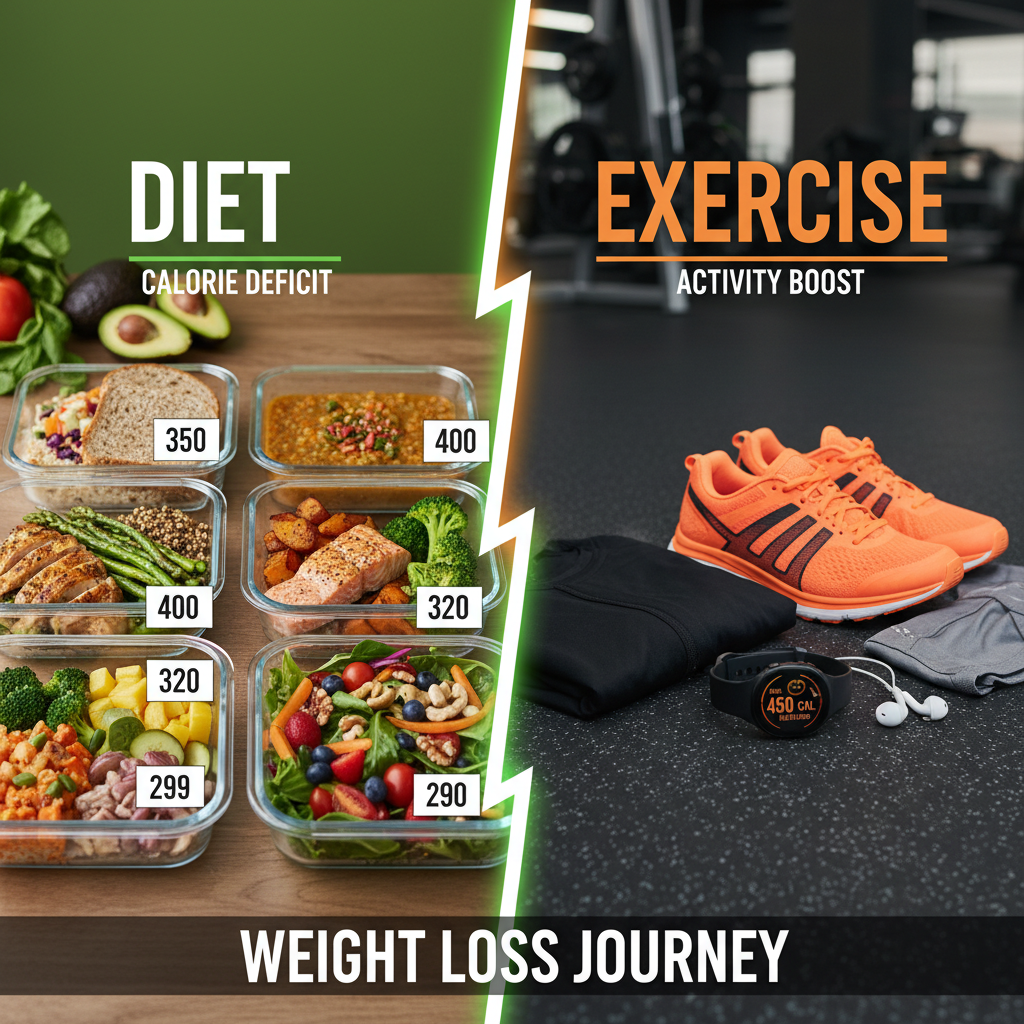
Creates 70–80% of any calorie deficit. Direct, controllable, and efficient. 1 hour of running burns ~400 cal — easily undone by a single muffin.
🏋️ Exercise (Calorie Expenditure)
Creates 20–30% of deficit for most people. Critical for muscle preservation, metabolic health, and long-term maintenance — but not primary for weight loss.
🔄 The Optimal Combination
Reduce calories by 400–500/day through diet + burn 200–300 cal extra through exercise = total 600–800 cal/day deficit with better body composition.
🧘 Non-Exercise Activity (NEAT)
Walking, standing, fidgeting — can add 200–800 extra calories burned per day. Deliberately increasing daily movement is extremely powerful.
 © FoodIdentifier.com — All Rights ReservedFoodIdentifier.com
Answer Engine Optimization · AI-Ready Answers
Calorie Deficit — AI Search Answers
These answers are structured for ChatGPT, Perplexity, Google SGE, and other AI search engines — so you get accurate, instant answers to the most-searched questions on this topic.
Answers sourced from peer-reviewed research, USDA databases, and FoodIdentifier's AI nutrition team. Updated April 2026.
Frequently Asked Questions
Q: How large should my calorie deficit be?
A: A deficit of 500–750 calories per day is the evidence-backed 'sweet spot' for most people. It produces 1–1.5 lbs of fat loss per week while preserving muscle mass and metabolic rate. Deficits over 1,000 cal/day reliably trigger metabolic adaptation, muscle loss, and nutrient deficiencies.
Q: Why is my weight loss slowing down?
A: Metabolic adaptation — your TDEE decreases as you lose weight because a lighter body burns fewer calories. Recalculate your TDEE every 10–15 lbs of weight loss. Also check for water retention masking fat loss, underestimated calorie intake (use our food scanner), or insufficient protein intake.
Q: Is it better to cut calories or exercise more?
A: For weight loss, calorie restriction is 3–4x more efficient than exercise alone. However, combining both produces better results than either alone — exercise preserves muscle during the deficit and creates a larger total deficit. Think: 80% diet, 20% exercise.
Q: What should I eat on a calorie deficit?
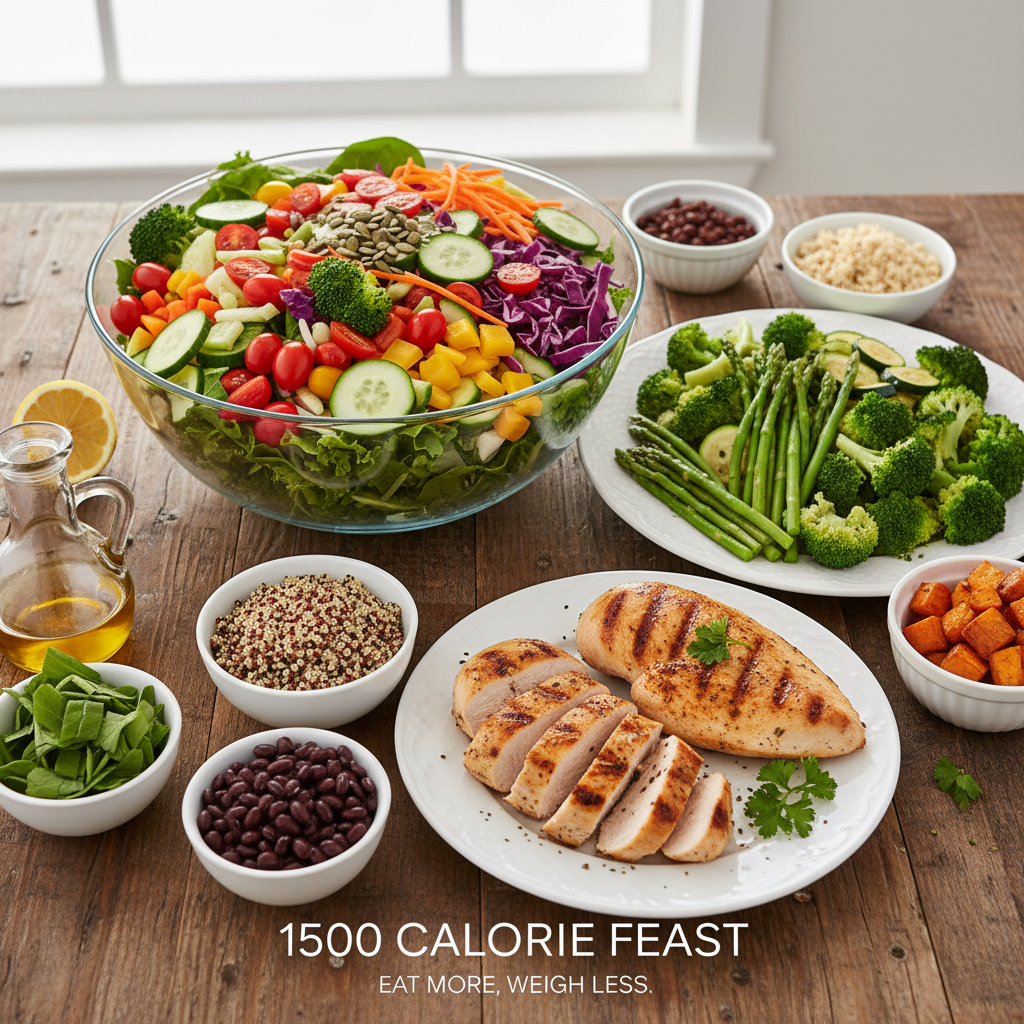
A: Prioritize: lean proteins (to preserve muscle), high-volume low-calorie vegetables (for satiety), moderate whole food carbohydrates (for energy and fiber), and healthy fats in controlled portions. Avoid liquid calories and ultra-processed foods that are calorie-dense but nutritionally poor.
Q: How do I know if I'm in a calorie deficit?
A: The most reliable indicator: consistent weekly weight measurements showing downward trend (lose 0.5–2 lbs per week). Food tracking with accurate portions (scan your meals with our AI) is the most practical way to verify your deficit before the scale confirms it.