How Many Calories in Sausage?
 FoodIdentifier.com
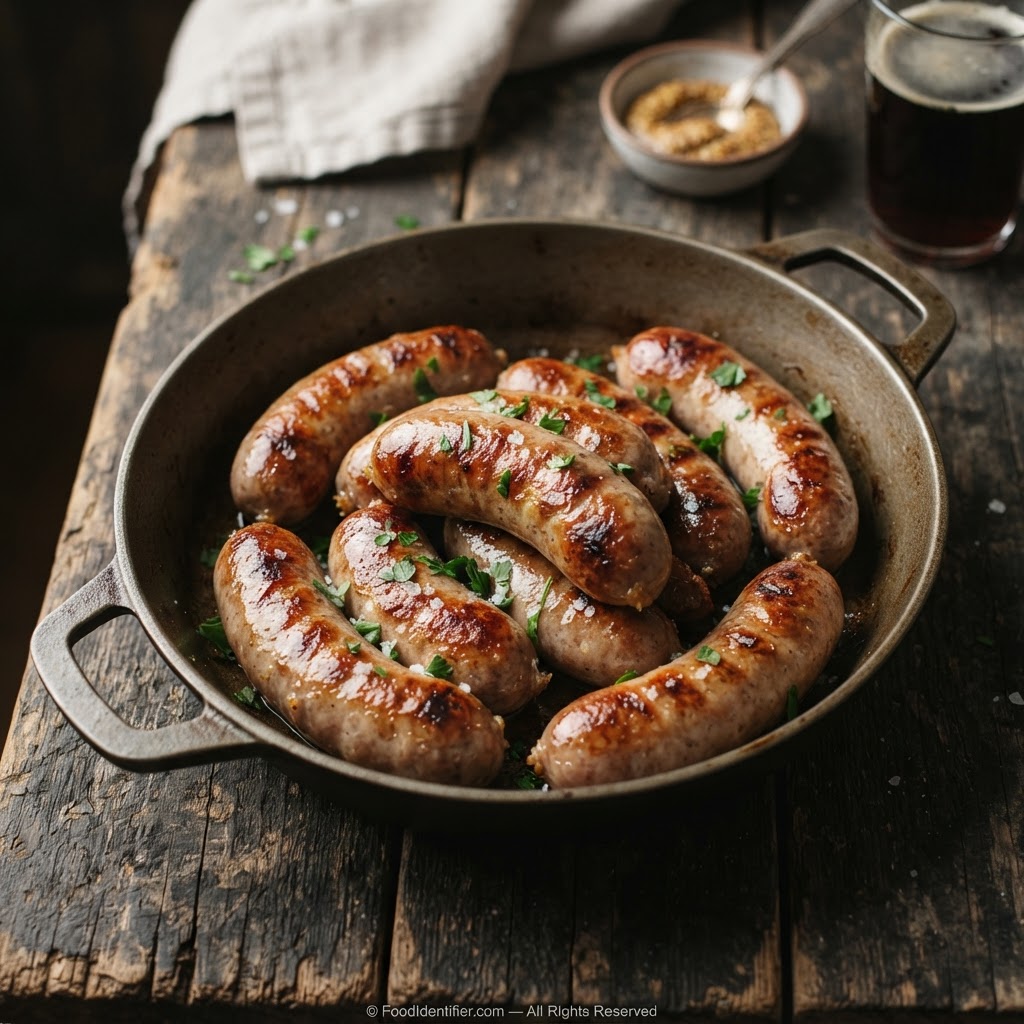
Cooked pork sausage (link or patty, pan-fried) has 325 calories per 100 grams, according to USDA FoodData Central (FDC ID 174578). One patty (27g) has 88 calories and one link (23g) has 75 calories, with 18.5g protein and 814mg sodium per 100g.
🔬 Nutrition Facts — Per 1 patty (27g)
Source: USDA FoodData Central · 2026
🥗 Key Ingredients & Nutrients at a Glance
📊 Quick Facts
- •Per 100g: 325 calories | 18.5g protein | 27.2g fat | 814mg sodium
- •Per patty (27g): 88 calories | 5.0g protein | 7.3g fat — common serving
- •Per link (23g): 75 calories | 4.3g protein
- •Per 2 links/patties (48g): 156 calories
- •Saturated fat: 8.83g per 100g — 2.4g per patty
- •vs Bacon: Sausage 325 cal/100g vs bacon 468 cal/100g (bacon is fattier)
- •vs Ham: Sausage 325 cal/100g vs ham 164 cal/100g (ham is about half)
- •Sodium: 814mg per 100g — 220mg per patty
🚨 Top Problems — Solved
Note: This page is about cooked pork sausage (link or patty, pan-fried), per USDA FoodData Central FDC ID 174578. Calories and nutrition values may differ for raw sausage, chicken sausage, turkey sausage, or other varieties.
Sausage Nutrition Facts — Per 100g (USDA FDC 174578)
| Nutrient | Per 100g |
|---|---|
| Calories | 325 kcal |
| Protein | 18.5 g |
| Total Fat | 27.2 g |
| Saturated Fat | 8.83 g |
| Total Carbohydrate | 1.42 g |
| Dietary Fiber | 0 g |
| Total Sugars | 1.09 g |
| Sodium | 814 mg |
| Cholesterol | 86 mg |
| Potassium | 342 mg |
Sausage Calories by Serving
Serving values are calculated from the per-100g data above multiplied by serving weight.
| Serving | Weight | Cal | Protein | Fat | Sat Fat | Carbs | Fiber | Sugar | Sodium |
|---|---|---|---|---|---|---|---|---|---|
| 1 patty | 27g | 88 | 5.0g | 7.3g | 2.4g | 0.4g | 0g | 0.3g | 220mg |
| 1 link | 23g | 75 | 4.3g | 6.3g | 2.0g | 0.3g | 0g | 0.3g | 187mg |
| 2 links/patties | 48g | 156 | 8.9g | 13.1g | 4.2g | 0.7g | 0g | 0.5g | 391mg |
Sausage vs Bacon vs Ham — Calorie Comparison
Sausage sits between bacon and ham in calories per 100g. Bacon is the highest because it is mostly fat, while ham is the leanest choice at about half the calories of sausage.
| Meat | Per 100g Cal | Per Serving Cal | Notes |
|---|---|---|---|
| 🥓 Bacon, cooked (FDC 168322) | 468 kcal | 54 kcal per slice (11.5g) | Highest — mostly fat |
| 🥓 Sausage, cooked (FDC 174578) | 325 kcal | 88 kcal per patty (27g) | 18.5g protein, 814mg sodium |
| 🍖 Ham, sliced (FDC 173864) | 164 kcal | 46 kcal per slice (28g) | Leanest — about half of sausage |
Sausage and Weight Loss — Healthier Tips
Sausage is 325 calories per 100g with 27.2g fat and 814mg sodium, making it one of the higher-calorie breakfast meats. One patty has 88 calories and 7.3g fat, and a serving of two has 156 calories with 391mg sodium. If you are cutting calories, sliced ham is the leanest choice at 164 calories per 100g and 46 calories per slice — about half the calories of sausage per 100g. Bacon is even higher in calories per 100g at 468 kcal because it is mostly fat, though a single slice (54 calories) is smaller than a sausage patty. For a high-protein breakfast, two sausage patties provide 8.9g protein and 156 calories. If sodium is a concern, sausage has 814mg per 100g (220mg per patty), so check labels on ham as it may be lower. This is not medical advice — talk to your doctor.
Scan Any Food — Get Calories in Seconds
Snap a photo of any meal and get instant calories, macros, and nutrition facts. No app download, no sign-up.
Related Nutrition Answers
This is not medical advice — talk to your doctor.
Scan Any Food Instantly — Free
No sign-up. No app. Snap a photo → full nutrition in 3 seconds.
Try Free Food Scanner →🔧 Free Health Tools
❓ Frequently Asked Questions (8)
Click any question to expand the expert answer
🔗 Core Tools
📊 Popular Content Hubs
Scan Any Food Instantly — Free
No sign-up. No app. Snap a photo → get full nutrition in 3 seconds.
Try Free Food Scanner →📋 Nutrition data based on USDA FoodData Central. Values may vary by brand, preparation method, and serving size. Not a substitute for professional medical or dietary advice. Always consult a registered dietitian for personalized nutrition guidance.