How Many Calories in a Slice of Pizza?
 FoodIdentifier.com
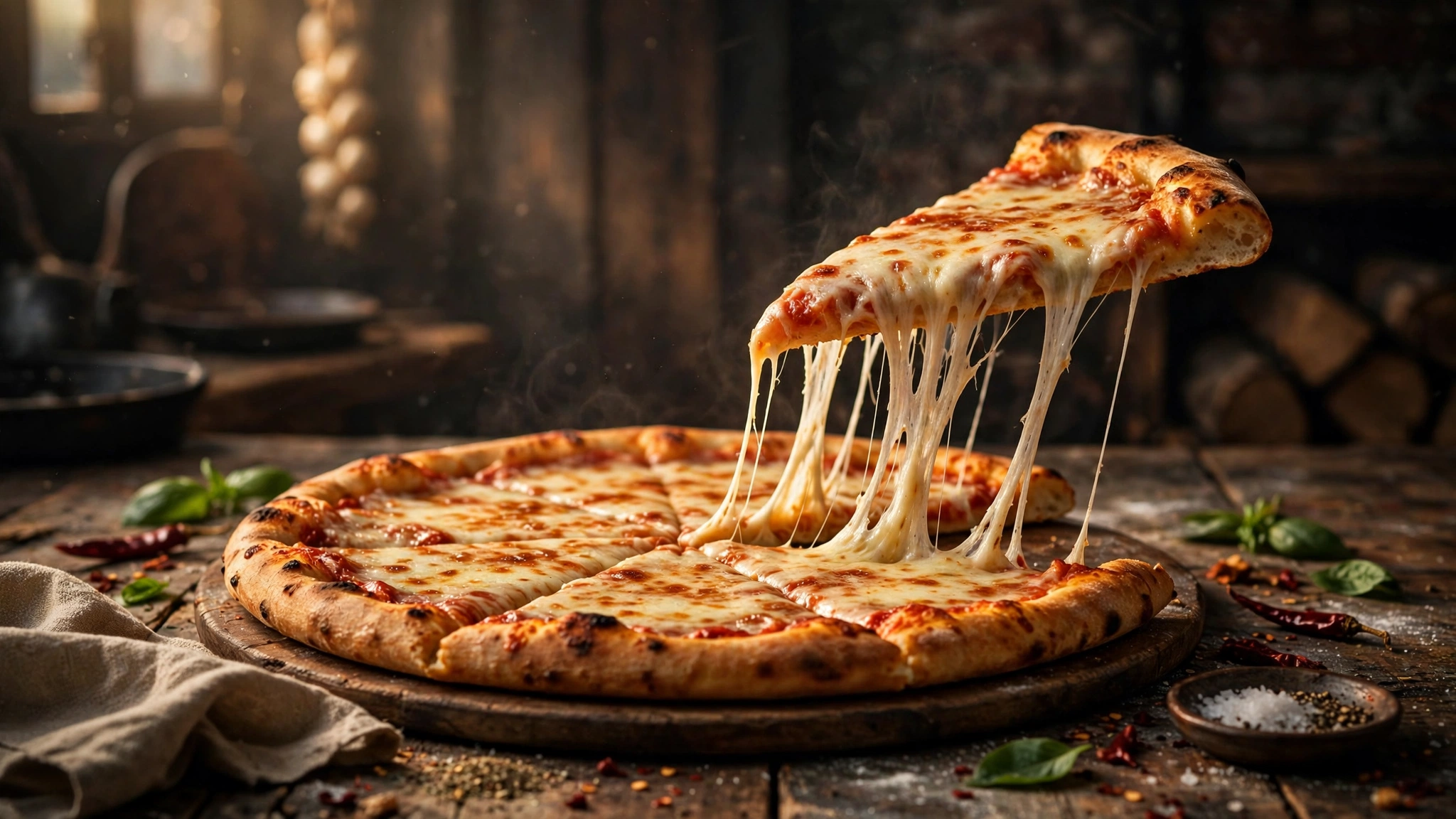
A standard cheese pizza slice (1/8 of a 14-inch pie, 107g) has 285 calories, 12g protein, 10g fat, and 36g carbs. Pepperoni runs about 298, thin-crust cheese about 210, and deep-dish about 350. Per 100g, pizza averages 266 calories. Cooking method and toppings shift the total, but a cheese slice is the baseline.
🔬 Nutrition Facts — Per 1 Cheese Slice (1/8 of 14", 107g)
Source: USDA FoodData Central · 2026
🥗 Key Ingredients & Nutrients at a Glance
📊 Quick Facts
- •Cheese slice (1/8 of 14", 107g): 285 cal · 12g protein · 10g fat · 36g carbs
- •Pepperoni slice: ~298 cal · Thin-crust cheese: ~210 cal
- •Deep-dish slice: ~350 cal · Veggie slice: ~240 cal
- •Meat-lovers slice: ~330 cal · Frozen slices: 290–380 cal by brand
- •Per 100g: 266 calories (USDA reference for comparison)
- •2 slices (cheese): ~570 cal | 3 slices: ~855 cal
- •Lowest-cal order: Thin crust + veggies + light cheese (~200–240/slice)
- •Biggest calorie trap: Stuffed crust + meat-lovers (~400+/slice)
- •Pair with: A side salad to fill up on fewer pizza calories
🚨 Top Problems — Solved
⚠️ Medical Disclaimer
This is not medical advice — talk to your doctor. Nutrition figures are averages from USDA FoodData Central and vary by brand, preparation, and serving size.
Scan Any Slice — Get Calories in Seconds
Snap a photo of any pizza and get instant calories, macros, and nutrition facts. No app download. No sign-up.
🍕 Scan Free at FoodIdentifier.com →🍕 Calories by Crust Style (Cheese, 1/8 of 14")
The crust is the single biggest factor in a slice's calorie count. A thin crust uses less dough, so it carries fewer carbs and calories than a regular or deep-dish base. A standard cheese slice on regular crust (1/8 of a 14-inch pie, 107g) has 285 calories — that is the baseline for every other comparison on this page.
| Crust Style | Calories | Protein | Carbs | Fat |
|---|---|---|---|---|
| Thin crust cheese ★ | ~210 | ~10g | ~24g | ~8g |
| Regular crust cheese ★ | 285 | 12g | 36g | 10g |
| Deep-dish cheese | ~350 | ~14g | ~40g | ~14g |
★ Regular crust is the USDA baseline (285 cal, 107g). Thin-crust figures vary by brand; deep-dish by pan and dough weight.
🍕 Calories by Topping (Regular Crust, 1/8 of 14")
Toppings add calories on top of the crust-and-cheese baseline. Vegetables add the least (mostly water and fiber), pepperoni adds a little fat, and meat-lovers piles on the most. A veggie slice runs about 240 calories, a pepperoni slice about 298, and a meat-lovers slice about 330.
| Topping | Calories | Protein | Fat | Carbs |
|---|---|---|---|---|
| Cheese (baseline) ★ | 285 | 12g | 10g | 36g |
| Veggie | ~240 | ~11g | ~9g | ~34g |
| Pepperoni | ~298 | ~13g | ~12g | ~36g |
| Meat-lovers | ~330 | ~15g | ~15g | ~36g |
| Frozen (cheese, by brand) | 290–380 | 11–14g | 10–16g | 34–42g |
★ Cheese is the USDA baseline. Frozen-slice calories vary by brand and serving size — check the box nutrition panel.
🧊 Frozen vs Restaurant Pizza
Frozen and restaurant slices are closer than most people assume. A restaurant cheese slice averages about 285 calories, while frozen cheese slices range from about 290 to 380 calories depending on the brand. The catch with frozen pizza is the serving size on the nutrition panel — some brands list a serving as half the pizza, not a single slice, so the per-slice count is easy to underestimate. To compare honestly, use the per-100g figure of 266 calories: multiply it by the grams in your slice. Frozen brands that pack more cheese and a thicker crust land at the high end; thinner, lighter frozen pizzas land closer to restaurant counts.
Not Sure How Many Slices You Ate?
Scan the slice or the box and get an instant calorie count. No app, no sign-up, no card.
Scan Free at FoodIdentifier.com →🥗 Pizza and Weight Loss: Fitting It Into a Calorie Deficit
Pizza is not a weight-loss food, but one slice is not a diet-ender either. A single cheese slice is 285 calories — well within a daily deficit for most adults. The problem is rarely the slice; it is the number of slices plus the sides. Three cheese slices, garlic knots, and a regular soda can clear 1,200 calories in one meal.
To fit pizza into a deficit: cap it at one or two slices, choose thin crust (~210 cal) over regular or deep-dish, add a vegetable topping for volume without many calories, and pair it with a side salad so you fill up on fiber before reaching for a third slice. Skip the stuffed crust and extra cheese — those push a single slice past 360 calories. Track the meal honestly in your day, and let the weekly average, not one dinner, decide your progress. This is not medical advice — talk to your doctor.
Related calorie answers & tools
Compare pizza against other common foods, or calculate your daily protein and calorie targets.
Scan Any Food Instantly — Free
No sign-up. No app. Snap a photo → full nutrition in 3 seconds.
Try Free Food Scanner →🔧 Free Health Tools
❓ Frequently Asked Questions (8)
Click any question to expand the expert answer
🔗 Core Tools
📊 Popular Content Hubs
Scan Any Food Instantly — Free
No sign-up. No app. Snap a photo → get full nutrition in 3 seconds.
Try Free Food Scanner →📋 Nutrition data based on USDA FoodData Central. Values may vary by brand, preparation method, and serving size. Not a substitute for professional medical or dietary advice. Always consult a registered dietitian for personalized nutrition guidance.