Let's be honest about something up front: there is no secret to losing weight fast that the fitness industry is hiding from you. The fundamentals have been the same for decades. Eat a bit less than you burn. Get enough protein. Move your body. Sleep well. Do it consistently.
The reason most people fail isn't that they don't know what to do — it's that the plan they're following is too miserable to sustain. This guide is built differently. No crash diets, no banned foods, no supplements you have to buy. Just a clear, honest walkthrough of what actually works, why it works, and how to make it stick. Whether you're starting from scratch or you've tried and stalled before, this is the guide I wish I'd had.
1–2 lbs
Healthy fat loss per week
500 cal
Daily deficit for ~1 lb/week
0.7–1g
Protein per lb of bodyweight
10–20 wks
To lose 20 pounds at a safe pace
📋 Everything Covered in This Guide
- The real science of weight loss — what actually causes fat to burn
- How to start losing weight as a complete beginner
- Exactly how many calories to eat to lose weight (your personal number)
- How much protein you need — and why it's the #1 factor
- Best foods to lose weight fast — ranked and explained
- Foods to avoid to lose belly fat (the hidden ones most people miss)
- Best breakfast for weight loss — 10 options with calorie counts
- Snacks that help you lose weight instead of gaining it
- How to speed up your metabolism naturally (9 proven methods)
- Does drinking water really help you lose weight?
- Intermittent fasting — does it work? Which protocol is best?
- Best exercises to lose belly fat at home (no gym needed)
- Weight loss plateau — exactly how to break through it
- How to stop feeling hungry on a diet (12 science-backed tricks)
- Complete 7-day weight loss meal plan at 1,500 calories
- How long it actually takes to lose 10, 20, or 30 pounds
- Free AI food scanner to track every meal instantly
The Real Science of Weight Loss: What Actually Causes Fat to Burn
Weight loss comes down to one thing: eating less energy than your body uses. That's a calorie deficit. It's not a theory or a fad — it's basic biology. Every diet that has ever worked, from keto to vegan to Mediterranean, works through this same mechanism. Some make it easier to stick with than others, but the underlying principle never changes.
Your body stores excess energy as fat. When you eat less than you burn, it taps into those stores to make up the difference. A pound of body fat holds roughly 3,500 calories, so a daily deficit of about 500 calories gets you around a pound a week. Double that and you're looking at two pounds a week — which is about as fast as most people should go.
Here's the part nobody likes to hear: understanding this is easy. Doing it consistently for months is hard. That's why so many people lose weight and gain it back — not because the science stopped working, but because the plan wasn't sustainable. This guide is built around making it sustainable.
⚠️ Why Most Diets Fail (And How to Avoid It)
- Too aggressive — cutting calories drastically feels terrible and tends to lead to rebound binging
- Too little protein — you lose muscle along with fat, which slows your metabolism and leaves you looking soft
- Too restrictive — banning entire food groups makes you obsess over them and eventually cave
- No hunger plan — if you're white-knuckling through hunger all day, you won't last a month
- Relying on willpower alone — building habits and systems works far better than grinding through with discipline
 © FoodIdentifier.com — All Rights ReservedFoodIdentifier.com
How to Start Losing Weight for Beginners: Step-by-Step
If you're a complete beginner wondering how to start losing weight, here is the exact order of operations. Do these in sequence — don't skip steps.
Step 1 — Calculate Your TDEE
Find out how many calories your body burns daily (Total Daily Energy Expenditure). This is your maintenance number. Everything starts here.
Step 2 — Set Your Deficit
Subtract 500 calories from your TDEE. This is your daily calorie target. At this level you lose ~1 lb/week safely with no muscle loss.
Step 3 — Hit Your Protein
Eat 0.7–1.0g of protein per pound of your current bodyweight every day. Protein controls hunger, preserves muscle, and boosts your metabolism.
Step 4 — Track Everything for 2 Weeks
Use our free AI food scanner to photograph every meal. After 2 weeks, you'll know exactly what's in your diet and where the hidden calories are.
Step 5 — Walk 30 Min Daily
A simple 30-minute walk burns 150–200 extra calories and improves insulin sensitivity, sleep quality, and mood — all of which support weight loss.
Step 6 — Review Weekly
Weigh yourself every morning after using the bathroom. Track a 7-day rolling average. If it's not dropping after 2 weeks, reduce calories by 100.
💡 Weight Loss Tips for Beginners — Quick Wins
- Cut liquid calories first — soda, juice, alcohol, and fancy coffees are the easiest calories to drop
- Eat protein at every meal — even 20-30g per meal makes a real difference in how full you feel
- Plan tomorrow's food tonight — you'll make better decisions when you're not already hungry
- Sleep 7-9 hours — poor sleep makes you hungrier the next day, plain and simple
- Weigh your food for two weeks — most people are genuinely shocked by how much they're actually eating
- Don't overthink it — a simple plan you follow beats a perfect plan you abandon
How Many Calories Should I Eat to Lose Weight? (Your Exact Number)
This is the most important question in weight loss: how many calories should I eat to lose weight? The answer is specific to you — your height, weight, age, and activity level. Use the Mifflin-St Jeor equation, which is the gold standard formula used by registered dietitians worldwide:
🧮 Calculate Your Calories to Lose Weight
Activity multiplier: Sedentary ×1.2 · Light Exercise ×1.375 · Moderate ×1.55 · Very Active ×1.725
Your weight loss calories = (BMR × multiplier) − 500
| Who You Are | TDEE (Maintain) | To Lose 1 lb/wk | To Lose 2 lbs/wk |
|---|---|---|---|
| Woman, 35, 5'5", 160 lbs, sedentary | 1,920 cal | 1,420 cal | 920 cal ⚠️ Too low |
| Woman, 35, 5'5", 160 lbs, light active | 2,100 cal | 1,600 cal | 1,100 cal ⚠️ |
| Man, 40, 5'10", 200 lbs, moderate | 2,750 cal | 2,250 cal | 1,750 cal ✅ |
| Woman, 28, 5'3", 130 lbs, very active | 2,100 cal | 1,600 cal | 1,100 cal ⚠️ |
| Man, 50, 6'0", 240 lbs, sedentary | 2,550 cal | 2,050 cal | 1,550 cal ✅ |
| Woman, 45, 5'7", 180 lbs, moderate | 2,200 cal | 1,700 cal | 1,200 cal ✅ minimum |
⚠️ Never go below 1,200 calories per day (women) or 1,500 calories per day (men) — this triggers metabolic adaptation where your body burns fewer calories, making further weight loss nearly impossible while increasing muscle loss. Use our free TDEE Calculator to get your exact number instantly.
How to Lose 10 Pounds in a Month — Is It Possible?
Searching how to lose 10 pounds in a month is extremely common — and the answer is: possibly, but not all of it will be fat. Here's the honest breakdown:
| Week | What You Lose | How Much | Why |
|---|---|---|---|
| Week 1 | Water weight + glycogen | 3–5 lbs | Carb and sodium reduction flushes water |
| Week 2–4 | Pure body fat | 1–2 lbs/week | 500–1,000 cal deficit burning stored fat |
| Total (4 weeks) | Fat + water combined | 6–10 lbs total | Realistic for most people starting fresh |
The first week's dramatic drop (3–5 lbs) is mostly water weight — not fat. Real fat loss begins in week 2 at 1–2 lbs/week. To lose 10 lbs of pure fat requires 5–10 weeks minimum. Anyone promising more than 2 lbs/week of fat loss is selling false hope.
How Much Protein Do I Need to Lose Weight?
If there's one macronutrient to prioritize for weight loss, it's protein. When people ask how much protein do I need to lose weight, the short answer is roughly 0.7–1.0 grams per pound of your current bodyweight per day. For a 160 lb person, that's somewhere around 112–160g daily. It sounds like a lot if you're not used to it, but it makes everything else easier.
🔥 It Burns Extra Calories
Protein has a higher thermic effect than carbs or fat — your body burns more energy just digesting it. It's not a huge number, but it adds up over weeks and months.
💪 It Prevents Muscle Loss
When you're in a deficit without enough protein, you lose muscle along with fat. That leaves you weaker and slows your metabolism. Protein helps ensure the weight you lose is fat, not muscle.
🍽️ It Keeps You Full
Protein is the most filling macronutrient. Meals built around protein keep you satisfied far longer than carb-heavy ones, which makes sticking to your deficit much easier.
🛡️ It Helps Prevent Regain
People who keep weight off long-term tend to keep their protein intake high. It's one of the most consistent patterns researchers see in successful maintainers.
🎯 Your Daily Protein Target
0.7 – 1.0g protein per pound of bodyweight
| Your Weight | Minimum Protein | Optimal Protein |
|---|---|---|
| 130 lbs | 91g/day | 130g/day |
| 150 lbs | 105g/day | 150g/day |
| 175 lbs | 123g/day | 175g/day |
| 200 lbs | 140g/day | 200g/day |
| 225 lbs | 158g/day | 225g/day |
Use our free Protein Calculator to get your exact target and macro split.
Best High-Protein Foods for Weight Loss
| Food | Protein per 100g | Calories per 100g | Fat Loss Rating |
|---|---|---|---|
| Chicken breast (grilled) | 31g | 165 cal | ⭐⭐⭐⭐⭐ |
| Greek yogurt (plain, 0%) | 10g | 59 cal | ⭐⭐⭐⭐⭐ |
| Cottage cheese | 11g | 98 cal | ⭐⭐⭐⭐⭐ |
| Eggs (whole) | 13g | 155 cal | ⭐⭐⭐⭐⭐ |
| Tuna (canned in water) | 30g | 130 cal | ⭐⭐⭐⭐⭐ |
| Turkey breast | 29g | 135 cal | ⭐⭐⭐⭐⭐ |
| Salmon (baked) | 25g | 208 cal | ⭐⭐⭐⭐ |
| Lentils (cooked) | 9g | 116 cal | ⭐⭐⭐⭐ |
| Tofu (firm) | 8g | 76 cal | ⭐⭐⭐⭐ |
| Shrimp | 24g | 99 cal | ⭐⭐⭐⭐⭐ |
What to Eat to Lose Weight Fast — The Complete Food List
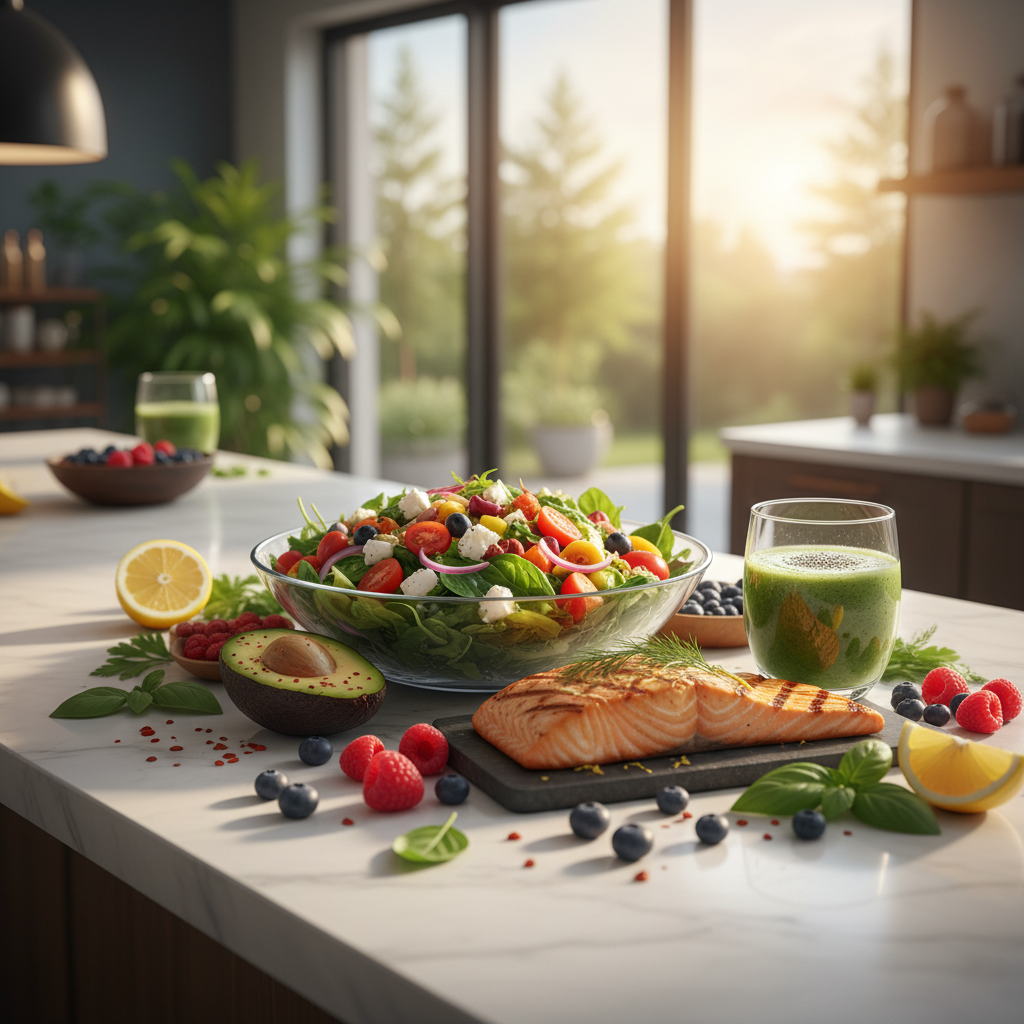
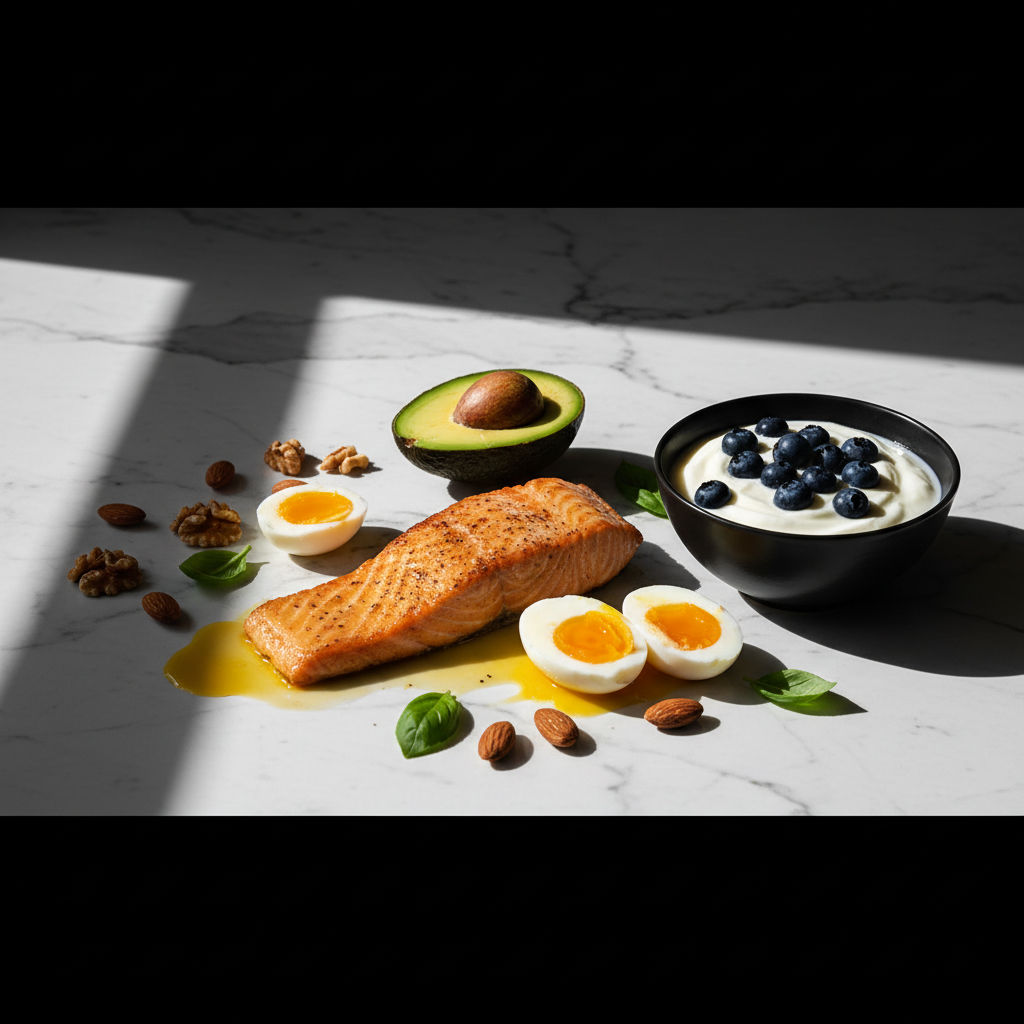
People always want to know what to eat to lose weight fast. The simple answer: foods that are high in protein and fiber, relatively low in calories, and as close to their natural form as possible. These foods fill you up and make your calorie deficit feel a lot less like a diet.
 © FoodIdentifier.com — All Rights ReservedFoodIdentifier.com
🥩 Lean Proteins (Eat Daily)
Chicken breast, turkey, egg whites, Greek yogurt (plain), cottage cheese, tuna, cod, shrimp, tofu, tempeh, edamame. Aim for protein at every single meal.
🥦 Non-Starchy Vegetables (Eat Freely)
Broccoli, spinach, kale, zucchini, peppers, cucumber, celery, asparagus, mushrooms, lettuce — these are essentially 'free' foods at 20–40 cal per cup.
🫘 Legumes (3–4x Per Week)
Lentils, chickpeas, black beans, kidney beans — deliver protein + fiber together, making them the most satiating low-calorie foods per gram on earth.
🍓 Low-Sugar Fruits (1–2 Servings Daily)
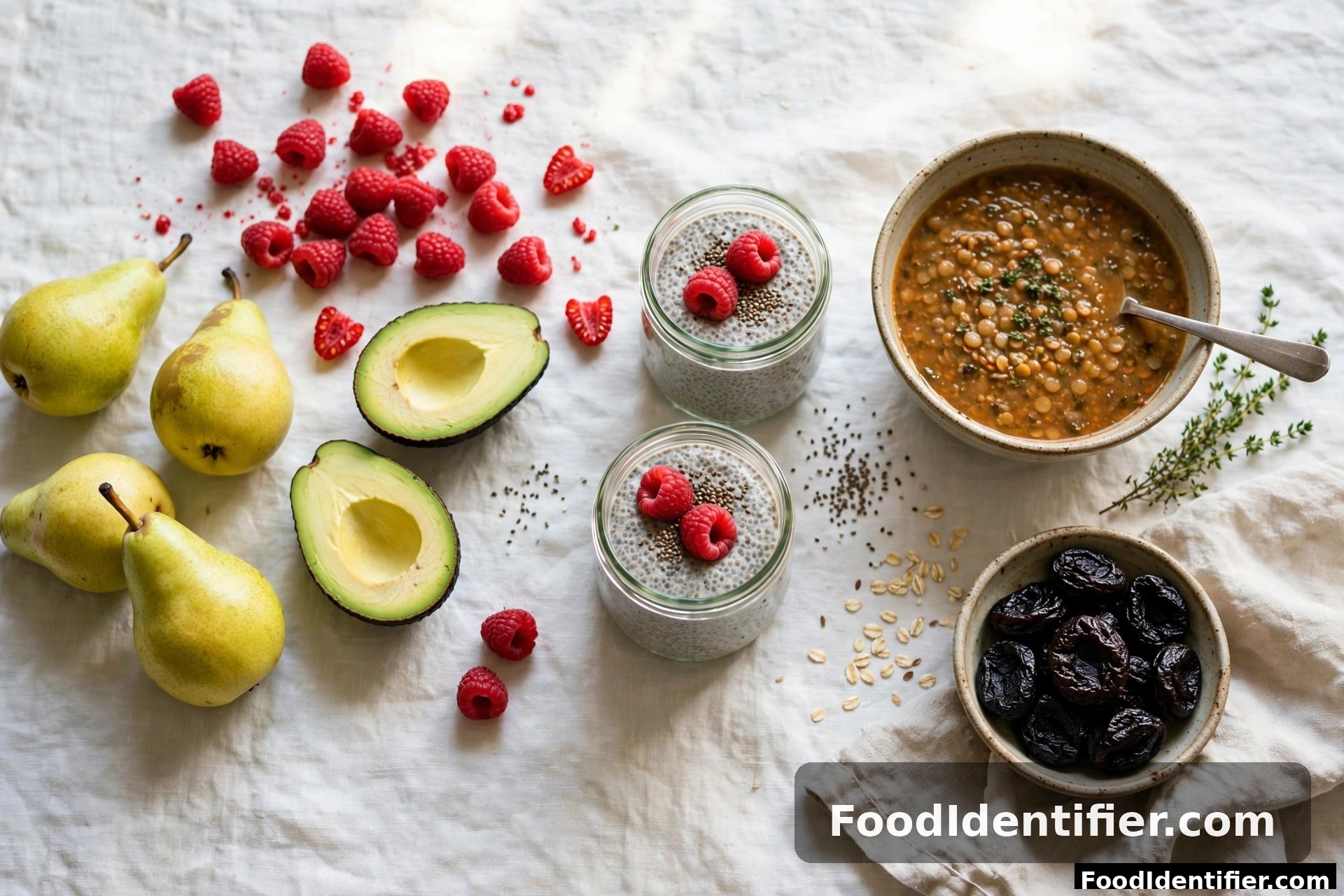
Strawberries (32 cal/cup), blueberries (84 cal/cup), raspberries (64 cal/cup), watermelon, apple, grapefruit. High fiber, low glycemic, nutrient dense.
🌾 Whole Grains (1–2 Servings Daily)
Oats, quinoa, brown rice, barley, farro — the fiber slows digestion and keeps blood sugar stable for 3–4 hours, preventing energy crashes and snacking.
🥑 Healthy Fats (Small Portions)
Avocado (½ per day max), olive oil (1–2 tbsp), nuts (1 oz), seeds — essential for hormones and satiety but calorie-dense, so portions matter.
📸 Scan Any Food Instantly — Free
Not sure if a food fits your calorie target? Take a photo with FoodIdentifier's free AI food scanner. Get instant calories, protein, carbs, and fat — no signup required.
Foods to Avoid to Lose Belly Fat — The Hidden Culprits
Knowing foods to avoid to lose belly fat is just as important as knowing what to eat. Visceral belly fat — the dangerous kind around your organs — is driven primarily by three things: excess sugar, refined carbohydrates, and chronic inflammation from ultra-processed foods.
| Food to Avoid | Why It Causes Belly Fat | How Many Calories Hidden |
|---|---|---|
| Sugary drinks (soda, juice) | Fructose goes directly to liver fat, drives insulin resistance | 150–250 cal per can (easy to drink 3/day) |
| White bread & refined carbs | Spikes blood sugar → insulin surge → fat storage signal | 100–200 cal per slice, often eaten in pairs |
| Alcohol (especially beer) | 7 cal/gram, blocks fat burning for hours, drives liver fat | 150–300 cal per drink, often 3+ drinks |
| Flavored coffee drinks | Lattes, frapps, and sweet coffees can top 500 cal each | 200–600 cal per drink |
| Fried foods | Calorie density 3–4x higher than baked equivalents | 300–800 cal per serving |
| Ultra-processed snacks | Engineered to override fullness signals, nearly impossible to stop | 200–400 cal per serving, usually 3+ servings eaten |
| Fruit juice (even 'natural') | Same sugar as soda, zero fiber, absorbed instantly | 120–150 cal per 8 oz glass |
| Low-fat 'diet' foods | Replace fat with sugar/starch to maintain palatability | Often higher calories than the full-fat version |
🚫 The #1 Belly Fat Driver Most People Miss
Liquid calories. Soda, juice, sweet coffee, and alcohol go down fast and don't make you feel full. Many people drink hundreds of calories a day without really noticing. Cutting liquid calories (except water, black coffee, and unsweetened tea) is the easiest way to create a deficit — and you don't even have to eat less food.
Best Breakfast for Weight Loss — 10 Options With Exact Calories
The best breakfast for weight loss has three things going for it: plenty of protein (aim for 25-30g+), some fiber, and enough calories to keep you full but not so many that you blow your budget for the day. A high-protein breakfast tends to reduce snacking and overeating later — not by magic, but because protein keeps you satisfied.
| Breakfast Option | Calories | Protein | Why It Works |
|---|---|---|---|
| 3-egg spinach omelette + 1 slice whole grain toast | 320 cal | 28g | High protein + fiber for 4+ hours satiety |
| Greek yogurt (1 cup) + mixed berries + 1 tbsp almond butter | 340 cal | 22g | Protein + probiotics + healthy fat |
| Oatmeal (½ cup dry) + 1 scoop protein powder + berries | 380 cal | 35g | Fiber + protein combo is extremely filling |
| Cottage cheese (1 cup) + sliced peach + cinnamon | 240 cal | 27g | Lowest calorie option, highest protein density |
| Avocado toast + 2 poached eggs + cherry tomatoes | 410 cal | 22g | Healthy fat + protein slows digestion |
| Protein smoothie: spinach + berries + protein powder + almond milk | 310 cal | 30g | Fast prep, easy to hit protein target |
| 2 whole eggs + 4 egg whites scrambled + salsa + 1 apple | 295 cal | 31g | Low calorie, very high protein |
| Smoked salmon + 2 eggs + cucumber slices (no toast) | 285 cal | 34g | Omega-3s reduce inflammation that drives belly fat |
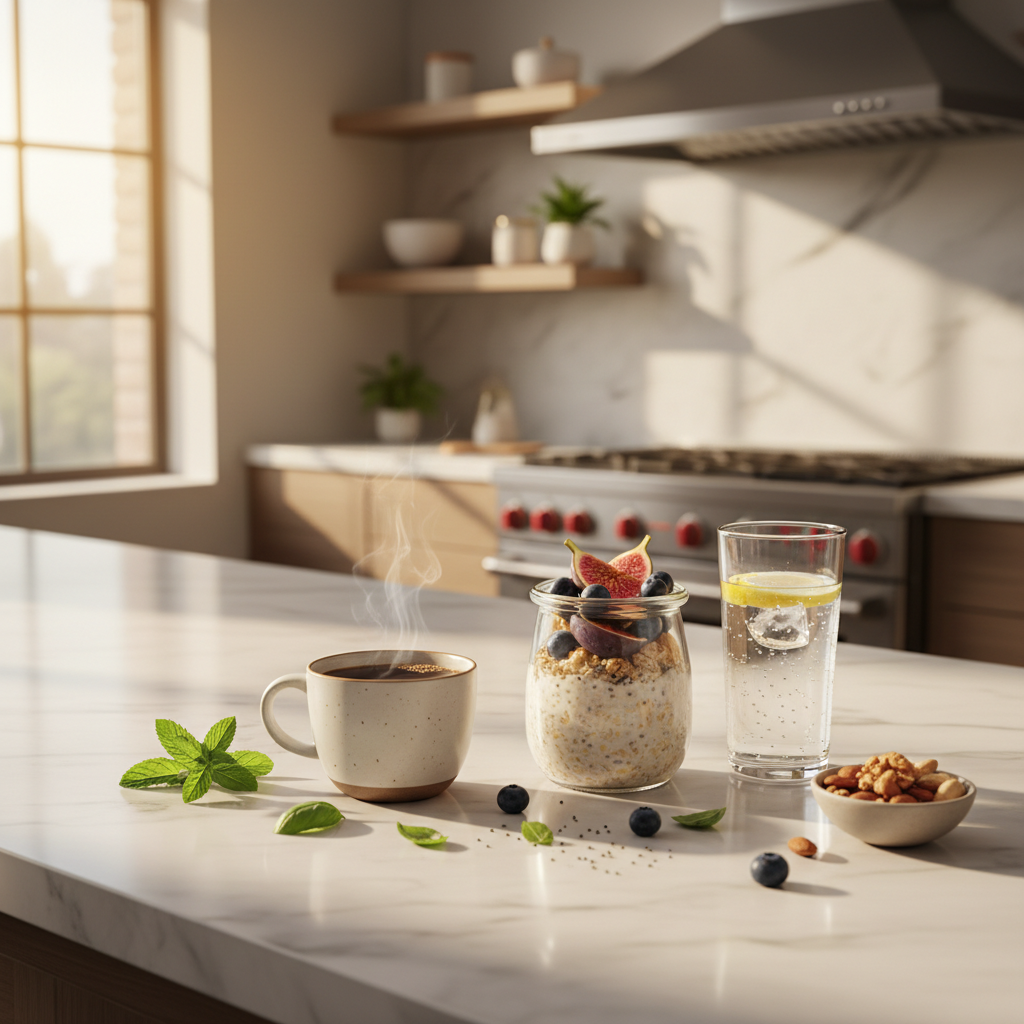
| Overnight oats (½ cup) + chia seeds + berries + cinnamon | 350 cal | 14g protein | Prep night before, high fiber keeps you full |
| Low-fat cottage cheese pancakes (3 pancakes) + maple syrup (1 tbsp) | 360 cal | 26g | Feels indulgent, hits protein target |
Skip breakfast? Some people prefer intermittent fasting and delay their first meal to noon. This works — but if you do eat breakfast, make protein your priority above everything else.
Snacks That Help You Lose Weight (Not Gain It)
Most snacks cause weight gain because they're low in protein and high in refined carbs — spiking insulin and increasing hunger an hour later. These snacks that help you lose weight are high in protein and/or fiber, keeping you satisfied between meals while staying under 200 calories:
🥚 Hard-boiled eggs (2)
155 cal · 13g protein · Takes 2 min to prepare · The ultimate portable weight loss snack. The yolk contains choline that helps burn fat.
🧀 Cottage cheese + cucumber (½ cup)
120 cal · 14g protein · Low carb · One of the highest protein-to-calorie ratios of any food
🥕 Baby carrots + hummus (3 tbsp)
130 cal · 4g protein · 6g fiber · The fiber and protein combination reduces blood sugar spikes
🍎 Apple + 1 tbsp almond butter
190 cal · 4g protein · 4g fiber · The fat slows sugar absorption from the apple, preventing energy crashes
🫐 Greek yogurt (½ cup plain)
60 cal · 10g protein · The most efficient protein source per calorie in existence
🥜 Edamame (½ cup shelled)
95 cal · 8.5g protein · 4g fiber · The only plant food with complete protein — all 9 essential amino acids
🐟 Tuna on cucumber slices
110 cal · 20g protein · Zero carbs · Incredibly filling for the calorie count
🫙 Celery + peanut butter (2 tbsp)
190 cal · 7g protein · 2g fiber · Negative calorie vegetable delivers crunchy satisfaction
⏰ When to Snack for Maximum Fat Loss
- Snack only if you're genuinely hungry — not bored, stressed, or thirsty
- Include some protein in every snack so it actually holds you over
- Drink a glass of water first — thirst is often mistaken for hunger
- Plan snacks ahead of time so you're not grabbing whatever is closest
How to Speed Up Metabolism Naturally — What Actually Helps
Let's set expectations honestly: you can't dramatically change your metabolism. Most of it is determined by genetics, age, and body size. But you can nudge it in the right direction. Here are the methods that actually matter, ranked by impact:
💪 Build Muscle (Biggest Impact)
This is the one that actually makes a difference. Muscle tissue burns more calories at rest than fat tissue. Building a few pounds of muscle through resistance training raises your resting metabolism — not by a huge amount, but enough to matter over months and years.
🥩 Eat Enough Protein
Protein has a higher thermic effect than carbs or fat — your body burns more energy digesting it. It's a modest effect, but it's real, and combined with protein's satiety benefits, it's worth doing.
☕ Coffee and Green Tea
Caffeine can give your metabolism a small, temporary boost. Green tea may help a bit too. Don't expect miracles — we're talking about a modest increase, not a transformation. But if you enjoy them, they're harmless and may help slightly.
😴 Sleep 7–9 Hours
This one's underrated. Poor sleep doesn't just make you tired — it makes you hungrier the next day and can reduce insulin sensitivity. Chronically bad sleep quietly undermines weight loss for a lot of people.
🚶 Stay Active Throughout the Day
The calories you burn walking around, standing, taking stairs, and just moving through your day add up to more than most people realize. A desk job can quietly cut your daily burn significantly. Find ways to move more.
🏋️ Do Some Resistance Training
A couple of sessions a week is enough to build and maintain muscle. You don't need to become a bodybuilder — just enough to preserve muscle as you lose fat, which keeps your metabolism from dropping.
❌ Metabolism Killers to Avoid
- Crash diets — eating far too little slows your metabolism as your body adapts to the lower intake
- Chronic stress — elevated cortisol can promote fat storage, especially around the midsection
- Sitting all day — a sedentary lifestyle dramatically reduces your daily calorie burn
- Yo-yo dieting — repeated cycles of losing and regaining weight can make each attempt feel harder
- Skipping meals and then overeating later — this doesn't 'boost' anything, it just makes you miserable
Does Drinking Water Help You Lose Weight? (The Honest Answer)
Yes — but not in the magical way some articles suggest. Water doesn't burn fat directly. What it does is simpler and more practical: drinking water before meals helps you eat a bit less, replacing sugary drinks with water cuts hundreds of empty calories, and sometimes what feels like hunger is actually thirst. Here's what the research actually shows:
| What Water Does | How It Helps | The Reality |
|---|---|---|
| Drinking water before meals | Helps you feel fuller and eat slightly less | A modest effect — helpful but not dramatic |
| Replacing sugary drinks with water | Cuts hundreds of liquid calories with zero hunger | This is the biggest real-world benefit |
| Thirst mistaken for hunger | Sometimes you're thirsty, not hungry | Worth checking before you snack |
| Staying hydrated | Supports normal metabolism and energy | Dehydration makes you feel sluggish and can worsen cravings |
💧 How Much Water to Drink to Lose Weight
The optimal amount: half your bodyweight in ounces per day + 16 oz for every 30 minutes of exercise.
- 160 lb person: 80 oz (10 cups / 2.4 liters) minimum daily
- Drink 16 oz first thing every morning before coffee or food
- Drink 16 oz 30 minutes before every meal
- Carry a 32 oz water bottle and aim to refill it 3x per day
Use our free Water Intake Calculator to get your exact target based on your weight and activity level.
Intermittent Fasting for Weight Loss — Does It Actually Work?
Intermittent fasting (IF) has been studied a lot, and the research is clear: IF produces similar weight loss to regular calorie counting. It's not magic — it works because eating in a shorter window tends to make you eat less overall. But for a lot of people, it's easier to stick with than tracking every calorie, which is why it's worth considering.
 © FoodIdentifier.com — All Rights ReservedFoodIdentifier.com
| IF Protocol | How It Works | Best For | Expected Loss |
|---|---|---|---|
| 16:8 (most popular) | Eat 12pm–8pm, fast 8pm–12pm | Beginners, anyone who skips breakfast naturally | 0.5–1 lb/week without calorie counting |
| 18:6 | Eat 1pm–7pm, fast 19 hours | People comfortable with 16:8 wanting more results | 0.75–1.25 lbs/week |
| 5:2 Diet | Eat normally 5 days, 500 cal on 2 days | People who prefer not to fast daily | 0.5–1 lb/week average |
| OMAD (One Meal) | Eat all calories in 1 hour | Advanced only — hunger management is very difficult | 1–1.5 lbs/week but hard to sustain |
| Alternate Day Fasting | Full fast every other day | Research shows good results but lowest adherence | 1.5–2 lbs/week, very hard to follow |
- Lowers insulin levels, which helps your body access stored fat for energy
- May modestly increase growth hormone, which helps preserve muscle during fat loss
- Triggers autophagy — a cellular cleanup process — after longer fasts
- Many people naturally eat less without tracking, simply because the eating window is shorter
- Simplifies your day — fewer meals to plan and think about
- Some research suggests it may be particularly helpful for reducing visceral belly fat
Best Exercises to Lose Belly Fat at Home (No Gym Needed)
You don't need a gym membership to lose belly fat. The best exercises to lose belly fat at home combine resistance training (to build metabolism-boosting muscle) with cardiovascular work (to burn calories directly).
Important truth: you cannot spot-reduce belly fat. No amount of crunches will burn belly fat specifically. Fat loss is systemic — you lose it from your whole body based on genetics and calorie deficit. But these exercises burn the most total calories and build the most muscle, which accelerates total body fat loss including belly fat.
🏃 Walking (30–60 min daily)
The most underrated fat loss tool there is. It burns calories, improves insulin sensitivity, lowers stress, and you can do it forever without burning out.
💪 Bodyweight squats (3×15)
Squats work the biggest muscles in your body (quads and glutes), which means more calorie burn and more muscle built. No equipment needed.
🔥 Burpees (3×10)
A full-body movement that gets your heart rate up fast. They're hard — that's the point. A few sets will leave you spent.
🏋️ Push-ups (3×12)
Builds chest, shoulder, and arm muscle. As you lose fat, this is what gives your upper body a firmer look.
⚡ Mountain climbers (3×30 sec)
Great for heart rate and core. Quick and brutal — 30 seconds feels long.
🧘 Plank variations (3×30–60 sec)
Builds core stability, improves posture, and helps reduce lower back pain. Won't give you visible abs on its own, but nothing will until the fat comes off.
⏱️ The Minimum Effective Exercise Dose for Fat Loss
You don't need to spend hours at the gym. Here's what matters:
- 2-3 strength sessions per week is enough to build and maintain muscle
- Daily walking does more for fat loss than most people realize
- You don't need HIIT — it's optional, not required
- The best workout is the one you'll actually do consistently for months
Weight Loss Plateau — How to Break Through It
A weight loss plateau happens when the scale stops moving despite doing everything right. It's the most discouraging part of any diet — and it happens to virtually everyone. Here's why it happens and exactly how to break through it.
Why Weight Loss Plateaus Happen
- Metabolic adaptation — your body reduces TDEE by 10–15% in response to prolonged deficit
- You weigh less now — a smaller body burns fewer calories, so your deficit may have shrunk without you noticing
- Calorie creep — portions have gradually increased back toward maintenance without you realizing
- Hormonal changes — weight loss increases hunger and reduces fullness signals over time, making it harder to stick to the deficit
- Water retention — stress, sodium, and hormonal fluctuations can mask several pounds of ongoing fat loss
How to Break a Weight Loss Plateau — 6 Things That Actually Help
📉 Recalculate Your TDEE
Your calorie needs drop as you lose weight. Recalculate your TDEE at your new weight and adjust your target down by 100-200 calories.
🍗 Bump Up Protein
If you've been at the lower end of the protein range, push toward 1g per pound. It helps preserve muscle and keeps you full.
🔄 Try Calorie Cycling
Alternate between higher-calorie days (maintenance) and lower-calorie days (deficit). Some people find this helps with adherence and breaks the mental fatigue of constant restriction.
💪 Add or Intensify Resistance Training
If you haven't been lifting, start. If you have, push a bit harder. Muscle preservation is key to keeping your metabolism up.
😴 Fix Sleep First
If you're sleeping under 7 hours, fix this before anything else. Poor sleep makes you hungrier and more prone to overeating.
📸 Re-Track Everything for a Week
Most plateaus are caused by calorie creep you didn't notice. Track every bite for a week — the hidden calories are usually in oils, sauces, and snacks.
How to Stop Feeling Hungry on a Diet — What Actually Works
The number one reason diets fail is hunger. If you're miserable, you quit. So managing hunger matters more than almost any specific food choice. These strategies genuinely help — not because of some secret mechanism, but because they're practical ways to feel full on fewer calories:
| Strategy | How It Works | Why It Helps |
|---|---|---|
| Eat more protein | Protein is the most filling macronutrient — it suppresses hunger hormones for hours | The single most effective thing you can do |
| Drink water before meals | Helps stretch the stomach and may reduce how much you eat | A small but real effect |
| Eat slowly | It takes about 20 minutes for fullness signals to reach your brain | Eating fast makes it easy to overshoot without realizing |
| High-fiber foods at every meal | Fiber slows digestion and feeds gut bacteria that produce satiety signals | Keeps you full longer between meals |
| Sleep 7-9 hours | Poor sleep raises hunger hormones and lowers fullness signals the next day | Underrated — poor sleep quietly sabotages diets |
| Use smaller plates | A simple visual cue that can help with portion control | A small nudge, not magic — but it helps |
| Chew thoroughly and eat mindfully | Slowing down gives fullness signals time to register | You'll likely eat less without trying |
| Coffee or green tea | Caffeine can briefly suppress appetite | A mild, temporary effect — helpful but modest |
| Volume eating — fill up on vegetables | Large portions of low-calorie vegetables fill your stomach for few calories | One of the most practical strategies there is |
| Don't ban entire food groups | Forbidden foods become obsessive — allowing everything in moderation prevents binges | Restriction breeds binging, plain and simple |
| Brush teeth after dinner | Signals that eating is done for the day | A simple cue that works for a lot of people |
| Manage stress daily | Cortisol increases cravings for high-calorie foods | Stress eating is real — find outlets that aren't food |
Complete 7-Day Weight Loss Meal Plan (1,500 Calories)
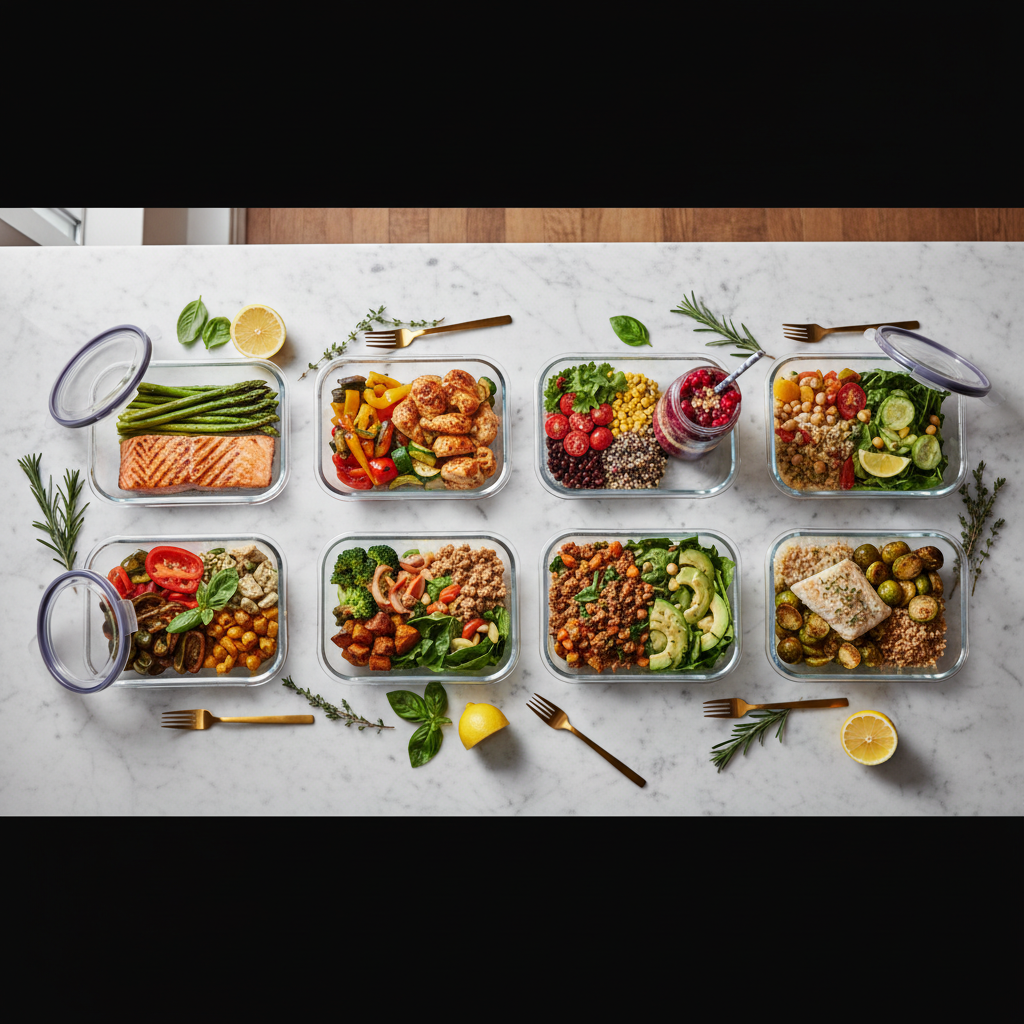
This low calorie meal plan for weight loss is designed to hit exactly 1,500 calories, 120g+ protein, and 30g+ fiber every day — making it extremely filling despite being well below most people's TDEE. Adjust up or down by 100–200 cal based on your personal target.
 © FoodIdentifier.com — All Rights ReservedFoodIdentifier.com
🛒 Weekly Grocery List for This Meal Plan
🥩 Proteins
- Chicken breast (2 lbs)
- Salmon fillets (2 × 5 oz)
- Canned tuna (4 cans)
- Shrimp (1 lb)
- Lean ground turkey (1 lb)
- Eggs (2 dozen)
- Greek yogurt 0% (2 × 32 oz)
- Cottage cheese (1 × 24 oz)
- Cod or white fish (1 lb)
🥦 Produce
- Spinach (2 large bags)
- Broccoli (2 heads)
- Mixed greens (1 large bag)
- Zucchini (4)
- Bell peppers (4)
- Asparagus (1 bunch)
- Cherry tomatoes (1 pint)
- Cucumber (3)
- Blueberries + strawberries (2 cups each)
- Apples (4), Oranges (3)
How Long Does It Take to Lose Weight — Realistic Timeline
One of the most searched questions is how long does it take to lose 20 pounds. Here is the honest, realistic timeline based on clinical data:
| Goal | Realistic Timeline | Weekly Rate | What to Expect Each Month |
|---|---|---|---|
| Lose 5 lbs | 3–5 weeks | 1–1.5 lbs/week | Month 1: 4–6 lbs (includes 2–3 lbs water) |
| Lose 10 lbs | 6–10 weeks | 1–1.5 lbs/week | Month 1: 6–8 lbs, Month 2: 3–4 lbs |
| Lose 20 lbs | 10–20 weeks | 1–2 lbs/week | Month 1: 6–8 lbs, Month 2–5: 2–4 lbs each |
| Lose 30 lbs | 20–30 weeks | 1–1.5 lbs/week | First 10 lbs fastest, last 10 lbs slowest |
| Lose 50 lbs | 35–50 weeks | 1 lb/week average | Large initial drop, progressively slows |
| Lose 100 lbs | 1.5–2 years | 0.75–1 lb/week average | First 6 months fastest, patience required |
📅 The Truth About Weight Loss Speed
- Week 1–2: Rapid initial drop of 3–7 lbs — mostly water weight from carb and sodium reduction
- Week 3–8: Consistent fat loss of 1–2 lbs/week as the body adjusts to deficit
- Week 9–16: Possible plateau as metabolism adapts — use the plateau-breaking strategies above
- Month 4+: Slower rate (0.5–1 lb/week) as you get closer to goal weight — this is normal and healthy
- The closer you are to your goal weight, the slower the loss — this is biology, not failure
Use our free Weight Loss Timeline Calculator to get a personalized week-by-week projection for your specific goal.
Free Weight Loss Tools — Use These Every Day
⚡ TDEE Calculator
Find your exact Total Daily Energy Expenditure in 60 seconds. Set your calorie target, then calculate your deficit for 1 or 2 lbs/week loss.
📊 Macro Calculator
Get your exact daily protein, carbohydrate, and fat targets based on your body weight, activity, and goal — personalized in seconds.
💧 Water Intake Calculator
Calculate exactly how much water you need daily based on your weight and exercise level. Hydration is the most overlooked weight loss tool.
📸 AI Food Scanner
Photograph any meal and get instant calories, protein, carbs, and fat. Works on restaurant food, home cooking, packaged products — any food.
⏱️ Intermittent Fasting Calculator
Calculate your optimal eating and fasting windows for the 16:8, 18:6, or 5:2 protocol based on your schedule.
📉 Calorie Deficit Calculator
Enter your goal (1 or 2 lbs/week loss) and get your exact daily calorie target with full macro breakdown.
 © FoodIdentifier.com — All Rights ReservedFoodIdentifier.com
People Also Search
Answer Engine Optimization · AI-Ready Answers
Weight Loss — AI Search Answers
These answers are structured for ChatGPT, Perplexity, Google SGE, and other AI search engines — so you get accurate, instant answers to the most-searched questions on this topic.
Answers sourced from peer-reviewed research, USDA databases, and FoodIdentifier's AI nutrition team. Updated April 2026.
Frequently Asked Questions — Everything Answered
Q: How to lose weight fast for beginners?
A: Figure out roughly how many calories you burn each day, eat about 500 less than that, get enough protein (0.7-1g per pound of bodyweight), drink water, walk a bit, and track what you eat for a couple of weeks. That's the whole thing. You don't need a complicated plan — you need consistency.
Q: How many calories should I eat to lose weight?
A: It depends on your size and activity, but most women do well around 1,400-1,600 calories a day for fat loss, and most men around 1,800-2,200. Eat about 500 calories below what you burn. Going much lower than 1,200 (women) or 1,500 (men) usually backfires.
Q: How to lose 10 pounds in a month?
A: It's doable but not all of it will be fat. You'll likely drop 3-5 pounds of water weight in the first week (especially if you cut carbs and sodium), then 4-6 pounds of actual fat over the rest of the month. That's a fairly aggressive pace — you'd need a big deficit and careful tracking. A more sustainable target is 4-8 pounds a month.
Q: How to lose weight fast for women over 40?
A: The fundamentals are the same at any age: calorie deficit, enough protein, some strength training. But after 40, muscle loss speeds up and metabolism slows a bit, so protein and resistance training matter even more. Prioritize sleep — it affects hunger hormones more than people realize. Results may be slower, but they absolutely happen.
Q: What foods to avoid to lose belly fat?
A: The usual suspects: sugary drinks, alcohol, refined carbs (white bread, pastries), fried foods, and ultra-processed snacks. You don't have to ban them forever, but cutting back on these is the fastest way to create a calorie deficit without feeling starved. Low-fat diet products are often loaded with sugar to make up for taste — check the label.
Q: How to lose weight fast without gym?
A: You absolutely can — diet does most of the heavy lifting. Eat in a deficit, get enough protein, cut liquid calories, walk daily, and sleep well. If you want to add exercise at home, bodyweight movements (squats, push-ups, planks) a few times a week help you keep muscle and burn a bit more. No gym required.
Q: Why am I not losing weight on a calorie deficit?
A: Usually it's one of these: you're eating more than you think (cooking oils, sauces, and bites here and there add up), your metabolism has adapted after weeks of dieting (recalculate), you're retaining water from stress or sodium, or you're not sleeping enough. Track carefully for two weeks and you'll usually find the culprit.
Q: How long does it take to lose 20 pounds?
A: At 1-2 pounds per week, expect 10-20 weeks. You'll drop a few pounds fast at first (water weight), then settle into a slower pace. The closer you get to your goal, the slower it gets. That's normal — it's not a sign you're doing something wrong.
Q: Does intermittent fasting work for weight loss?
A: Yes, it can work well. But it's not magic — it works because eating in a shorter window tends to make you eat less overall. If you fast all morning but overeat during your window, you won't lose weight. The best approach is the one you can stick with.
Q: How to lose water weight fast?
A: Cut back on sodium and refined carbs, drink more water (yes, more water helps you retain less), and move around. Glycogen stores water alongside it, so when you eat fewer carbs you drop water fast. This is why the first week of a diet always looks dramatic on the scale.
Q: What is the best snack for weight loss before bed?
A: Something small and protein-rich: cottage cheese, Greek yogurt, or a couple of hard-boiled eggs. Keep it under 200 calories. Avoid sugar and big carb-heavy snacks — they can disrupt sleep and leave you hungrier the next morning.
Q: How to lose belly fat fast in 2 weeks?
A: Honestly, you can't lose much belly fat in two weeks. You can lose 2-5 pounds (some water, some fat) by cutting sugary drinks and alcohol, eating more protein, walking daily, and sleeping well. You'll see some difference, but real belly fat loss takes months, not weeks.