📋 Key Takeaways
- • Volume eating lets you eat more food for fewer calories — no hunger required
- • 21 specific foods are high-volume and low-calorie — leafy greens, cucumber, and berries lead the list
- • Low-calorie-dense foods lead to 50% more weight loss than calorie counting alone
- • Starting meals with soup or salad reduces total calories by 20%
- • Cauliflower rice has 80% fewer calories than white rice for the same volume
- • Scan any meal with FoodIdentifier to check its calorie density
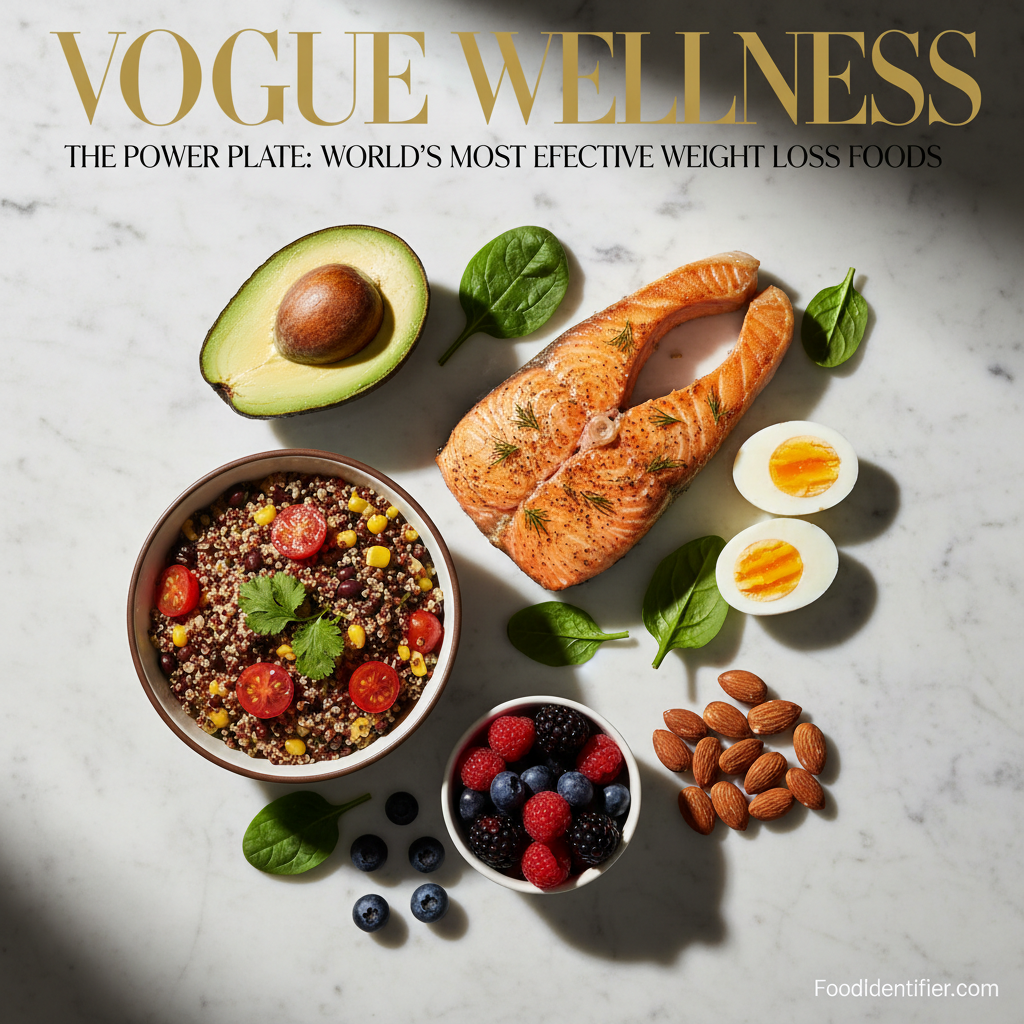
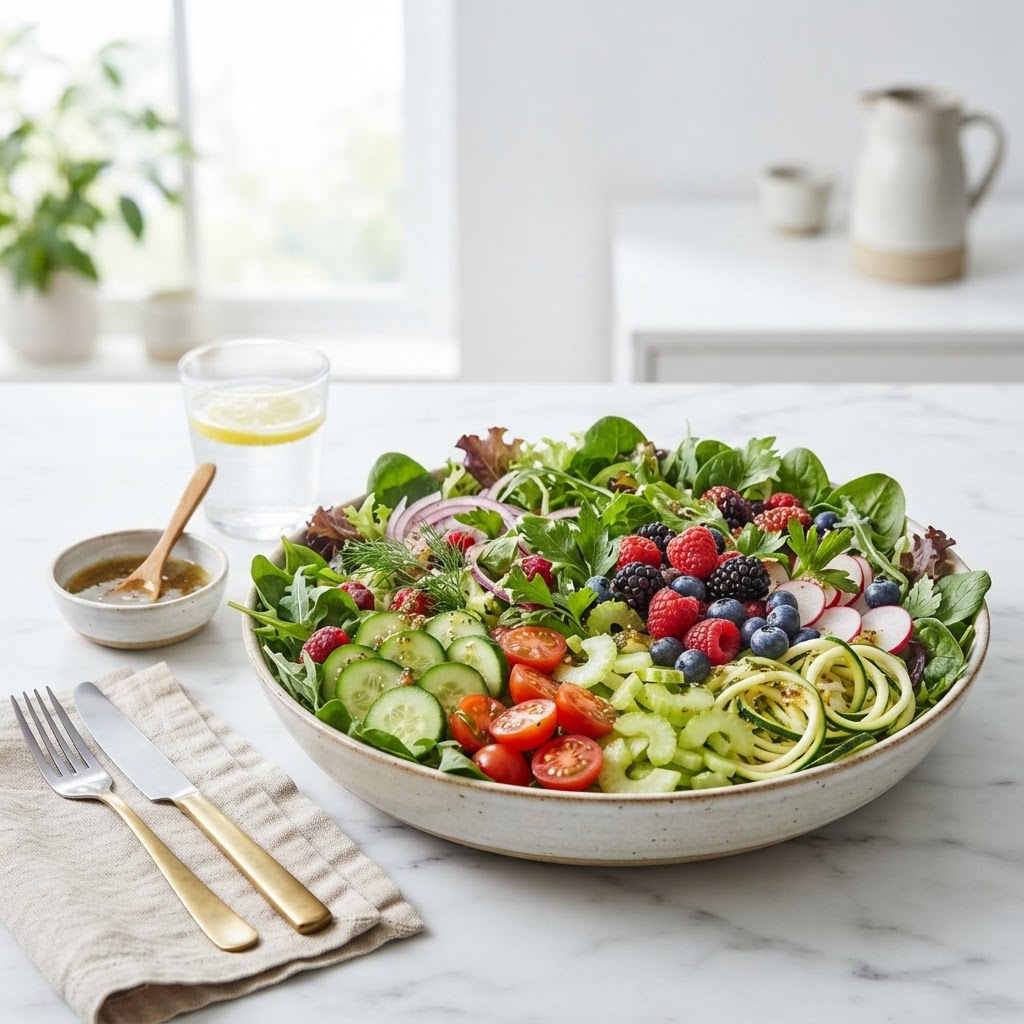
What if you could eat more food and still lose weight? That is the promise of volume eating — filling up on high-volume, low-calorie foods so you never feel hungry. Research from Penn State University shows this approach leads to 50% more weight loss than calorie counting. In this complete 2026 guide, we cover the 21 best high-volume low-calorie foods, the science of calorie density, a 7-day volume-eating meal plan, and how to use AI food scanning to eat more while weighing less.
The Science of Volume Eating
Your stomach has stretch receptors that signal fullness based on food volume, not calories. When you eat a large volume of food, your stomach stretches, and your brain receives fullness signals — regardless of how many calories the food contains. This is why you can eat a huge salad and feel full on 200 calories, or a small piece of cake and feel hungry on 400 calories.
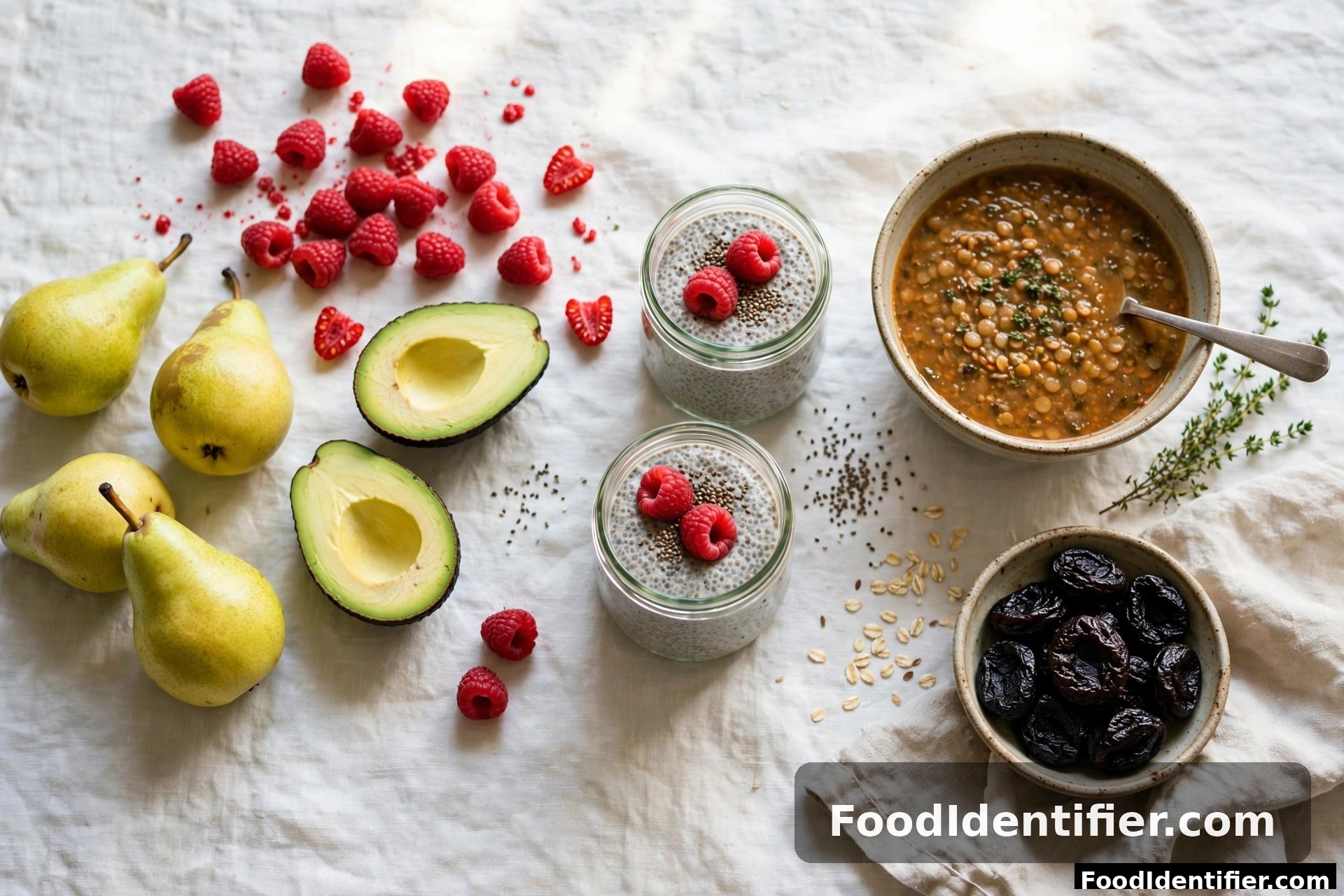
Calorie density (calories per gram) is the key metric. Low-calorie-dense foods (0-1.5 cal/g) are mostly water and fiber — vegetables, fruits, broth soups. High-calorie-dense foods (4-9 cal/g) are mostly fat and sugar — oils, nuts, cheese, processed foods. By choosing low-calorie-dense foods, you eat 2-3x more volume for the same calories. See: Best Foods for Calorie Deficit →
📊 Volume Eating Facts
The 21 Best High-Volume Low-Calorie Foods
🥬 Top 10 Highest-Volume Foods
Lettuce (iceberg)
95% water
5 cal
per cup
Spinach (raw)
91% water
7 cal
per cup
Cucumber
96% water
16 cal
per cup
Zucchini
95% water
20 cal
per cup
Celery
95% water
14 cal
per cup
Cauliflower
92% water
25 cal
per cup
Broccoli
89% water
31 cal
per cup
Watermelon
92% water
46 cal
per cup
Strawberries
91% water
49 cal
per cup
Cantaloupe
90% water
53 cal
per cup
🥗 Other High-Volume Foods
Air-popped popcorn
High volume, whole grain
31 cal
per cup
Broth-based soup
Highest volume food
50-80 cal
per cup
Cabbage
92% water
22 cal
per cup
Bell peppers
92% water
30 cal
per cup
Asparagus
93% water
27 cal
per cup
Tomatoes
94% water
32 cal
per cup
Mushrooms
92% water
15 cal
per cup
Green beans
90% water
31 cal
per cup
Berries (raspberries)
85% water
64 cal
per cup
Grapefruit
91% water
42 cal
per half
Shirataki noodles
97% water, glucomannan fiber
5-10 cal
per serving
7-Day Volume-Eating Meal Plan
Broth soup starter + large spinach salad + grilled chicken + cauliflower rice + strawberries + popcorn
Vegetable soup + cucumber salad + salmon + zucchini noodles + watermelon + celery sticks
Broth soup + large cabbage salad + turkey + broccoli + cantaloupe + air-popped popcorn
Salad starter + chicken + bell peppers + cauliflower mash + berries + cucumber slices
Vegetable soup + spinach salad + fish + asparagus + grapefruit + mushrooms
Broth soup + large green salad + chicken + zucchini + strawberries + popcorn
Salad starter + turkey + broccoli + cauliflower rice + watermelon + celery
High-Volume vs Low-Volume Foods (Same Calories)
See exactly how swapping common foods for healthier alternatives changes your nutrition
| Food Item | Calories | Protein | Carbs | Fat | Fiber |
|---|---|---|---|---|---|
| g | g | g | g | ||
| g | g | g | g | ||
| g | g | g | g | ||
| g | g | g | g | ||
| g | g | g | g | ||
| g | g | g | g | ||
Want to check the exact nutrition of any food? Scan it with FoodIdentifier and get instant calories, macros, and healthier swap suggestions.
Scan a Food NowHow FoodIdentifier Compares to MyFitnessPal, Cronometer & Yuka
See why 500,000+ users switched to the AI-powered food scanner
Feature-by-Feature Comparison
| Feature | FoodIdentifierAI-Powered | MyFitnessPal | Cronometer | Yuka |
|---|---|---|---|---|
AI Photo Food Scanner | Instant — snap any meal | No photo scan | No photo scan | Barcode only |
Barcode + Photo + Label Scan | All 3 methods | Barcode only | Manual entry | Barcode only |
AI Nutrition Coach | Personalized AI coach included | Generic tips | No coach | No coach |
Blood Sugar Impact Prediction | Per-meal glucose prediction | |||
Ozempic / GLP-1 Compatibility Check | Built-in checker | |||
0–100 Food Quality Score | Instant unified score | Yes (basic) | ||
Better Alternative Suggestions | AI recommends swaps | Basic | ||
Ingredient Safety Scanner | Additive + allergen detection | Yes | ||
Personal Safety Verdict | Based on your allergies + goals | |||
Free Scans (No Signup) | 3 free scans daily | Must create account | Must create account | Limited free scans |
Price | Free / $9.99 mo Pro | $19.99 mo Premium | $9.99 mo | Free / €1.99 mo |
FoodIdentifier is the only app that combines AI photo scanning, blood sugar prediction, Ozempic compatibility, and a personalized nutrition coach — all in one.
Scan Your First Meal Free →No credit card required · 3 free scans daily
⚕️ Medical Disclaimer
This article is for educational purposes only and is not medical advice. Very low-calorie diets can be dangerous without medical supervision. If you have an eating disorder or are underweight, consult a doctor and registered dietitian before changing your diet. Always consult a qualified healthcare provider before making significant dietary changes.
Scan Any Meal. Check Its Calorie Density.
Take a photo of any food and instantly see its calorie density and volume score.
Try It Free — No Sign-Up Needed →