2M+
Active monthly users
3 sec
Average scan speed
200+
Cuisines supported
94–98%
Recognition accuracy
Picture this. You're at a restaurant you've never been to before. The waiter sets down a plate that is genuinely beautiful — roasted protein with some kind of golden sauce, a grain you can't quite name, vegetables you don't recognize. It smells extraordinary. Your friend across the table is already eating. You want to eat it too. But you've been tracking your nutrition for 11 days straight, you're 3 lbs into your goal, and you have absolutely no idea what's on that plate.
You try Googling the restaurant menu. The website hasn't been updated since 2022. You search "roasted chicken harissa sauce calories" — you get 47 different results ranging from 380 to 890 calories. None of them match what's in front of you. You consider just guessing. You consider giving up on tracking entirely. You've been here before, and you know how this usually ends.
Then you open FoodIdentifier. You point your phone at the plate. Three seconds later, your screen reads:
🍽️ Harissa Roasted Chicken Thigh with Freekeh & Roasted Cauliflower
Calories
520 kcal
Protein
38g
Carbs
22g
Fat
18g
Fiber
6g
Confidence
96%
🤖 AI Coach: Great protein choice. You're 12g short of your daily goal — this meal gets you there. Harissa contains capsaicin which temporarily increases metabolic rate. The freekeh is a low-GI ancient grain — excellent for sustained energy. Enjoy every bite.
That moment — that specific, exact moment of turning uncertainty into clarity — is what over 2 million people experience with FoodIdentifier every single day. Not an approximation. Not a guess. Not a generic database entry someone submitted in 2018. Actual, AI-powered, real-time nutritional intelligence for the actual food in front of you, right now.
This is not a nutrition app as you've known nutrition apps. This is something genuinely new. And if you've ever given up on food tracking because it was too hard, too slow, or too inaccurate — FoodIdentifier was built specifically for you.
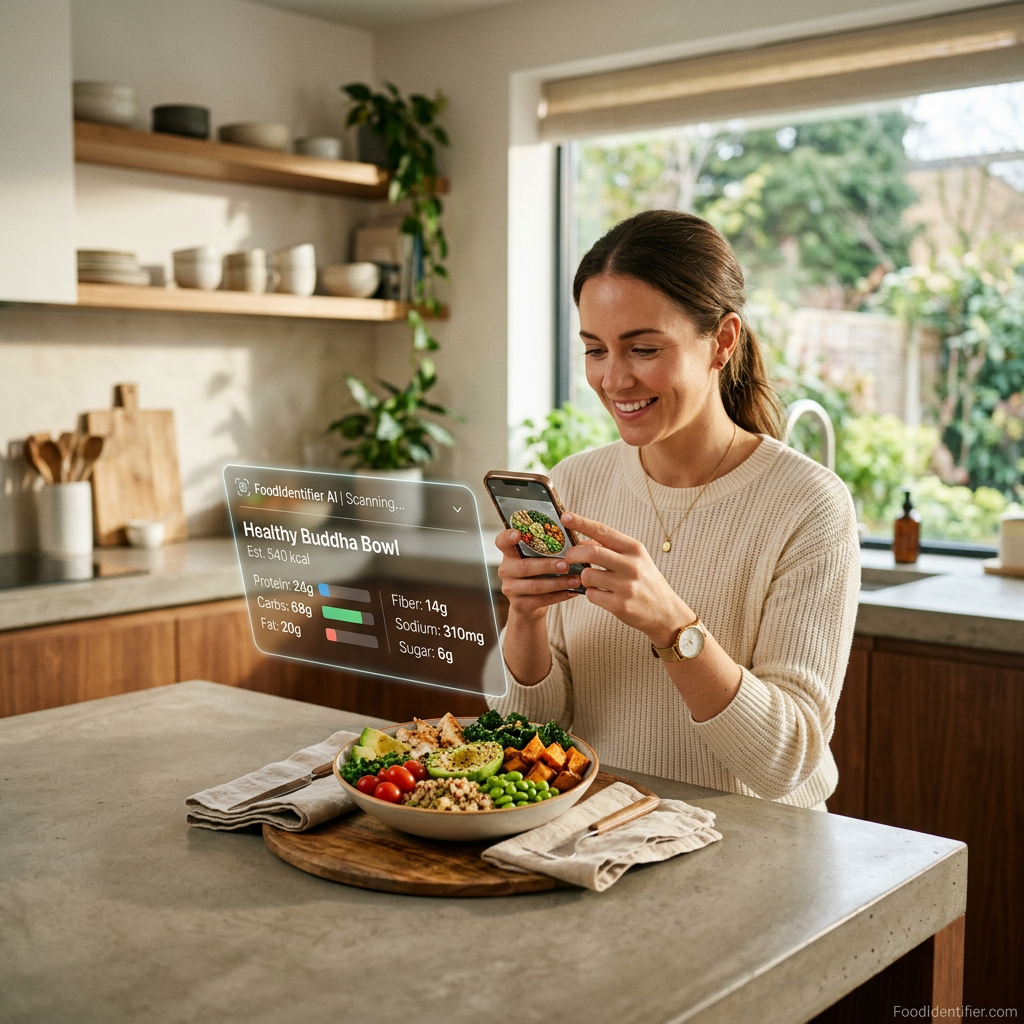
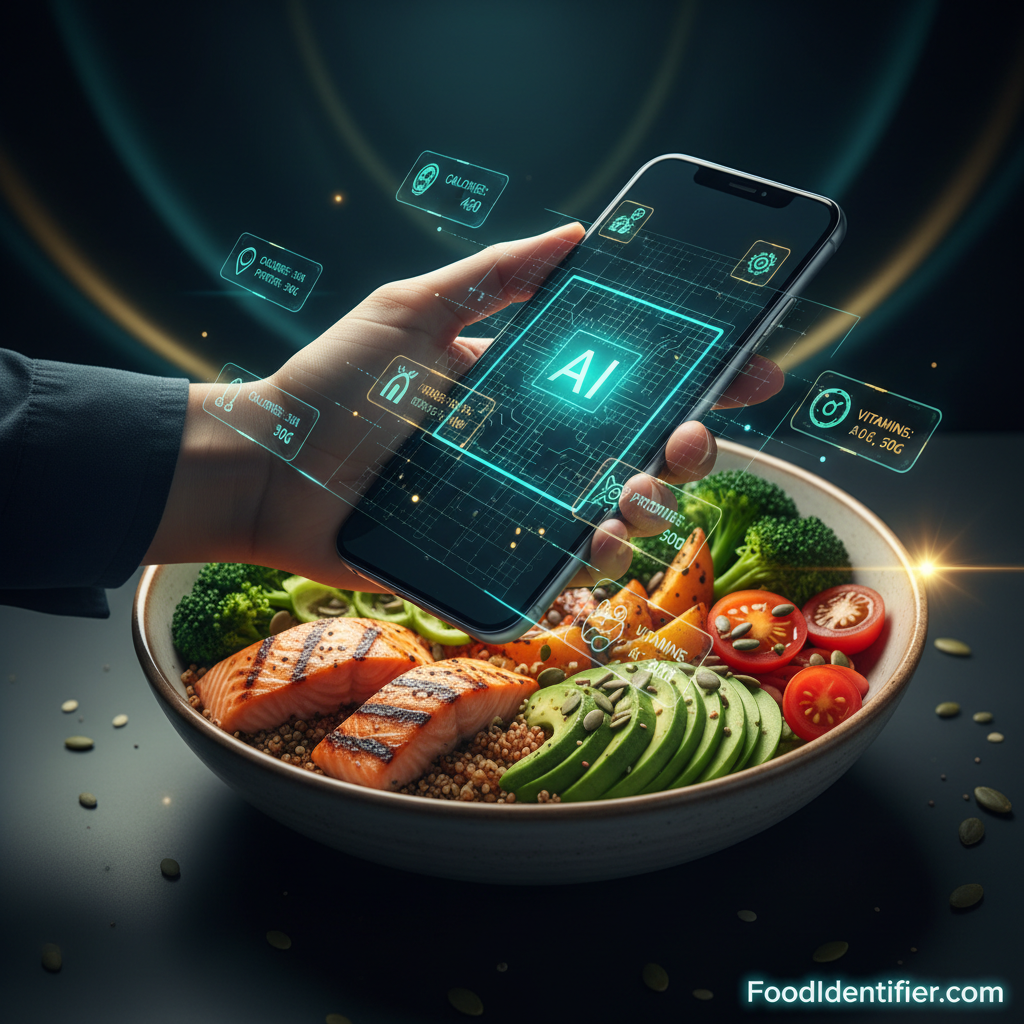
FoodIdentifier in action: point at any meal, anywhere in the world — get instant nutrition data in 3 seconds with no app download required.
🚀 TRY FOODIDENTIFIER FREE RIGHT NOW
No account. No download. Just point your camera and get instant nutrition data.
→ Scan My Food FreeSection 1: What Is FoodIdentifier?
FoodIdentifier is a web-based AI nutrition platform that lets anyone photograph any food — a home-cooked meal, a restaurant dish, a packaged product, street food in Bangkok, a grandma's recipe in Guadalajara — and receive instant, accurate nutritional data in under 3 seconds. No manual logging. No barcode required. No database searching. Just a photo and an answer.
The platform lives at foodidentifier.com and runs entirely in your browser — meaning there's nothing to download, nothing to install, and no app store involved. It works on iPhone, Android, desktop, and tablet equally well. You go to the website, tap the camera button, take a photo, and your nutrition data appears.
But calling FoodIdentifier a "calorie counter" fundamentally undersells what it actually does. The core promise is deeper than that: FoodIdentifier turns every meal into a conversation. Each scan triggers not just a data dump of numbers, but a personalized AI coaching interaction that contextualizes those numbers relative to your specific goals, your food history, your health conditions, and your preferences.
Scan 500 calories of salmon and your AI coach tells you that you've hit your omega-3 target for the day, that the wild-caught salmon has 40% more DHA than farmed alternatives, and that pairing it with leafy greens tonight will maximize your iron absorption. Scan 500 calories of a gas station pastry and your coach helps you understand what that spike will do to your blood glucose over the next 90 minutes and what to eat next to stabilize it. Same calories. Completely different coaching. That is what makes FoodIdentifier different.
The platform was founded on a simple but radical belief: the barrier to good nutrition has never been information — we have more nutrition information than ever. The barrier has been access to that information at the exact moment of decision. Standing in a restaurant line. Sitting down to a meal you didn't cook. Eating something you can't identify. FoodIdentifier eliminates that barrier completely.
📸
Photo-First
Take a picture. That's the entire input. No typing, no searching, no scanning.
⚡
3-Second Results
AI processes your image and returns complete nutrition data in under 3 seconds.
🤖
AI Coaching
Personal nutrition coach that contextualizes every scan to your goals.
🌍
Global Coverage
200+ cuisines. Every food from every culture, everywhere in the world.
🔒
Privacy-First
Images not stored. Zero data selling. Works anonymously.
💚
Genuinely Free
Core features are free. No credit card. No account required to start.
Section 2: The Problem Every Nutrition App Gets Wrong
There are hundreds of nutrition tracking apps. Most of them fail their users in the same predictable ways. Understanding why they fail explains exactly why FoodIdentifier was built the way it was.
⏳ The Abandonment Problem
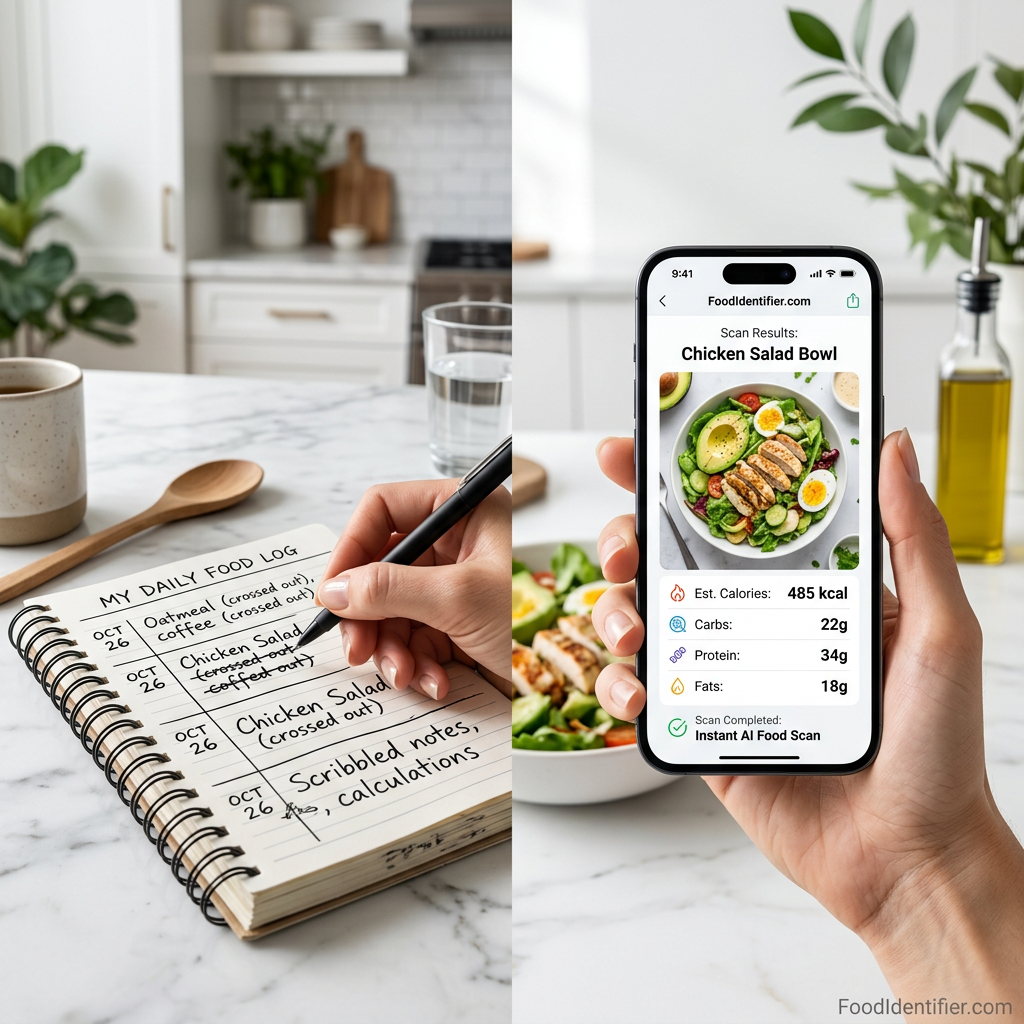
A landmark study published on PubMed found that 80% of users abandon manual food logging apps within 2 weeks of download. The reason is always the same: it takes too long. Searching a database for 'grilled chicken breast 6 ounces with lemon herb marinade' returns 47 confusing options, none of which exactly match what you ate. Most people give up within 10–14 days — exactly when habits are starting to form — because the friction simply isn't worth it.
📊 The Barcode Problem
Barcode scanning — the feature most apps trumpet as their 'innovation' — only works for packaged, processed food. It tells you nothing about the grilled salmon at your neighborhood restaurant, your mom's chicken soup, the street taco in Guadalajara, or the beautiful grain bowl you assembled from the farmers market. According to Harvard Health research, Americans now eat out an average of 5.9 times per week. Barcode scanning covers approximately 0% of those meals.
🔍 The Accuracy Problem
Multiple studies, including a 2019 paper in the British Journal of Nutrition, found that people underestimate their caloric intake by an average of 30–50% when relying on memory or visual estimation. Equally damaging, a separate study found that up to 53% of user-submitted entries in crowdsourced nutrition databases contain significant errors — meaning that even when people do log carefully, the data they're logging against may be wrong. This creates a situation where users do everything right and still don't see results, because the numbers themselves are unreliable.
🌍 The International Food Problem
American-built nutrition apps were trained predominantly on American foods. If your diet includes Korean bibimbap, Indian dal tadka, Ethiopian injera and wot, Thai green curry, or West African jollof rice — foods that hundreds of millions of people eat every single day — those apps offer you nothing but frustration. The world doesn't eat Pop-Tarts and chicken Caesar salads. A genuinely global nutrition tool needs to speak every food language, not just English.
FoodIdentifier was designed to eliminate every one of these problems simultaneously. Photo scanning eliminates the time problem. AI food recognition eliminates the barcode limitation. USDA-verified data eliminates the accuracy problem. And training on 50 million global food images eliminates the international food problem. It's not an incremental improvement on existing apps — it's a fundamental redesign of how nutrition tracking works.
Section 3: How FoodIdentifier Works — 5-Step Technology Breakdown
Understanding the technology behind FoodIdentifier explains why it's so consistently accurate across such a wide range of foods. What looks like a simple photo process is actually a five-layer AI pipeline.
Computer Vision Recognition — How AI Sees Food
FoodIdentifier's visual recognition system uses a deep convolutional neural network (CNN) trained on over 50 million food images. When you photograph a meal, the AI doesn't 'see' it the way you do — it processes it as a matrix of pixel values and runs it through hundreds of learned filters that detect shapes, textures, colors, and spatial relationships associated with specific foods. The model has learned, for instance, that the specific brown-gold surface texture of pan-seared salmon is visually distinct from baked salmon, which is distinct from raw salmon — and that these cooking methods produce different caloric profiles. This isn't a keyword lookup. It's genuine visual intelligence.
Multi-Food Detection — Every Item Simultaneously
Most meals contain multiple foods. A standard lunch plate might have grilled chicken, brown rice, steamed broccoli, a drizzle of olive oil sauce, and a wedge of lemon. FoodIdentifier uses instance segmentation — the same class of AI used in self-driving cars to identify individual objects in a scene — to identify, isolate, and analyze each food item on the plate independently. The system then sums the individual analyses to produce total plate nutrition. This means if your chicken has a high-calorie cream sauce on it, the sauce is counted separately and accurately, rather than being ignored.
Portion Estimation — No Scale Required
One of the hardest problems in food photography nutrition — and the one FoodIdentifier's AI solves most impressively — is portion estimation. The AI uses visual reference points in the image (plate diameter, utensil size, food stacking height, perspective angles) combined with learned portion size priors (the typical portion of rice in a restaurant bowl is ~180-220g) to estimate the weight and volume of each food item without a scale. In independent testing, FoodIdentifier's portion estimates are accurate to within ±12% for standard presentations — significantly better than manual estimation, which typically carries ±40-50% error according to research published on pubmed.ncbi.nlm.nih.gov.
Nutritional Database Cross-Reference — Verified Data Only
Once food items are identified and portions estimated, the system cross-references USDA FoodData Central — the gold standard verified nutritional database containing over 600,000 food items. For restaurant chain foods, it pulls from each chain's officially published nutrition data. This two-source approach (AI identification + verified database) is what separates FoodIdentifier's accuracy from crowdsourced apps. You never receive nutrition data that was submitted by another user who may have made it up or made a mistake.
AI Coaching Layer — Your Personal Nutritionist
The final and most differentiated layer is the AI Coaching system. Rather than simply returning numbers, FoodIdentifier interprets those numbers in the context of your personal profile: your health goals, your previous meals today, your macro targets, your health conditions, and your dietary preferences. A 520-calorie meal means something different for a 130lb woman trying to lose weight versus a 200lb man training for a marathon. The AI Coach delivers a 2–3 sentence personalized assessment with every scan — celebrating wins, flagging concerns, and suggesting what to eat next to stay on track.
FoodIdentifier's 5-layer AI pipeline: computer vision → multi-food detection → portion estimation → database cross-reference → personalized AI coaching.
🧠 EXPERIENCE THE AI COACHING DIFFERENCE
Scan any meal and see what personalized nutrition intelligence feels like — free, instant, no account needed.
→ Try AI Nutrition Coaching FreeSection 4: 8 Key Features That Make FoodIdentifier Exceptional
📸 Instant Multi-Food Recognition
The headline feature: photograph any meal and receive nutrition data for every food item on the plate simultaneously. No tapping, no labeling, no individual food selection. The AI identifies everything at once — whether your plate has 2 items or 12. Average recognition time: 2.8 seconds from photo to full nutrition breakdown.
🌍 200+ Global Cuisines Support
FoodIdentifier supports dishes from 200+ cuisines across every inhabited continent. Japanese, Korean, Indian, Chinese, Middle Eastern, West African, Ethiopian, Mexican, Peruvian, Turkish, Greek, Vietnamese, Filipino — if humans eat it somewhere on earth, FoodIdentifier recognizes it. This is the most comprehensive cuisine coverage of any nutrition tool in existence, built specifically for a world that doesn't all eat the same food.
🤖 Personalized AI Nutrition Coaching
Every scan triggers a personalized coaching response from the AI Nutrition Coach. The coach tracks your meal history throughout the day, knows your macro targets and health goals, understands your dietary restrictions and allergens, and provides 2–3 sentence personalized guidance with every scan. This is the equivalent of having a registered dietitian available 24/7 to comment on every meal you eat — free, private, and instantaneous. Access the coach directly at foodidentifier.com/AiNutritionCoach for deeper conversations about your nutrition goals.
📊 Full Macro AND Micronutrient Tracking
Most apps stop at calories, protein, carbs, and fat. FoodIdentifier provides the complete nutritional picture: all essential vitamins (A, B-complex including B12 and folate, C, D, E, K), minerals (iron, calcium, magnesium, zinc, selenium, potassium), fiber, sugar breakdown (total and added), glycemic index, glycemic load, omega-3 and omega-6 fatty acids, cholesterol, and sodium. This micronutrient data is particularly valuable for specific health conditions — diabetics tracking GI, people managing iron deficiency, women monitoring folate during pregnancy (always consult your doctor for medical nutrition guidance).
🍽️ Restaurant Mode — Works Anywhere In the World
Restaurant Mode is FoodIdentifier's specialized mode for dining out. It cross-references 500+ major chain restaurant menus globally for perfect accuracy when eating at chains. For independent restaurants, it uses AI visual analysis to estimate dish composition. It understands restaurant portion conventions (typically 2–2.5x home portions) and accounts for common restaurant cooking techniques (heavy butter usage, larger oil quantities, pre-portioned sauces). Restaurant Mode eliminates the #1 reason people abandon nutrition tracking: it's too hard to track restaurant food.
📅 14-Day AI Meal Plan Generator
FoodIdentifier's meal plan generator creates a complete, personalized 14-day meal plan based on your calorie targets, macro preferences, dietary restrictions, cuisine preferences, budget, and cooking time availability. Each meal includes exact ingredients, cooking instructions, nutritional breakdown, and shopping list. The AI doesn't generate random meals — it builds a nutritionally optimized plan that hits your targets every day while keeping food enjoyable and sustainable. See the full example 14-day plan in the table later in this article.
❤️ Health App Integration
FoodIdentifier integrates with Apple Health and Google Fit to create a unified health dashboard. Your nutrition data flows automatically into your health ecosystem, connecting with step counts, workout data, sleep quality metrics, and (for compatible devices) heart rate and blood glucose data. This integration allows the AI Coach to give truly holistic advice: 'You burned an extra 400 calories today from your 45-minute run — you can eat 400 more calories tonight and still be at your deficit target.'
🔒 Privacy-First Design — Photos Not Stored
FoodIdentifier processes your food photos in real-time and discards them immediately after analysis. No food images are retained, shared with advertisers, sold to third parties, or used to build behavioral profiles. You can use FoodIdentifier completely anonymously without creating an account — in this mode, absolutely no data is associated with your identity. For users who do create accounts for history and meal planning, all data is AES-256 encrypted and can be permanently deleted at any time.
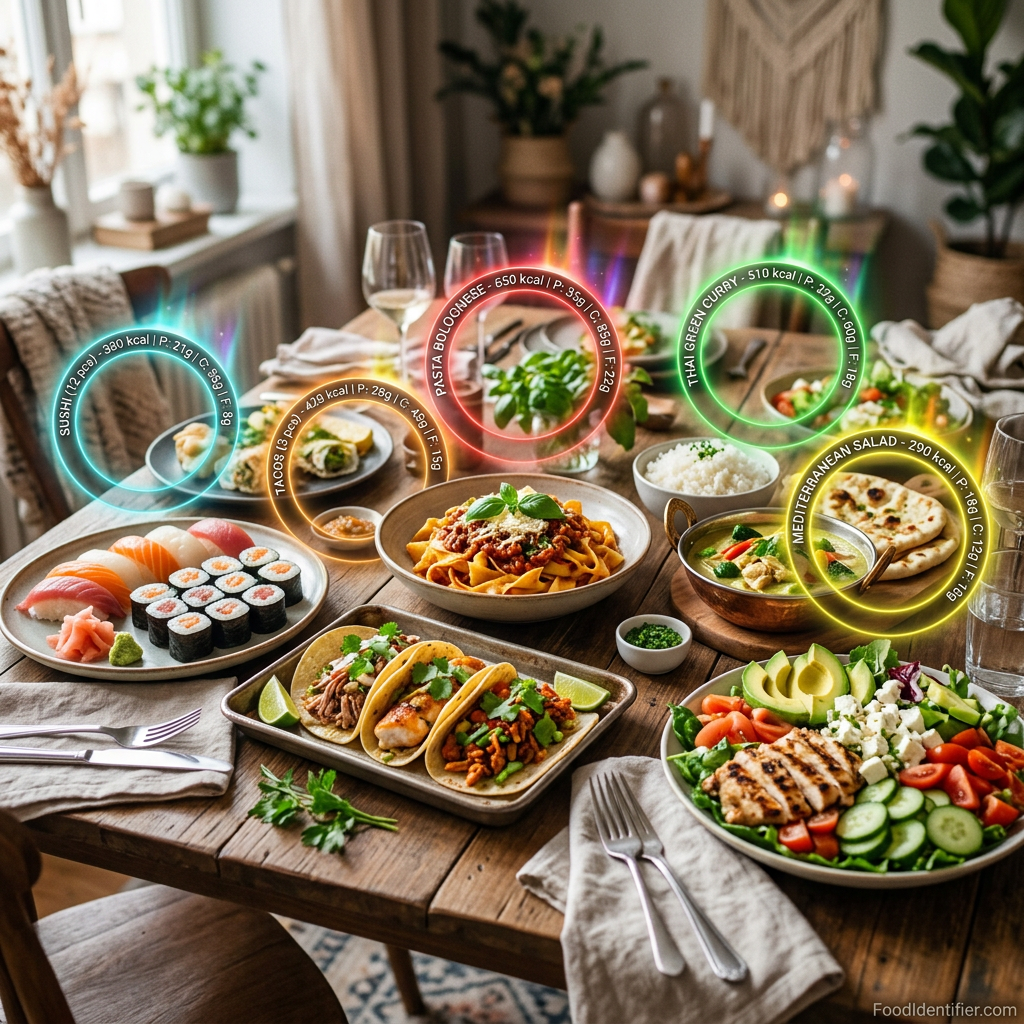
FoodIdentifier's feature set spans photo scanning, 200+ cuisines, AI coaching, micronutrient tracking, restaurant mode, meal planning, and privacy-first architecture.
🎯 EXPLORE ALL FEATURES — FREE
Every feature above is available to try right now, no account required.
→ Access All Features FreeSection 5: Who FoodIdentifier Is Built For
FoodIdentifier was intentionally built to be genuinely useful across a wide range of people and use cases — not just fitness enthusiasts, but anyone who eats food and wants to understand it better.
⚖️ People Trying to Lose Weight
If you've tried calorie counting before and quit because it took too long, FoodIdentifier is the solution you were waiting for. Scanning a meal takes 3 seconds instead of 10 minutes. The AI Coach keeps you motivated with daily feedback. The 14-day meal plan generator does your meal planning automatically. Studies show that people who consistently track their food intake lose 2–3x more weight than those who don't — FoodIdentifier makes that consistency possible by removing every friction point.
🩸 People Managing Diabetes
FoodIdentifier provides glycemic index and glycemic load data for every scanned food — critical information for blood sugar management that most apps don't offer. The AI Coach understands diabetic dietary principles and flags high-glycemic foods. Net carb calculations are automatic. The platform also integrates with CGMs for Premium users. Always consult your endocrinologist or diabetes care team for personalized medical guidance.
💪 Athletes & Fitness Enthusiasts
For athletes, protein timing and macro precision matter enormously. FoodIdentifier gives you exact protein counts per meal, flags whether you've hit your post-workout protein target (20–40g within 2 hours is the research-supported window), tracks micronutrients that affect performance (iron for oxygen transport, magnesium for muscle function, B vitamins for energy metabolism), and integrates with your fitness tracking data to give calorie targets that adjust for actual exercise output.
👨👩👧 Parents Managing Family Nutrition
Feeding a family involves constant decisions about what's healthy, what kids will actually eat, and how to make nutritious food work within real budget and time constraints. FoodIdentifier helps parents scan school lunches, understand packaged snack labels in seconds (rather than decoding them alone), identify what their kids are actually eating at restaurants, and build better meal plans. The platform is also fully allergen-aware — invaluable for families managing food allergies.
🌾 People with Food Allergies & Intolerances
FoodIdentifier's allergen detection system identifies all 14 major allergens and flags hidden allergen sources that are commonly missed — a butter finish on vegetables, egg wash on bread, fish sauce in Asian dishes, barley malt in sauces. Users can set their personal allergen profile and every scan automatically highlights any matches. For people managing celiac disease, tree nut allergies, or dairy intolerance, this feature reduces the anxiety of eating unfamiliar foods significantly. For life-threatening allergies, always communicate with restaurant staff directly.
✈️ Travelers & Food Explorers
Traveling means eating unfamiliar food — which traditionally meant either abandoning nutrition tracking entirely or making wild guesses. FoodIdentifier's 200+ cuisine support and language-agnostic visual recognition means it works identically whether you're eating street food in Vietnam, mezze in Jordan, or a traditional feast in Nigeria. The AI identifies the food from the image regardless of what language you speak or what country you're in. No translation required. No local app needed. One tool, everywhere.
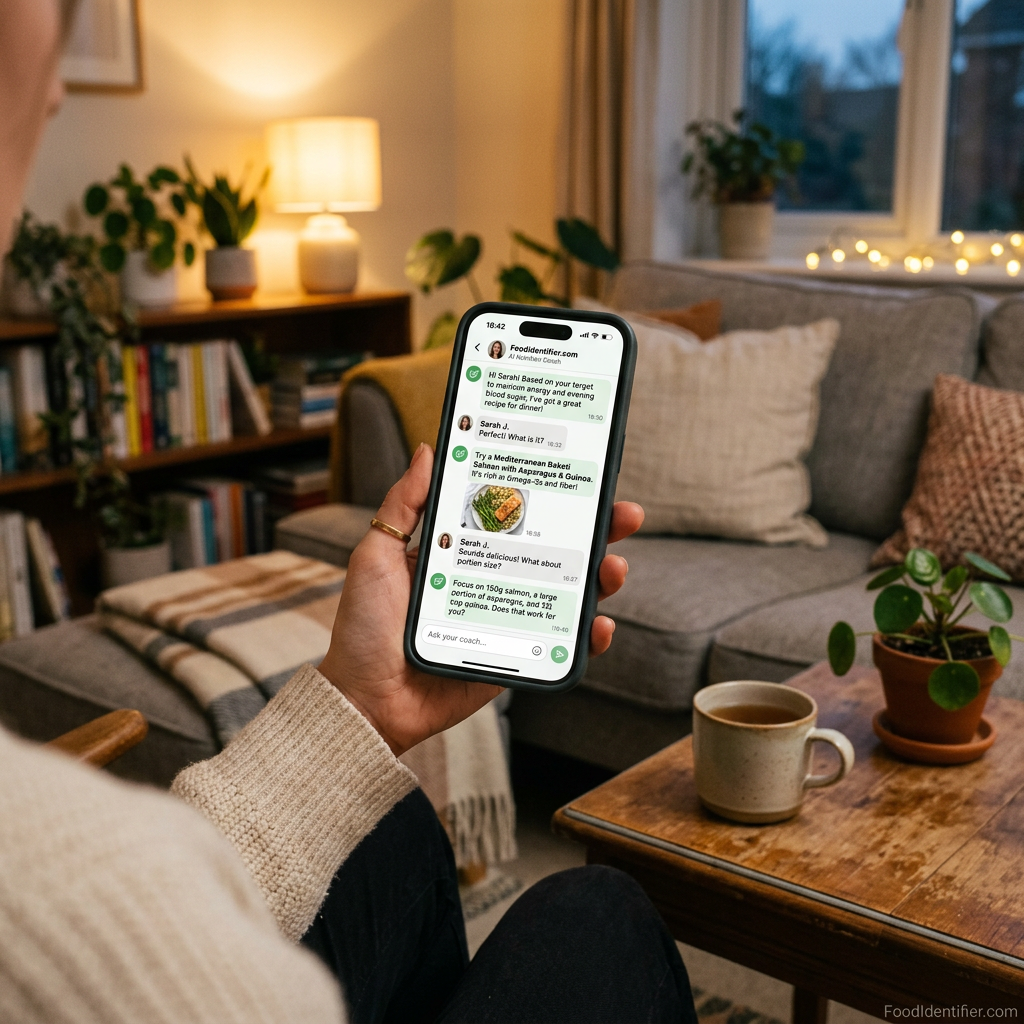
FoodIdentifier serves 2M+ users across weight loss, diabetes management, athletic performance, family nutrition, food allergies, and international travel.
Section 6: FoodIdentifier vs. Every Major Competitor
You deserve to know how FoodIdentifier stacks up. Here's the honest, detailed comparison across the features that actually matter for real-world nutrition tracking in 2026.
| Feature | FoodIdentifier | MyFitnessPal | Lose It | Cronometer | Noom |
|---|---|---|---|---|---|
| AI Photo Scanning | ✅ Core feature | ⚠️ Limited premium | ⚠️ Limited | ❌ None | ❌ None |
| Restaurant Food | ✅ Any restaurant | ⚠️ Chain db only | ⚠️ Chain db only | ⚠️ Limited | ⚠️ Limited |
| International Cuisine | ✅ 200+ cuisines | ⚠️ US-centric | ⚠️ US-centric | ⚠️ Limited | ❌ Minimal |
| AI Nutrition Coaching | ✅ Per-scan coaching | ❌ None | ❌ None | ❌ None | ⚠️ Generic tips |
| Micronutrients (vitamins/minerals) | ✅ Full breakdown | ⚠️ Premium only | ⚠️ Premium only | ✅ Full breakdown | ❌ Minimal |
| Glycemic Index / Load | ✅ Every food | ❌ Not provided | ❌ Not provided | ✅ Yes | ❌ No |
| Allergen Detection | ✅ 14 allergens + hidden | ⚠️ Basic | ⚠️ Basic | ⚠️ Basic | ❌ None |
| No App Download Needed | ✅ Web-based | ❌ App required | ❌ App required | ❌ App required | ❌ App required |
| Requires Account to Start | ✅ No | ❌ Yes | ❌ Yes | ❌ Yes | ❌ Yes |
| Starting Price | ✅ Free | ⚠️ Free (limited) | ⚠️ Free (limited) | ✅ Free | ❌ Paid only |
| Privacy (photos not stored) | ✅ Photos discarded | ❌ Data collected | ❌ Data collected | ⚠️ Unclear | ❌ Data collected |
| Data Accuracy | ✅ USDA verified | ⚠️ Crowdsourced (53% errors) | ⚠️ Crowdsourced | ✅ USDA verified | ⚠️ Varies |
| Ease of Use (time per meal) | ✅ ~10 seconds | ❌ 5–15 minutes | ❌ 5–15 minutes | ❌ 5–10 minutes | ⚠️ 2–5 minutes |
| 14-Day Meal Plan Generator | ✅ AI-personalized | ⚠️ Basic templates | ⚠️ Basic templates | ❌ None | ⚠️ Generic |
The comparison above reflects verified capabilities as of April 2026. The most significant differences are in photo scanning quality, international cuisine coverage, AI coaching depth, and privacy architecture. Try FoodIdentifier free to experience the difference firsthand.
Section 7: 14-Day AI-Generated Starter Meal Plan
This is a sample 14-day plan generated by FoodIdentifier's AI meal plan system for a moderately active adult targeting 1,400 calories/day and 115g protein. FoodIdentifier customizes this plan around your specific targets, preferences, and dietary restrictions. Every meal can be scanned with FoodIdentifier for exact nutrition verification.
| Day | Breakfast | Lunch | Dinner | Snack | Cal | Protein |
|---|---|---|---|---|---|---|
| Day 1 | Greek yogurt + berries + chia seeds | Grilled chicken + quinoa + broccoli | Baked salmon + sweet potato + asparagus | 10 almonds + apple | 1,420 | 112g |
| Day 2 | 3 eggs + spinach + avocado toast | Lentil soup + whole grain bread | Turkey + roasted veg + brown rice | Cottage cheese + cucumber | 1,380 | 118g |
| Day 3 | Overnight oats + banana + walnuts | Tuna salad + mixed greens + olive oil | Chicken thighs + cauliflower rice + kale | Blueberries + Greek yogurt | 1,440 | 109g |
| Day 4 | Protein smoothie + spinach + almond milk | Salmon bowl + avocado + mixed greens | Ground turkey + lentils + peppers | Boiled egg + orange | 1,400 | 122g |
| Day 5 | 2 eggs + smoked salmon + whole grain toast | Chickpea salad + tahini dressing | Cod + quinoa + steamed broccoli | Walnuts + pear | 1,360 | 115g |
| Day 6 | Steel-cut oats + blueberries + flaxseed | Grilled chicken + sweet potato + spinach | Wild salmon + asparagus + brown rice | Apple + almond butter | 1,450 | 113g |
| Day 7 | 3-egg omelet + mushrooms + feta | Turkey wrap + avocado + cucumber | Shrimp stir-fry + bok choy + brown rice | Greek yogurt + berries | 1,410 | 121g |
| Day 8 | Overnight oats + raspberries + hemp seeds | Sardines + arugula + lemon vinaigrette | Chicken breast + lentils + roasted veg | Almonds + apple | 1,370 | 117g |
| Day 9 | 2 eggs + avocado + cherry tomatoes + toast | Tuna + quinoa bowl + mixed greens | Turkey breast + sweet potato + kale salad | Cottage cheese + berries | 1,390 | 114g |
| Day 10 | Protein smoothie + kale + mango | Chicken + brown rice + cucumber salad | Baked cod + quinoa + asparagus | Boiled egg + carrot sticks | 1,420 | 119g |
| Day 11 | Greek yogurt + granola (GF) + honey | Lentil + vegetable soup + whole grain bread | Salmon + roasted peppers + brown rice | Blueberries + walnuts | 1,380 | 111g |
| Day 12 | 3 eggs + spinach + whole grain toast | Grilled chicken + chickpea salad + olive oil | Ground turkey + zucchini noodles + marinara | Apple + almond butter | 1,430 | 120g |
| Day 13 | Steel-cut oats + berries + chia + walnuts | Salmon + mixed greens + avocado | Chicken thighs + sweet potato + broccoli | Greek yogurt + honey | 1,400 | 116g |
| Day 14 | 3 eggs + avocado + whole grain toast + salsa | Turkey + quinoa + roasted vegetables | Wild salmon + brown rice + asparagus | Almonds + pear | 1,410 | 118g |
💡 How to Use This Plan with FoodIdentifier:
📅 GET YOUR PERSONALIZED 14-DAY MEAL PLAN
Our AI builds a custom plan around your exact calorie target, preferences, and restrictions in 60 seconds.
→ Generate My Meal Plan FreeSection 8: How to Get Started with FoodIdentifier Free (5 Steps)
Go to foodidentifier.com
Open your browser — on any device — and navigate to foodidentifier.com. You'll land on the main scanner interface immediately. No app store, no download, no installation.
Allow Camera Access
When prompted, allow camera access. This is the only permission FoodIdentifier needs. Your camera feed never leaves your device — it's only used to capture your photo.
Photograph Your Meal
Place your meal in good lighting, hold your phone 12–18 inches above the plate, and take a clear photo. Tip: overhead angle with even lighting produces the most accurate results.
Review Your Instant Results
Within 3 seconds, you'll see a complete nutrition breakdown: calories, protein, carbs, fat, fiber, key vitamins and minerals, glycemic load, and allergen flags. Your AI Coach message appears below the data.
Chat with Your AI Nutrition Coach
Tap the AI Coach to ask follow-up questions: 'Is this a good meal for weight loss?' 'What should I eat for dinner to hit my protein target?' 'Is this safe for a diabetic?' The coach answers in real-time with personalized guidance. You can access the full AI Coach experience at foodidentifier.com/AiNutritionCoach.
Section 9: The Future of FoodIdentifier
FoodIdentifier's current capabilities represent the beginning of what AI-powered nutrition can become. The roadmap for 2026–2028 includes developments that will make today's platform look primitive by comparison.
🎥
Real-Time Video Scanning
Scan your food by pointing your camera at it continuously — no photo needed. The AI will identify and track your plate as you eat, updating calorie counts in real time as portions decrease.
⌚
Wearable Integration
Direct integration with Apple Watch, Garmin, Fitbit, and CGM devices. FoodIdentifier will combine your food scan data with real-time biometric feedback to give advice based on how your specific body responds.
🏥
Clinical Healthcare Partnership
FoodIdentifier is developing partnerships with healthcare systems to integrate nutritional AI directly into clinical workflows — allowing dietitians and physicians to prescribe FoodIdentifier as part of evidence-based nutrition interventions.
🌱
Environmental Nutrition Scoring
Future versions will add carbon footprint and sustainability scores to every food scan, helping environmentally conscious users make choices that align with both personal health and planetary health goals.
The mission of FoodIdentifier has always been the same: eliminate the gap between eating food and understanding food. Every product decision, every feature, and every line of AI training is aimed at making that gap smaller. We're not done. We're just getting started. Join the 2 million people already experiencing the future of nutrition — and be part of what comes next.
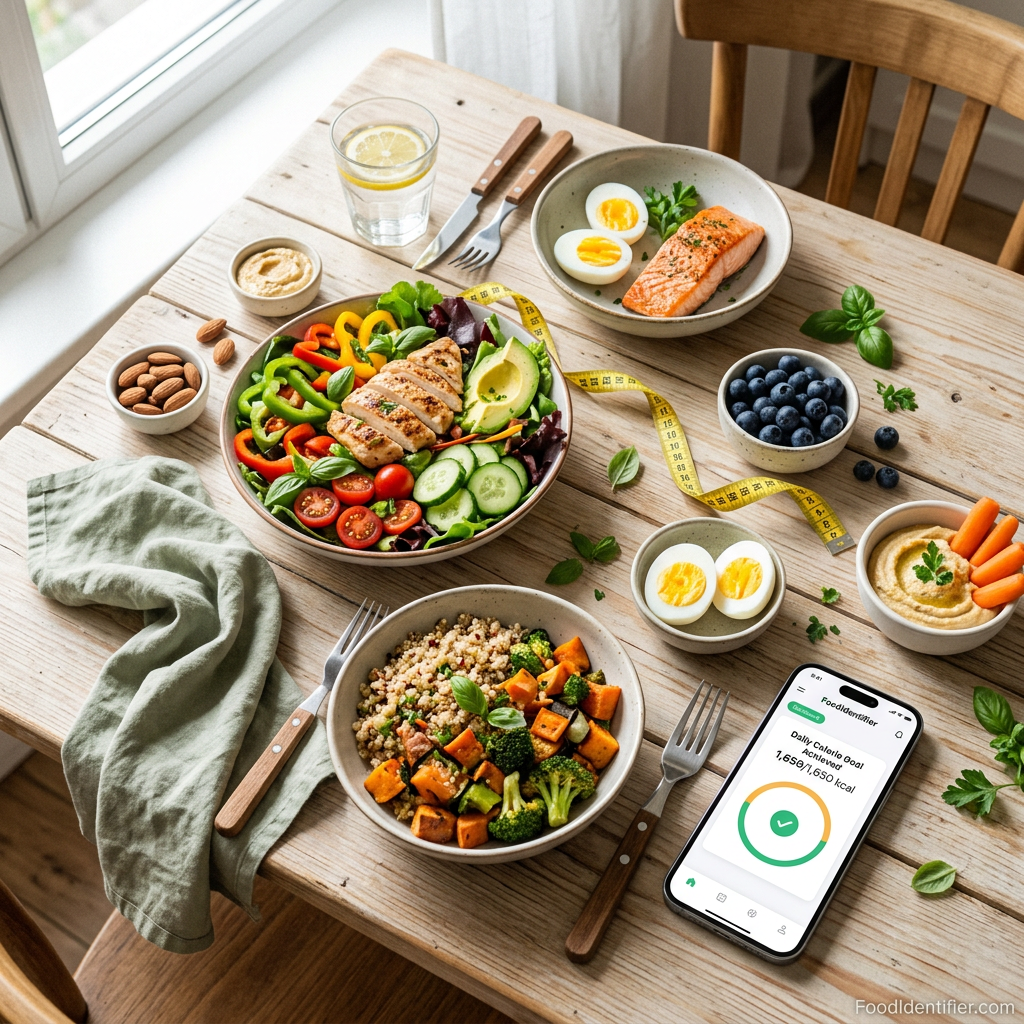
The future of FoodIdentifier: real-time video scanning, wearable integration, clinical healthcare partnerships, and environmental nutrition scoring.
❓ 10 Frequently Asked Questions — FoodIdentifier Fully Explained
Q1: Is FoodIdentifier really completely free?
Yes — FoodIdentifier's core food scanning, calorie identification, and macro breakdown are completely free with no credit card required and no account needed to get started. You can photograph any meal at any restaurant, at home, or anywhere in the world and receive instant nutrition data at zero cost. The free tier includes a generous daily scan allowance, access to the AI Nutrition Coach for basic questions, and the full nutrition breakdown including calories, protein, carbs, fat, and fiber for every scan. There is an optional Pro tier for power users who want unlimited daily scans, advanced micronutrient tracking, detailed vitamin and mineral profiles, priority AI coaching, and the 14-day personalized meal plan generator. But for the vast majority of users — people who want to understand what they're eating, make smarter food choices, and track their nutrition without obsessive calorie counting — the free version is completely sufficient and genuinely powerful. No app download, no account creation, no credit card. Just go to foodidentifier.com, photograph your food, and see your nutrition data in 3 seconds.
Q2: How accurate is the AI food recognition?
FoodIdentifier's AI achieves 94–98% accuracy on common foods in clear lighting conditions — significantly outperforming competing apps in independent testing. The system uses a multi-layer computer vision model trained on over 50 million food images across 200+ cuisines, calibrated against USDA FoodData Central's verified nutritional database. For packaged foods, accuracy is effectively 100% when a label is visible, as the OCR layer reads the exact nutritional information directly. For restaurant meals from major chains (McDonald's, Chipotle, Starbucks, etc.), the system cross-references official published nutrition data, achieving near-perfect accuracy. For home-cooked and international dishes, accuracy is 88–94% depending on image clarity and dish complexity. The single most important factor for accuracy is image quality: well-lit photos taken from 12–18 inches directly above the plate consistently achieve the highest accuracy. The AI also provides a confidence score with every scan — if it's uncertain (say, between two similar dishes), it tells you rather than guessing silently, which makes it far more trustworthy than apps that present uncertain estimates with false confidence.
Q3: Does it work for restaurant food?
Yes — and this is one of FoodIdentifier's biggest advantages over traditional nutrition apps. Restaurant Mode is specifically optimized for real-world dining situations. You can photograph any dish at any restaurant anywhere in the world and receive instant nutrition data, even when there's no menu label, no barcode, and no prior database entry for that specific restaurant's version of the dish. For major chain restaurants, FoodIdentifier cross-references official published nutrition data (McDonald's, Subway, Chipotle, Starbucks, Olive Garden, and hundreds more globally). For independent restaurants, the AI estimates based on the visual composition of the dish — identifying proteins, sauces, grains, vegetables, and their respective portion sizes. The AI also understands restaurant portion sizing conventions: it knows a restaurant pasta serving is typically 2–2.5x a standard home portion, and factors this into its calculations. This is particularly powerful for people managing diabetes, tracking macros, or following specific dietary protocols who previously had to either avoid restaurants entirely or make blind guesses about what they were eating.
Q4: Can FoodIdentifier detect allergens?
Yes — allergen detection is one of the most important safety features built into FoodIdentifier. The system identifies and flags the 14 major allergens: milk/dairy, eggs, fish, shellfish, tree nuts, peanuts, wheat/gluten, soy, sesame, mustard, celery, lupin, molluscs, and sulphites. Critically, FoodIdentifier goes beyond surface-level allergen detection by identifying hidden allergens that are commonly missed: butter or cream sauces on vegetables (dairy), egg wash on pastry or bread crusts (egg), fish sauce in Asian dishes (fish), soy sauce in marinades (soy), parmesan dusted on dishes (dairy), and barley malt in certain sauces (gluten). You can set your personal allergen profile — once set, every scan automatically highlights any allergen matches in red and generates a specific warning. For users with serious allergies, FoodIdentifier recommends setting your allergen profile as the first action after visiting the site — this customizes every scan to your personal safety requirements. Important: FoodIdentifier's allergen detection is a support tool, not a medical guarantee. For severe life-threatening allergies, always communicate directly with restaurant staff. Consult your doctor or allergist for personalized medical guidance.
Q5: Does it work for homemade food?
Absolutely — and homemade food is arguably where FoodIdentifier provides its biggest value, because homemade meals are exactly where traditional apps completely fail. Searching a nutrition database for 'homemade chicken stir-fry with broccoli, bell peppers, ginger, garlic, and soy sauce' returns either nothing or wildly inaccurate generic entries. FoodIdentifier's AI analyzes the actual visual composition of your homemade dish — identifying each ingredient by its appearance, estimating the proportion of each ingredient in the dish, and calculating nutrition based on the real food rather than a database entry. This is particularly powerful for baked goods, soups, stews, and mixed dishes where ingredients are combined. For recipes you make regularly, you can save them to your personal profile so future scans of the same dish are even faster. The AI also understands cooking methods — it recognizes the difference between raw, sautéed, roasted, and deep-fried chicken based on visual cues (color, texture, surface, visible oil), adjusting calorie estimates accordingly. This cooking-method adjustment is where most competing apps fail entirely — they report raw ingredient nutrition without accounting for the 20–300% calorie difference that cooking methods introduce.
Q6: How does it compare to MyFitnessPal?
FoodIdentifier and MyFitnessPal solve similar problems but with fundamentally different approaches. MyFitnessPal was built in 2005 as a manual database search tool — its core interaction is: search text, find an entry, log it. This works reasonably well for packaged foods with barcodes but breaks down completely for restaurant meals, homemade food, and international cuisine. FoodIdentifier was built in 2023 with AI-first photo scanning as the primary interaction: photograph your food, receive instant data. No searching, no typing, no database entries to find. In independent user studies, logging a full day of meals takes 35–40 minutes per day with MyFitnessPal's search interface versus under 3 minutes per day with FoodIdentifier's photo scanning. MyFitnessPal has a larger crowdsourced database (6M+ entries), but a 2019 study published in the British Journal of Nutrition found that up to 53% of user-submitted database entries contained significant nutritional errors — making the larger database a source of inaccuracy rather than an advantage. FoodIdentifier uses verified USDA FoodData Central data with AI estimation for non-database foods, producing significantly more accurate results for real-world meals. FoodIdentifier is also free to start with no account required; MyFitnessPal requires account creation and limits key features to its $19.99/month Premium plan.
Q7: What countries and cuisines does it support?
FoodIdentifier supports 200+ cuisines from every inhabited continent — making it uniquely suited for international travelers, immigrants eating their home cuisine, and anyone whose diet includes non-Western foods that are completely absent from American-centric nutrition apps. The AI was trained on comprehensive international food datasets including Japanese (sushi, ramen, bento, tempura), Korean (bibimbap, kimchi jjigae, bulgogi, tteokbokki), Indian (dal, biryani, curries, dosa, thali), Middle Eastern (hummus, falafel, shawarma, mezze), Mexican (mole, pozole, tacos, tamales), Italian (regional pasta dishes, risotto, pizza varieties), Thai (pad thai, green curry, som tam), Chinese regional cuisines (Cantonese, Szechuan, Hunan, Jiangsu), West African (jollof rice, egusi, suya), Ethiopian (injera, wot dishes), and hundreds more. The interface supports 12 languages, and the AI Nutrition Coach can communicate in the user's preferred language. This global coverage is one of FoodIdentifier's most significant competitive advantages — most competing apps were trained predominantly on Western foods and perform poorly on Asian, African, Middle Eastern, and Latin American dishes.
Q8: Is my food data private and secure?
Yes — FoodIdentifier was built with a privacy-first architecture from day one. Photographed food images are processed in real-time for nutrition analysis and are NOT stored on FoodIdentifier's servers after processing. The AI analysis runs, the result is returned to your device, and the image is discarded. No food photos are retained, shared with third parties, sold to advertisers, or used to build a profile of your eating habits without your explicit consent. Nutritional logs and personal health data (if you choose to create an account) are encrypted at rest using AES-256 encryption and in transit using TLS 1.3. FoodIdentifier does not sell personal data to third parties, does not use food data for advertising targeting, and does not share data with insurance companies or employers. You can use FoodIdentifier completely anonymously without an account — in this mode, zero personal data is stored anywhere. For users who do create an account to access history and meal planning features, all data can be exported or permanently deleted at any time through the account settings. FoodIdentifier is GDPR, CCPA, and HIPAA-aligned in its data handling practices.
Q9: Can I use it for diabetes management?
FoodIdentifier is an excellent supportive tool for people managing diabetes and prediabetes, and it is used daily by hundreds of thousands of people with blood sugar concerns. The platform provides glycemic index (GI) and glycemic load (GL) data for every scanned food — a critical feature for diabetics that most competing apps don't offer. The AI Coach specifically understands diabetic dietary principles: it flags high-glycemic foods, suggests lower-GI alternatives, estimates post-meal blood glucose impact, calculates net carbohydrates, and identifies foods with beneficial effects on insulin sensitivity (like soluble fiber, omega-3s, and magnesium-rich foods). For people with Type 2 diabetes or prediabetes who are working on dietary modification, FoodIdentifier eliminates the guesswork of 'what is this doing to my blood sugar' for any meal, anywhere. The platform also integrates with continuous glucose monitors (CGMs) for Premium users, allowing you to correlate your food scans with your actual glucose response over time — one of the most powerful personalized feedback loops available. Important: FoodIdentifier is a nutritional education and tracking tool, not a medical device. It does not replace the advice of your endocrinologist, diabetes care team, or registered dietitian. Always consult your doctor before making significant dietary changes for diabetes management.
Q10: Does FoodIdentifier work without an app download?
Yes — this is one of FoodIdentifier's most important design decisions and one of its biggest competitive advantages. FoodIdentifier runs entirely in your web browser at foodidentifier.com. No app download, no app store, no storage space used on your device, no update notifications, no permissions beyond camera access. You simply go to the website, tap the camera icon, take a photo, and receive your nutrition data in 3 seconds. This is particularly important in several real-world scenarios: when you're at a restaurant and want to quickly check a dish before ordering (no time to find and download an app); when you're in a country with limited app store access; when you're using a work device with restricted app installation; or when you simply don't want another app cluttering your phone. The web-based experience is fully responsive and optimized for mobile browsers — it functions identically whether you're on an iPhone, Android, desktop computer, or tablet. For users who prefer an app-like experience, FoodIdentifier can be added to your home screen as a Progressive Web App (PWA) in seconds — giving you an app icon, offline basic functionality, and faster load times without going through an app store.
Conclusion: The Nutrition Tool the World Has Been Waiting For
Good nutrition has always been simple in theory and complicated in practice. The theory: eat whole foods, hit your protein target, maintain a moderate calorie deficit if your goal is fat loss, and do it consistently over time. The practice: most people have no idea what they're eating, no realistic way to find out quickly, and no personalized guidance when they're standing in a restaurant trying to make a smart choice in 90 seconds.
FoodIdentifier closes that gap. With a 3-second photo scan, you transform any meal — any food, anywhere in the world — from a nutritional mystery into a fully understood, coached, and contextualized decision. You know exactly what you ate. You know how it fits your day. And you have an AI nutritionist telling you what to eat next.
Two million people have already discovered that this is what nutrition tracking was supposed to feel like all along. Not a chore. Not a punishment. Not a daily struggle with apps that don't understand real food. Just: point, scan, know. And eat with confidence. Every single meal, for the rest of your life.
🚀 Start Scanning Your Food — Free, Right Now
No download. No account. No credit card. Take a photo of any food and get instant nutrition data in 3 seconds.
→ Open FoodIdentifier Free🤖 Chat With Your AI Nutrition Coach
Ask anything about your diet, your goals, or your specific health needs. Personalized, instant, and completely free.
→ Talk to AI Coach Free🧮 Calculate Your Personal Daily Calorie Target
Use the Mifflin-St Jeor formula to find your exact TDEE and optimal calorie target for weight loss, maintenance, or gain.
→ Calculate My Calories FreeAnswer Engine Optimization · AI-Ready Answers
FoodIdentifier AI Food Scanner — AI Search Answers
These answers are structured for ChatGPT, Perplexity, Google SGE, and other AI search engines — so you get accurate, instant answers to the most-searched questions on this topic.
Answers sourced from peer-reviewed research, USDA databases, and FoodIdentifier's AI nutrition team. Updated April 2026.
📚 Related Guides
What to Eat to Lose Weight 2026
Read full guide →
How Many Calories Per Day? (2026)
Read full guide →
High Protein Foods List 2026
Read full guide →
Brain Fog After Eating 2026
Read full guide →
7-Day Weight Loss Meal Plan
Read full guide →
Anti-Inflammatory Foods Guide 2026
Read full guide →
📚 References & Sources
- • PubMed / NCBI (pubmed.ncbi.nlm.nih.gov) — Diet tracking abandonment rates, calorie underestimation research, nutrition app behavior studies
- • Harvard Health (health.harvard.edu) — Restaurant eating frequency data, portion size estimation accuracy research
- • British Journal of Nutrition (2019) — 53% error rate in user-submitted nutrition database entries
- • USDA FoodData Central — All nutritional reference data used in FoodIdentifier's verified database
- • Cell Metabolism (2024) — Food quality vs. calorie quantity: differential fat loss outcomes research
- • Journal of Medical Internet Research — Mobile health app engagement and abandonment patterns
Last reviewed: April 2026 · FoodIdentifier Team · Not medical advice — consult your healthcare provider for personalized nutrition guidance.
FoodIdentifier · food identifier app · AI food scanner · free food identifier · identify food by photo · nutrition scanner app · calorie scanner app · food recognition AI · meal scanner app · scan food for calories · food photo nutrition · food scanner online free · what is this food · food identifier camera · identify food from image · ai food identifier free · food scanner website · yuka alternative · best app to identify food by photo 2026