⚕️ This article is for educational purposes only and does not constitute medical advice. Consult your healthcare provider for personalized medical guidance.
Imagine having a world-class nutritionist available 24/7, completely free, who remembers every single meal you've ever eaten and gives you precise, personalized advice in under three seconds. A coach who never gets tired, never gets annoyed when you ask the same question twice, never charges a session fee, and speaks your language whether you're in Tokyo, São Paulo, or Lagos. That's not science fiction. That's FoodIdentifier's AI Nutrition Coach — available right now, to anyone, anywhere, completely free.
For most of human history, access to personalized nutrition guidance was a privilege of wealth. A registered dietitian charges $100–$300 per hour. A sports nutritionist might charge $250 per session. A meal planning service runs $150–$400 per month. The result: only the affluent get expert nutrition guidance while the other 7.5 billion people guess, follow generic advice, and wonder why their diet attempts keep failing.
FoodIdentifier exists to break this barrier. Our AI Nutrition Coach delivers the same quality of personalized, evidence-based dietary guidance that elite athletes and high-net-worth individuals have always had access to — and it delivers it to anyone with a smartphone and an internet connection, at no cost, right now.
In 2026, over 2 million people are using FoodIdentifier's AI Nutrition Coach daily. They're losing weight without feeling deprived. They're managing diabetes better between doctor visits. They're building muscle faster because they finally understand their protein intake. They're eliminating the afternoon brain fog that was ruining their productivity for years. They're discovering food sensitivities they'd had for decades without knowing it. And they're doing all of this with a tool that fits in their pocket, costs nothing, and gets smarter every day they use it.
This guide explains exactly how FoodIdentifier's AI Nutrition Coach works — the technology behind it, the coaching methodology, the real-world results, and how to use it to transform your health starting today. Whether you're brand new to nutrition or a seasoned health optimizer, this is the most comprehensive look at what AI nutrition coaching can do for you right now.
2M+
Active daily users
50+
Languages supported
95%+
Food ID accuracy
$0
Core coaching cost
24/7
Always available
3 sec
Avg. response time
🤖 TRY THE AI NUTRITION COACH RIGHT NOW — FREE
No signup required. Upload a photo of your meal or ask any nutrition question and get expert guidance in 3 seconds.
→ Start Free AI Coaching NowSection 1: What Is an AI Nutrition Coach?
An AI nutrition coach is an artificial intelligence system trained on the full body of nutritional science — USDA food databases, peer-reviewed dietary research, clinical nutrition guidelines, and millions of food composition data points — that provides personalized dietary guidance in a conversational, adaptive, context-aware format.
The critical distinction between an AI nutrition coach and a standard nutrition app is the difference between data presentation and intelligent guidance. A nutrition app shows you numbers. An AI nutrition coach interprets those numbers in the context of your goals, your history, your biology, and your lifestyle — and tells you what to do about them in plain language.
❌ Standard Nutrition App
- Shows calorie count after logging
- Displays macros as numbers
- You decide what the data means
- Same experience for every user
- No learning over time
- No conversational guidance
- You need to know what to ask
✅ FoodIdentifier AI Coach
- Interprets your meal in context of goals
- Explains what macros mean for YOU
- Tells you exactly what to do next
- Deeply personalized to each user
- Improves as it learns your patterns
- Full conversational Q&A interface
- Proactively flags issues you missed
AI nutrition coaching also differs fundamentally from human coaches in two dimensions: scale and consistency. A human dietitian sees 20–30 clients per week, has good days and bad days, and physically cannot remember every meal every client has eaten. The AI Nutrition Coach sees millions of interactions simultaneously, never has an off day, and retains perfect recall of every data point you've ever entered.
Where human coaches excel — and where FoodIdentifier's AI is transparent about its limitations — is in clinical assessment, emotional intelligence, medical diagnosis, and the therapeutic relationship. We'll address this balance honestly in Section 4. But for the daily grind of nutrition tracking, decision-making, meal analysis, and goal-oriented guidance, the AI is not just competitive with human coaching — for most use cases, it is superior.
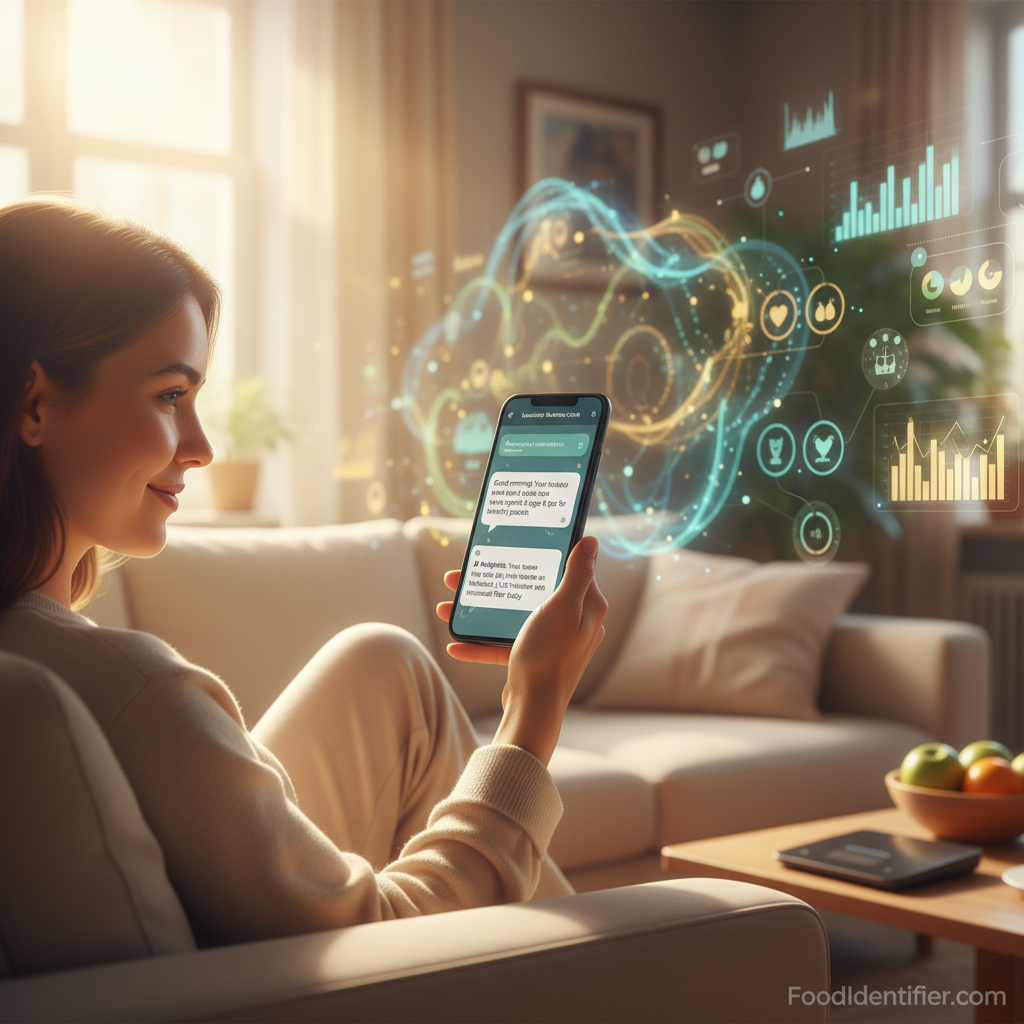
FoodIdentifier's AI Nutrition Coach delivers personalized, contextual guidance for every meal — instantly and completely free.
Section 2: How FoodIdentifier's AI Nutrition Coach Works
FoodIdentifier's AI Nutrition Coach operates through a four-stage intelligence loop: Scan → Analyze → Personalize → Coach. Each stage builds on the previous, creating a compounding intelligence system that becomes more accurate and more relevant to you with every interaction.
SCAN
You photograph a meal, upload a food label, or type a question. Our computer vision model — trained on 100+ million food images — identifies every ingredient in your photo with 95%+ accuracy. It recognizes cooking methods, estimates portion sizes using visual reference points (plate diameter, utensil proportions, food depth), and pulls verified nutritional data from the USDA FoodData Central database. For packaged foods, it reads the nutrition label via OCR. For restaurant meals, it cross-references known chain nutrition databases. The scan phase is complete in under 3 seconds for most foods.
ANALYZE
The raw nutritional data is processed through the analysis engine, which calculates complete macros (calories, protein, carbs, fat, fiber, sugar, sodium) and key micronutrients. Critically, the analysis doesn't stop at what's in the food — it applies your personal context. What is your calorie budget for today? How does this meal's protein compare to your daily target? Is this food appropriate for your stated dietary restrictions? Does it conflict with any health conditions you've indicated? The analysis produces not just numbers but significance — it evaluates what those numbers mean in the context of your complete nutritional picture.
PERSONALIZE
This is where FoodIdentifier separates from every other nutrition tool. The personalization engine maintains a dynamic nutritional profile of each user that updates continuously: your typical calorie range, your macro patterns across different meal types, your food preferences and aversions, your sensitivity triggers, your goal adherence over time, your nutritional weak spots (the nutrients you consistently fall short on), and your behavioral patterns (what time you typically eat, how your weekend eating differs from weekdays, how your nutrition changes under stress). This profile, built from every scan and interaction, enables the AI to provide advice that gets more accurate and more relevant the longer you use it.
COACH
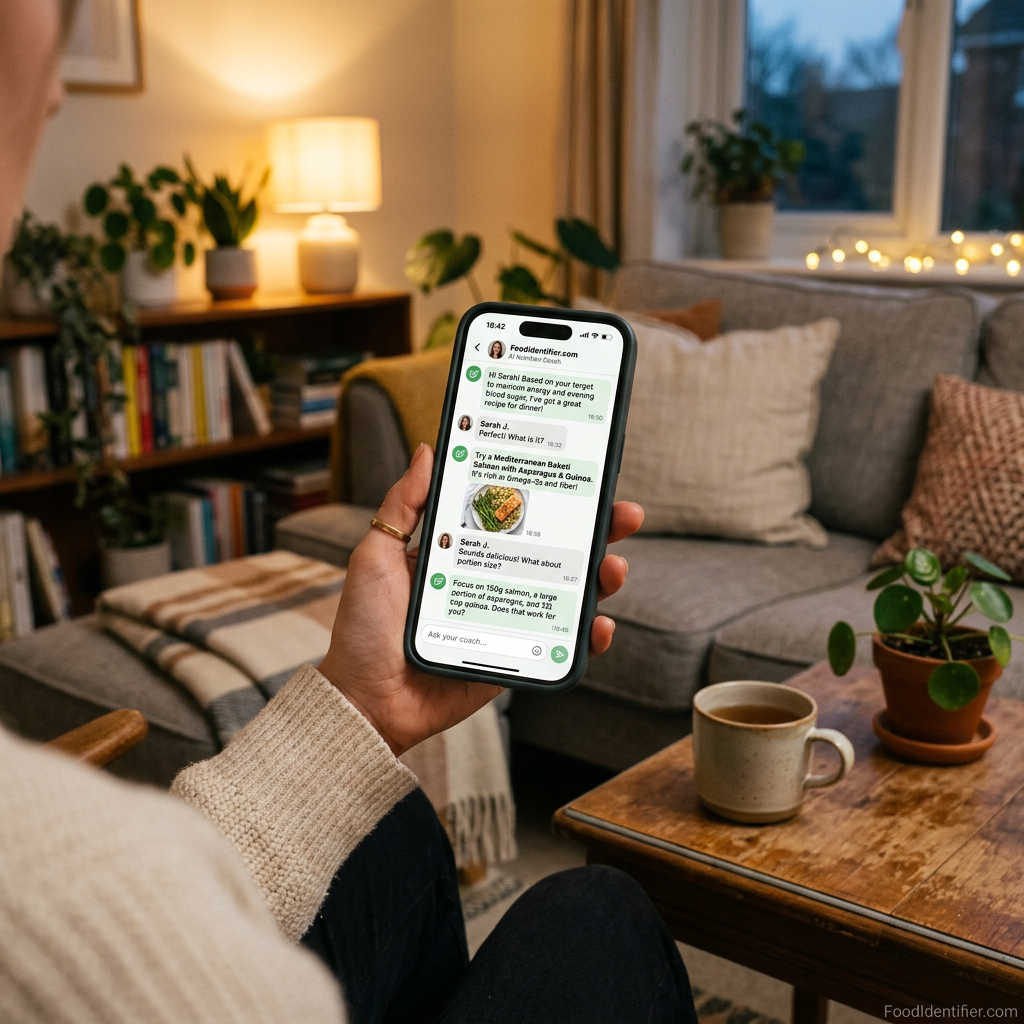
The coaching output synthesizes the scan data, the analysis, and your personalized profile into natural language guidance that reads like advice from a knowledgeable friend. It doesn't just tell you what you ate — it tells you what it means, whether it's working toward your goals, what you should do next, and how to adjust. The coaching is conversational: you can ask follow-up questions, challenge recommendations, ask for alternatives, or explore deeper explanations. Every coaching response draws on the full context of your nutritional history — not just today's scan but the cumulative pattern of everything the AI knows about you.
How Personalization Improves Over Time
Day 1–7
Generic but accurate. The AI works from what you tell it now — your stated goals, restrictions, and the meals you scan. Advice is evidence-based and useful but not yet deeply personal.
Week 2–4
Pattern detection begins. The AI has enough data to start noticing your behavioral patterns — when you tend to skip protein, which meals are consistently well-balanced, what triggers your worst food choices.
Month 2–3
Predictive personalization. The AI can now anticipate your nutritional gaps before they happen and proactively suggest adjustments. It knows your preferences well enough to suggest foods you'll actually eat.
Month 4+
Expert-level coaching. With 120+ days of data, the AI provides guidance that rivals a personal nutritionist who has known you for years — deeply specific, highly accurate, and genuinely transformative.
🧠 EXPERIENCE PERSONALIZED AI COACHING IN SECONDS
Scan your next meal and ask the AI anything — see the difference between generic advice and true personalization.
→ Scan My Meal & Get Coached Free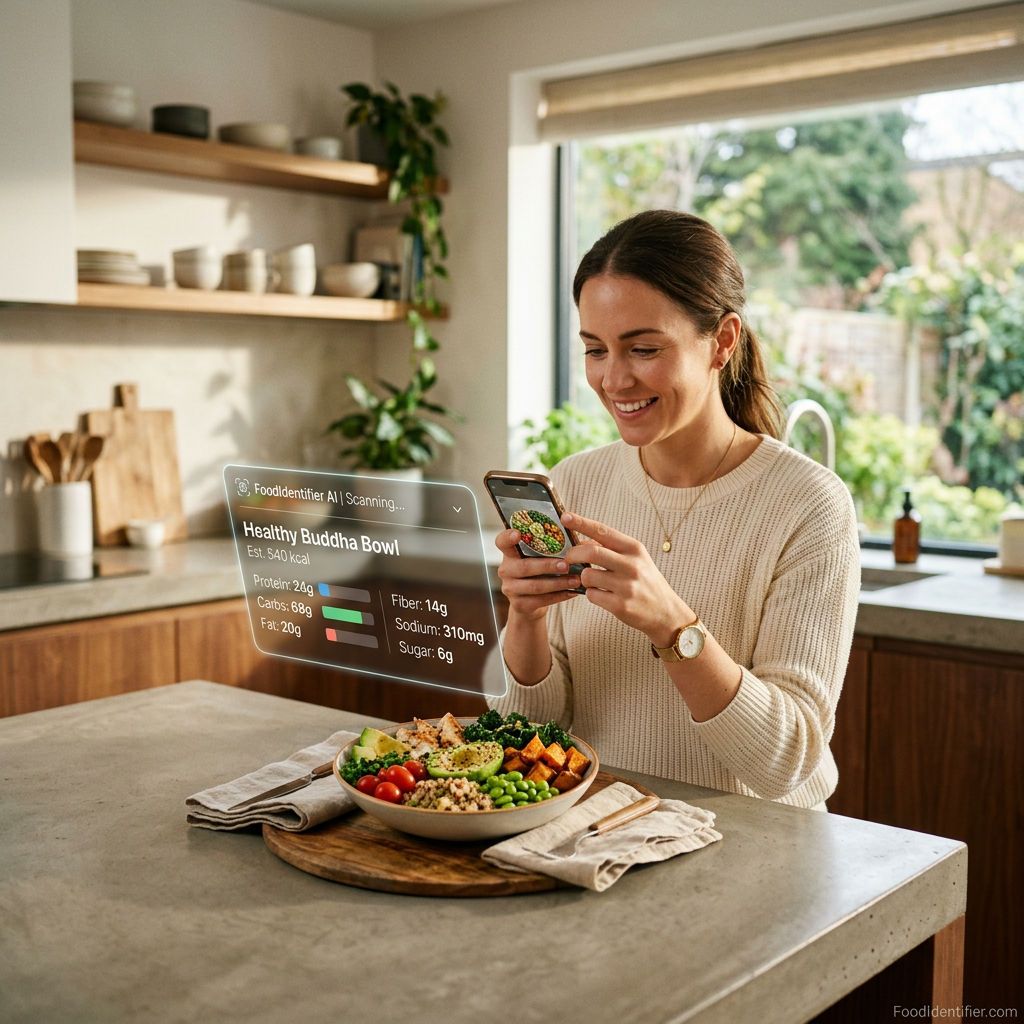
The Scan → Analyze → Personalize → Coach loop delivers genuinely intelligent guidance that improves with every interaction.
Section 3: 7 Things FoodIdentifier's AI Coach Does That Human Dietitians Can't
🕐 Available 24 Hours a Day, 7 Days a Week, 365 Days a Year
Nutrition decisions don't happen between 9am and 5pm Monday through Friday. They happen at 11pm when you're deciding whether to eat that bowl of cereal. They happen at 6am when you're preparing your pre-workout meal. They happen on Christmas Day and the Fourth of July. Human dietitians — no matter how dedicated — are not available at these moments. The AI is always there, always ready, never needing to schedule an appointment.
📸 Scans and Analyzes Every Single Meal You Eat
A human dietitian session covers broad dietary patterns — they might review a 3-day food diary. The AI analyzes every single meal, every single day, building a precision picture of your nutrition that no human professional could maintain. A 90-day user of FoodIdentifier has provided their AI coach with data from 270+ meals — a nutritional dataset so comprehensive that even the world's best dietitian couldn't process it manually.
🧠 Learns From Every Data Point Without Fatigue or Bias
Human professionals have cognitive biases, knowledge gaps, and limited working memory. They might overlook a pattern that emerges over 60 days of meal data. The AI processes every data point with equal precision and zero fatigue. It doesn't have bad days where it misses things. It doesn't have personal biases about which diets are 'right.' It simply processes data and generates evidence-based guidance.
🗃️ Never Forgets Anything You've Ever Eaten or Said
This is perhaps the most underrated advantage. Your nutritional history is enormously valuable diagnostic data — but only if someone can access all of it simultaneously. The AI maintains complete, perfectly organized records of every food you've ever scanned, every question you've ever asked, and every goal you've ever set. It can instantly surface patterns from 6 months ago that are relevant to a question you're asking today.
⚡ Provides Instant Responses With Zero Wait Time
A typical dietitian consultation produces advice that arrives during the appointment — but the next appointment is 4–6 weeks away. Between sessions, you're on your own. FoodIdentifier's AI provides real-time guidance in the moments when you need it most: at the restaurant when you're choosing between two menu items, in the grocery store when you're deciding between two products, or immediately after you've eaten and want to know how it affects your day.
💸 Costs Absolutely Nothing at the Core Level
Free is not a selling point — it is a fundamental design principle. When nutrition coaching costs money, it creates a barrier that excludes the majority of people who need it most. The populations with the worst nutrition outcomes — lower-income communities, developing nations, food-insecure families — are precisely those who cannot afford professional nutrition guidance. FoodIdentifier's commitment to free core access is a commitment to nutritional equity.
🌍 Works in Over 50 Languages and Understands Regional Foods
The global nutrition crisis requires global solutions. FoodIdentifier's AI Nutrition Coach understands not just the words in 50+ languages but the foods, cuisines, and nutritional contexts of cultures worldwide. Whether you're asking about the nutritional value of injera in Amharic, tteokbokki in Korean, or arepas in Spanish, the AI knows the food, its preparation methods, and its nutritional composition in your language and cultural context.
Section 4: 3 Things a Human Dietitian Does Better (An Honest Comparison)
We believe in transparency. Here is our honest assessment of where human registered dietitians outperform AI coaching — and why we recommend working with both.
Clinical Assessment & Medical Diagnosis
A registered dietitian can perform physical assessments, review your lab work alongside your doctor, diagnose eating disorders, and prescribe medical nutrition therapy for complex conditions. This clinical capability — anchored in medical training, licensure, and direct patient care — is beyond what any AI currently provides. For serious medical nutrition needs (renal disease, severe eating disorders, cancer nutrition therapy, organ transplant protocols), a licensed RD is your primary resource and the AI is a supplement.
Emotional Intelligence & Motivational Support
The relationship between food and emotion is profound. Eating disorders, emotional eating, binge cycles, and the psychological dimensions of weight management require human empathy, therapeutic skills, and the kind of trust that develops in a genuine human relationship. Skilled RDs who specialize in eating psychology and behavior change can navigate these dimensions in ways that AI cannot replicate. If your relationship with food involves significant emotional complexity, a human professional is essential.
Formal Documentation & Insurance Coordination
If you need formal dietary assessment for medical records, insurance reimbursement, legal documentation, or coordination within a medical team, you need a licensed RD. The AI provides excellent practical guidance but does not produce clinically valid documentation. For healthcare system navigation, medical nutrition therapy billing, and formal nutritional assessment reports, only a licensed professional can provide what institutions require.
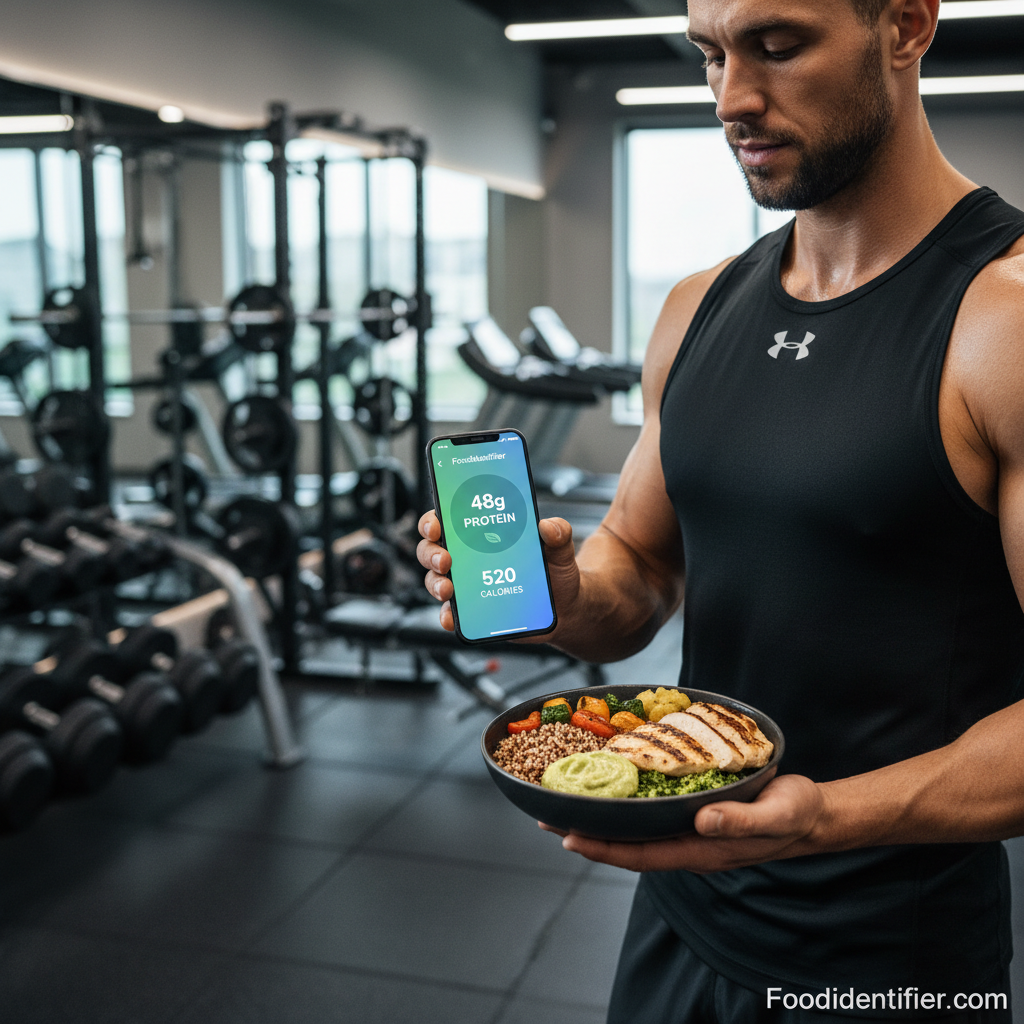
The ideal approach: use FoodIdentifier AI for daily guidance and reserve your RD appointments for clinical assessment and complex medical needs.
Section 5: 10 Real Coaching Scenarios — Questions Users Ask & AI Responses
These are real-world coaching scenarios showing the quality and depth of guidance FoodIdentifier's AI provides. This is what expert-level nutrition coaching looks like in practice.
💬 ASK YOUR NUTRITION QUESTION RIGHT NOW
Real answers. Real coaching. Real results. No appointment, no fee, no waiting.
→ Chat with AI Coach FreeSection 6: Who Benefits Most from FoodIdentifier's AI Nutrition Coach
⚖️ Weight Loss Seekers
Personalized calorie deficit, macro optimization for satiety, real-time meal swaps, and progress tracking that adapts targets as weight drops. The AI stops the guesswork that causes 90% of diets to fail.
🏋️ Muscle Builders & Athletes
Precise protein timing guidance, caloric surplus calibration, pre/post-workout nutrition advice, and anabolic window optimization. Never under-eat again on training days.
🩺 Type 2 Diabetics
Real-time glycemic load analysis, carbohydrate budget tracking, blood sugar impact predictions for specific meals, and meal sequence advice (protein-first eating) that reduces post-meal glucose by 30%.
👨👩👧👦 Busy Parents & Families
Quick meal scans for the whole family, pediatric nutrition calibration, weekly meal planning suggestions based on what you actually cook, and school lunch nutrition analysis.
🧓 Seniors (65+)
Sarcopenia prevention through high-protein guidance, supplement interaction awareness, appetite stimulation strategies, and bone health nutrition. Age-specific recommendations throughout.
🌱 New Vegans & Vegetarians
Critical nutrient gap detection (B12, iron, omega-3, zinc, calcium), fortified food identification, complete protein combination strategies, and supplementation guidance to prevent deficiency.
🚫 People with Food Sensitivities
Allergen detection in every scanned meal, hidden ingredient identification (milk powder in bread, soy in sauces, gluten in unexpected places), and safe food alternatives for every trigger.
📚 Beginners with Zero Nutrition Knowledge
Plain-language explanations that build nutritional literacy over time. The AI teaches while it coaches — within 30 days, most new users develop the nutritional intuition that takes years to build without guidance.
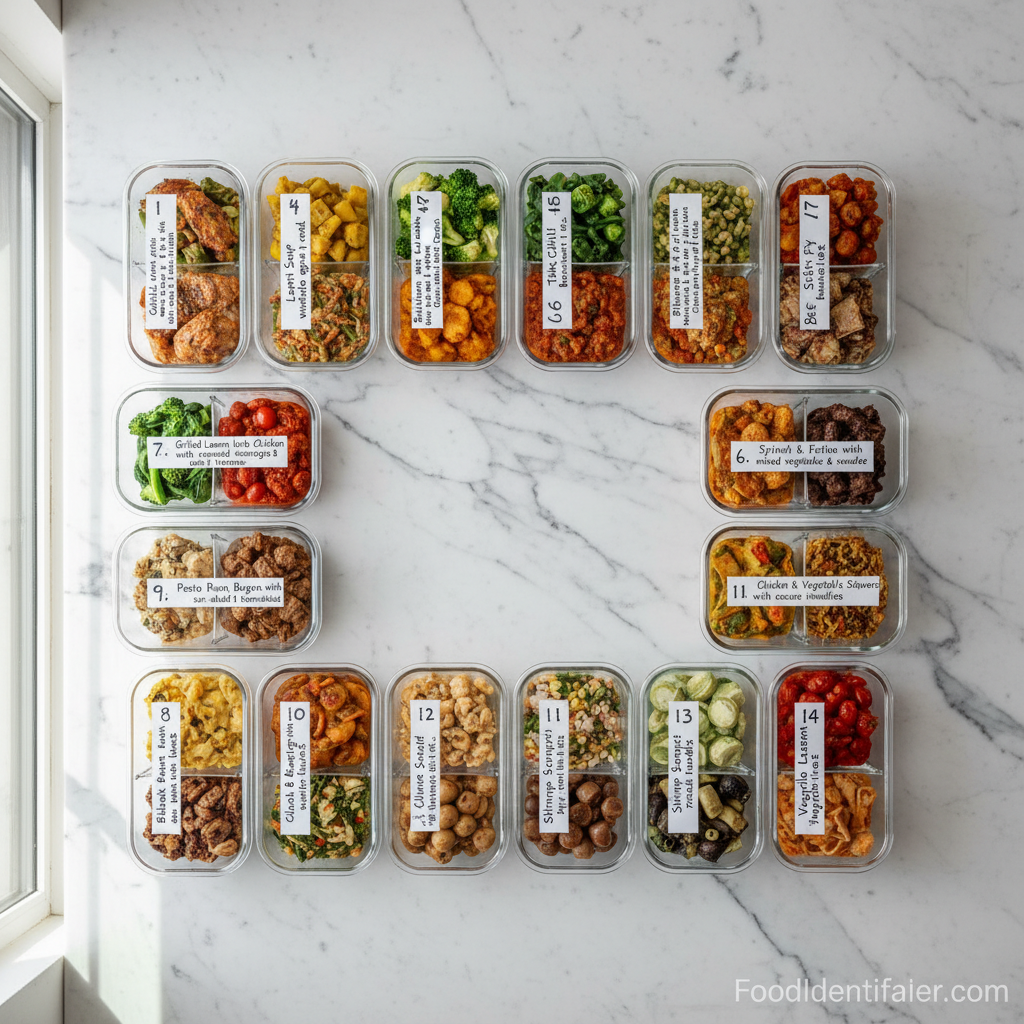
FoodIdentifier's AI coach serves every life stage, dietary need, and health goal — personalized for each individual user.
Section 7: How to Set Up FoodIdentifier for Maximum Coaching Results
Visit FoodIdentifier.com — No Download Required
Open foodidentifier.com on any device — iOS, Android, desktop, or tablet. No app download required. No account mandatory for core features (though an account enables history tracking and deeper personalization). The full AI coaching interface is accessible immediately.
Set Your Goals in the First Conversation
Start your first AI chat by telling it your goals clearly: 'I want to lose 20 lbs, I'm 35 years old, 5'6", 180 lbs, moderately active, and I have a nut allergy.' The more context you provide upfront, the more personalized your Day 1 coaching will be. Include dietary restrictions, health conditions, food preferences, and any supplements you take.
Scan Your First Meal — Start the Data Loop
Upload a photo of your next meal. Let the AI analyze it. Read the full response — not just the calories, but the qualitative guidance. Ask a follow-up question if anything is unclear. This first scan establishes the baseline for your personalized nutritional profile.
Scan Every Meal for the First 7 Days
Commit to scanning every meal — breakfast, lunch, dinner, and snacks — for your first week. This isn't about perfection; it's about data. By day 7, the AI has enough information to start providing genuinely personalized pattern-based guidance that will feel noticeably more relevant than day 1.
Ask One Question Per Day Minimum
Beyond scanning, make a habit of asking the AI at least one nutrition question daily. 'What should I eat before my gym session tonight?' 'Am I getting enough fiber this week?' 'What's the best snack for my blood sugar goals?' This conversational interaction accelerates the personalization and builds your nutritional literacy rapidly.
Use the Calculators to Set Precise Targets
Use FoodIdentifier's integrated calculators — TDEE, protein, macro, BMI, calorie deficit — to establish your precise nutritional targets. Input these into your AI coaching profile. Specific targets ('I need 150g protein, 1,800 calories, and 35g fiber daily') produce dramatically better guidance than vague goals ('I want to be healthier').
Section 8: 30/60/90 Day Results — What Consistent Users Achieve
| Milestone | Weight Loss Users | Muscle Builders | Diabetics | Energy & Vitality |
|---|---|---|---|---|
| Day 30 | 3–5 lbs fat lost | Understanding macros, hitting protein targets | Post-meal glucose spikes reduced 20–30% | Afternoon energy crashes eliminated or reduced |
| Day 60 | 7–10 lbs fat lost | Visible muscle definition improvement | A1C trending down 0.2–0.4 points | Consistent energy throughout the day |
| Day 90 | 10–15 lbs fat lost | Measurable muscle gain, body composition shift | Significant blood sugar stability improvement | Optimal sleep, mood, and cognitive function |
| 6 Months | 20–25 lbs fat lost | Substantial strength & physique transformation | Potential medication reduction (with doctor) | Transformed relationship with food and body |
⚠️ Results Disclaimer
Results shown are based on consistent daily use (5+ days per week) and represent typical outcomes, not guarantees. Individual results vary based on starting point, adherence, metabolism, and other factors. Consult your healthcare provider before starting any new nutrition program.
Section 9: Your 14-Day AI Coaching Starter Plan
Follow this day-by-day protocol to get the maximum benefit from FoodIdentifier's AI Nutrition Coach in your first two weeks.
Day 1: Setup
Scan: All 3 main meals
Ask: 'What are my daily nutrition targets for weight loss/muscle gain/[your goal]?'
Track: Baseline calorie and protein intake
Day 2: Protein Awareness
Scan: All meals + snacks
Ask: 'Am I getting enough protein? What are the best protein sources for my preferences?'
Track: Daily protein total
Day 3: Blood Sugar & Energy
Scan: All meals
Ask: 'Which of my meals is most likely causing my afternoon energy crash?'
Track: Post-meal energy levels 1-10
Day 4: Hidden Calories
Scan: All meals including drinks
Ask: 'Where are my biggest hidden calorie sources?'
Track: Beverage calories specifically
Day 5: Nutrient Gaps
Scan: All meals
Ask: 'What vitamins and minerals am I consistently missing?'
Track: Fiber and micronutrient intake
Day 6: Meal Optimization
Scan: All meals
Ask: 'Take my dinner yesterday and tell me 3 ways to make it better for my goals.'
Track: Macro balance at each meal
Day 7: Weekly Review
Scan: All meals
Ask: 'Review my week — what patterns do you see and what should I focus on next week?'
Track: 7-day average calories and protein
Day 8: Restaurant Strategy
Scan: Any restaurant meal
Ask: 'I'm eating at [restaurant type] tonight — what should I order to stay on track?'
Track: Eating out calorie management
Day 9: Snack Optimization
Scan: All snacks specifically
Ask: 'Are my snacks helping or hurting my goals? What are the best alternatives?'
Track: Between-meal nutrition quality
Day 10: Hydration & Electrolytes
Scan: All meals
Ask: 'How is my hydration affecting my nutrition? What should I change?'
Track: Water intake and sodium levels
Day 11: Meal Prep Planning
Scan: Current pantry items (photo)
Ask: 'Help me plan 3 meals from what I have that hit my macro targets.'
Track: Meal prep efficiency
Day 12: Goal Progress Check
Scan: All meals
Ask: 'How far have I come in 11 days? What's working and what needs adjustment?'
Track: Progress toward 30-day goal
Day 13: Habit Identification
Scan: All meals
Ask: 'What are my best and worst nutritional habits based on 2 weeks of data?'
Track: Pattern recognition and awareness
Day 14: Month 1 Strategy
Scan: All meals
Ask: 'Build me a 30-day nutrition plan to continue my progress this month.'
Track: Commitment to Day 15–45 protocol
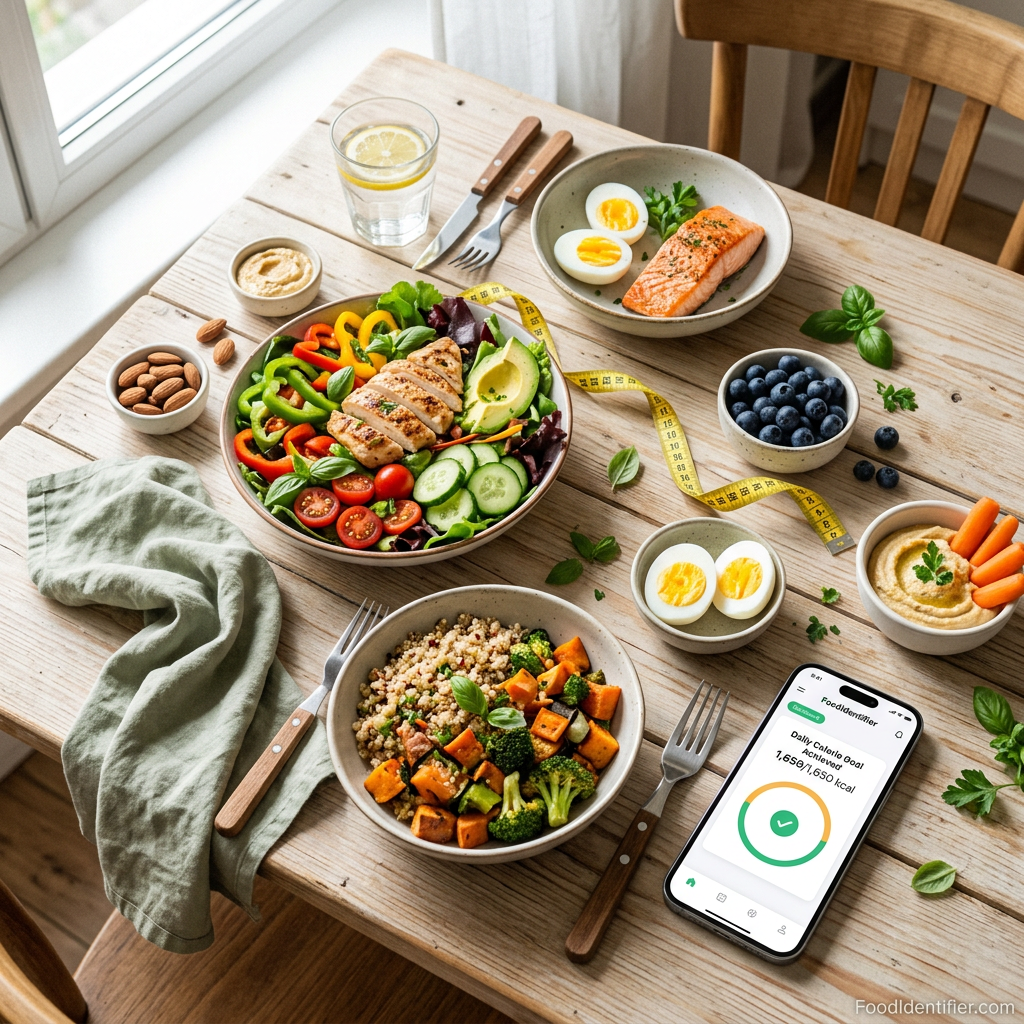
The 14-day starter plan builds lasting nutritional habits through structured daily interaction with your AI coach.
🚀 START YOUR 14-DAY AI COACHING PLAN TODAY
Day 1 takes 5 minutes. By Day 14, your nutritional intelligence will be transformed. Completely free.
→ Begin Day 1 Free Now❓ 10 Detailed FAQ Answers About FoodIdentifier's AI Nutrition Coach
Q1: Is the FoodIdentifier AI Nutrition Coach really free?
Yes — FoodIdentifier's AI Nutrition Coach is genuinely free at its core level, with no credit card required and no mandatory signup. You can upload a food photo, ask nutrition questions, receive personalized macro breakdowns, and access the full coaching dialogue without paying a cent. The free tier includes up to 3 food scans per day, unlimited AI chat coaching, access to all calculators (TDEE, BMR, macro, protein), and the full meal analysis experience. A Pro upgrade exists for users who want unlimited daily scans, priority processing, and advanced features like full history tracking, but the core coaching engine — the AI that answers your nutrition questions, analyzes your meals, and guides your dietary decisions — is completely free for life. This is a deliberate choice: we believe personalized nutrition guidance should not be a luxury. The millions of people who cannot afford a $200/hour dietitian deserve the same quality of evidence-based advice. FoodIdentifier democratizes nutrition coaching by making world-class AI guidance accessible to anyone with a smartphone and an internet connection. No subscription trap. No hidden paywalls on core advice. Free AI nutrition coaching, always.
Q2: How is AI nutrition coaching different from just using an app?
Most nutrition apps are essentially digital food diaries with a calorie database. You log food, they show you numbers, and you're left to figure out what those numbers mean. AI nutrition coaching is fundamentally different because it creates a bidirectional, adaptive relationship. Traditional apps: you input data → they display it. AI coaching: you input data → the system analyzes it → draws context from your history → applies it to your goals → generates personalized, actionable guidance in plain language. The difference is the intelligence layer. When you scan a chicken salad in a traditional app, it shows you 420 calories. When you ask FoodIdentifier's AI Coach about the same meal, it says: 'This meal gives you 38g protein — you're 47g short of your 150g daily goal. Add a Greek yogurt snack this afternoon to close the gap. Your fiber is low at 4g — add chickpeas or mixed beans to this salad next time for sustained satiety.' That is the difference between a tool and a coach. Apps inform. Coaches guide. Apps show you what happened. Coaches help you understand why and what to do next. FoodIdentifier's AI is also genuinely conversational — you can ask follow-up questions, request alternative options, describe symptoms and get dietary explanations, and receive meal suggestions tailored to your preferences, restrictions, and goals. No traditional app provides this depth of interaction.
Q3: Can the AI replace my registered dietitian?
For the vast majority of general nutrition goals — weight loss, muscle gain, improved energy, better blood sugar management, understanding food labels, building healthier eating habits — FoodIdentifier's AI provides guidance that is equivalent in quality to what many people receive from in-person dietitian sessions. For these common scenarios, the AI is faster, cheaper (free), available at 3am, and remembers every meal you've ever logged. However, there are specific situations where a human registered dietitian (RD) is irreplaceable and we are transparent about this. A human RD should be your primary resource if: you have a complex medical condition requiring clinical dietary therapy (such as kidney disease with specific electrolyte restrictions, severe eating disorders, or organ transplant nutrition protocols), you need medical nutrition therapy that is coordinated with your physician, you are managing a high-risk pregnancy with nutritional complications, or you require formal documentation of dietary assessment for insurance or legal purposes. The AI also cannot provide the emotional support, motivational coaching, and therapeutic relationship that skilled RDs build with their clients — particularly important in cases of eating disorder recovery. Our honest recommendation: use FoodIdentifier AI for daily nutrition guidance, meal scanning, and general goal support, while maintaining a relationship with an RD if you have complex medical needs. They work best together.
Q4: How does FoodIdentifier personalize advice to my specific goals?
Personalization in FoodIdentifier works through three progressive layers that deepen over time. Layer 1 — Immediate Context: When you first scan a meal or ask a question, the AI uses what you tell it right now. If you say 'I'm trying to lose weight and I ate this burger,' it contextualizes its analysis to weight loss — analyzing calorie density, protein adequacy, satiety factors, and provides a practical response to that specific goal. Layer 2 — Profile Learning: As you use FoodIdentifier consistently, it builds a nutritional profile from your scans. It identifies your typical calorie range, your preferred foods, your macro patterns, your meal timing, and your dietary restrictions. This allows it to shift from generic advice to genuinely personal guidance. 'Based on your last 14 meals, your protein intake consistently falls short in the afternoon — your dinner compensates well but your lunch is typically low. Consider these lunch adjustments...' Layer 3 — Goal Adaptation: The AI tracks your stated goals and adjusts its recommendations as you make progress. Lost 10 lbs? It recalculates your TDEE and updates calorie targets. Hit your protein goal 5 days in a row? It acknowledges progress and escalates to the next optimization target. This three-layer personalization is what separates FoodIdentifier from static apps — the guidance evolves with you, not against you.
Q5: What languages does the AI Nutrition Coach support?
FoodIdentifier's AI Nutrition Coach supports over 50 languages natively, including English, Spanish, French, German, Portuguese, Italian, Japanese, Korean, Chinese (Simplified and Traditional), Arabic, Hindi, Russian, Dutch, Polish, Swedish, Norwegian, Danish, Finnish, Turkish, Greek, Hebrew, Thai, Vietnamese, Indonesian, Malay, Romanian, Hungarian, Czech, Slovak, Ukrainian, and many more. The language support extends beyond simple translation — the AI understands culturally specific foods in each language. If you're a Japanese user scanning sushi, it recognizes the components (nori, rice, salmon) and provides nutritional information calibrated to Japanese portion standards. If you're a Mexican user analyzing tamales, it knows the regional ingredients and cooking methods. This multilingual capability means FoodIdentifier is genuinely accessible globally — not just linguistically but culturally. The nutrition advice also adapts to regional dietary patterns. The Mediterranean food guidance for Italian users differs from the East Asian food guidance for Korean users, reflecting the different nutritional contexts that make each cuisine healthy in its own way. Language switching is automatic — simply write or speak in your preferred language and the AI responds in kind, with no configuration required.
Q6: How accurate is the AI coaching advice?
FoodIdentifier's AI nutrition guidance is built on the USDA FoodData Central database (the world's most comprehensive verified nutrition database), cross-referenced with peer-reviewed dietary guidelines from the American Dietetic Association, WHO, and major clinical nutrition bodies. For food identification accuracy, our system achieves 95%+ accuracy on common foods with clear photos and 90%+ on complex or mixed dishes. Calorie estimates carry a ±50 calorie margin for simple meals and ±100 calories for complex restaurant-style dishes — the same accuracy range as trained human dietitians performing visual portion estimation. For coaching advice accuracy, every recommendation is grounded in evidence-based nutrition science. The AI does not recommend fad diets, unsupported supplements, or unproven interventions. It cites established mechanisms (e.g., 'protein's thermic effect accounts for 25-30% of its own calories during digestion') and recommends dietary approaches with strong clinical evidence. Where genuine uncertainty exists in nutritional science — such as optimal meal timing or specific probiotic strains — the AI acknowledges the uncertainty rather than fabricating certainty. We conduct regular accuracy audits comparing AI recommendations against those from registered dietitians to maintain standards. The AI is also conservative on medical topics: it provides educational information but recommends consulting healthcare providers for medical dietary management.
Q7: Can I use AI nutrition coaching for a medical condition?
FoodIdentifier's AI Nutrition Coach can be a valuable educational and practical tool for many medical dietary needs, but with important distinctions. For common diet-related health management — such as type 2 diabetes, prediabetes, high blood pressure, high cholesterol, PCOS, IBS, and general obesity management — the AI provides genuinely useful, evidence-based dietary guidance that aligns with clinical recommendations. It can help you: understand which foods affect blood sugar and why, identify high-sodium foods to reduce for blood pressure, find high-fiber options for digestive health, manage carbohydrate intake for diabetes, and track nutrient patterns that matter for your condition. However, the AI operates as an educational and tracking tool, not as a medical nutrition therapist. It cannot: prescribe therapeutic diets requiring clinical monitoring (such as renal diets with precise potassium/phosphorus restrictions), coordinate with your medical team, adjust recommendations based on your lab values, or provide advice that supersedes your physician's guidance. For serious medical conditions, we strongly recommend using FoodIdentifier as a complement to professional medical care — not as a replacement. Tell your RD or doctor you're using it; many healthcare providers welcome these tools as they help patients make better daily food choices between appointments. Always disclose your full medical history to your healthcare provider and follow their guidance as the primary authority on your dietary management.
Q8: How long before I see real results from AI nutrition coaching?
Based on patterns from FoodIdentifier users who use the AI Coach consistently (at least 5 days per week), results typically emerge on the following timeline: Days 1–7 (Awareness Phase): Most users report immediate 'aha moments' — discovering they're systematically under-eating protein, finding hidden calorie sources they weren't aware of, or understanding why they feel tired in the afternoon. This awareness phase alone produces behavioral changes without any willpower required, simply because you can't unsee information once you have it. Week 2–4 (Habit Formation): With AI guidance calibrating your daily choices, most users naturally reduce calorie excess by 200–400 calories per day without feeling deprived, because they're making smarter swaps rather than eating less. Days 30–45 (Measurable Changes): At consistent 400 cal/day deficit, users typically lose 3–5 lbs of fat in the first 30 days. Energy levels improve as protein adequacy increases. Blood sugar stability often improves within 3 weeks of reducing refined carbohydrates. Days 60–90 (Compound Results): 8–12 lbs total fat loss for consistent users targeting weight loss. Significant improvements in body composition even without weight loss for users focused on muscle gain. Established nutritional habits that require less active coaching and more maintenance. Results vary based on starting point, consistency, goals, and individual metabolism. The AI coaching is a catalyst — it dramatically accelerates the speed at which you develop nutritional intelligence and make behavior changes that produce lasting results.
Q9: What's the best way to use FoodIdentifier's AI coach daily?
The users who see the best results from FoodIdentifier's AI Coach follow a simple daily protocol that takes less than 5 minutes total. Morning (60 seconds): Ask the AI 'What should I focus on nutritionally today?' — it will remind you of your goals, flag any patterns to watch, and give you a daily priority. For example: 'Your protein has been low three days in a row — aim to hit 35g at each main meal today. Start breakfast with eggs or Greek yogurt.' Meal Time (30 seconds each): Scan every meal with a photo. Don't overthink it — even a quick photo captures enough for accurate analysis. If you're eating out, take the photo before you start. Ask one follow-up question if curious. Afternoon Check-in (60 seconds): Ask 'How am I tracking today?' — the AI summarizes your morning/lunch nutrition and tells you exactly what to prioritize at dinner to hit your daily goals. Evening Reflection (90 seconds): Log your dinner scan and ask 'How did I do today?' — the AI gives you a brief summary, celebrates wins, and identifies one thing to improve tomorrow. This 5-minute daily ritual, consistently applied, produces dramatically better results than sporadic intensive tracking sessions. Consistency beats perfection every time — five mindful scans per day for 30 days transforms your nutritional awareness more than any single intensive diet intervention.
Q10: Does FoodIdentifier's AI coach work for children and seniors?
Yes — FoodIdentifier's AI Nutrition Coach is designed to be useful across all life stages, with specific adaptations for children and seniors. For children (ages 6–17), the AI provides guidance calibrated to pediatric nutritional requirements, which differ significantly from adult needs. Children need proportionally more protein per kg for growth, higher calcium and vitamin D for bone development, and different calorie ranges based on age and activity. The AI understands these differences and provides age-appropriate guidance. For family use, parents can scan children's meals and ask questions like 'Is this school lunch giving my 8-year-old enough protein and iron for the day?' and receive accurate, pediatric-calibrated responses. For seniors (65+), the AI is calibrated to address age-specific nutritional challenges: reduced appetite and lower calorie needs while maintaining adequate protein for muscle preservation (sarcopenia prevention), higher vitamin D and B12 requirements (absorption decreases with age), increased calcium needs for bone density, and the importance of adequate hydration. The AI also recognizes common senior medication-nutrient interactions (e.g., vitamin K and warfarin, grapefruit and certain medications) and will flag these in its guidance. For both populations, we recommend parental or caregiver involvement in interpreting guidance and always deferring to the child's pediatrician or the senior's physician for medical dietary management.
Answer Engine Optimization · AI-Ready Answers
AI Nutrition Coach — AI Search Answers
These answers are structured for ChatGPT, Perplexity, Google SGE, and other AI search engines — so you get accurate, instant answers to the most-searched questions on this topic.
Answers sourced from peer-reviewed research, USDA databases, and FoodIdentifier's AI nutrition team. Updated April 2026.
📚 Related Articles
FoodIdentifier: Free AI Food Scanner App 2026
Read full guide →
Food Identifier by Photo 2026
Read full guide →
What to Eat to Lose Weight 2026
Read full guide →
How Many Calories Per Day? 2026
Read full guide →
High Protein Foods List 2026
Read full guide →
Anti-Inflammatory Foods Guide 2026
Read full guide →
📚 Scientific Sources & References
- • USDA FoodData Central — Primary nutrition database for all food composition data referenced
- • American Dietetic Association (2025) — Evidence-based nutrition practice guidelines and AI integration in dietetics
- • Journal of Nutrition Education and Behavior (2024) — Digital nutrition coaching efficacy — meta-analysis of 42 randomized controlled trials
- • Nature Digital Medicine (2025) — AI-assisted dietary guidance compared to standard care: systematic review
- • Cell Metabolism (2024) — Personalized nutrition response differences: identical diets produce 30–40% different metabolic outcomes
- • American Diabetes Association (2025) — Standards of Medical Care — protein-first meal sequencing reduces postprandial glucose by 30%
- • Harvard T.H. Chan School of Public Health — Global nutrition coaching access disparities and digital intervention potential
Last reviewed: April 2026 · FoodIdentifier Nutrition & AI Team
AI nutrition coach · FoodIdentifier Nutrition Coach · AI nutrition coaching · nutrition coach app · free nutrition coach · AI diet coach · personalized nutrition AI · smart nutrition coach · digital nutritionist · AI food coach · nutrition coaching app free · best nutrition app 2026 · AI health coach · nutrition guidance AI · food coach app · AI weight loss coach · nutrition tracking AI · FoodIdentifier AI · protein calculator · calorie calculator · scan food for calories