This article is general information only — not medical advice. Talk to your doctor about your own situation.
⚡ Quick Answer: Best Foods for Gut Health
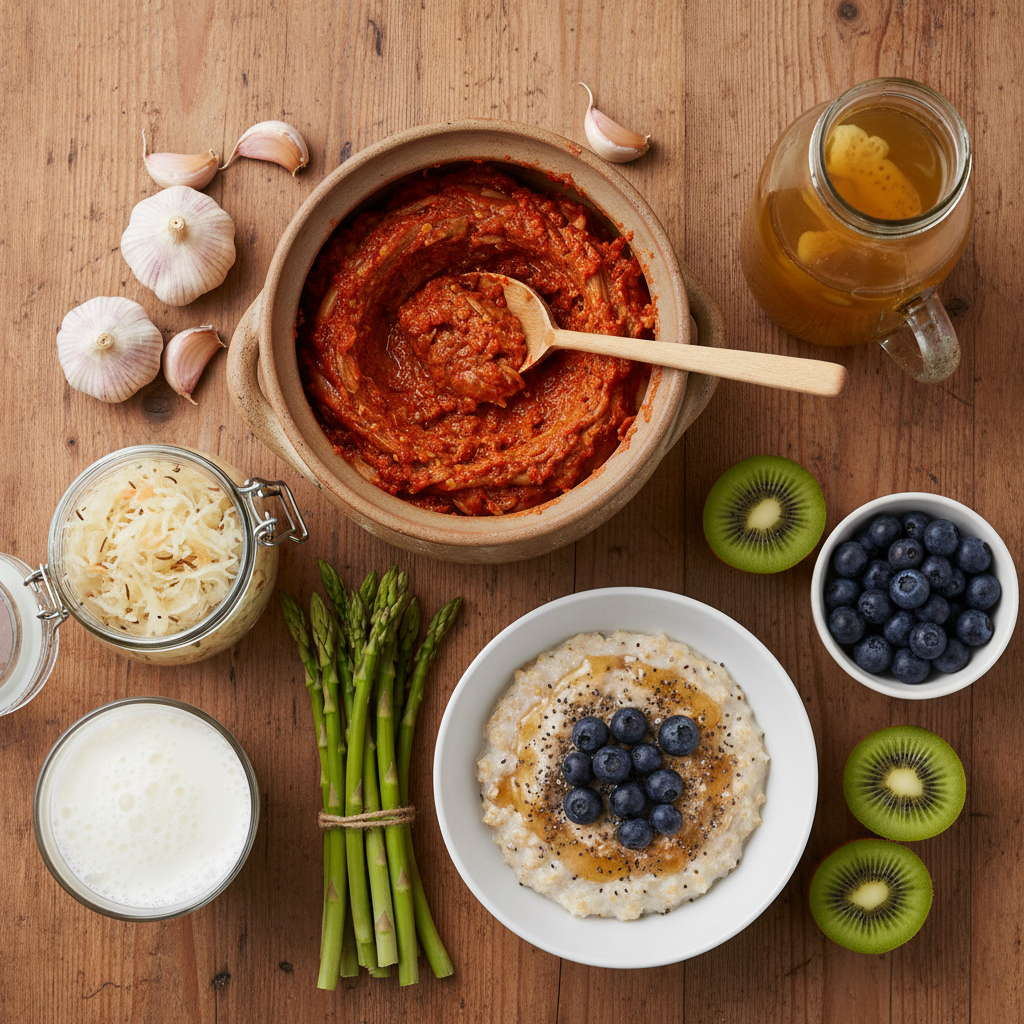
Top gut health foods: Kimchi, kefir, sauerkraut (probiotics with 10–100B CFU) + garlic, onions, asparagus, oats, unripe bananas (prebiotics feeding Bifidobacterium) + bone broth, kiwi, EVOO (gut lining repair). Aim for 30 different plant foods per week and 1–2 fermented foods daily for maximum microbiome diversity. Most people see bloating and digestion improvements within 3–7 days.
Your gut microbiome — the 38 trillion bacteria, fungi, viruses, and archaea living primarily in your large intestine — is now understood by science to be one of the most consequential systems in your entire body. Far beyond digestion, your gut controls 70% of immune function, produces 90% of your serotonin, manufactures B vitamins and vitamin K2, regulates blood sugar and cholesterol, determines how many calories you extract from food, and communicates continuously with your brain via the vagus nerve.
The foods you eat are the single most powerful determinant of your gut microbiome composition. This guide gives you the 25 most evidence-backed gut health foods — organized by type (probiotic, prebiotic, gut-healing, fiber) — with the clinical evidence for each, exact dosing recommendations, the 30-plants-per-week challenge, the complete gut-damaging foods to eliminate, and 10 detailed FAQ answers.
1. Understanding Your Gut Microbiome
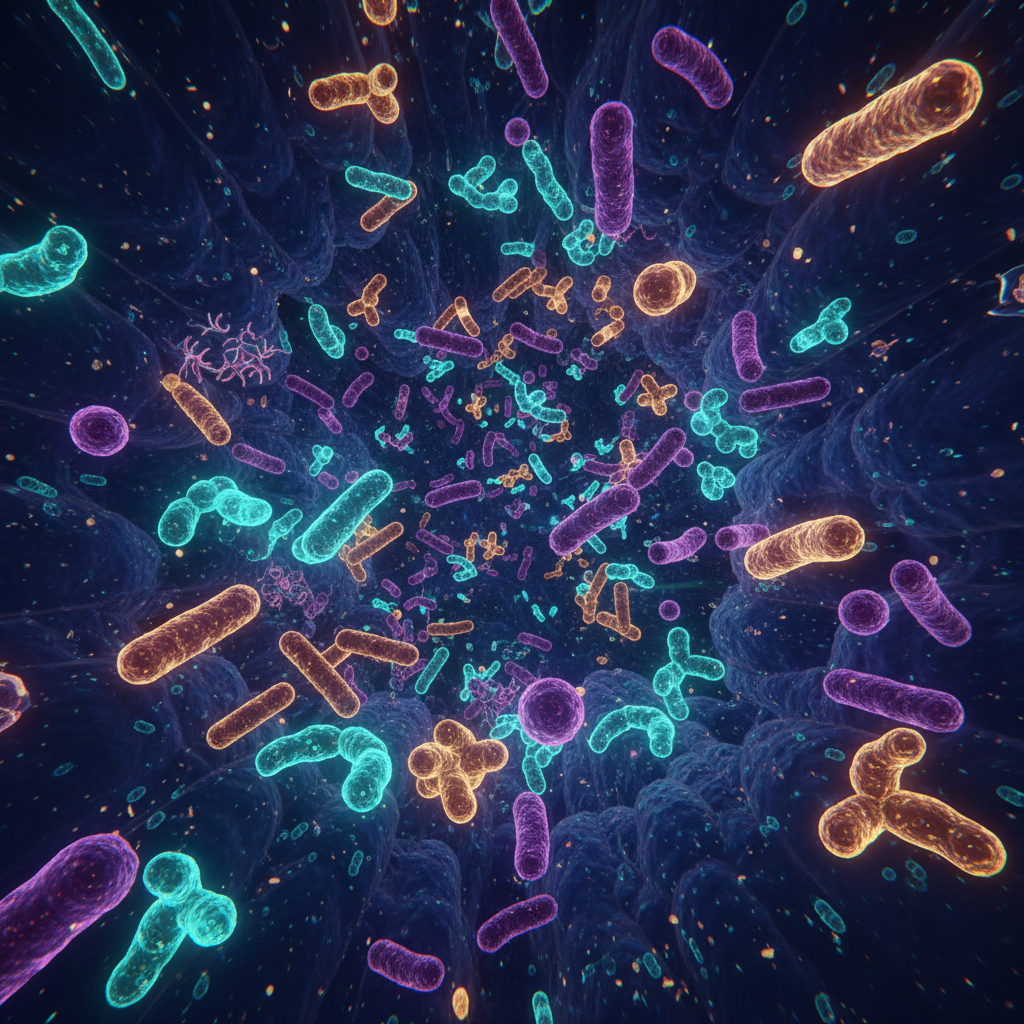
The human gut microbiome contains approximately 1,000 different bacterial species across 38 trillion individual organisms. These bacteria collectively carry 150 times more genes than the entire human genome — meaning your microbiome has enormous metabolic capacity that supplements and amplifies your own biology.
- 70% of your immune system lives in gut-associated lymphoid tissue (GALT)
- 90% of serotonin is produced in the gut by enterochromaffin cells, regulated by gut bacteria
- GLP-1 production — the satiety hormone mimicked by Ozempic — is directly controlled by gut bacteria
- Vitamin K2 and B vitamins are synthesized by gut bacteria — deficiencies can occur in people with dysbiosis even with adequate dietary intake
- Bile acid metabolism — gut bacteria convert primary bile acids into secondary forms that regulate fat absorption and blood cholesterol
- Intestinal mucosal integrity — bacteria produce the mucus layer that protects your gut lining from pathogens and leaky gut
2. The 4 Types of Gut Health Foods
Gut health foods fall into four functional categories — and the most powerful approach combines all four daily:
● PROBIOTIC
Live beneficial bacteria introduced to your gut
● PREBIOTIC
Fiber that feeds and grows your existing good bacteria
● GUT-HEALING
Compounds that repair the gut lining and reduce inflammation
● FIBER
High-fiber foods that produce short-chain fatty acids
3. The 25 Best Foods for Gut Health (Ranked by Evidence)
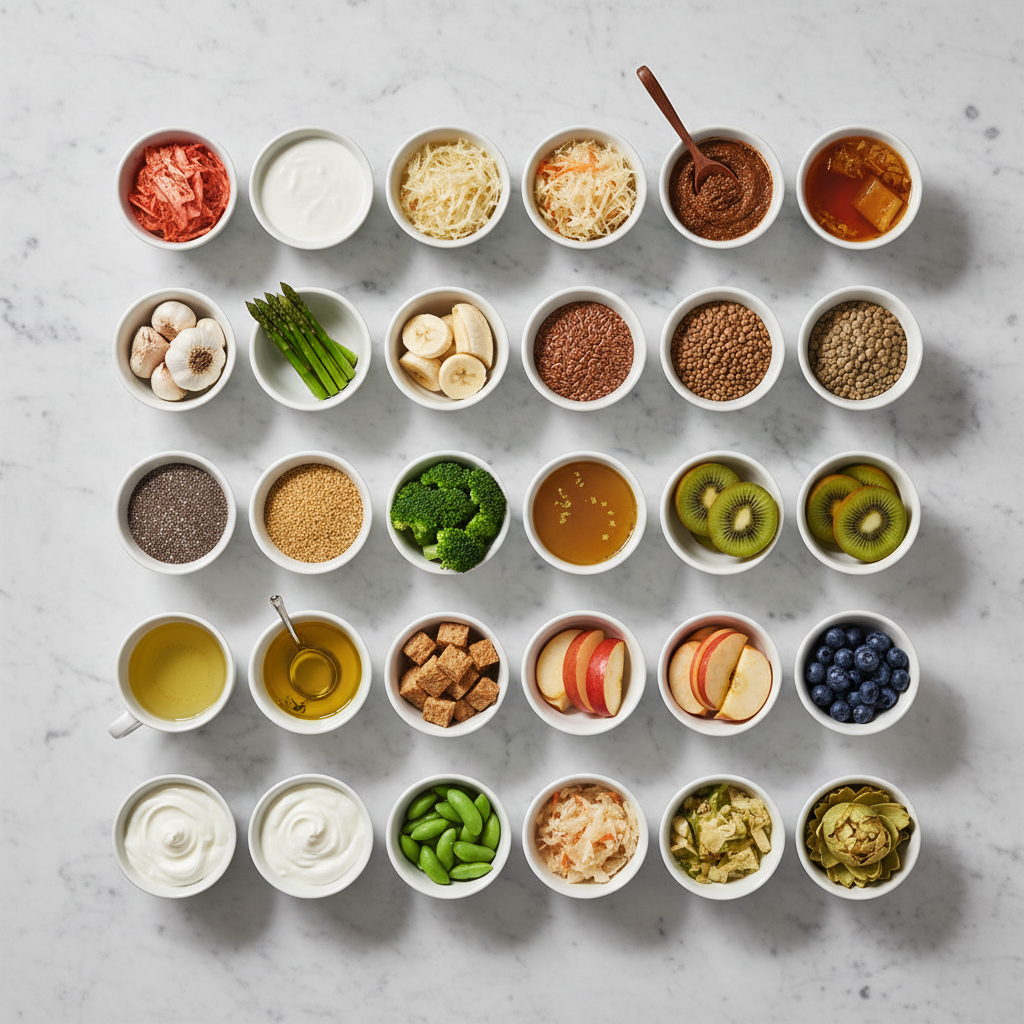
1. Kimchi
PROBIOTICThe most comprehensively studied fermented food for gut health. Contains 10+ billion CFU of Lactobacillus plantarum and L. brevis per serving, which directly colonize the gut and produce anti-inflammatory compounds. A 2021 RCT found daily kimchi consumption increased gut diversity by 40% and significantly reduced inflammatory cytokines (IL-6, TNF-alpha) within 10 weeks.
💡 How to use: 2–4 tbsp daily as a side dish. Must be raw — heat kills bacteria.
2. Kefir
PROBIOTICKefir surpasses yogurt dramatically in probiotic diversity — 30+ bacterial strains plus Saccharomyces cerevisiae yeast, versus 2–5 strains in typical yogurt. The yeasts break down lactose (tolerable for many lactose-intolerant people) and produce unique B vitamins. Kefir specifically and robustly increases Bifidobacterium — the primary GLP-1-producing bacteria. Studies show kefir reduces IBS bloating by 70%.
💡 How to use: 240ml (1 cup) plain unsweetened daily. Drink alone or use in smoothies.
3. Sauerkraut (Raw, Unpasteurized)
PROBIOTICRaw sauerkraut contains up to 100 billion CFU of probiotic bacteria per cup — more than any supplement available. The critical distinction: pasteurized sauerkraut sold in shelf-stable jars has zero live bacteria. Only refrigerated sauerkraut without vinegar (vinegar kills bacteria) contains live cultures. Also rich in vitamin C and K2 supporting gut mucosal integrity.
💡 How to use: 2–4 tbsp raw refrigerated sauerkraut daily. No heat.
4. Miso
PROBIOTICJapanese fermented soybean paste containing multiple probiotic strains plus 100+ digestive enzymes. Miso provides glutamate that stimulates digestive enzyme secretion and the gut lining's renewal cycle. Studies link regular miso consumption to reduced gastric cancer risk, improved gut barrier function, and significantly reduced colorectal cancer incidence in Japanese population studies.
💡 How to use: Dissolve in warm (not boiling) water for soup, or add to dressings and marinades. Never boil.
5. Kombucha (Authentic Raw)
PROBIOTICAuthentic kombucha (live, refrigerated, unfiltered) contains Lactobacillus and Bifidobacterium plus organic acids (acetic acid, glucuronic acid) that reduce intestinal pH — creating an environment hostile to pathogenic bacteria while favoring beneficial strains. Choose brands with visible cloudiness and "live cultures" labeling. Pasteurized kombucha has zero probiotic benefit.
💡 How to use: 4–8oz daily. Check sugar content — choose varieties under 8g per serving.
6. Garlic & Onions
PREBIOTICThe most potent prebiotic foods in the standard diet. Fructooligosaccharides (FOS) and inulin in garlic specifically feed Bifidobacterium — the bacteria that produce butyrate and GLP-1. Garlic contains 4–6g FOS per 100g (raw), onions 2–6g. These aren't just flavoring — they are targeted feed for your most important gut bacteria.
💡 How to use: Cook with garlic and onions daily. Raw garlic provides 3x more FOS than cooked.
7. Oats (Beta-Glucan)
PREBIOTICBeta-glucan in oats is the most extensively studied prebiotic soluble fiber. It forms a viscous gel in the gut that: (1) feeds Lactobacillus and Bifidobacterium specifically, (2) directly stimulates GLP-1 release from L-cells, and (3) reduces LDL cholesterol by 10–20% as a secondary benefit. Beta-glucan increases production of butyrate — the primary fuel for colonocytes (colon lining cells).
💡 How to use: ½ cup rolled or steel-cut oats daily. Overnight oats increase resistant starch content by 40%.
8. Asparagus
PREBIOTICThe richest vegetable source of inulin — a prebiotic fiber specifically feeding Bifidobacterium and Lactobacillus. Inulin in asparagus increases SCFA production, reduces intestinal permeability, and has been shown in clinical trials to improve constipation more effectively than many laxatives. 1 cup asparagus provides 2–3g inulin.
💡 How to use: 5–6 spears, 3–4 times per week. Roasted, steamed, or raw in salads.
9. Slightly Unripe Bananas
PREBIOTICUnripe (slightly green) bananas are exceptionally rich in resistant starch — a prebiotic that travels intact to the colon and feeds beneficial bacteria there, rather than being absorbed in the small intestine. As bananas ripen, resistant starch converts to simple sugar. Green-tipped bananas contain 15–20g resistant starch; fully ripe contain almost none.
💡 How to use: 1 slightly unripe banana daily. Blend into smoothies if the tartness is off-putting.
10. Jerusalem Artichoke
PREBIOTICJerusalem artichoke (sunchoke) contains the highest inulin concentration of any common food — 14–19g per 100g. This makes it exceptionally powerful for feeding Bifidobacterium, but also exceptionally gas-producing if introduced too quickly. It is the most potent prebiotic food available and worth including 1–2x weekly once gut health is established.
💡 How to use: Start with 1–2 tbsp and gradually increase. Roast or add raw to salads. Introduce very gradually.
11. Bone Broth
GUT-HEALINGBone broth's collagen breaks down during cooking into glycine and proline — amino acids that directly repair the tight junction proteins that seal the gut lining (preventing "leaky gut"). L-glutamine, also abundant in bone broth, is the primary fuel source for enterocytes (intestinal lining cells), enabling rapid cellular regeneration. Studies show glycine supplementation significantly reduces intestinal permeability in 4 weeks.
💡 How to use: 1–2 cups daily. Choose certified grass-fed or make at home from organic bones simmered 12–24 hours.
12. Kiwifruit
GUT-HEALINGKiwi is uniquely valuable for gut health for two reasons: (1) It provides prebiotic fiber that feeds gut bacteria. (2) It contains actinidin — a unique proteolytic enzyme that dramatically improves protein digestion and reduces bloating. A 2022 RCT found 2 kiwis daily for 4 weeks improved constipation, reduced bloating, and improved gut discomfort significantly more than psyllium husk alone.
💡 How to use: 2 kiwis daily, ideally with breakfast. Green or golden kiwi both work.
13. Green Tea
GUT-HEALINGEGCG and other catechins in green tea act as selective prebiotics — promoting Bifidobacterium growth while actively inhibiting pathogenic bacteria (E. coli, H. pylori, Clostridium). Green tea also reduces gut inflammation and tightens intestinal junctions, reducing permeability. Population studies show people drinking 3+ cups daily have 30% higher gut diversity scores on average.
💡 How to use: 3 cups brewed daily. Steep at 80°C (not boiling) to preserve maximum catechin content.
14. Extra Virgin Olive Oil
GUT-HEALINGEVOO's oleocanthal (a natural COX inhibitor) reduces gut inflammation directly, while its polyphenols selectively promote Bifidobacterium and Lactobacillus growth and inhibit pathogenic bacteria. A 2022 RCT found Mediterranean diet adherents with high EVOO consumption showed dramatically better microbiome profiles than those on low-fat diets, including higher butyrate production.
💡 How to use: 2 tbsp daily. Cold drizzle over salads, vegetables, or consume 1 tbsp straight before meals.
15. Ginger
GUT-HEALINGGinger's active compounds (6-gingerol, 6-shogaol) have multiple gut-beneficial effects: they reduce gut inflammation, inhibit nausea-causing serotonin receptors, improve gastric emptying, and have demonstrated antimicrobial effects against H. pylori — the bacteria causing most stomach ulcers. Ginger also supports the migrating motor complex (the gut's "cleaning wave" between meals).
💡 How to use: 1–2g fresh ginger daily in tea, cooking, or grated into dressings. Powder is also effective.
16. Lentils & Chickpeas
FIBERLegumes are the single strongest dietary predictor of gut microbiome diversity across global population studies — stronger than fruit, vegetable, or whole grain intake alone. They provide 15–17g of mixed soluble and insoluble fiber per cup (cooked). The combination of fermentable fiber, slow-release protein, and resistant starch makes legumes uniquely valuable for microbiome health.
💡 How to use: ½ cup cooked daily. Canned (drained and rinsed) is equally effective. Introduce gradually to reduce gas.
17. Chia Seeds
FIBERChia seeds form a thick mucilaginous gel when wet, feeding a specific class of gut bacteria that produce the protective gut mucus layer. The mucus layer is the gut's first line of defense against pathogens and leaky gut. Chia also provides omega-3 ALA with emerging evidence for reducing gut inflammation, and delivers 10g fiber per 2 tbsp serving.
💡 How to use: 2 tbsp soaked overnight in liquid (smoothies, oatmeal, water). The gel form is most beneficial.
18. Ground Flaxseeds
FIBERFlaxseeds provide lignans — unique compounds metabolized by gut bacteria into enterolactone and enterodiol, which have demonstrated anti-inflammatory effects on the gut mucosa and influence estrogen metabolism via the microbiome. Ground flaxseeds (not whole — whole pass through undigested) also provide 3g fiber per tablespoon and omega-3 ALA.
💡 How to use: 2 tbsp ground flaxseeds daily in oatmeal, smoothies, or mixed into foods. Must be ground.
19. Cruciferous Vegetables
FIBERBroccoli, cauliflower, Brussels sprouts, and cabbage contain glucosinolates — compounds converted by gut bacteria into isothiocyanates that feed beneficial bacteria AND reduce gut inflammation. Cruciferous vegetables also provide sulforaphane, which activates Nrf2 — the master antioxidant pathway in gut epithelial cells — and has demonstrated protective effects against colorectal cancer.
💡 How to use: 1–2 cups daily. Light steaming preserves enzymes better than boiling or roasting.
20. Whole Apples (With Skin)
FIBERApple pectin is one of the most effective gut-healing fibers for restoring Bifidobacterium after antibiotic use. The combination of pectin (soluble, gel-forming) + insoluble fiber + polyphenols (quercetin, chlorogenic acid) makes whole apples unique. The polyphenols specifically are largely unabsorbed and reach the colon intact, where they feed beneficial bacteria directly.
💡 How to use: 1–2 apples daily, with skin. Apple juice has almost none of the gut benefits.
21. Psyllium Husk
FIBERPsyllium is 70% soluble fiber — the highest of any food. It forms an exceptionally viscous gel that: (1) produces among the highest GLP-1 responses of any fiber, (2) feeds gut bacteria selectively for Bifidobacterium and Lactobacillus, (3) normalizes both constipation and diarrhea (it is the active ingredient in Metamucil), and (4) reduces LDL cholesterol by 15–20% at therapeutic doses.
💡 How to use: 10g (1 heaped tsp) in 250ml water before meals. Drink immediately — it gels rapidly.
22. Cooked and Cooled Potatoes/Rice
FIBERWhen starchy foods like potatoes and rice are cooked then cooled for 12+ hours, their starches recrystallize into resistant starch (RS3) — which acts as a powerful prebiotic fiber that travels to the colon intact and dramatically boosts Bifidobacterium and butyrate production. Reheating does not eliminate the resistant starch benefit, making cold potato salad one of the most gut-beneficial carbohydrate preparations.
💡 How to use: Cook potatoes or rice, refrigerate overnight, then eat cold or reheat gently. Works with any starchy food.
23. Dark Berries (Blueberry, Blackberry, Raspberry)
FIBERPolyphenols in dark berries (anthocyanins, ellagitannins) are largely not absorbed in the small intestine — they travel to the colon where gut bacteria convert them into urolithins and other anti-inflammatory metabolites. These metabolites reduce gut inflammation, improve gut barrier function, and selectively feed Bifidobacterium. People with the Gordonibacter bacteria convert ellagitannins most efficiently.
💡 How to use: 1 cup mixed dark berries daily. Fresh or frozen equally effective.
24. Edamame (Young Soybeans)
FIBEREdamame provides the most gut-beneficial combination of any legume: high protein (17g/cup), resistant starch, soluble fiber, plus isoflavones that are metabolized by gut bacteria into equol — a compound with demonstrated effects on gut diversity and estrogen metabolism. Edamame's fiber feeds specifically the butyrate-producing Faecalibacterium prausnitzii, which is reduced in IBD patients.
💡 How to use: ½ cup shelled edamame as a snack or in salads and bowls.
25. Tempeh
GUT-HEALINGTempeh is fermented whole soybean — the fermentation process produces probiotics while the whole soybean structure provides prebiotic fiber, creating a unique food that is simultaneously probiotic AND prebiotic (a "synbiotic"). Tempeh also provides 20g protein per 100g (the highest of any plant food), making it uniquely valuable for protein intake while feeding the gut.
💡 How to use: 85–100g (about 3oz) 3–4x per week. Pan-fry, crumble into bowls, or marinate and grill.
4. 5 Foods That Destroy Gut Bacteria (Eliminate These)
These food additives — found in nearly all ultra-processed foods — directly reduce mucus layer thickness in the gut, damaging the protective biofilm, within 10 days of consumption in human studies. Even at doses approved by regulators.
Sucralose and saccharin demonstrably harm Bifidobacterium and Lactobacillus — the two most important beneficial bacterial groups — within 2 weeks of regular consumption. Studies show they also increase glucose intolerance despite having no calories.
Ethanol directly kills gut bacteria, disrupts tight junction proteins in the gut lining (causing leaky gut), and reduces microbiome diversity. Even moderate consumption (1–2 drinks/day) maintains measurably lower gut diversity than abstinence.
TMAO (trimethylamine N-oxide) — produced from L-carnitine in red meat by gut bacteria — is associated with cardiovascular disease and an inflammatory microbiome profile when consumed without adequate fiber to counterbalance it.
High omega-6 linoleic acid in these oils promotes gut inflammation and an inflammatory microbiome environment. Switch to olive oil, avocado oil, and butter for cooking.
5. The 30 Plants Per Week Challenge
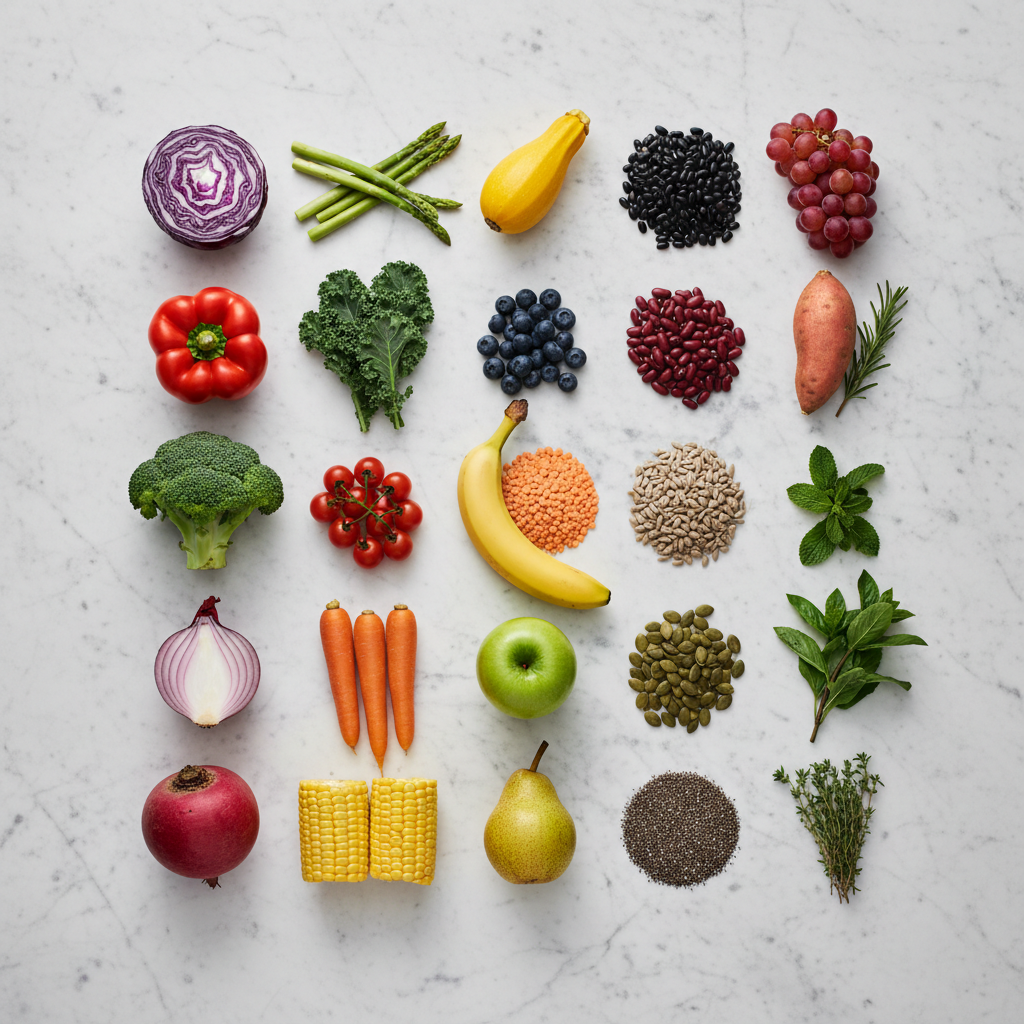
The single most evidence-backed dietary intervention for gut microbiome diversity is eating 30+ different plant foods per week — a finding from the American Gut Project that studied 10,000+ people across 45 countries. Crucially: every different plant food counts (vegetables, fruits, legumes, nuts, seeds, grains, herbs, spices — even 1/4 teaspoon of a spice counts as 1 plant). Variety beats quantity.
🌱 Start with These 30 Plants This Week:
🦠 Know What's In Your Food
Use FoodIdentifier to instantly identify any food and see its gut health benefits — probiotics, prebiotic fiber, and gut-healing compounds.
6. 7-Day Gut Reset Plan
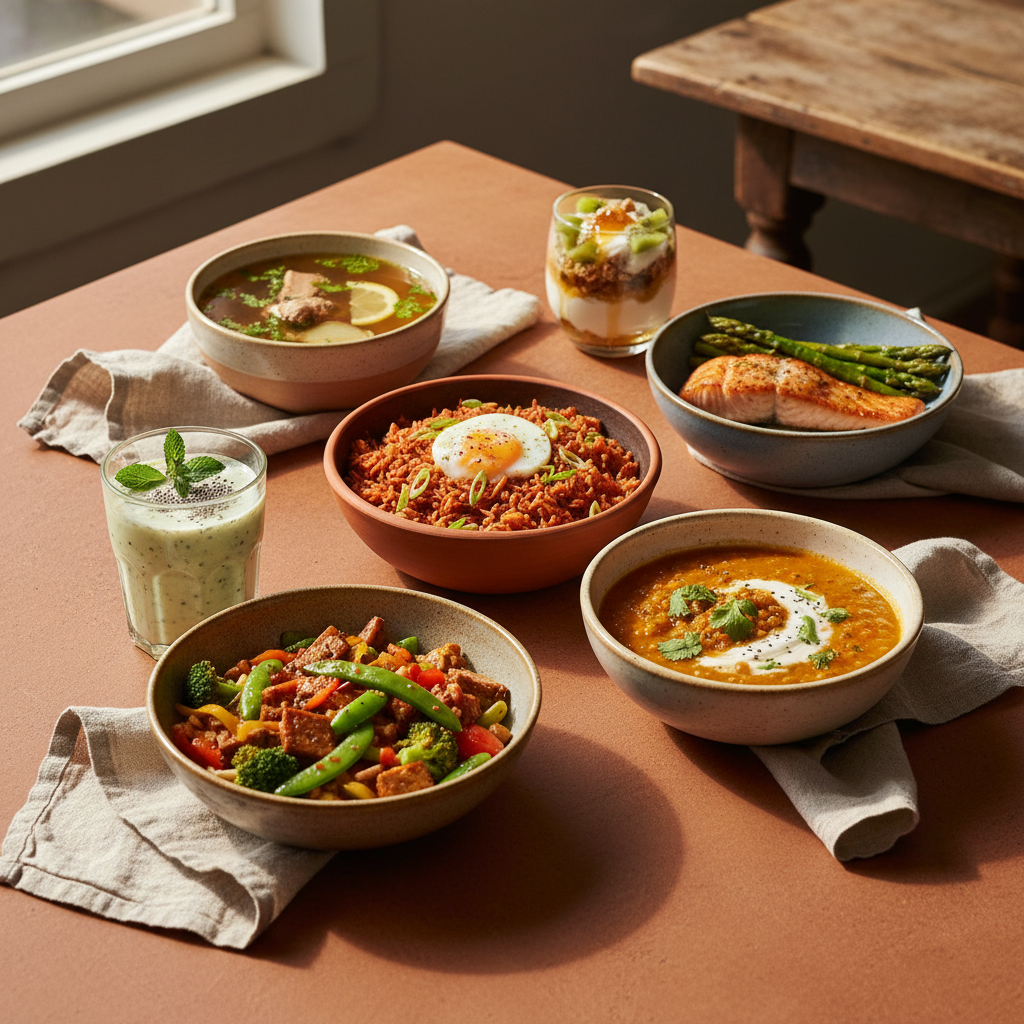
B: Steel-cut oats + banana (unripe) + chia seeds | L: Lentil soup + garlic + spinach | D: Salmon + asparagus + kimchi side | S: Kefir smoothie + blueberries
💡 Remove all ultra-processed foods and artificial sweeteners today — the most important step.
B: Greek yogurt + oats + blueberries + walnuts | L: Chickpea salad + garlic + EVOO + lemon | D: Tempeh stir-fry + bok choy + ginger + garlic | S: Apple (whole, with skin) + almond butter
💡 Add 1 fermented food to every meal if possible.
B: Kefir + banana + spinach + flaxseeds smoothie | L: Miso soup + edamame + sauerkraut | D: Bone broth soup + vegetables + garlic + ginger | S: 2 kiwis + chamomile tea
💡 Drink 1 cup bone broth separately for maximum gut-lining healing.
B: Overnight oats + apple + cinnamon + psyllium husk | L: Black bean bowl + avocado + kimchi + lime | D: Salmon + roasted broccoli + asparagus + EVOO | S: Kombucha + walnuts
💡 You may notice less bloating today as beneficial bacteria begin colonizing.
B: Eggs + spinach + garlic sauté + sauerkraut side | L: Lentil curry + ginger + onion + brown rice | D: Tempeh + asparagus + EVOO + lemon + garlic | S: Kefir + berries + chia
💡 Add 1 new plant food you haven't eaten this week — novel plants = novel microbiome benefits.
B: Kiwi (2) + Greek yogurt + oats + flaxseeds | L: Big salad: kale, chickpeas, avocado, salmon, EVOO | D: Miso-glazed salmon + roasted broccoli + kimchi | S: Bone broth warm drink + apple
💡 Count your plants this week — aim for 20+ so far.
B: Banana (unripe) + almond butter + oats + chia + kefir | L: Lentil soup + garlic + onion + kombucha | D: Tempeh + ginger + edamame + brown rice + sauerkraut | S: Blueberries + walnuts + chamomile tea
💡 Week complete. Most people notice improved digestion, less bloating, and better energy by day 5–7.
7. Free Tools for Gut Health Optimization
📸 AI Food Scanner
Check probiotic and fiber content in any food instantly
🦠 Gut Health Score
Assess your gut health risk factors
🤖 AI Nutrition Coach
Get personalized gut health meal plans
🍽️ Meal Planner
Generate a 30-plants gut health meal plan
🧠 Stop Food Noise
Gut bacteria produce GLP-1 — read the connection
😌 Lower Cortisol
Cortisol damages gut health — here's how to fix it
8. People Also Ask — 10 Expert Answers on Gut Health & Food
❓ What are the absolute best foods for gut health?
The best gut health foods, ranked by clinical evidence: (1) Kimchi — contains 10+ billion CFU Lactobacillus per serving, increases gut diversity 40% in RCTs. (2) Kefir — 30+ probiotic strains including yeasts, dramatically more diverse than yogurt. (3) Sauerkraut (raw/unpasteurized) — up to 100 billion CFU per cup. (4) Garlic and onions — the most potent prebiotic foods, specifically feeding Bifidobacterium. (5) Oats with beta-glucan — most potent soluble prebiotic fiber. (6) Bone broth — glycine and glutamine directly repair tight junctions in the gut lining. (7) Lentils and legumes — the single strongest dietary predictor of microbiome diversity in global studies. Aim for 30+ different plant foods per week.
❓ How quickly can you improve gut health with diet?
Gut microbiome changes begin within 24–48 hours of dietary changes. A landmark 2023 Stanford study found that eating 6 servings of fermented foods daily for 10 weeks produced dramatic increases in microbiome diversity and significant reductions in inflammatory markers. However, meaningful, stable microbiome improvements take 4–12 weeks of consistent dietary changes. The 30 different plants per week protocol shows measurable diversity improvements in 3–4 weeks.
❓ What heals a damaged gut lining (leaky gut) fastest?
The most evidence-backed interventions for gut lining repair: (1) L-glutamine (5g daily) — primary fuel for enterocytes (gut lining cells), reduces intestinal permeability. (2) Bone broth — collagen-derived glycine and proline directly repair tight junction proteins. (3) Zinc-carnosine — clinically proven to repair gut lining in 8 weeks. (4) Aloe vera inner leaf gel. (5) Prebiotic fiber — reduces LPS (lipopolysaccharide) that causes leaky gut. Removing triggers is equally important: gluten (for sensitive individuals), alcohol, NSAID overuse, ultra-processed food emulsifiers (carrageenan, polysorbate-80).
❓ Does eating 30 different plants per week really improve gut health?
Yes — this is one of the best-replicated findings in microbiome science. The American Gut Project (10,000+ participants) found people eating 30+ plant foods per week had dramatically more diverse gut microbiomes than those eating fewer than 10, and this effect held true even comparing vegans vs. meat-eaters. Diversity matters more than quantity: each new plant food introduces unique fermentable fibers that feed different bacterial strains. "Plants" include vegetables, fruits, legumes, nuts, seeds, herbs, spices, and whole grains — even 1/4 teaspoon of a spice counts.
❓ What foods destroy gut bacteria?
The most gut-damaging foods and substances: (1) Ultra-processed foods with emulsifiers — carrageenan, polysorbate-80, and carboxymethylcellulose directly reduce mucus layer thickness and gut diversity in as few as 10 days. (2) Artificial sweeteners — sucralose and saccharin demonstrably harm Bifidobacterium and Lactobacillus within 2 weeks. (3) Alcohol — disrupts tight junctions and kills beneficial bacteria directly. (4) Antibiotic residues in conventionally-raised meat. (5) Excessive red meat without adequate fiber — creates a pro-inflammatory microbiome environment. (6) High-sugar diets — feed pathogenic bacteria (Clostridium, E. coli strains) over beneficial ones.
❓ What is dysbiosis and how do you fix it?
Gut dysbiosis is an imbalance between beneficial and pathogenic bacteria in the microbiome. Symptoms include: chronic bloating, irregular bowel habits, food intolerances, brain fog, fatigue, skin problems, and frequent illness. It is caused by antibiotics, ultra-processed food, chronic stress, alcohol, and low-fiber diets. To fix dysbiosis: (1) Remove gut-damaging foods (ultra-processed, sugar, alcohol) for at least 30 days. (2) Add fermented foods 2x/day (kimchi, kefir, sauerkraut). (3) Increase fiber to 35g+ daily through 30+ plant foods per week. (4) Take a high-quality multi-strain probiotic (50 billion CFU). (5) Add prebiotic foods (garlic, onions, asparagus, oats). Full dysbiosis reversal typically takes 3–6 months.
❓ Can gut health affect weight and metabolism?
Yes — gut health is one of the most important and underappreciated factors in weight regulation. The gut microbiome: (1) Produces GLP-1 (the satiety hormone that Ozempic mimics) — poor gut health = low GLP-1 = constant hunger and food noise. (2) Regulates how many calories are extracted from food — the same meal produces different caloric impact in people with different microbiomes. (3) Produces SCFA butyrate which improves insulin sensitivity and fat metabolism. (4) Modulates systemic inflammation linked to obesity. Studies transplanting gut bacteria from obese mice to lean mice cause the lean mice to gain weight — demonstrating the microbiome's direct metabolic effects.
❓ Is kefir better than Greek yogurt for gut health?
Kefir is significantly more potent than Greek yogurt for gut health by most measures. Kefir contains 30+ probiotic strains (bacteria AND yeasts), while Greek yogurt typically contains 2–5 strains. Kefir's yeasts break down lactose, making it tolerable for most lactose-intolerant people. Kefir specifically and robustly increases Bifidobacterium — the key GLP-1-producing bacteria — while Greek yogurt's effect is milder. That said, Greek yogurt is excellent for protein content and gut health when kefir is unavailable. Use both for maximum benefit.
❓ Does the gut-brain axis affect mood and mental health?
Yes — the gut-brain axis is one of the most exciting research frontiers in medicine. 90% of serotonin is produced in the gut (not the brain). Gut bacteria synthesize dopamine precursors, GABA, and other neurotransmitters. The vagus nerve transmits information from gut microbiome status to the brain in real time. Studies show: (1) People with depression have distinctly different microbiome profiles from healthy controls. (2) Probiotic supplementation reduces depression scores in multiple RCTs. (3) High-fiber diets correlate with lower anxiety and better mood across populations. (4) Fecal microbiome transplants are being studied as treatments for depression and autism. The gut is essentially a "second brain."
❓ What is the best probiotic supplement for gut health?
The best probiotic supplements for gut health share several characteristics: (1) Multi-strain — include both Lactobacillus (multiple strains) and Bifidobacterium (multiple strains). (2) High CFU count — 50 billion CFU or more for therapeutic effect. (3) Enteric-coated or shelf-stable — bacteria must survive stomach acid to reach the colon. (4) Contains Lactobacillus rhamnosus GG (the most studied strain) and Bifidobacterium longum. (5) Refrigerated where possible. However: food-based probiotics (kimchi, kefir, sauerkraut) are generally more effective than supplements because they include the diverse prebiotic fibers that keep probiotic bacteria alive. Use both for best results.
🚀 Transform Your Gut Health Starting Today
Use our free AI food scanner and personalized coaching to implement the 30-plants challenge and gut health protocol from this guide.
📚 Related Articles
best foods for gut health, gut health foods 2026, microbiome foods, best probiotic foods, prebiotic foods, foods improve gut microbiome, gut healing foods, how to improve gut health naturally, fermented foods gut health, gut health diet, gut bacteria foods, leaky gut healing foods, probiotic foods ranked, gut health nutrition, prebiotic fiber foods, kimchi gut health, kefir gut health, sauerkraut probiotics, bone broth gut lining, 30 plants gut health, fiber gut microbiome, dysbiosis treatment food, gut brain axis, GLP-1 gut bacteria, microbiome diversity