How Many Calories in Honey?
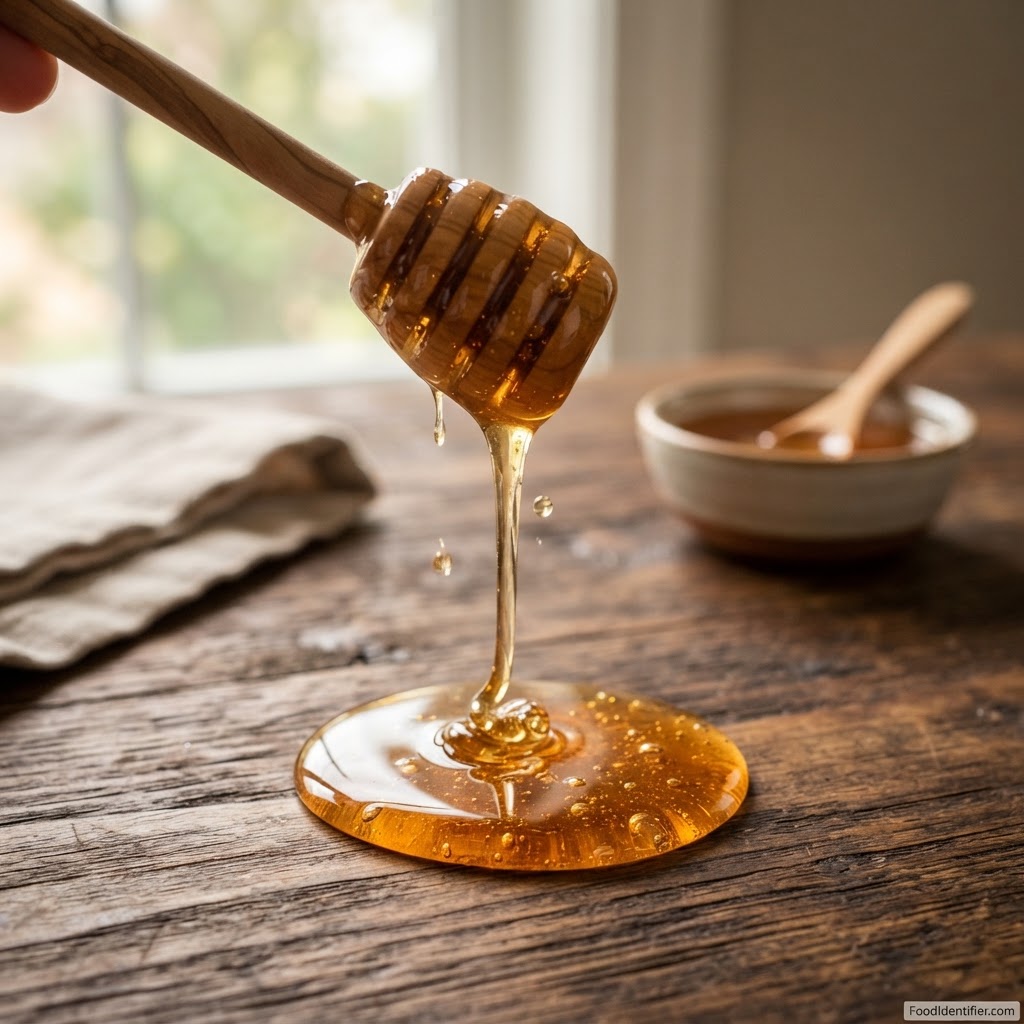
 FoodIdentifier.com
Honey has 304 calories per 100g, with 82.4g carbohydrates (82.1g as sugars), 0.3g protein, and 0g fat, per USDA FoodData Central (FDC 169640). One tablespoon (21g) is 64 kcal and one teaspoon (7g) is 21 kcal. Honey is essentially concentrated sugars — slightly lower in calories per gram than table sugar, but denser per spoon.
🔬 Nutrition Facts — Per 1 Tablespoon (21g)
Source: USDA FoodData Central · 2026
🥗 Key Ingredients & Nutrients at a Glance
📊 Quick Facts
- •Per 100g (USDA FDC 169640): 304 kcal | 82.4g carbs | 82.1g sugar
- •Per tablespoon (21g): 64 kcal | 17.3g carbs | 17.2g sugar
- •Per teaspoon (7g): 21 kcal | 5.8g carbs | 5.7g sugar
- •Protein: 0.3g/100g (negligible)
- •Fat: 0g — honey is fat-free
- •Fiber: ~0g (negligible)
- •Honey vs sugar (per tbsp): 64 kcal vs ~49 kcal
- •Honey vs sugar (per 100g): 304 kcal vs ~387 kcal
- •Keto? ❌ No — 82g carbs/100g
🚨 Top Problems — Solved
Honey Nutrition Facts (USDA FoodData Central, FDC 169640)
The values below are from USDA FoodData Central for honey (FDC 169640). Per-serving figures are scaled linearly from the per-100g anchors for one tablespoon (21g) and one teaspoon (7g). Fiber is negligible and marked as ~0g; sodium is not given in the USDA anchors, so it is omitted rather than estimated.
| Nutrient | Per 100g (USDA) | Per Tbsp (21g) | Per Tsp (7g) |
|---|---|---|---|
| Calories | 304 kcal | 64 kcal | 21 kcal |
| Protein | 0.3 g | ~0.1 g | ~0 g |
| Total Carbohydrate | 82.4 g | 17.3 g | 5.8 g |
| • Dietary Fiber | ~0 g | ~0 g | ~0 g |
| • Total Sugars | 82.1 g | 17.2 g | 5.7 g |
| Total Fat | 0 g | 0 g | 0 g |
Scan Your Meal — Get Calories in Seconds
Snap a photo of any food and get instant calories, macros, and nutrition facts. No app download. No sign-up.
📸 Scan Your Meal Free →🍯 Raw vs Regular Honey — Same Calories
Raw and regular (processed) honey have essentially the same calories — about 304 per 100g and 64 per tablespoon per the USDA anchors. Processing (filtering and gentle heating) changes clarity, shelf stability, and some enzyme and pollen content, but not the energy. Floral variety differences (clover, wildflower, manuka, acacia) are tiny on the calorie count. Choose raw honey for flavor and trace compounds if you prefer, but do not expect a meaningful calorie difference.
| Type | Per Tbsp (21g) | Per 100g | Notes |
|---|---|---|---|
| Raw honey | ~64 kcal | ~304 kcal | Unfiltered, retains pollen & enzymes |
| Regular (processed) honey | ~64 kcal | ~304 kcal | Filtered, heated for clarity |
| Clover / wildflower / manuka | ~64 kcal | ~304 kcal | Floral variety differences are tiny |
🍯 Honey vs Granulated Sugar — Honest Comparison
Per 100g, honey (304 kcal) is lower in calories than granulated sugar (~387 kcal) because honey still contains about 17% water. But per spoon, honey is denser: a tablespoon of honey weighs about 21g and delivers 64 kcal, while a tablespoon of granulated sugar weighs about 12.6g and delivers about 49 kcal. So honey is sweeter and denser per spoon, meaning you may use less to get the same sweetness — but if you spoon for spoon swap, honey adds more calories. The honest verdict: nutritionally, honey is approximately sugar with trace extras (enzymes, antioxidants, small amounts of minerals). Both are added sugars to moderate.
| Food | Serving | Calories | Carbs | Sugar |
|---|---|---|---|---|
| 🍯 Honey | 1 tbsp (21g) | 64 | 17.3g | 17.2g |
| 🍯 Honey | 1 tsp (7g) | 21 | 5.8g | 5.7g |
| 🍯 Honey | 100g | 304 | 82.4g | 82.1g |
| 🧂 Granulated sugar | 1 tbsp (~12.6g) | ~49 | ~12.6g | ~12.6g |
| 🧂 Granulated sugar | 100g | ~387 | ~99.8g | ~99.8g |
Honey in Tea: How Many Calories?
The calories honey adds to tea depend entirely on the spoon. One teaspoon (7g) adds about 21 calories, and one tablespoon (21g) adds about 64 calories, both scaled from the USDA value of 304 kcal/100g. If you stir in two teaspoons, that is about 42 calories. The tea itself contributes zero. If you are tracking, measure the spoon you actually use rather than estimating — honey is sticky and a "dollop" is not a unit.
Go Pro — Unlimited Scans, Full Macro Tracking
Scan every meal, track your daily macros, and hit your targets on purpose with FoodIdentifier Pro.
See Pro Plans →Honey and Weight Loss
Honey is not a weight-loss food. At 64 calories per tablespoon and 82g of carbohydrates per 100g, it is concentrated energy with almost no fiber or protein to slow absorption. Swapping sugar for honey does not meaningfully cut calories — honey is slightly lower per gram but denser per spoon, so spoon-for-spoon you may add more. If you enjoy honey, the practical move is to measure it (a teaspoon is 21 calories, a tablespoon is 64), count it toward your daily total, and treat it like any added sugar. No single food ruins a diet, but liquid calories from honey in tea, coffee, or dressings are easy to underestimate.
Honey and Blood Sugar
Honey is essentially concentrated sugars — 82.1g of sugars per 100g per USDA — so it raises blood glucose. For people with diabetes, prediabetes, or anyone monitoring glucose, honey is not a "free" sweetener. If your care team allows it, use small measured amounts and check your individual response with a glucose meter. This is not medical advice — talk to your doctor. Honey also breaks a fast for most protocols, since even a teaspoon (21 kcal, ~5.8g carbs) is enough to raise insulin.
Scan Your Plate — And Read Our Books
Get instant calories and macros for any meal, then go deeper with our nutrition guides. Free scan, no app required.
Related guides
Nutrition values are USDA FoodData Central reference values; brands and preparation vary.
Scan Any Food Instantly — Free
No sign-up. No app. Snap a photo → full nutrition in 3 seconds.
Try Free Food Scanner →🔧 Free Health Tools
❓ Frequently Asked Questions (8)
Click any question to expand the expert answer
🔗 Core Tools
📊 Popular Content Hubs
Scan Any Food Instantly — Free
No sign-up. No app. Snap a photo → get full nutrition in 3 seconds.
Try Free Food Scanner →📋 Nutrition data based on USDA FoodData Central. Values may vary by brand, preparation method, and serving size. Not a substitute for professional medical or dietary advice. Always consult a registered dietitian for personalized nutrition guidance.