 FoodIdentifier
Is Hummus Healthy? Calories, Protein and the Store-Bought Catch
Is hummus healthy? Yes, with a catch. Compare calories, protein, fibre and sodium for homemade and store-bought, plus portions and smarter dips to use.
This is not medical advice — talk to your doctor.
Key takeaways
- ▶Yes \u2014 plain hummus is a genuinely useful healthy food, with real fibre. The catch is portion, sodium and what you dip in it.
- ▶Hummus is a fibre-and-fat food more than a protein food. A quarter-cup gives you a few grams of protein, not the hit the tub implies.
- ▶Homemade and store-bought plain are close; flavoured and dessert hummus are different products. Chocolate hummus is a spread with a health halo.
- ▶The tub is not a serving. Most tubs hold three to four servings.
Scan a food free
Scan a food free — no app, no sign-up →The short verdict
Yes — with portion glasses on. Plain hummus, homemade or a decent store-bought tub, is one of the better dips you can keep in the house: short ingredient list, a legume base, and it actually fills you up.
But it's not a free pass, and it's not a protein food, whatever the tub suggests. It's calorie-dense, store-bought versions can carry surprising sodium, and nobody stops at two tablespoons once the pita comes out. Keep the hummus; lose the idea that a whole tub plus chips is a light lunch. For the quick number, our how many calories in hummus guide breaks the serving down plainly.
General information only. This is not medical advice — talk to your doctor.
What hummus is — and what it is not
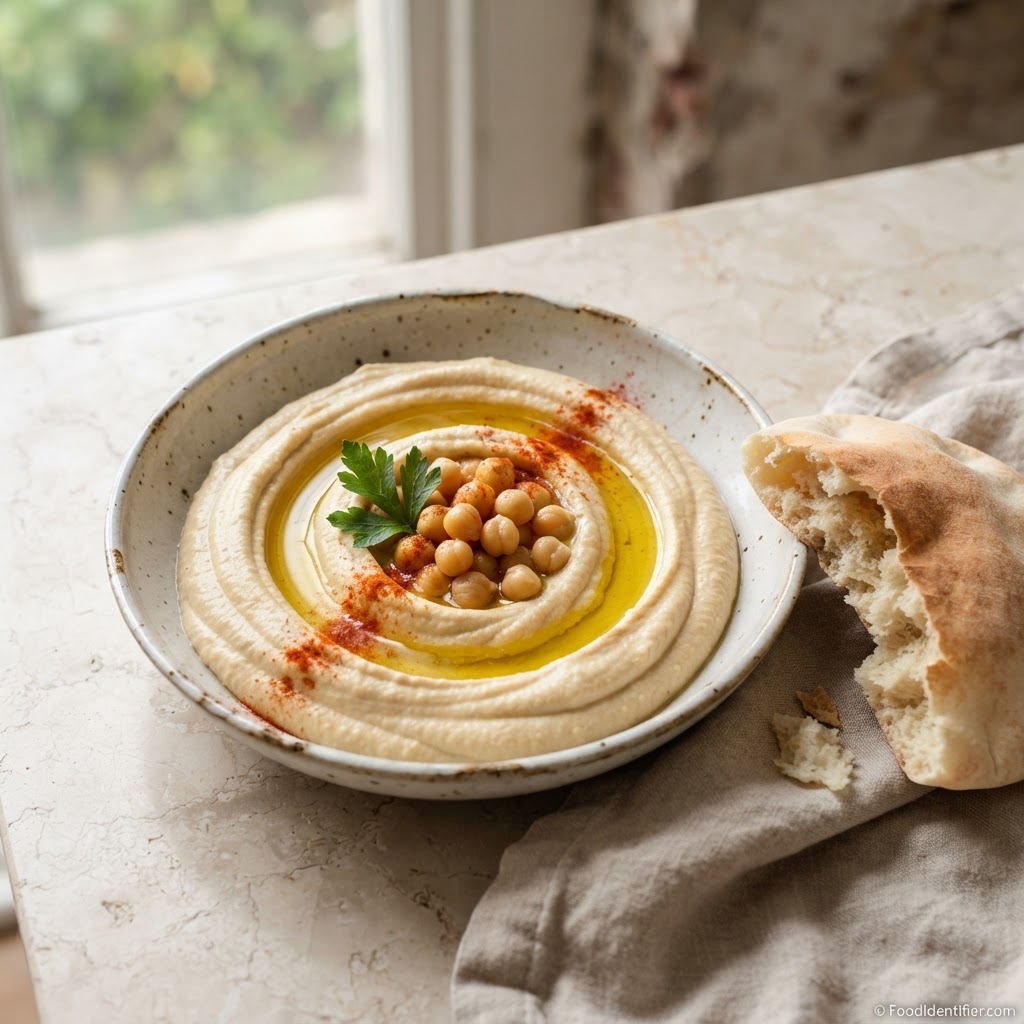
At its core, hummus is cooked chickpeas blended with tahini, olive oil, lemon juice, garlic and salt until smooth. That's it. Whipped long enough, it goes pale and fluffy; rushed, it stays dense and pasty.
Tahini is a paste made from sesame, which is a major allergen — worth knowing if you're serving hummus to guests you don't know well.
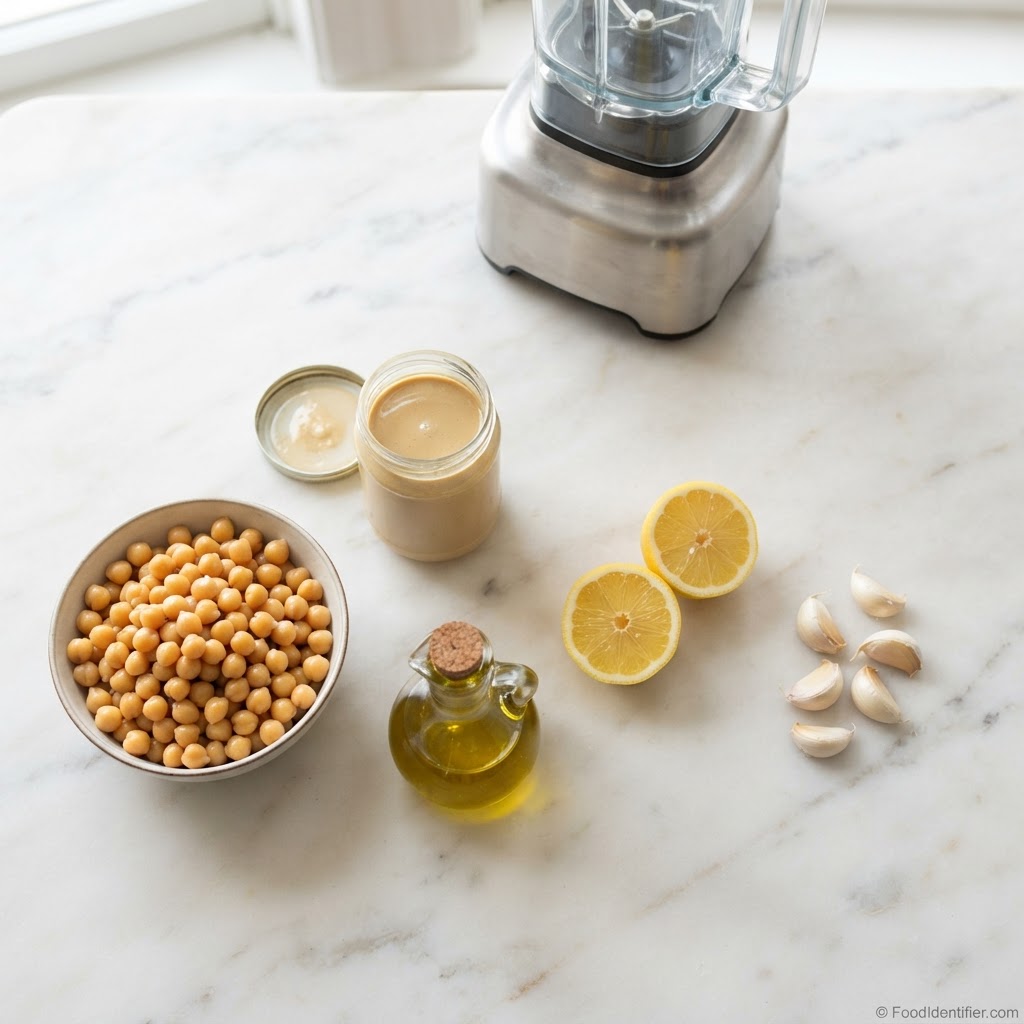
Homemade puts you in charge of the levers that matter: oil, salt, tahini. Store-bought plain is the same idea at scale — better tubs read like a home recipe, weaker ones lean harder on salt and cheaper oils.
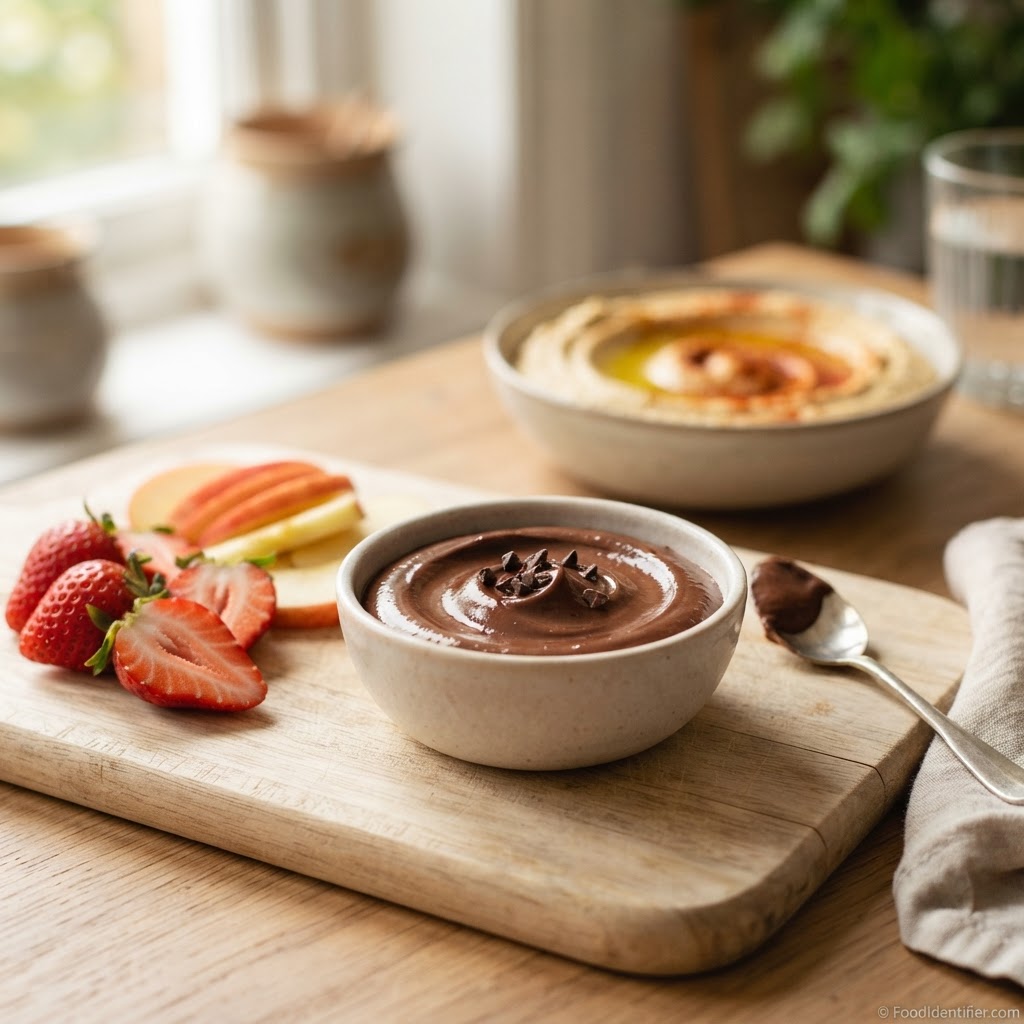
What it is not: flavoured hummus is a step away, not automatically a step down — roasted red pepper versions mostly add vegetables and seasoning. Dessert hummus — chocolate and vanilla-style tubs — is a different product entirely, sweetened and best judged as a dessert. It's also not guacamole, not ranch, and not a protein shake in dip form.
The numbers: a scoop, honestly
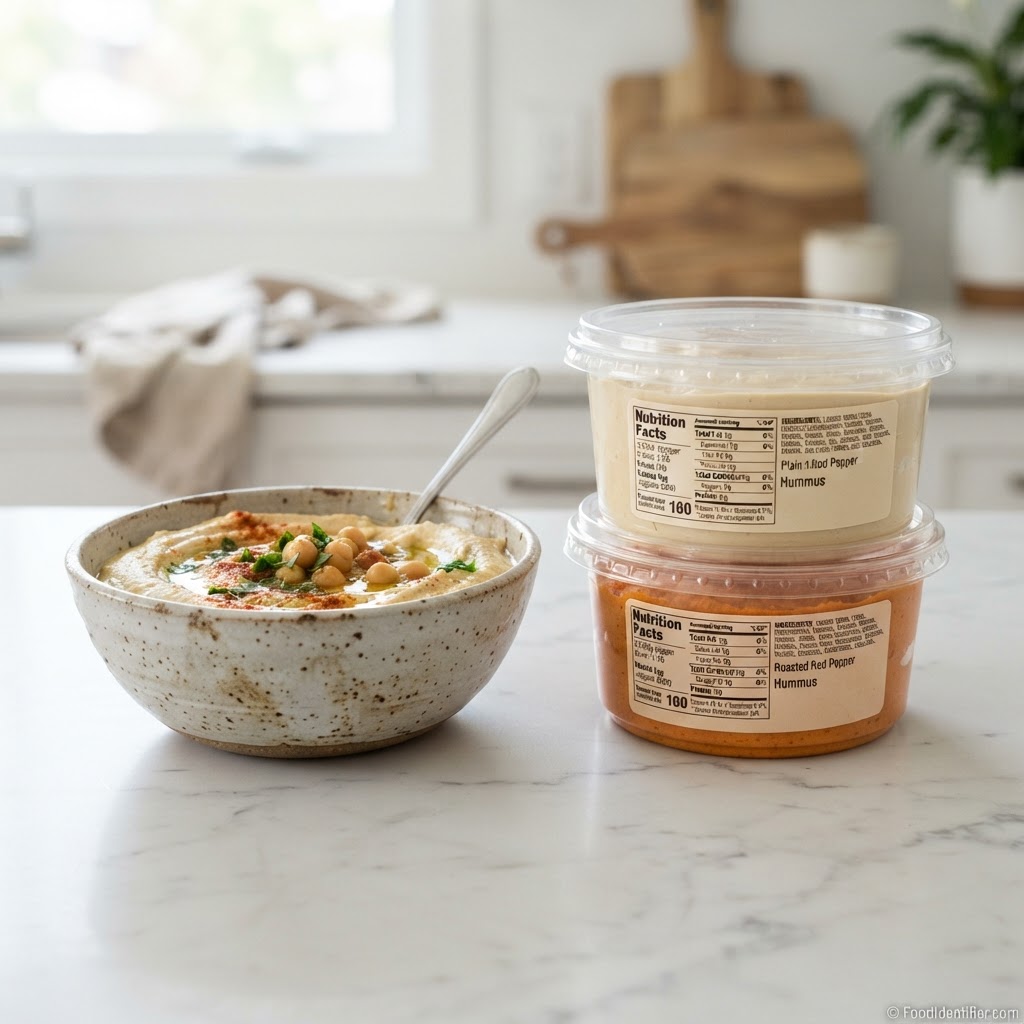
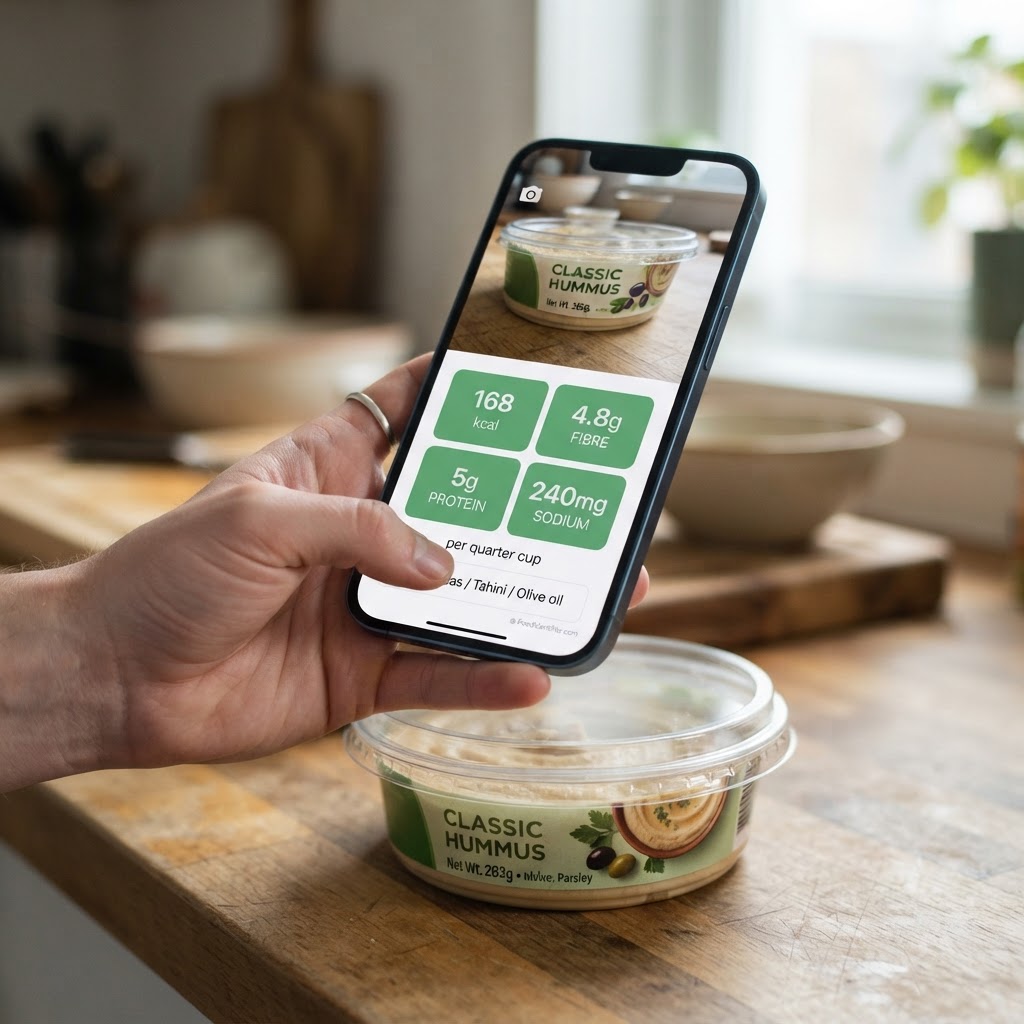
A labelled serving is usually 2 tablespoons; a realistic portion is closer to 1/4 cup, about 60 grams — the measure below. Brands vary, so check your own tub. Learning how to read nutrition labels takes a minute and pays off every time.
| Per 1/4 cup (~60g), typical values | Calories | Protein | Fibre | Sodium |
|---|---|---|---|---|
| Homemade classic hummus | ~160–180 | ~4–5g | ~3–4g | ~120–180mg |
| Store-bought plain hummus | ~150–190 | ~3–5g | ~2–4g | ~200–300mg |
| Roasted red pepper hummus, flavoured | ~140–180 | ~3–4g | ~2–3g | ~220–320mg |
| Chocolate dessert hummus | ~120–160 | ~2–3g | ~2–3g | ~80–140mg |
| Ranch dip, for context | ~140–180 | ~0–1g | ~0g | ~260–340mg |
| Guacamole, for context | ~90–120 | ~1–2g | ~3–4g | ~120–200mg |
Two lessons: plain hummus beats ranch on almost everything — more protein, real fibre, ingredients you recognise. And it's not low-calorie per bite: guacamole is lighter per scoop, dessert hummus spends its calories on sweetness, and plain hummus sits in the honest middle — filling, useful, easy to overdo.
The protein-and-fibre reality
Let's be straight: hummus gets marketed like a protein food and it isn't, quite. A quarter-cup gives you roughly 3 to 5 grams of protein — more than most dips, but a snack-level amount. Covering a meal's protein from hummus alone would take a lot of hummus, and a lot of calories with it. Put it next to our high-protein foods complete list and the gap is obvious.
Where it quietly wins is fibre plus fat. Chickpeas bring fibre most snacks have none of, and tahini and olive oil bring a richness that keeps you full. Not a protein shortcut, then, but a satisfying food that makes vegetables easier to eat — in my house, it makes a plate of plain carrots and cucumber disappear. Don't plan your protein around it.
The oil question
Oil is where homemade and store-bought part ways. At home it's olive oil — part of the flavour. In some store brands, part or all of it is replaced with cheaper oils: less peppery and fruity, more flat richness. If olive oil is the only oil listed, that tub is closer to the home version.
Quantity matters too. A glossy pool on top looks beautiful, but every spoonful is real calories. Homemade lets you keep the swirl thin; with a tub, the oil is already decided.
Got a tub in your hand?
Scan a food free — no app, no sign-up →Sodium: the quiet catch
Chickpeas bring almost no sodium themselves. Nearly all of it is added, and store-bought tubs can run roughly 200 to 300 milligrams per quarter-cup. Eat half a tub — a normal afternoon — and that's 400 to 600 milligrams before the dipper adds any.
Homemade is the easiest fix: salt to taste, and lemon and garlic do much of salt's work. With tubs, compare two labels once and buy the lower-sodium one on repeat. And watch the company: salted pita chips and crackers stack the same way, fast.
"Crispy Does NOT Mean Healthy" — a real scan from our YouTube channel.
Portion creep: the tub-as-a-single-serving problem
Here's the part nobody wants to hear, including me. Most tubs contain three to four labelled servings. Most people treat one tub as one snack.
Do the quiet maths. A whole standard tub can land around 500 to 700 calories, before anything is dipped in it. Add pita or chips and you've built a meal's calories in the shape of a snack. That doesn't make hummus "bad." It makes the portion the whole story.
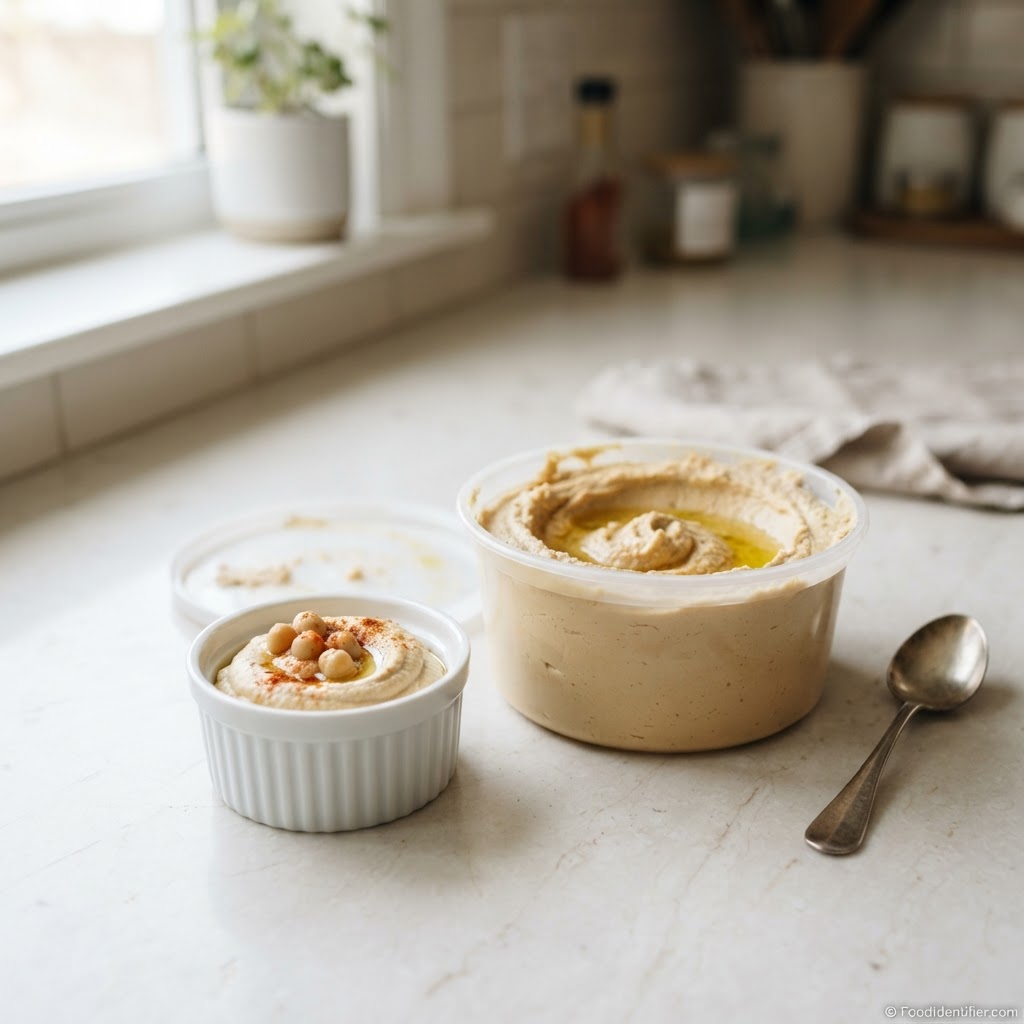
Three habits fix it. Scoop a quarter-cup into a small bowl and put the tub back — eating from the tub removes every stopping point. Sit down with it. And pair it with something bulky and low-calorie, like cucumber or pepper strips, so the plate feels finished.
What to dip changes the meal
Hummus is never eaten alone, so judging it alone is only half the job.
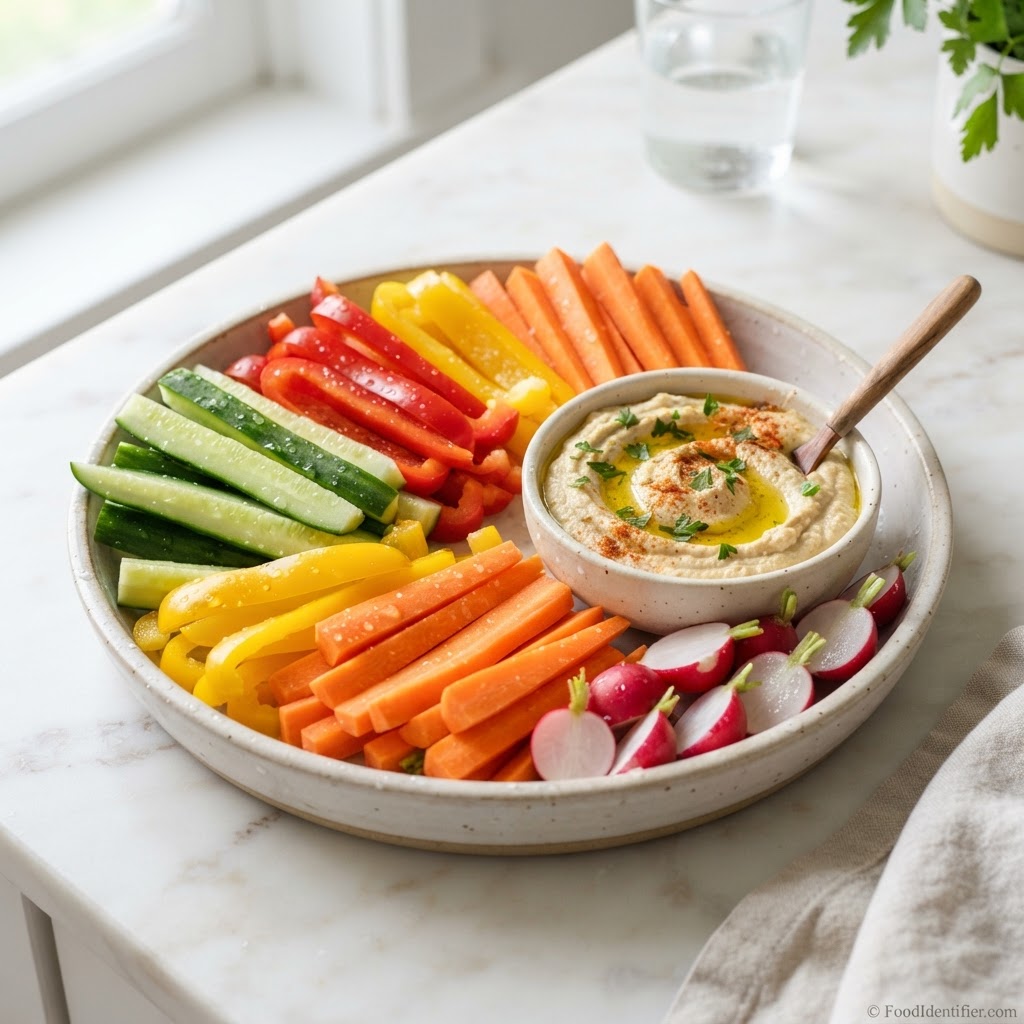
Vegetables — carrot, cucumber, bell pepper, radish, snap peas — are the best case: crunch, water and fibre for very few calories, and hummus makes them enjoyable rather than dutiful. This version I defend without caveats.
Crackers are the middle ground. Whole-grain adds some fibre; a refined, salty cracker mostly adds calories and sodium in the same direction as the dip.
Pita depends on the pita. Warm wholemeal pita makes hummus a proper small meal — with meal-level calories to match. Bagged, salted pita chips are the steepest route: chip plus dip, bite after bite, nothing telling you to stop.
My rule: vegetables when it's a snack, good bread when it's lunch, pita chips as the occasional treat they actually are.
Best ways to eat it
The snack plate, done right. A quarter-cup of plain hummus, a mountain of cucumber, peppers and carrots, lemon over the top. The plate looks generous because it is — most of it just isn't the dip.
The sandwich spread. Hummus instead of mayo on a chicken or roasted-vegetable sandwich. Creaminess stays, fibre arrives, and the sandwich stops tasting flat by bite three.
The grain bowl base. A big spoonful under warm grains and roasted vegetables, with chickpeas or a boiled egg on top. The toppings carry the protein; the hummus makes it taste like a plan.
The mezze lunch. Hummus with olives, tomatoes, cucumber, a little feta and warm wholemeal pita — counted as lunch, not a pre-lunch snack. Naming it a meal is the most honest portion control there is.
Shopping with your phone in hand? Our best AI food scanner apps roundup shows how a ten-second scan settles the tub-versus-tub question before your basket.
Scan a food free
Scan a food free — no app, no sign-up →Swaps ladder: when hummus isn't the move
1. White bean dip
Best for: the same creamy, legume-based dip with a milder flavour than chickpeas.
What changes: white beans with lemon, garlic and olive oil land close in fibre and protein, smoother and less nutty, with salt in your control.
Honest drawback: it’s blander, needs confident seasoning, and almost nobody sells a good ready-made one.
2. Greek-yogurt herb dip
Best for: anyone who wanted hummus to be a high-protein dip in the first place.
What changes: strained Greek yogurt with herbs and lemon swaps the profile — much more protein per scoop, far fewer calories, no legume fibre.
Honest drawback: it’s tangy and thin next to hummus’s richness, and won’t satisfy the same craving.
3. Guacamole
Best for: a lighter-per-scoop dip with the same real-ingredient satisfaction.
What changes: avocado brings fibre and richness for fewer calories per quarter-cup than hummus in typical values, with a brighter flavour.
Honest drawback: it browns fast, costs more, and the ripe-avocado window waits for no one.
4. Cottage-cheese dip
Best for: a high-protein, low-effort spread blended smooth in two minutes.
What changes: blended cottage cheese with herbs gives you protein hummus can’t match, at similar or lower calories.
Honest drawback: the flavour is dull without help, and even blended, the texture never quite reaches hummus-smooth.
Questions people ask before they finish the tub
Isn’t hummus just automatically healthy because it’s chickpeas?
The chickpeas are a great start, not the whole verdict. Oil, salt, portion and the dipper decide the rest.
Is store-bought hummus as good as homemade?
A good plain tub is close — short list, olive oil named first, sodium in check. Homemade wins on control, but I keep a decent tub in the fridge without guilt.
Is dessert hummus a healthy dessert?
Usually a better dessert than many, and a worse hummus than any plain one. Enjoy it as the sweet spread it is, in dessert portions.
Which choice fits your situation?
- ▶Everyday snacking: plain store-bought or homemade hummus, portioned into a bowl, with vegetables to dip.
- ▶Watching sodium: homemade, salted by your hand, or the lowest-sodium plain tub you can find — label checked once, then on repeat.
- ▶Trying to hit a protein target: keep the hummus for flavour and fibre, let Greek yogurt, eggs or chicken carry the protein — or pick the yogurt dip from the swaps.
- ▶Feeding a crowd: plain hummus is one of the safest shared dips going — just flag that it contains sesame if guests’ needs are unknown to you.
- ▶Wanting something sweet: dessert hummus, honestly counted as dessert, with fruit to dip instead of cookies.
FAQ
Scan a food free — no app, no sign-up — and get calories, fibre and sodium for what you actually eat.
Scan a food free — no app, no sign-up →See Hummus Calories →About the author
Faisal Ali — Founder of FoodIdentifier
Faisal Ali is the founder of FoodIdentifier, the free AI food scanner, writing from Dallas, Texas — check the label, skip the panic.
Related reading: how many calories in hummus and best AI food scanner apps.
Connect with Faisal on LinkedIn →General information, not medical advice. This is not medical advice — talk to your doctor. Figures are typical ranges; brands vary, so scan your specific tub.