This article is general information only — not medical advice. Talk to your doctor about your own situation.
⚡ Quick Answer: Fastest Safe Weight Loss
Maximum safe rate: 1.5–2 lbs per week = 6–8 lbs actual fat in 30 days. Formula: Calculate TDEE → subtract 500–750 cal → eat 1g protein/lb body weight → walk 8,000–10,000 steps daily → resistance train 3x/week → sleep 7–8 hours. Most people following this protocol correctly lose 8–12 lbs in 30 days (including initial water weight in week 1).
Let's start with honesty. The phrase "lose 30 pounds in 30 days" is not physiologically possible without surgical intervention or dehydration that would require hospitalization. A pound of body fat contains approximately 3,500 calories of energy. To lose 30 lbs of fat in 30 days, you would need a 105,000-calorie deficit in one month — about 3,500 calories per day. Even if you ate nothing and were an elite athlete, you would not produce a 3,500-calorie deficit daily.
What IS possible in 30 days: 6–12 lbs of total weight loss (including 5–8 lbs of actual fat loss and 2–4 lbs of water/glycogen loss in week 1) following the protocol in this guide. For many people starting from a high weight, this 30-day result is life-changing and the foundation for sustained fat loss of 1–2 lbs/week thereafter.
The key insight that makes this guide different: the fastest possible fat loss is not about extreme caloric restriction — it's about preserving muscle while maximizing fat loss. Every pound of muscle you lose slows your metabolism by approximately 6 calories per day — permanently, until you rebuild it. People who lose weight too aggressively lose 30–50% of their loss as muscle rather than fat, then regain all the fat within a year while keeping the lower metabolism. This protocol prevents that.
1. Why Most Fast Diets Fail (And What Works Instead)
- Muscle loss: Restricting below 1,000 calories/day causes 30–50% of weight loss to come from muscle, not fat
- Metabolic adaptation: The body responds to starvation by reducing RMR (resting metabolic rate) by 10–30% within weeks
- Hormonal disruption: Severe restriction reduces leptin, testosterone, and thyroid T3 — all of which slow metabolism
- Cortisol spike: Severe caloric restriction is a major physiological stressor that elevates cortisol, promoting fat retention and muscle breakdown
- Muscle loss compounds: Every lb of muscle lost = 6 cal/day metabolic reduction = 2 lbs less fat loss per year indefinitely
- Rebound effect: 80%+ of people who lose weight on very-low-calorie diets regain it all within 2 years, due to metabolic adaptation + muscle loss
2. Step 1 — Calculate Your Calorie Deficit (The Mathematical Foundation)
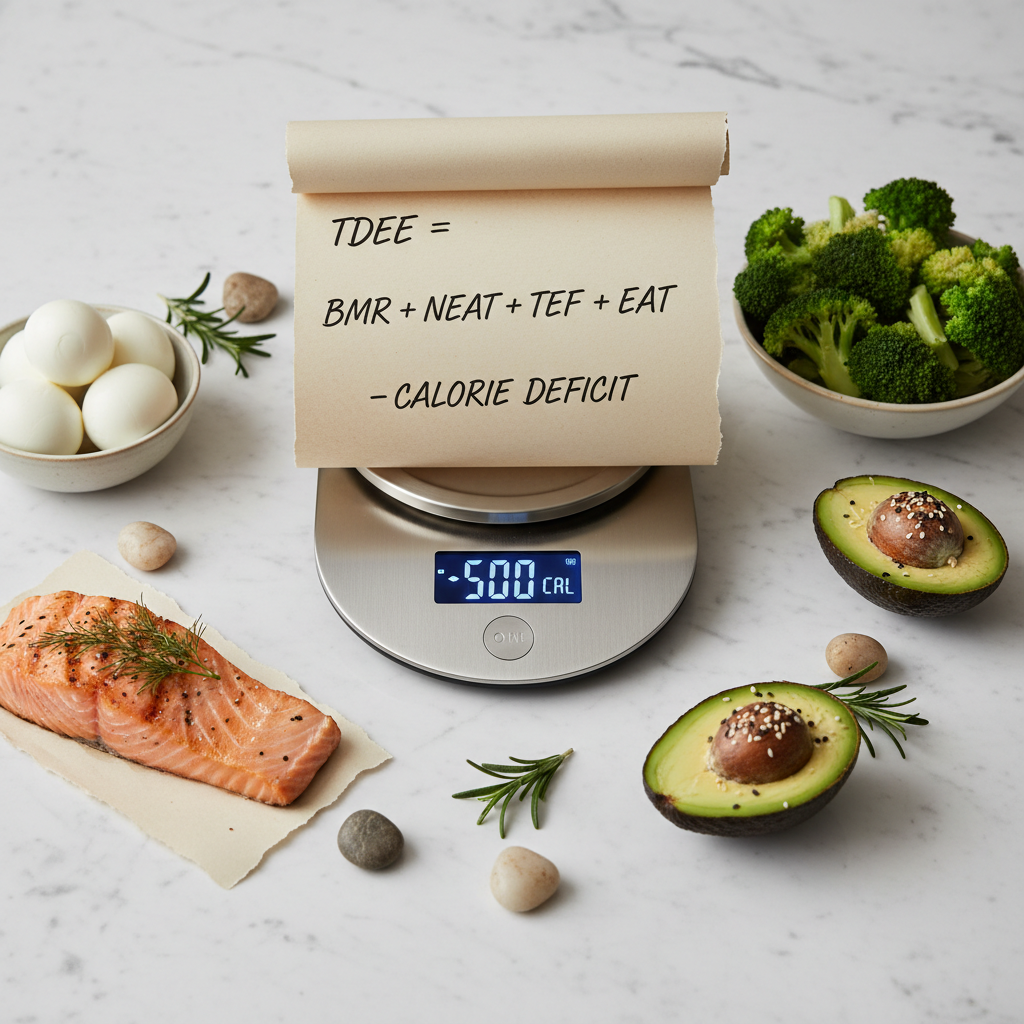
1 pound of fat = approximately 3,500 calories. This is the fundamental equation. To lose 1 lb/week, you need a 500-calorie daily deficit. To lose 1.5 lbs/week: 750-calorie deficit. The maximum recommended is a 1,000-calorie deficit — beyond this, muscle loss and metabolic adaptation accelerate disproportionately.
How to Calculate Your TDEE
TDEE (Total Daily Energy Expenditure) is the number of calories you burn daily. Subtract your deficit from this number to get your daily calorie target.
📊 Mifflin-St Jeor TDEE Formula
Men: BMR = (10 × weight kg) + (6.25 × height cm) − (5 × age) + 5
Women: BMR = (10 × weight kg) + (6.25 × height cm) − (5 × age) − 161
Example: 180 lb (82kg), 5\'10" (178cm), 35-year-old man, moderately active: BMR = (820 + 1112.5 − 175 + 5) = 1,762 × 1.55 = 2,730 TDEE. Weight loss target: 2,730 − 750 = 1,980 calories/day for 1.5 lbs/week fat loss. Use our free Calorie Deficit Calculator for your personal numbers.
3. Step 2 — The Protein Rule (Non-Negotiable for Fat Loss)
Protein is the single most important variable in determining whether you lose fat specifically (vs. fat + muscle during a caloric deficit). The research is definitive: eating 0.8–1g protein per pound of body weight while in a deficit preserves muscle mass almost completely and maximizes fat-specific loss.
- 140 lb person → 112–140g protein daily
- 160 lb person → 128–160g protein daily
- 180 lb person → 144–180g protein daily
- 200 lb person → 160–200g protein daily
- 220 lb person → 176–220g protein daily
- Divide into: 35–50g per meal × 3 meals + snack if needed
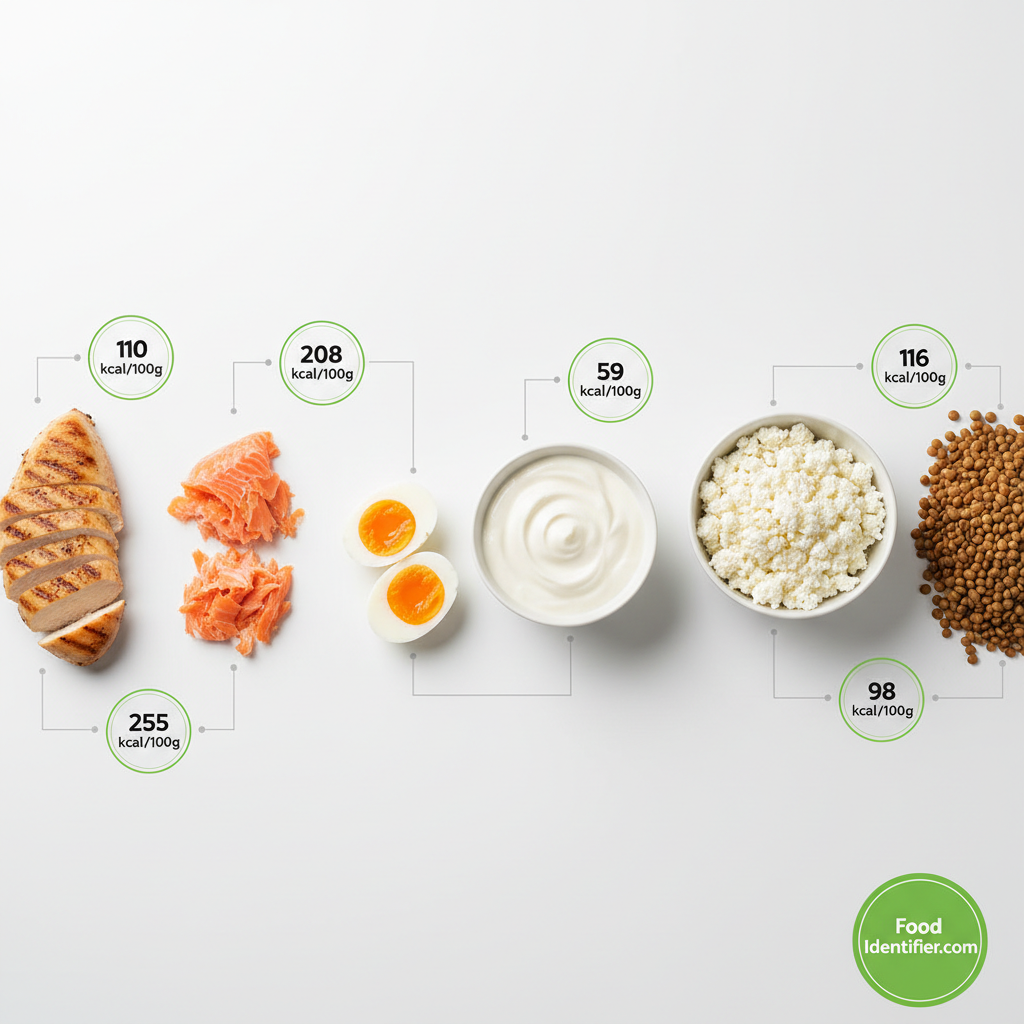
- Best sources: chicken breast, eggs, Greek yogurt, salmon, cottage cheese, lentils, protein shakes
Why does protein work so well? Three mechanisms: (1) Protein has the highest thermic effect of food — digesting it burns 20–30% of its caloric value. (2) It is the most satiating macronutrient, producing the strongest GLP-1 and CCK responses, reducing hunger between meals by more than fat or carbohydrates. (3) During a deficit, it provides the amino acids muscle tissue needs to maintain itself — without which the body cannibalizes muscle for fuel.
4. Step 3 — The Complete Food List for Fast Fat Loss
🥚 Lean Proteins (eat at every meal)
- Chicken breast (165g/6oz = 48g protein, 280 cal)
- Wild salmon (170g/6oz = 34g protein, 350 cal)
- 3 whole eggs (18g protein, 210 cal)
- Greek yogurt unsweetened full-fat (170g = 17g protein, 120 cal)
- Cottage cheese 1% (227g = 25g protein, 160 cal)
- Lentils (½ cup cooked = 9g protein, 115 cal)
- Canned tuna in water (85g = 22g protein, 100 cal)
🥦 High-Volume Vegetables (eat 2–3 cups per meal)
- Broccoli (1 cup = 55 cal, 5g fiber)
- Spinach & mixed greens (2 cups = 14 cal)
- Cucumbers (1 cup = 16 cal)
- Zucchini (1 cup = 20 cal)
- Bell peppers (1 cup = 30 cal)
- Cauliflower (1 cup = 25 cal)
- Mushrooms (1 cup = 15 cal)
🍠 Complex Carbs (limited — ½ cup per meal)
- Sweet potato (½ cup = 90 cal, 3g fiber)
- Brown rice (½ cup cooked = 110 cal)
- Quinoa (½ cup cooked = 111 cal)
- Oats steel-cut (½ cup dry = 150 cal, 4g fiber)
- Lentils (½ cup = 115 cal, 8g fiber)
🥑 Healthy Fats (1–2 servings/meal)
- Avocado ½ (120 cal, 5g fiber)
- EVOO 1 tbsp (119 cal)
- Walnuts 1oz (185 cal)
- Almond butter 1 tbsp (98 cal)
Foods to Eliminate Immediately (Highest Priority)
No satiety signal — 300 calories of juice produces zero fullness. Liquid calories are the fastest-cut for fat loss.
Spike and crash blood sugar, creating cravings. Remove entirely for 30 days — most people see dramatic hunger reduction.
High glycemic index causes blood sugar spikes that undermine fat burning. Replace with complex alternatives.
Extremely calorie-dense, low in protein and fiber — the worst combination for a caloric deficit.
Stops fat burning entirely while metabolizing (your body prioritizes ethanol clearance), adds empty calories, and raises cortisol which promotes fat storage.
5. Step 4 — The 30-Day Meal Template
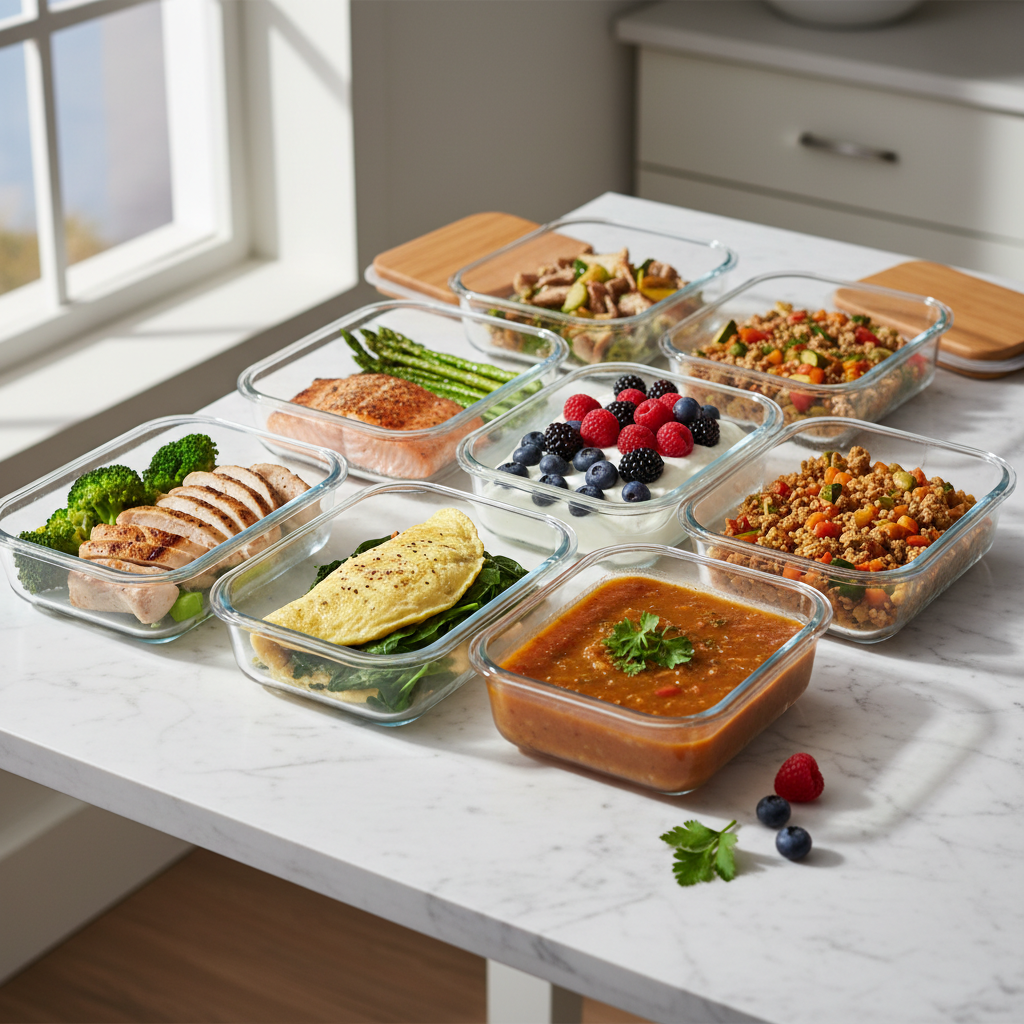
Use these interchangeable meal templates for all 30 days. Each option hits the protein target, includes adequate fiber, and stays within the caloric range for a 500–750 calorie deficit:
Option A: 3 scrambled eggs + ½ cup Greek yogurt + ¾ cup blueberries
Option B: Protein shake (30g) + 2 whole eggs + sautéed spinach
Option A: 6oz grilled chicken breast + 2 cups mixed greens + ½ avocado + EVOO dressing
Option B: Salmon salad (5oz) + vegetables + ¼ cup lentils
Option A: 6oz salmon or chicken + 1.5 cups roasted broccoli + ½ cup lentils
Option B: Lean beef stir-fry + vegetables + ½ cup brown rice
Option A: 1 cup cottage cheese + ½ cup berries
Option B: 2 hard-boiled eggs + 1 small apple + 12 walnuts
📸 Track Every Calorie Instantly
Use FoodIdentifier's free AI scanner to instantly see calories in any meal — the fastest way to stay in your deficit without counting every gram manually.
6. Step 5 — The Exercise Protocol for Maximum Fat Loss

Burns 300–500 extra calories daily — the single most sustainable fat loss activity. Non-exercise activity thermogenesis (NEAT) from walking accounts for 15–50% of daily calorie burn in active people. Zero cortisol spike, zero recovery required.
The most important exercise for maximizing fat-specific loss. Muscle preservation during a deficit prevents metabolic adaptation. Compound movements (squats, deadlifts, bench press, rows, overhead press) produce the largest hormonal responses and highest calorie burn. Minimum: 3 sets of 5–6 compound exercises.
Burns 200–400 extra calories AND creates EPOC (excess post-exercise oxygen consumption) — elevated metabolism for 12–24 hours post-workout. Not essential but significantly accelerates fat loss for those who can handle it. Avoid if doing heavy lifting the same day.
Swimming, cycling, elliptical — burns calories without significant muscle damage. Best on rest days from resistance training. Keeps metabolism elevated without cortisol spikes.
7. Sleep — The Most Underrated Fat Loss Variable
A landmark study in the Annals of Internal Medicine found that people sleeping 5.5 hours vs. 8.5 hours on an identical calorie deficit lost 55% less fat and 60% more muscle in the sleep-deprived group. Same diet. Same exercise. Dramatically different body composition outcomes — purely from sleep.
Why? Sleep deprivation increases ghrelin by 15%, decreases leptin by 15%, raises cortisol which promotes fat storage and muscle breakdown, and reduces the growth hormone secretion that is essential for muscle repair and fat oxidation. Protecting sleep is not optional for fat loss — it is a core protocol element with a larger effect size than most supplements.
8. Week-by-Week Realistic Results
Primarily glycogen-bound water loss (glycogen releases ~3g water per gram) + 0.5–1 lb actual fat. Cravings peak in days 3–5 then reduce significantly as blood sugar stabilizes. Energy may dip temporarily.
Pure fat loss begins dominating scale changes. Hunger stabilizes dramatically once protein and fiber targets are consistently hit. The GLP-1 effects of high-protein eating become noticeable.
Visual changes in the mirror become noticeable. Energy fully returns — often higher than before starting. Waist measurements typically show 1–2 cm reduction vs. Week 1.
Metabolic adaptation may begin slowing loss. Add a refeed day (TDEE calories, high carb). Total 4-week result: typically 7–12 lbs total loss, of which 5–8 lbs is actual fat tissue. Scale plateaus are normal and expected.
9. How to Break a Weight Loss Plateau
A plateau (no scale change for 2+ weeks during consistent effort) is one of the most common and frustrating experiences in weight loss. Here's how to address them systematically:
One day per week at TDEE calories, eating primarily complex carbs. This raises leptin temporarily, partially reversing metabolic adaptation. This is one of the most powerful plateau-busting strategies backed by RCTs.
Studies show most people underestimate calorie intake by 20–40%. Use FoodIdentifier's AI scanner to verify portion accuracy — this single change often restarts weight loss immediately.
Poor sleep is the most common unexpected plateau cause. Even 1 hour less sleep per night adds measurably to cortisol, which directly prevents fat burning and causes water retention that masks fat loss on the scale.
Your body adapts to repetitive exercise within 4–6 weeks, reducing calorie burn. Change exercise type, increase weight, or add new movements to force adaptation.
During a genuine plateau (fat loss continuing but scale unchanged), water retention often masks progress. Track waist, hip, and arm circumference weekly. Progress photos reveal changes the scale hides.
Research shows taking 1–2 weeks at maintenance calories every 8–12 weeks (a "diet break") results in better long-term fat loss than continuous dieting — by preventing the worst metabolic adaptation.
10. Free Tools for Your Weight Loss Journey
📸 AI Food Scanner
Instantly see calories in any meal — photographic accuracy
🧮 Calorie Deficit Calculator
Find your exact daily calorie target for your goal
🔥 TDEE Calculator
Calculate your precise daily energy expenditure
💪 Protein Calculator
Exact protein target to preserve muscle during fat loss
📊 Macro Calculator
Optimize your protein/carb/fat ratios for fat loss
🍽️ AI Meal Planner
Generate a personalized 30-day weight loss meal plan
📏 BMI Calculator
Track your progress with BMI monitoring
⏱️ Weight Loss Timeline
See exactly when you'll reach your goal weight
11. People Also Ask — 10 Expert Weight Loss Answers
❓ How much weight can you safely lose in 30 days?
The maximum safe fat loss rate is 1.5–2 lbs per week, which means 6–8 lbs of actual fat in 30 days for most people. The reason more isn't safely possible: losing fat faster than this rate requires a caloric deficit so large that muscle loss accelerates significantly — every pound of muscle lost slows metabolism by approximately 6 cal/day, creating a permanent metabolic slowdown. People with BMI over 35 (100+ lbs to lose) may safely lose up to 3 lbs/week initially due to higher baseline metabolic rate. The 3–6 lb loss often seen in the first week is largely water and glycogen, not fat.
❓ What is the fastest scientifically safe way to lose weight?
The fastest safe weight loss strategy (supported by meta-analyses): (1) Create a 750-calorie daily deficit (diet + exercise combined) — produces 1.5 lbs fat loss/week. (2) Eat 1g protein per pound body weight — preserves muscle mass, maximizing the deficit-to-fat ratio. (3) Eat high-volume, low-calorie foods (vegetables, lean protein) — reduces hunger while maintaining the deficit. (4) Do resistance training 3–4x/week — prevents muscle loss during deficit, raises RMR. (5) Walk 8,000–10,000 steps daily — adds 300–500 calories to daily expenditure without cortisol spike. (6) Sleep 7–8 hours — people sleeping <6h lose 50% less fat and 50% more muscle during identical caloric deficits.
❓ What foods should I eat to lose weight fast?
The best foods for maximizing fat loss while preserving muscle: High protein (30–40g per meal): eggs, chicken breast (skinless), wild salmon, Greek yogurt (full-fat unsweetened), cottage cheese, lentils. High volume, low calorie: broccoli, spinach, cucumbers, zucchini, lettuce, mushrooms — these create fullness without significant calories. Fiber and satiety: lentils, oats, chia seeds, avocado — raise GLP-1 and keep you full between meals. Complex carbs (limited portions): sweet potato, quinoa, brown rice — don't spike blood sugar, provide sustained energy. Healthy fats (moderate portions): avocado, olive oil, walnuts — trigger GLP-1 and satisfy without overeating. Foods to eliminate: ultra-processed food, liquid calories, refined sugar, alcohol.
❓ How do I calculate my calorie deficit for weight loss?
Step 1: Calculate your TDEE (Total Daily Energy Expenditure) using the Mifflin-St Jeor formula. For men: (10 × weight kg) + (6.25 × height cm) − (5 × age) + 5, multiplied by activity factor (1.2 sedentary, 1.375 light activity, 1.55 moderate, 1.725 active). For women: same formula minus 161 instead of +5. Step 2: Subtract your deficit: 500 cal/day = 1 lb/week. 750 cal/day = 1.5 lbs/week. 1000 cal/day = 2 lbs/week (maximum recommended). Step 3: Never go below 1,200 calories (women) or 1,500 calories (men) — below these thresholds, nutrient deficiencies and metabolic adaptation accelerate. Use our free Calorie Deficit Calculator for precise, personalized numbers.
❓ Why am I not losing weight on a calorie deficit?
The most common reasons a calorie deficit fails to produce expected weight loss: (1) Underestimating food intake — studies consistently show people underestimate calorie consumption by 20–40%. Tracking with a food scanner removes this error. (2) Metabolic adaptation — after 4–6 weeks, your metabolism adapts to lower caloric intake by reducing NEAT (non-exercise activity). Refeed days (one higher-calorie day per week) partially prevent this. (3) High cortisol — elevated cortisol promotes fat retention and water retention that masks fat loss on the scale. (4) Inadequate protein — without 0.8–1g protein/lb, muscle loss increases and metabolism slows more than expected. (5) Poor sleep — sleeping <7 hours nearly halves fat loss efficiency per study. (6) Hormonal issues — thyroid dysfunction, insulin resistance, and low testosterone can all impair fat loss despite a genuine deficit.
❓ Does intermittent fasting help lose weight faster?
Intermittent fasting (IF) does not produce faster fat loss than caloric restriction alone when total caloric intake is matched — this is well-established in multiple RCTs. However, IF helps many people achieve and maintain a calorie deficit because: (1) It naturally reduces eating windows, making overeating harder. (2) The fasted state (12+ hours) shifts fuel use toward fat oxidation. (3) It improves insulin sensitivity over time. (4) Many people find hunger easier to manage with structured fasting than constant moderate restriction. The 16:8 protocol (fast 16 hours, eat in an 8-hour window) is the most studied and most sustainable. The total caloric deficit is still what drives fat loss — IF is a tool to achieve it, not a metabolic magic.
❓ How does protein help with weight loss?
Protein is the most important macronutrient for maximizing fat loss while minimizing muscle loss during a caloric deficit. Mechanisms: (1) Highest thermic effect of food — digesting protein burns 20–30% of its calories vs. 5–10% for carbs and 0–3% for fat. Eating 150g protein daily burns ~50–75 extra calories through digestion alone. (2) Most satiating macronutrient — protein produces the strongest GLP-1 and CCK (satiety hormone) responses, reducing hunger between meals by more than fat or carbohydrates. (3) Muscle preservation — eating 0.8–1g protein/lb body weight during a deficit preserves lean mass almost completely, preventing the metabolic slowdown from muscle loss. (4) Blood sugar stability — protein does not spike insulin, preventing the spike-crash cycle that drives cravings and food noise.
❓ What is a realistic weight loss timeline?
Realistic expectations by week during a proper weight loss protocol: Week 1: 3–6 lbs (primarily glycogen-bound water + 0.5–1 lb actual fat). Week 2: 1.5–2 lbs (pure fat loss begins; hunger stabilizes for most people). Week 3: 1.5–2 lbs (visual changes become noticeable; energy returns). Week 4: 1–1.5 lbs (metabolic adaptation starts; plateau common — addressable with refeed day and diet adjustment). Month 2–3: 1–1.5 lbs/week sustainable. The scale will show frustrating plateaus that don't reflect fat loss — track body measurements (waist, hip, neck) and progress photos weekly. A 1-week scale plateau during consistent effort almost always reflects water retention masking fat loss.
❓ Is exercise or diet more important for weight loss?
Diet dominates weight loss; exercise optimizes body composition. Research consistently shows: (1) Caloric restriction through diet alone produces more weight loss than exercise alone. (2) Adding exercise to diet produces better fat loss and dramatically better lean mass preservation vs. diet alone. (3) Exercise increases metabolic rate long-term (through muscle preservation and building), making weight maintenance far easier. The practical breakdown: diet creates the caloric deficit (contributes 75–80% of the deficit); exercise prevents muscle loss and slightly increases the deficit (contributes 20–25%). You cannot outrun a bad diet — but you can significantly optimize the quality of weight loss (fat vs. muscle ratio) through exercise.
❓ How do I prevent weight loss plateaus?
Weight loss plateaus are caused by metabolic adaptation and can be addressed with several evidence-based strategies: (1) Refeed day — one day per week at TDEE calories (no deficit), eating primarily complex carbs. This temporarily raises leptin (the fullness hormone that drops during sustained deficits) and partially reverses metabolic adaptation. (2) Increase protein — if losing more than expected, protein may be inadequate; increase to 1g/lb. (3) Change exercise type or intensity — the body adapts to repetitive exercise; varied exercise prevents full adaptation. (4) Check sleep and stress — poor sleep and high cortisol are the most common plateau causes outside of true adaptation. (5) Take a diet break — 1–2 weeks at maintenance every 8–12 weeks prevents progressive metabolic adaptation and is associated with better long-term fat loss in RCTs.
🚀 Start Your 30-Day Fat Loss Plan Today
Use our free AI tools to calculate your calorie target, scan every meal, and get a personalized 30-day meal plan that fits your body and goals.
📚 Related Articles
how to lose weight fast safely 2026, fastest safe weight loss, how to lose weight 30 days, calorie deficit weight loss, protein for fat loss, best foods lose weight fast, weight loss meal plan 2026, lose belly fat fast, fastest way lose fat, calories to lose weight, weight loss tips 2026, high protein diet weight loss, foods help lose weight, weight loss plateau fix, burn fat fast, lose weight preserve muscle, realistic weight loss timeline, TDEE calculator weight loss, 30 day weight loss plan, sustainable fast weight loss, intermittent fasting weight loss