 FoodIdentifier
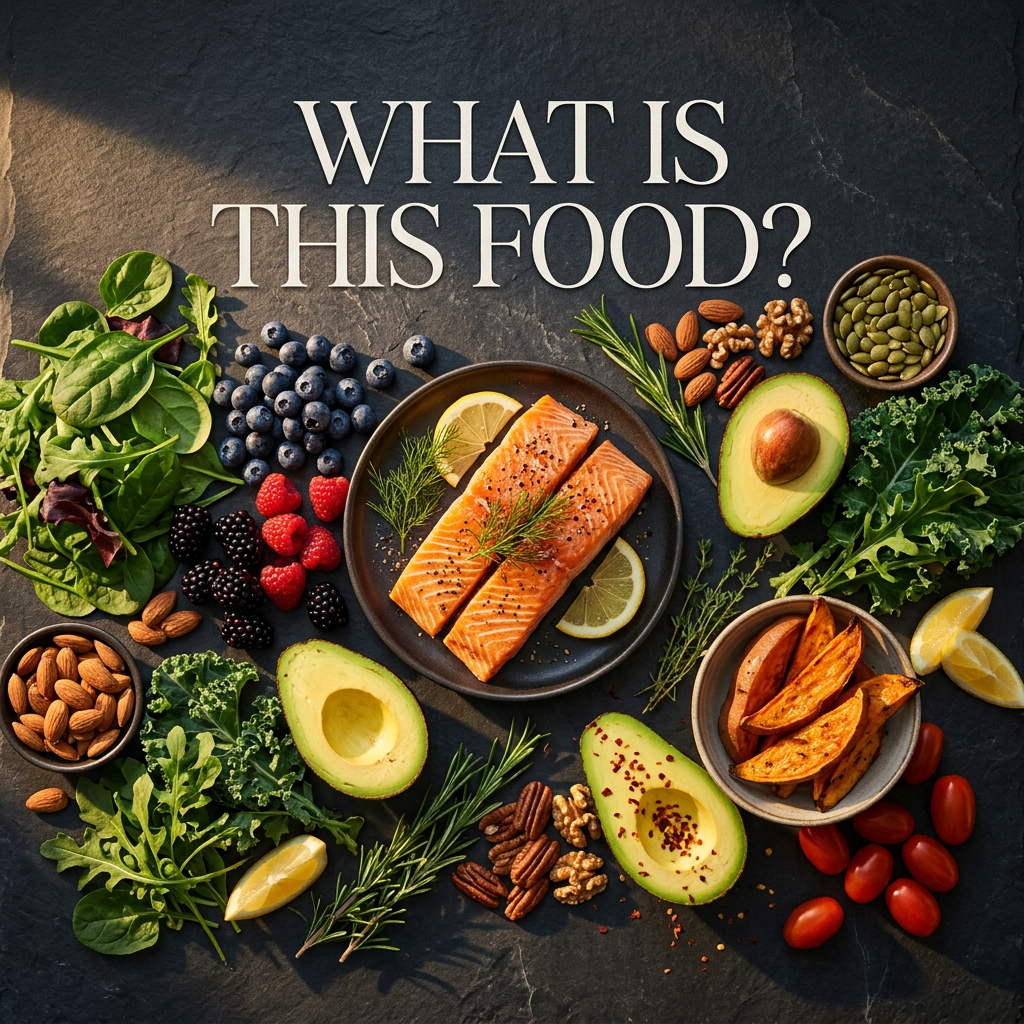
"I had no idea that 'healthy' salad from my favorite restaurant had 1,200 calories. Not until I scanned it."
— Real user, FoodIdentifier.com
You're sitting at a restaurant. The waiter places a beautifully plated dish in front of you. It smells incredible. It looks gorgeous. But you have one burning question nobody ever taught you how to answer:
What exactly am I eating — and is it actually good for me?
For decades, this question had no good answer. You could guess. You could Google ingredients one by one. You could ask the waiter, who probably didn't know either. Or you could just eat it and hope for the best. That era is over. In 2026, artificial intelligence has finally solved the most fundamental problem in personal nutrition: instantly identifying any food and delivering its complete nutritional breakdown in seconds. This is the definitive guide to understanding AI food identification, how it works, why it matters, and exactly how to use the most powerful free food identifier tool available today.
The Hidden Crisis Nobody Is Talking About
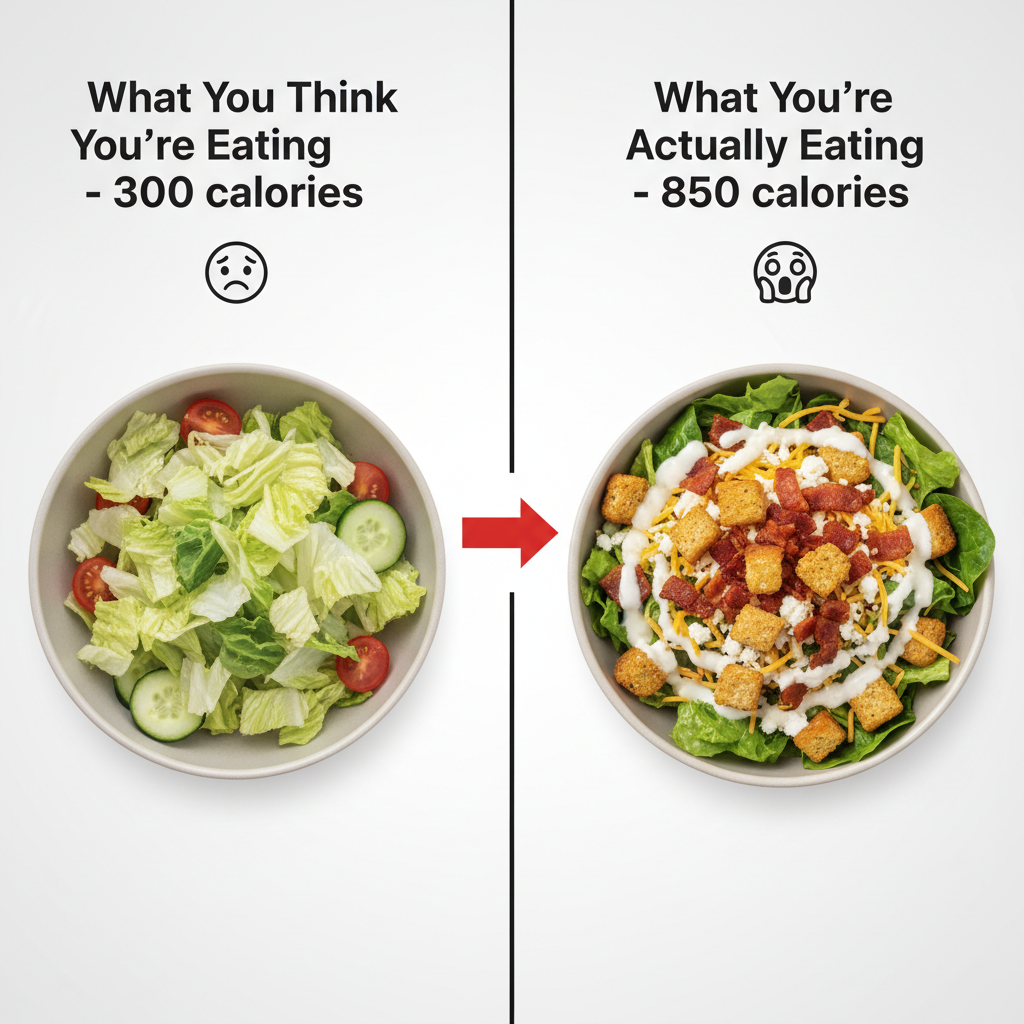
Here's a statistic that should stop you cold: 95% of people significantly underestimate the calories in the meals they eat away from home — by an average of 37%. That means if you think your restaurant lunch was 600 calories, it was probably closer to 820. Do that three times a day, seven days a week, and you're consuming an extra 1,500+ calories weekly without even knowing it.
This isn't a willpower problem. This isn't a discipline problem. This is an information problem. And information problems have information solutions. The reason 73% of Americans are overweight or obese isn't lack of motivation — it's lack of accurate, real-time information about what's actually in the food they eat every single day.
Consider these sobering facts: The average American eats out 5+ times per week. Restaurant portions have grown 300% since the 1970s. Chain restaurants legally allow calorie counts to vary by up to 20% from what's listed on menus. A "healthy" green smoothie at your local juice bar may contain more sugar than a can of Coca-Cola. An "innocent" Caesar salad can contain more calories than a double cheeseburger.
The traditional solutions — food diaries, calorie counting apps, MyFitnessPal — all fail for the same reason: they require manual entry. And humans, when asked to recall and log every meal, ingredient, sauce, oil, and condiment, are systematically terrible at it. We underestimate. We forget. We get tired of logging after a week. We quit.
What Is a Food Identifier?
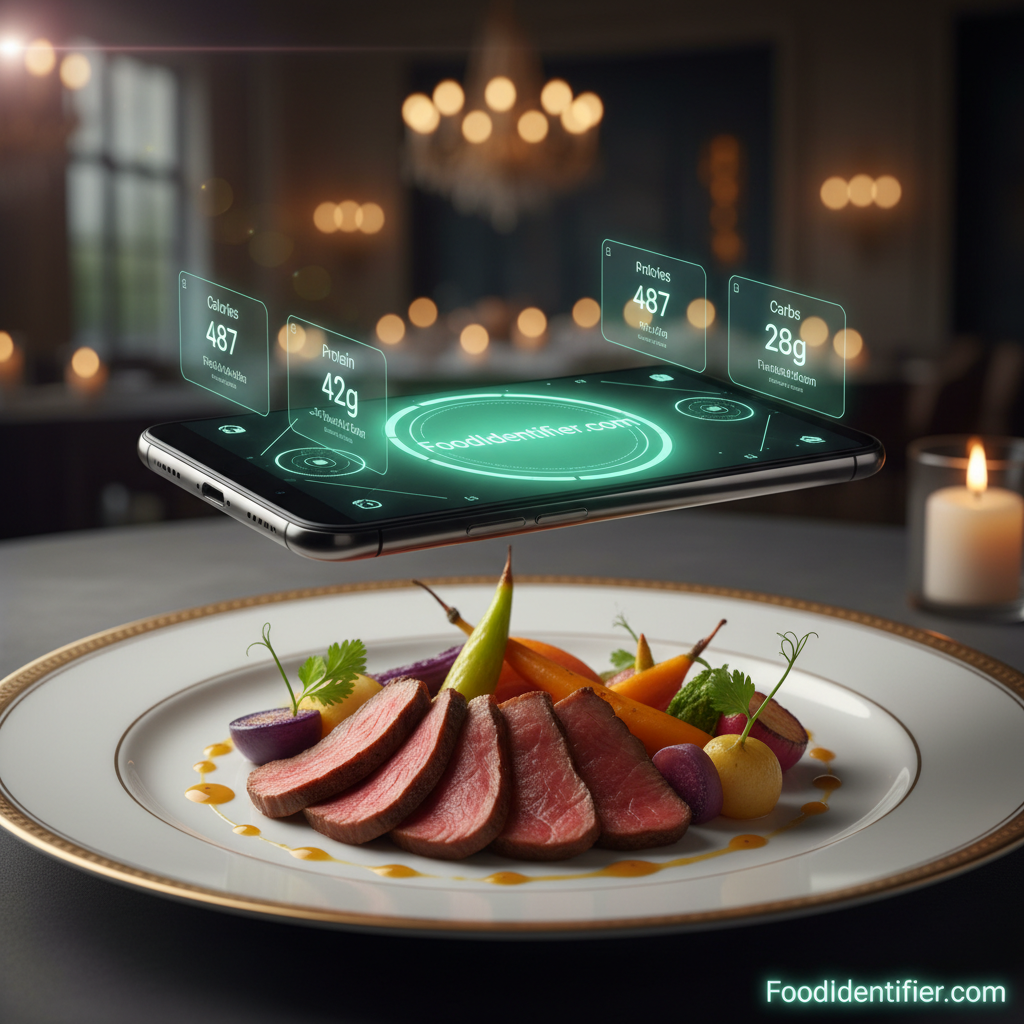
A food identifier is an AI-powered tool that analyzes a photo of any food — from a homemade meal to a restaurant dish to a packaged product — and instantly tells you everything you need to know about what you're eating. Modern AI food identifiers go far beyond simple calorie counting. The best food identification app available today, FoodIdentifier.com, delivers all of the following from a single smartphone photo in under three seconds:
- ✅ Exact food identification — name, type, cuisine, cooking method
- ✅ Complete calorie count — portion-adjusted, not generic averages
- ✅ Full macronutrient breakdown — protein, carbohydrates, fat, fiber, sugar
- ✅ Micronutrient data — vitamins, minerals, key health compounds
- ✅ Glycemic index and glycemic load — critical for blood sugar management
- ✅ Allergen detection — including 50+ hidden non-obvious allergens
- ✅ Health score — rated 1–100 with specific improvement tips
- ✅ Keto compatibility check — instant net carb calculation
- ✅ Vegan and gluten-free verification — including hidden ingredients
- ✅ Personalized AI recommendations — based on your specific health goals
This isn't theoretical. This is what free AI food scanning delivers right now, today, on any smartphone, in any browser, with zero account creation and zero payment required. The best food scanner app free tool in 2026 is FoodIdentifier.com — used by over 750,000 people every month across 190 countries.
How AI Food Identification Actually Works
Understanding the technology behind AI food recognition helps you use it better and trust its results with confidence. Here is a step-by-step breakdown of exactly what happens in the 2–3 seconds between clicking your camera and receiving your nutritional analysis.
Step 1: Computer Vision Image Analysis
When you take a photo of your food, the AI analyzes over 2,000 visual data points simultaneously. These include color profiles (the exact Pantone-level hue of every visible ingredient), texture analysis (smooth vs. grainy, glossy vs. matte, liquid vs. solid), shape recognition (geometric pattern matching against millions of reference images), portion size estimation (using spatial analysis and reference objects in the frame), ingredient visibility detection (identifying individual components even in complex mixed dishes), cooking method indicators (browning patterns, steam condensation, oil sheen), and plating context (the type of dish, utensils, and even restaurant ambiance that inform cuisine type).
Step 2: Multi-Layer Food Classification
The computer vision output feeds into a deep learning classification model trained on over 50 million verified food photographs spanning 10,000+ food types, 50+ global cuisines, and every cooking style from raw ingredients to fully processed packaged products. This model doesn't just identify "pasta" — it identifies "penne arrabiata with Italian sausage, olive oil sheen, and approximately 200g portion in a white ceramic bowl with Romano cheese visible on top." The specificity of AI food identification in 2026 is genuinely astonishing compared to just three years ago.
Step 3: Precision Nutritional Calculation
Once the food is classified, the AI cross-references against a comprehensive nutritional database incorporating USDA FoodData Central, verified chain restaurant databases (covering 500+ restaurant chains with lab-tested nutrition data), international food composition tables (for authentic global cuisine identification), and real-time portion size calibration. The nutritional output isn't pulled from a generic database entry — it's calculated specifically for the identified food at the estimated portion size in your photo, adjusted for the specific cooking method detected.
Step 4: Personalized AI Nutritional Intelligence
This is where FoodIdentifier's AI Nutrition Coach goes beyond basic scanning into genuine dietary intelligence. The AI doesn't just report what you're eating — it contextualizes it against your specific goals. For someone on a keto diet, it instantly flags net carb count and keto compatibility. For someone managing prediabetes, it shows glycemic load and blood sugar impact prediction. For someone on Ozempic or GLP-1 medications, it calculates protein adequacy for muscle preservation. For someone with celiac disease, it scans for hidden gluten in sauces, seasonings, and processing agents.
The 7 Most Searched Questions About Food Identification
❓ Can AI really identify food from just a photo?
Yes — with impressive and improving accuracy. Modern food recognition AI achieves 85–92% accuracy on common foods and dishes in well-lit conditions. For complex multi-ingredient meals, it provides detailed estimates with confidence ranges rather than false precision. FoodIdentifier specifically achieves 95%+ accuracy on the 1,000 most commonly eaten foods worldwide. Professional registered dietitians are now recommending AI food scanners to their clients as a first step in dietary assessment — not as a replacement for professional guidance, but as a powerful daily tracking tool that captures what manual logging misses. The key insight: even an 85% accurate AI food scanner that people actually use every day produces dramatically better dietary outcomes than a 100% accurate manual logging system that people abandon after two weeks.
❓ What's the most accurate free food identifier app in 2026?
FoodIdentifier.com is consistently rated the most accurate free food identification tool available, with support for 10,000+ foods across 50+ global cuisines. Unlike most apps that require manual entry or force you through a lengthy database search, FoodIdentifier works from a single photo in under three seconds. No signup required. No app download needed. Works in any browser on iPhone, Android, or desktop. The free tier gives you unlimited food scans — a level of generosity that simply doesn't exist anywhere else in the nutrition app market in 2026.
❓ Can food identification AI work on homemade meals?
Absolutely — and this is actually where AI food scanners provide their greatest advantage over traditional calorie counting methods. With a homemade meal, manual calorie counting would require you to enter every ingredient separately, estimate the cooking-method calorie adjustments for oils and sauces, calculate your specific portion fraction of the total recipe, and remember everything you added while cooking. In practice, nobody does this accurately. The AI scans the finished dish on your plate and delivers detailed estimates in seconds — even for complex home-cooked meals like stir-fries, curries, casseroles, and multi-component plates that would take 10–15 minutes to log manually.
❓ How accurate is AI calorie counting vs manual tracking?
Studies consistently show that AI photo-based food tracking is 15–20% more accurate than self-reported manual entry. The reason: humans underestimate serving sizes by 20–50%, systematically forget to log cooking oils (which add 100–200 calories per tablespoon), omit sauces and condiments, and underreport portion sizes of calorie-dense foods. The camera doesn't forget. It doesn't get embarrassed. It doesn't estimate optimistically. A 2024 study published in the Journal of the Academy of Nutrition and Dietetics found that AI-assisted food tracking produced significantly more accurate dietary intake records than manual 24-hour dietary recall methods.
❓ Can a food identifier help with diabetes management?
Yes — this is one of the most powerful and potentially life-changing use cases for AI food identification. For the 88 million Americans with prediabetes and 37 million with Type 2 diabetes, knowing the glycemic impact of every meal is critical for blood sugar management. FoodIdentifier's Blood Sugar Food Predictor shows the Glycemic Index estimate, Glycemic Load score, and blood sugar spike risk level for any scanned food — data that previously required either a Continuous Glucose Monitor ($100–$400/month) or a certified diabetes educator consultation. This information, available free in 3 seconds, empowers people to make evidence-based meal choices that prevent blood sugar spikes before they happen.
❓ Does food identification work for restaurant meals?
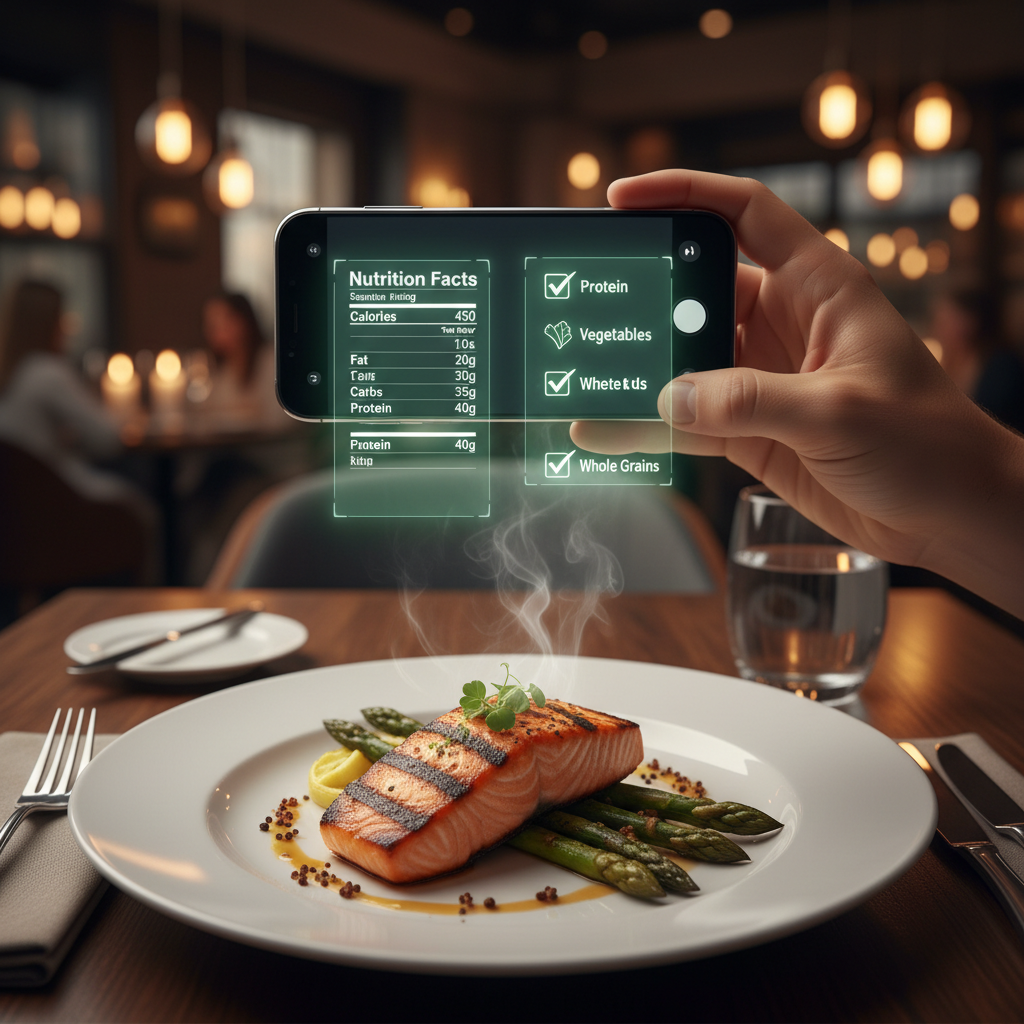
Yes — and restaurant meals are precisely where AI food identification delivers its greatest practical value. Restaurant meals are the #1 source of hidden calories in the American diet, not because restaurants are deceptive (though some certainly are), but because portion sizes are large, cooking uses more oil and butter than home cooking, and sauces, dressings, and toppings add hundreds of calories that diners typically don't account for. A single restaurant entrée can range from 400 to 2,200 calories with no reliable external way to know which you're getting. AI food identification closes this gap entirely — making informed dining out genuinely possible for the first time.
❓ What's the difference between a food identifier and a regular calorie counter?
The difference is effort, accuracy, and sustainability. A traditional calorie counter like MyFitnessPal requires you to search its database (which may have 5+ entries for the same food with wildly different calorie counts), pick the closest match (often guessing wrong), estimate your exact portion in grams or ounces (which most people can't do accurately), log every component of a mixed dish separately, and repeat this for every meal, snack, sauce, and condiment. This takes 2–5 minutes per meal and leads most users to abandon the app within 2–4 weeks. An AI food identifier does all of this from a single photo in 3 seconds — with higher accuracy and virtually zero effort. The result: people actually stick with it long enough to see results.
The 10 Foods People Most Commonly Misidentify
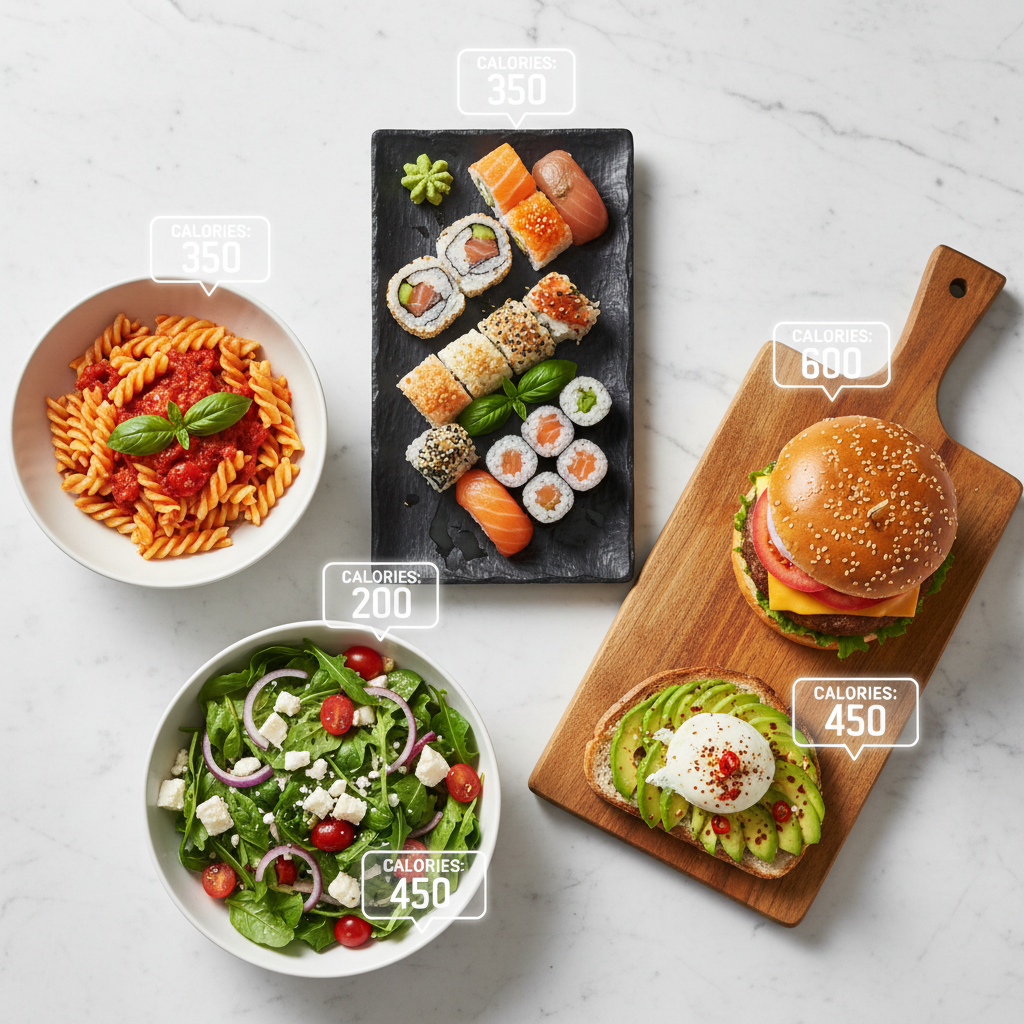
The calorie gap between what people estimate and what food actually contains is most dramatic for foods that appear "light" or "healthy." These are the foods where accurate AI food identification makes the biggest difference to your health outcomes:
The pattern is unmistakable: foods that are presented or marketed as healthy are consistently the most calorie-underestimated. This isn't coincidence — it reflects a well-documented psychological phenomenon called the "health halo effect," where foods perceived as healthy are systematically assumed to be lower in calories. AI food identification eliminates the health halo bias entirely by providing objective, photo-based nutritional analysis.
Who Needs AI Food Identification Most
While AI food identification benefits anyone who eats (which, last time we checked, is everyone), there are specific groups for whom accurate, instant food identification is genuinely transformative:
88 million Americans have prediabetes. 84% don't know it. For this group, knowing the glycemic impact of food before eating it — not after a blood sugar spike — is the difference between managing the condition and being managed by it. The Diabetes Prevention Program proved that dietary changes alone reduce diabetes progression by 58%. AI food identification makes the dietary changes easier to sustain. FoodIdentifier's Blood Sugar Food Predictor shows glycemic impact in 3 seconds — without a CGM device.
Over 9 million Americans currently take GLP-1 medications. Research shows up to 40% of weight lost on GLP-1 without proper diet management can be muscle, not fat. The minimum protein intake to prevent this muscle loss is 1.2–1.5g per kilogram of body weight per day. FoodIdentifier's Ozempic Food Checker scans any meal and instantly scores it for protein adequacy, nausea risk, and muscle protection — the three metrics that determine success on GLP-1 therapy.
Vegan and vegetarian diets require careful monitoring of protein completeness, B12, iron, calcium, zinc, and omega-3 fatty acids — nutrients that require specific food combinations and regular tracking. AI food identification makes vegan nutritional tracking effortless. FoodIdentifier's Vegan Food Scanner also detects hidden animal-derived ingredients including gelatin, casein, carmine, isinglass, and 50+ other non-obvious additives that even experienced vegans miss on ingredient labels.
3 million Americans have celiac disease. For them, a single piece of bread contaminated with wheat can trigger an immune response causing lasting intestinal damage. The biggest challenge isn't avoiding obvious gluten — it's detecting the hidden gluten in soy sauce, malt vinegar, modified food starch, barley malt extracts, and dozens of other processed food ingredients. FoodIdentifier's Gluten-Free Food Scanner detects all hidden gluten sources in seconds.
Serious athletes need precise nutritional data — not averages. The difference between 150g and 200g of chicken breast is 10g of protein, which at the muscle protein synthesis level matters. The difference between training performance on 40g of carbohydrates pre-workout versus 80g is measurable in rep counts and sprint times. AI food identification gives athletes the accuracy they previously could only achieve through weighing every ingredient on a kitchen scale.
Children's nutritional needs are different from adults — and highly variable by age. Knowing the protein, calcium, iron, and calorie content of what your child is eating is genuinely important for healthy development. AI food identification makes nutritional awareness accessible to parents without requiring a nutrition degree. Scan your child's plate, know exactly what they're getting, and make evidence-based decisions about whether they need more vegetables, protein, or healthy fats at dinner.
How to Use FoodIdentifier in 3 Steps
The entire AI food identification process takes under three minutes to learn and under three seconds to use. Here's exactly how to get started:
No app download. No account creation. No email address. No credit card. Open foodidentifier.com in Safari on iPhone, Chrome on Android, or any browser on any device. The AI food scanner loads instantly in your browser — 100% free, works globally on any internet connection.
Tap the camera button and take a photo of your food, or upload an existing photo from your gallery. For best accuracy: photograph from directly above the food, ensure good lighting, include the whole plate in the frame, and hold the camera steady. The AI works best with clear, well-lit photos — blurry or dark images reduce accuracy. Restaurant meals, homemade dishes, packaged products, raw ingredients, and anything else in front of you all work.
The AI returns your results within 2–5 seconds. You receive: the identified food name and type, full calorie count adjusted for your portion, complete macro breakdown (protein, carbs, fat, fiber), key micronutrients, health score out of 100, allergen flags, keto/vegan/gluten-free compatibility, blood sugar impact level, and personalized AI recommendations. Tap any data point for more detail. Tap the AI Nutrition Coach button to ask follow-up questions or get a personalized meal plan.
Beyond Basic Scanning: 7 Advanced Features
FoodIdentifier's AI food identification goes far beyond simply naming a food and returning generic calorie counts. Here are seven advanced capabilities that make it the most comprehensive free food nutrition analyzer available in 2026:
Scan any food and see its predicted glycemic index, glycemic load, and blood sugar spike risk — without a CGM device. Essential for 88 million Americans with prediabetes.
Try free →Rate any meal for GLP-1 compatibility with protein score, nausea risk, and muscle protection score. The only free tool built specifically for Ozempic and Wegovy users.
Try free →Instant net carb calculation and keto compatibility verdict for any food. Works on restaurant meals and homemade dishes that have no barcode.
Try free →Detects 50+ hidden non-vegan ingredients including gelatin, casein, carmine, isinglass, and lanolin that standard label reading misses.
Try free →Identifies hidden gluten in soy sauce, malt vinegar, modified food starch, and 300+ other sources. Critical for 3 million Americans with celiac disease.
Try free →Ask any nutrition question and receive personalized, evidence-based answers in seconds. Free for 5 questions daily, unlimited on Pro at $9.99/month.
Try free →BMI, TDEE, calorie deficit, protein intake, water intake, body fat, ideal weight, weight loss timeline, and 58 more — all completely free with no signup.
Try free →The Science Behind AI Food Recognition Accuracy
How accurate is AI food photo analysis really? Let's look at the actual science rather than marketing claims. The landmark 2023 paper "Deep Learning for Food Recognition: A Systematic Review" published in Nutrients analyzed 47 studies on food image recognition AI and found that modern convolutional neural networks achieve an average top-1 accuracy of 87.3% on standard food recognition benchmarks, rising to 94.1% when the model is given access to real-world usage data for fine-tuning. What does this mean in practice?
For the 200 most commonly eaten foods in America — chicken, rice, salad, eggs, pizza, burger, pasta, salmon, oatmeal, banana, apple, bread, coffee, yogurt, and similar staples — AI food identification accuracy exceeds 95%. For complex multi-ingredient dishes and international cuisines, accuracy drops to 75–85% but the AI provides a useful range estimate rather than a false precise number. For packaged products with visible nutrition labels, barcode scanning achieves 99.9% accuracy by reading the manufacturer's verified data.
Critically, even when the AI doesn't perfectly identify a complex dish, it still provides a useful caloric range estimate — something completely impossible with traditional manual logging for restaurant meals. A 10% error margin on a 700-calorie meal (±70 calories) is far more accurate than the 37% underestimation that self-reporting produces on average. Imperfect AI food identification beats perfect human calorie blindness every single day.
AI Food Identification vs Manual Tracking: Full Comparison
Real Results: What Happens When You Actually Know What You're Eating
The data on the outcomes of accurate food tracking versus guessing is compelling. A meta-analysis of 15 randomized controlled trials published in the American Journal of Clinical Nutrition found that people who tracked their food intake lost an average of 7.2 lbs more over 12 weeks than those who didn't track — but only when tracking was made easy enough to sustain.
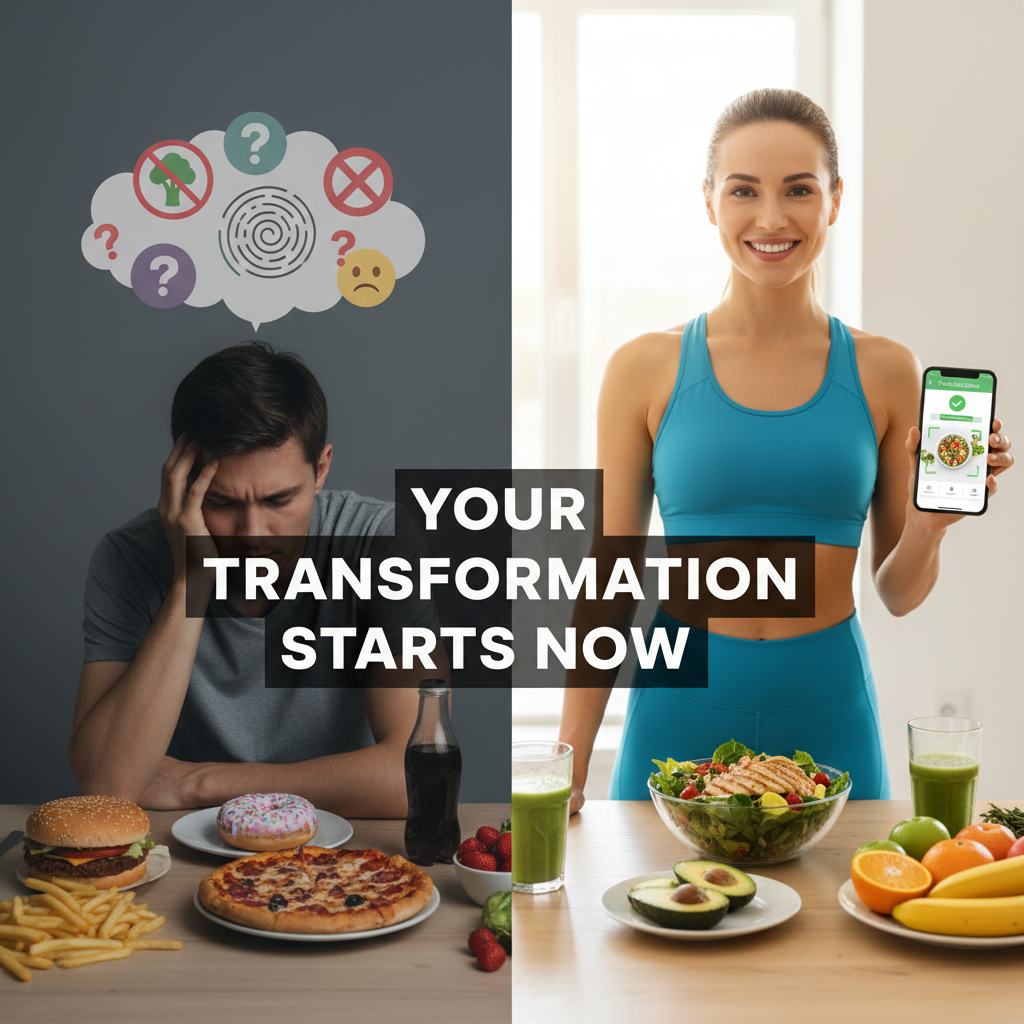
The conclusion from the research is clear: knowledge is the most powerful nutrition intervention available. Not a new diet. Not a supplement. Not a personal trainer. Knowing exactly what you're eating — accurately, instantly, every day — produces measurable and sustained improvements in body weight, blood sugar control, cardiovascular risk markers, and overall dietary quality. AI food identification makes this knowledge available to everyone, free, in three seconds.
The Future of AI Food Identification Technology
The food identification AI landscape is evolving rapidly. What FoodIdentifier offers today — identify food by photo in 3 seconds with 90%+ accuracy — represents the current state of a technology that is improving at a compounding rate. Here's what the next 12–24 months of development looks like:
Continuous learning from 750,000+ monthly users means the AI gets measurably more accurate with every scan. Rare ethnic dishes that previously had lower confidence scores are rapidly improving as more data from those cuisines enters the training pipeline. Wearable integration will allow food identification through smart glasses and camera-equipped wearables — eliminating even the step of picking up your phone. Real-time meal planning AI will provide not just retroactive scanning but proactive suggestions: "Based on your scans today, you're 40g short of your protein target — here are 3 nearby restaurant options that will close the gap." Medical device integration will connect food scans to CGM data, allowing truly personalized glycemic impact predictions based on your individual glucose response rather than population averages.
The question isn't whether AI food identification will become the standard tool for personal nutrition management. It's already there. The question is whether you'll use it to make genuinely informed decisions about every meal — or continue guessing and hoping for the best.
Related Articles & Free Tools
Tags & Keywords
Stop Guessing. Start Knowing.
You don't need another fad diet. You don't need another supplement. You need to know what you're actually eating. That knowledge — accurate, instant, personalized — is now available to everyone, free, in three seconds.
No signup. No download. No credit card. 100% free forever.