 FoodIdentifier
Is Oatmeal Healthy? Steel-Cut, Instant and the Sugar Trap
Is oatmeal healthy? Compare steel-cut, rolled and instant oats on fibre and sugar, spot the flavoured-packet trap, and learn the best toppings to use.
This is not medical advice — talk to your doctor.
Key takeaways
- ▶Yes — plain oatmeal is healthy. Flavoured oatmeal is a different conversation. The oats themselves are fine; what the packet adds is the story.
- ▶Steel-cut, rolled, and plain instant oats are close on nutrition. Processing mostly changes cook time and texture, not the base food.
- ▶Sugar is the trap, not the oat. A maple-brown-sugar packet can carry around twelve grams of sugar where plain oats carry almost none.
- ▶Toppings decide the meal. Greek yogurt, nuts, and seeds upgrade it. Brown sugar, syrup, and sweetened dried fruit quietly downgrade it.
Scan a food free
Scan a food free — no app, no sign-up →The short verdict
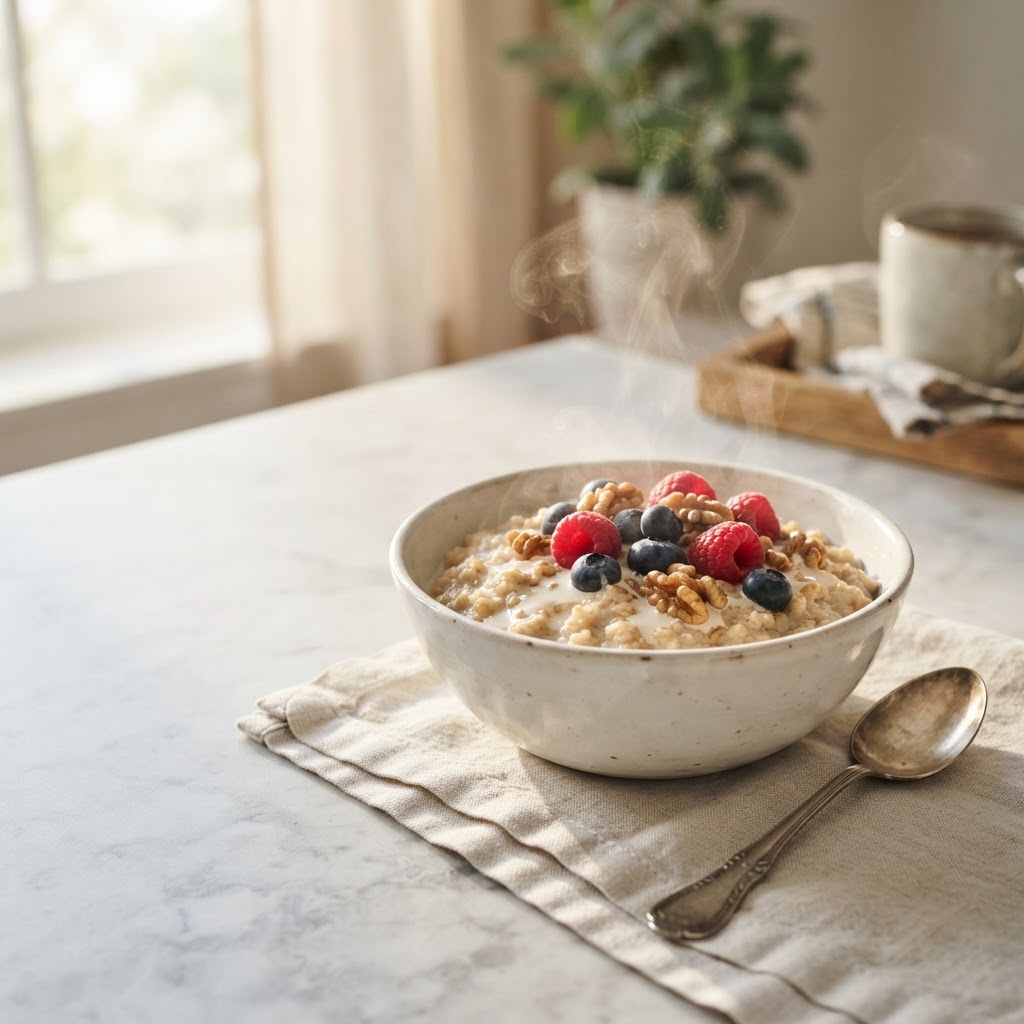
Yes, plain oatmeal earns its reputation. It's a whole grain, filling for the calories, costs almost nothing, and you can make it in a mug at a desk. I eat it — with one condition: the word plain.
A bowl of rolled oats you cooked yourself and a flavoured packet share a name and not much else. One is oats. The other is oats plus sugar, flavouring, and salt, portioned small enough to leave you hungry by ten. If you're asking about calories in oatmeal, the answer starts with which oatmeal you mean.
General information only. This is not medical advice — talk to your doctor.
What oatmeal is — and what it is not
Oatmeal starts as oat groats — the whole grain with the inedible hull removed. What happens next is mostly cutting and flattening.
Steel-cut oats are groats chopped into rough pieces. They cook slowly, twenty to thirty minutes, and stay chewy. Rolled oats are groats steamed and flattened into flakes — about five minutes to that classic soft bowl. Instant oats are rolled thinner, cut smaller, and often pre-cooked, so hot water alone finishes them. Softer, sometimes gluey — that's the trade for speed.
Processing changes cook time and texture far more than base nutrition. A plain instant packet is not junk because it's instant. It's still oats.
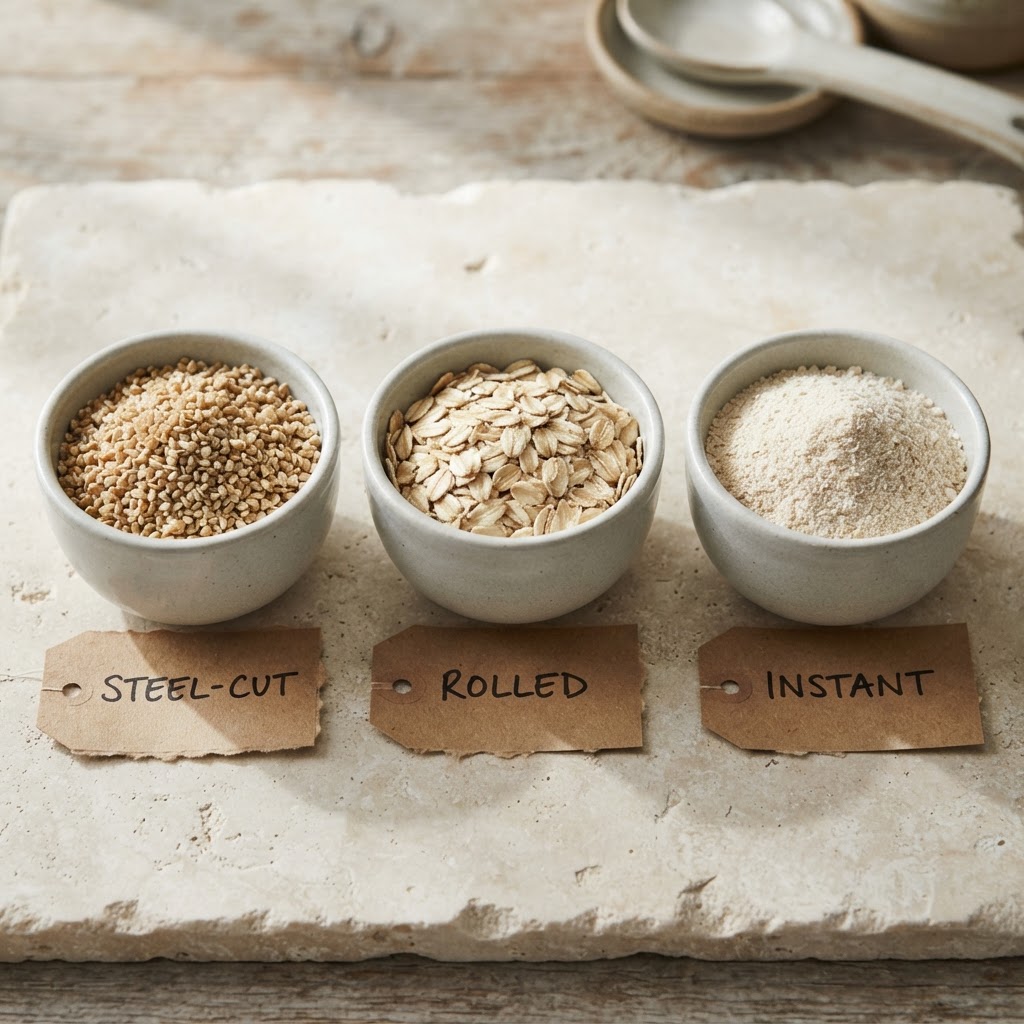
What oatmeal is not: a flavoured packet is a different product from plain oats, even from the same brand. And granola is not oatmeal — it's oats baked with oil and sweetener until they clump, much closer to a topping than a breakfast base.
The numbers: plain vs flavoured, honestly
Servings below are typical servings as eaten — about a cup cooked for steel-cut and rolled, one packet for the instant rows, and a modest half-cup for granola, which is denser. Brands vary, especially on sugar and sodium, so check your own packet.
| Per typical serving, typical values | Calories | Fibre | Sugar | Protein |
|---|---|---|---|---|
| Steel-cut oats, cooked | ~150 | ~4g | ~0–1g | ~5g |
| Rolled oats, cooked | ~150–160 | ~4g | ~0–1g | ~5–6g |
| Instant oats, plain packet | ~100–110 | ~3g | ~0–1g | ~4g |
| Instant oats, flavoured packet, maple-brown-sugar style | ~160 | ~3g | ~12g | ~4g |
| Granola, for context | ~200–220 | ~3g | ~12–13g | ~4–5g |
Read that sugar column twice. Steel-cut and rolled land in almost the same place. Plain instant is slightly lower on fibre and protein, mostly because the packet is smaller. The flavoured packet changes character — similar calories to rolled oats, far less staying power, and a spoonful-and-a-half of sugar before you've added a thing.
The fibre story
Oats are known for a soluble fibre called beta-glucan. In plain factual terms, it's the fibre that makes cooked oatmeal feel thick and almost creamy — it forms a gel-like texture in the bowl and as you digest it. That texture is part of why oatmeal feels more filling than the calorie number suggests.
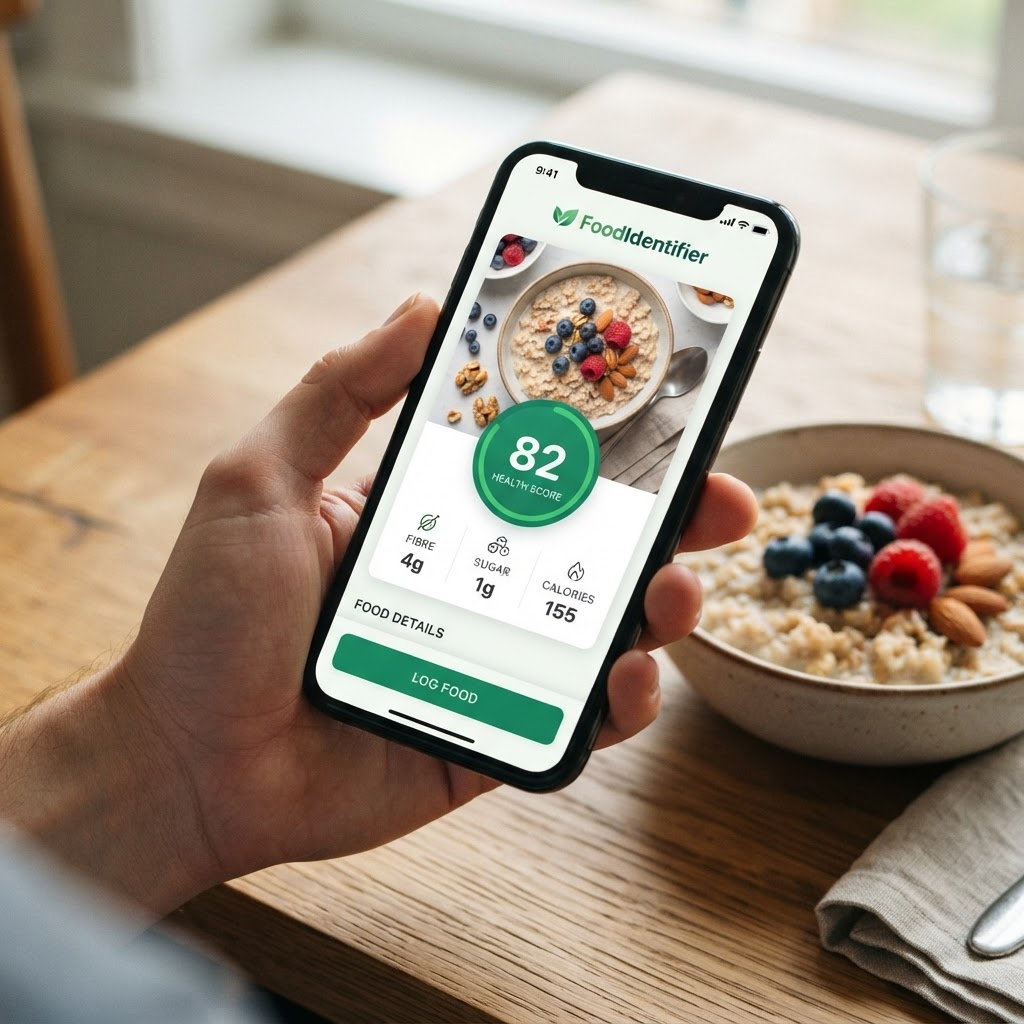
A typical cooked serving gives you around four grams of fibre — a solid start, not a full day's worth. I think of oatmeal as a good fibre base, not a fibre solution. Add raspberries, flax, or chia and the bowl pulls real weight; our guide to high-fiber foods for weight loss shows where it sits next to beans and lentils. No single breakfast fixes a low-fibre diet, but oats beat a pastry as a default — and defaults are what most of us actually eat.
The sugar trap in flavoured packets
I don't blame anyone for buying flavoured packets. They're cheap, they live in a desk drawer, and maple brown sugar smells like someone made breakfast for you.
Just read the sugar line as the price. Around twelve grams in one small packet is roughly three teaspoons, in a serving of only about 160 calories. A plain packet beside it has almost none. Same brand, same oat, wildly different bowl.
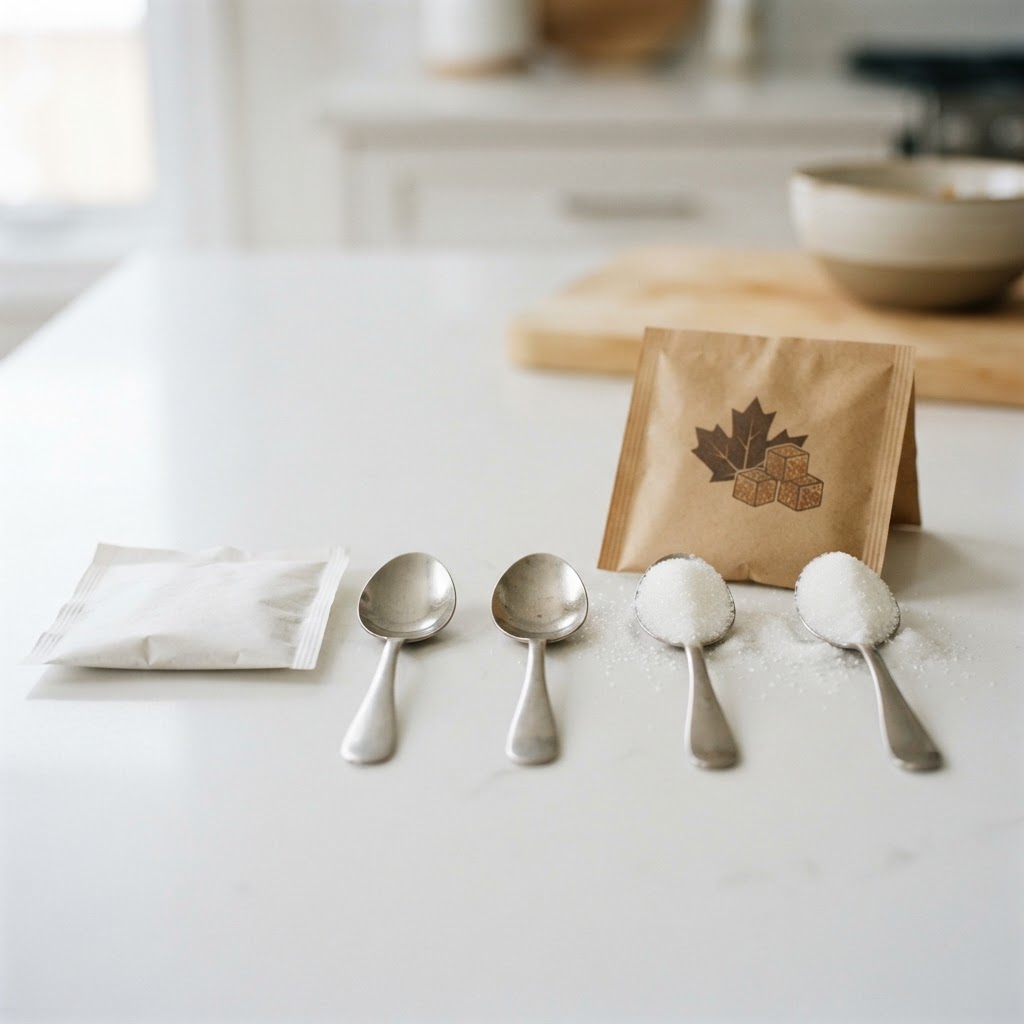
The sneakier problem is portion. One packet rarely feels like enough, so people use two — and the sugar doubles before milk or honey enters the picture. Middle move: one flavoured packet mixed with one plain, or plain oats with cinnamon and a teaspoon of brown sugar you can actually see.
Check your own breakfast
Scan a food free — no app, no sign-up →Blood sugar, in general terms
This is general information only, not guidance for treating any condition. How an oatmeal meal behaves depends on more than the oat itself.
Two things matter. First, processing: the finer and more pre-cooked the oat, the softer and faster-digesting the bowl tends to be — steel-cut at one end, instant at the other, rolled in between. Second, company: oats alone are mostly carbohydrate, but oats with protein and fat — yogurt stirred in, nuts on top, an egg on the side — become a slower, more balanced meal.
That's not a promise about your personal response, and it's not diabetes advice. If blood sugar is something you manage, talk to your doctor or dietitian about portions and pairings, and see our is oatmeal good for weight loss answer for the portion side.
Toppings that upgrade vs downgrade
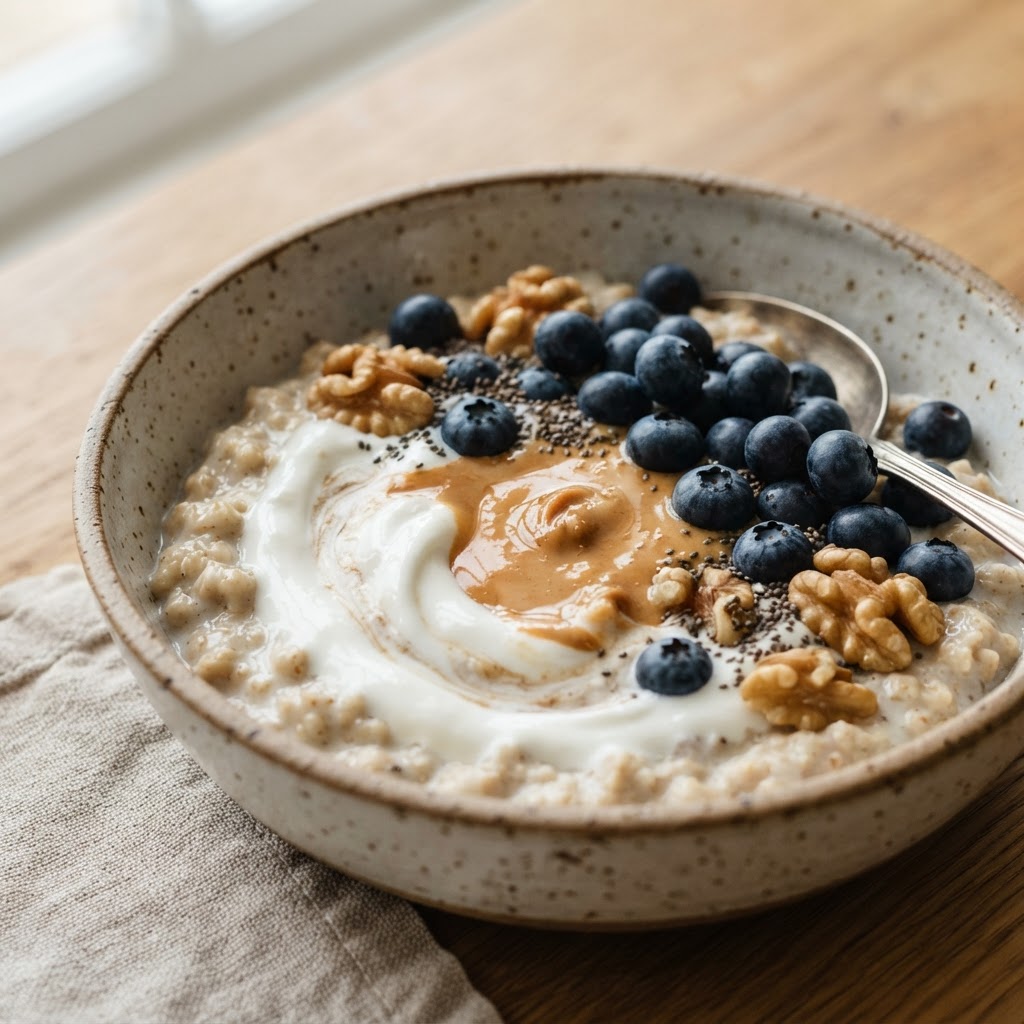
Upgrades add protein, texture, or fibre. Greek yogurt stirred in hot adds protein and tang. Peanut or almond butter adds staying power. Walnuts, chia, and ground flax add crunch and fibre. Berries add sweetness with fibre attached. And don't overlook an egg on the side.
Downgrades mostly add sugar without fullness. Brown sugar, honey, maple syrup, and sweetened dried fruit push the sugar column up fast; flavoured yogurts do it more quietly. None are forbidden — a teaspoon of maple syrup on a plain bowl you control is reasonable. Stacking three on a flavoured packet and calling it light is the problem.
My default: rolled oats, frozen berries cooked in, Greek yogurt, walnuts, cinnamon. Sweet enough, and I'm not thinking about food at ten-thirty.
"I Scanned My Breakfast" — a real scan from our YouTube channel.
Portion honesty: dry vs cooked
Most oatmeal confusion is a measuring problem. A quarter-cup of steel-cut dry, or about a half-cup of rolled dry, cooks into roughly a cup — the oats absorb water and swell. So a label saying 150 calories for the dry amount describes the whole cooked bowl.
Where people get caught: filling a big bowl to the brim with cooked oats — maybe two dry servings — adding toppings, and wondering why the "150-calorie breakfast" didn't behave like one. Café bowls can quietly be two or three home servings under fruit and granola.
You don't need a scale forever. Cook a measured portion once, see it in your own bowl, and you'll eyeball it honestly from then on.
The best ways to eat it
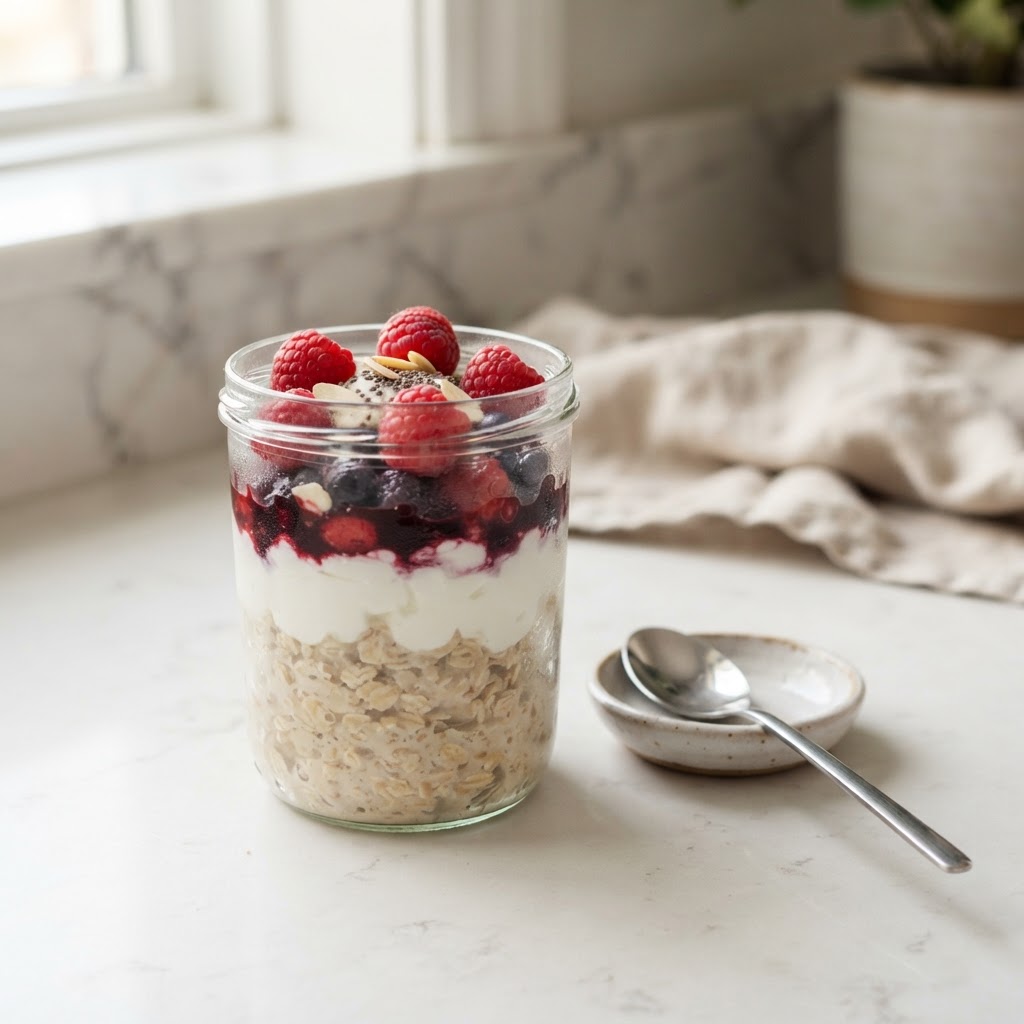
Overnight oats. Rolled oats, milk or yogurt, chia, and berries in a jar overnight. Cold, no cooking, pudding-like rather than porridge-like.
Protein oats. Rolled oats cooked as usual, then Greek yogurt and nut butter stirred in off the heat. The bowl I'd hand anyone who says oatmeal doesn't fill them up.
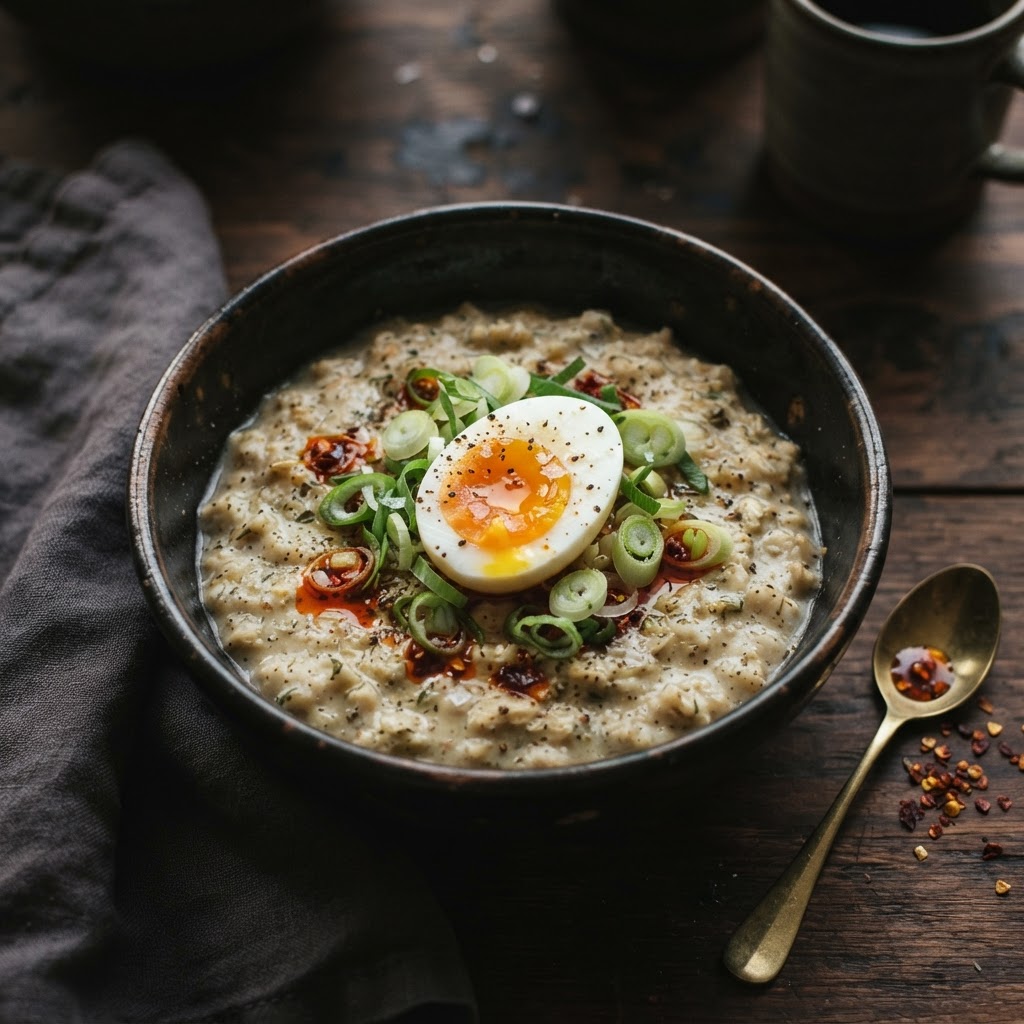
Savoury oats. Oats cooked in water or stock, topped with a fried egg, spring onion, and chilli oil. Sounds odd once, then becomes a regular dinner in my house.
Baked oats. Oats baked with banana, egg, and berries into a sliceable tray. Soft-cake texture, easy to portion — just watch added sweetener.
Our best AI food scanner apps guide is the honest rundown, drawbacks for our own tool included.
Scan a food free
Scan a food free — no app, no sign-up →The swaps ladder: when oatmeal isn't the move
1. Greek-yogurt bowl
Best for: a higher-protein cold breakfast with a similar berries-and-nuts topping routine.
What changes: protein roughly doubles or triples versus plain oats, carbohydrate drops, and the berries and nuts you already like still fit on top.
Honest drawback: costs more per serving, needs the fridge, and sweetened yogurts can sneak the sugar right back in.
2. Eggs for breakfast
Best for: mornings when you want almost no carbohydrate and real staying power.
What changes: two eggs give you solid protein with effectively no sugar, especially with vegetables or a slice of wholegrain toast on the side.
Honest drawback: needs cooking and a pan to wash, offers very little fibre on its own, and gets repetitive fast for some people.
3. Chia pudding
Best for: a make-ahead, high-fibre breakfast you can grab cold like overnight oats.
What changes: chia brings more fibre per serving than oats and a pudding texture, usually made with milk or a milk alternative and fruit.
Honest drawback: the texture divides people completely, chia costs more than oats, and café versions can be heavily sweetened.
Questions people actually argue about
Doesn’t oatmeal spike blood sugar?
It depends on the form and the company it keeps, in general terms. A plain steel-cut or rolled bowl eaten with protein and fat behaves differently from a sweetened instant packet eaten alone — processing, portion, and pairings all matter, and personal responses vary.
Are instant oats junk?
Plain instant oats, no. They’re the same oat, cut finer and pre-cooked, with a softer texture and usually a smaller serving. Flavoured instant packets are the ones to read carefully, and that’s about the added sugar, not the instant part.
Is oatmeal good for weight loss?
It can help, because a plain bowl is filling for moderate calories and replaces richer defaults. It stops helping when the bowl becomes two servings under syrup, sweetened granola, and dried fruit — portion and toppings decide, not the oat’s reputation.
Which choice fits your situation?
- ▶Everyday healthy default: plain rolled oats, measured dry, with berries and yogurt. Cheap, fast, balanced.
- ▶Most filling bowl: steel-cut oats if you have the time, or rolled oats with Greek yogurt, nuts, and chia stirred in.
- ▶Busy desk breakfast: one plain instant packet — or one flavoured plus one plain — with nuts added if you can.
- ▶Watching sugar closely: plain oats in any form, sweetness from whole fruit and cinnamon, labels checked on every packet.
- ▶Oatmeal never fills you up: keep the oats, fix the meal — add protein and fat before you blame the base.
FAQ
Scan a food free — no app, no sign-up — and see what the bowl you actually eat carries.
Scan a food free — no app, no sign-up →See Oatmeal Calories →About the author
Faisal Ali — Founder of FoodIdentifier
Faisal Ali is the founder of FoodIdentifier, the free AI food scanner, writing from Dallas, Texas — plain oats, honest toppings, no health halos.
Related reading: best AI food scanner apps and high-fiber foods for weight loss.
Connect with Faisal on LinkedIn →General information, not medical advice. This is not medical advice — talk to your doctor. Figures are typical values; brands vary, so scan your specific packet.