 FoodIdentifier
High-Fiber Foods for Weight Loss: Eat More, Stay Full
Most of us eat about half the fiber we should. Fiber is the closest thing food has to a built-in fullness system — and the fix is eating more of specific, ordinary, cheap foods. Here is the list.
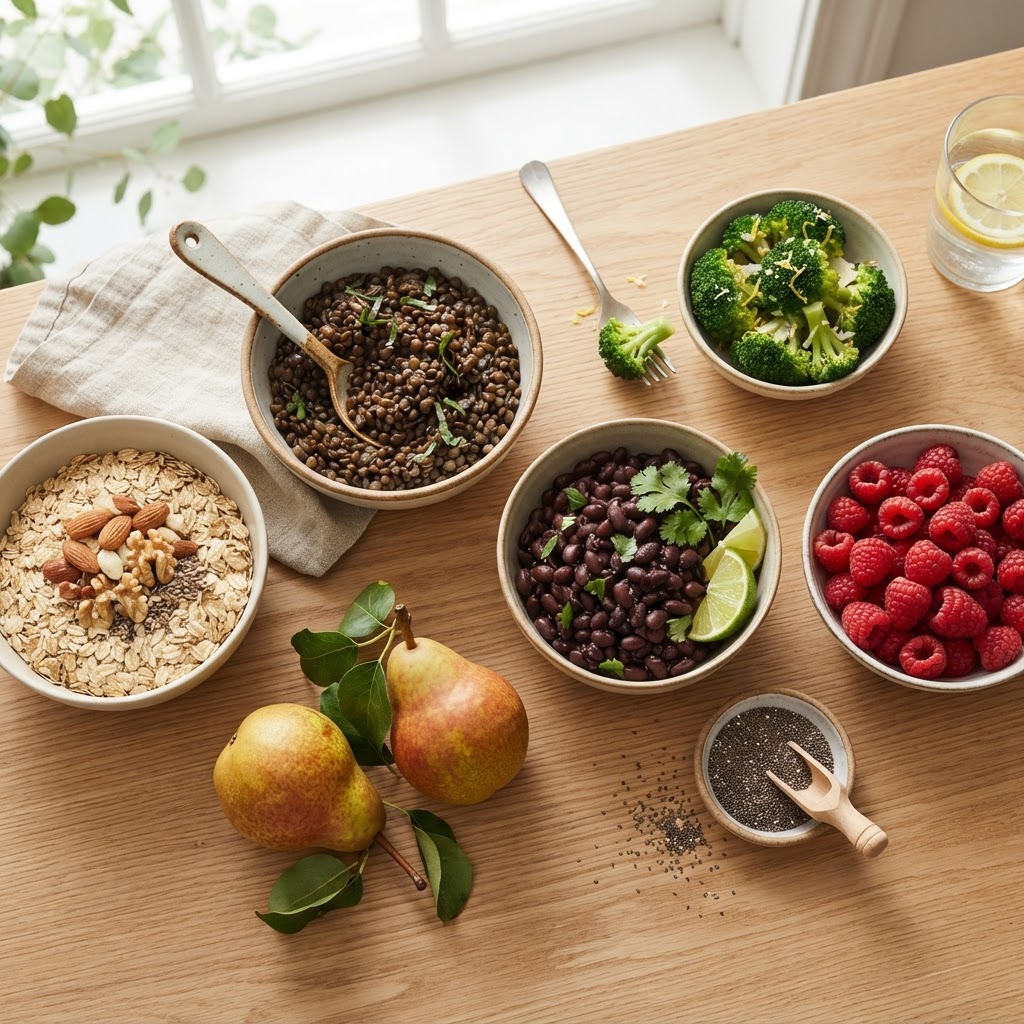
Scan any plate free at FoodIdentifier.com and see fiber alongside the calories in one photo.
Here is the least glamorous sentence in nutrition: most of us eat about half the fiber we should. Guidelines generally land around 25 grams a day for women and the mid-30s for men, and typical intakes sit closer to 15. That gap matters more than the supplement aisle wants you to know — especially if you are trying to lose weight — because fiber is the closest thing food has to a built-in fullness system.
Fiber slows digestion down. It adds bulk without adding many usable calories. It feeds the gut bacteria that produce compounds your body uses in appetite and blood-sugar regulation. And unlike most weight-loss advice, the fix is not eating less of everything. It is eating more of specific, ordinary, cheap foods. This is the list — ranked by what actually fills you up per calorie — and a realistic day that gets you past 30 grams without a single powder.
Scan any plate free at foodidentifier.com and see fiber alongside the calories.
Scan Your Meal Free →Check Your Fiber Target →The short answer: which high-fiber foods help most with weight loss?
⚡ The Short Answer
The best high-fiber foods for weight loss give you the most fiber for the fewest calories: raspberries, black beans, lentils, split peas, broccoli, pears, oats and chia seeds lead the list. Adding them works because fiber slows digestion and increases fullness, so you eat less later without white-knuckling it. Aim to build toward 25–35 grams a day, gradually, with water.
Why fiber is a weight-loss tool (not just a digestion one)
Fiber's reputation stops at the bathroom, which undersells it. Three mechanisms matter for weight:
First, time. Soluble fiber — the kind in oats, beans and apples — forms a gel in your stomach and slows how fast food leaves it. A meal that empties slowly keeps you full for noticeably longer than the same calories eaten in a low-fiber form.
Second, volume. Fiber-rich foods are physically bulky for their calories. A cup of raspberries is about 65 calories and takes real time to eat. Your stomach registers volume; a full stomach is one of the plainest stop-eating signals there is.
Third, the slow burn. Fiber blunts the blood-sugar rise of the meal it rides in with, which for many people means steadier energy and fewer of the crashes that send them looking for a snack at 3 p.m. Our fiber intake calculator will turn your age and sex into a personal target to aim at.
None of this is a drug effect, and fiber is not a treatment for anything. It is a dietary pattern effect — modest per meal, powerful across months. If you have a digestive condition, changing fiber intake can be a medical question: this article is general information, not medical advice — talk to your doctor.
The list: most fiber per calorie
Figures are standard USDA-style reference values, per common serving. "About" is doing honest work in every line — varieties and cooking move these a little.
The heavy hitters (10g or more per serving):
- ▶Split peas, cooked, 1 cup: about 16g fiber — the quiet champion, and the base of one of the cheapest soups on earth.
- ▶Lentils, cooked, 1 cup: about 15g — plus real protein, no soaking, done in 20 minutes.
- ▶Black beans, cooked, 1 cup: about 15g — tacos, soups, salads, blended into brownies if you are that household.
- ▶Chia seeds, 1 ounce (about 2 tablespoons): about 10g — stir into yogurt, oatmeal or smoothies; they disappear.
The everyday workhorses (5–9g):
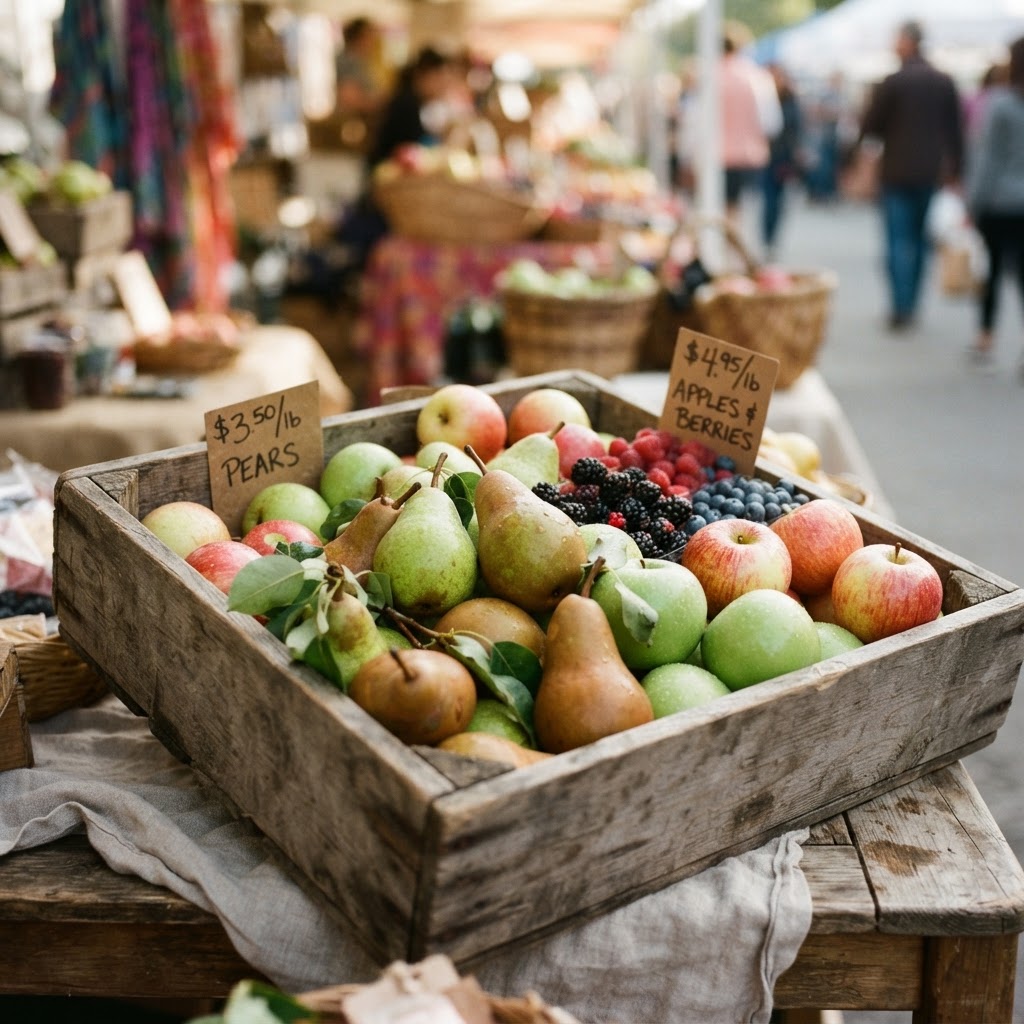
- ▶Raspberries, 1 cup: about 8g for roughly 65 calories — pound for pound, the best fiber deal in the fruit case. Blackberries are close behind at about 7–8g.
- ▶Pear, 1 medium with skin: about 5–6g — the skin is where much of it lives; peeling a pear is fiber vandalism.
- ▶Broccoli, 1 cup cooked: about 5g — frozen counts exactly the same.
- ▶Oats, ½ cup dry: about 4–5g — and the soluble kind specifically prized for fullness. A bigger morning bowl clears 8g without trying.
- ▶Avocado, 1 medium: about 9–10g — wonderful fiber, but at roughly 240 calories it is a food to place deliberately, not a freebie.
- ▶Sweet potato, 1 medium with skin: about 4g, plus it eats like a meal.
The easy adds (3–4g each, they stack):
An apple with skin, a cup of green peas, a serving of quinoa, air-popped popcorn (about 3–4g for 3 cups — and it fills a bowl), a tablespoon of ground flax, a handful of almonds.
A realistic 30-gram day
No powders, no strange ingredients, nothing you would not feed a guest:
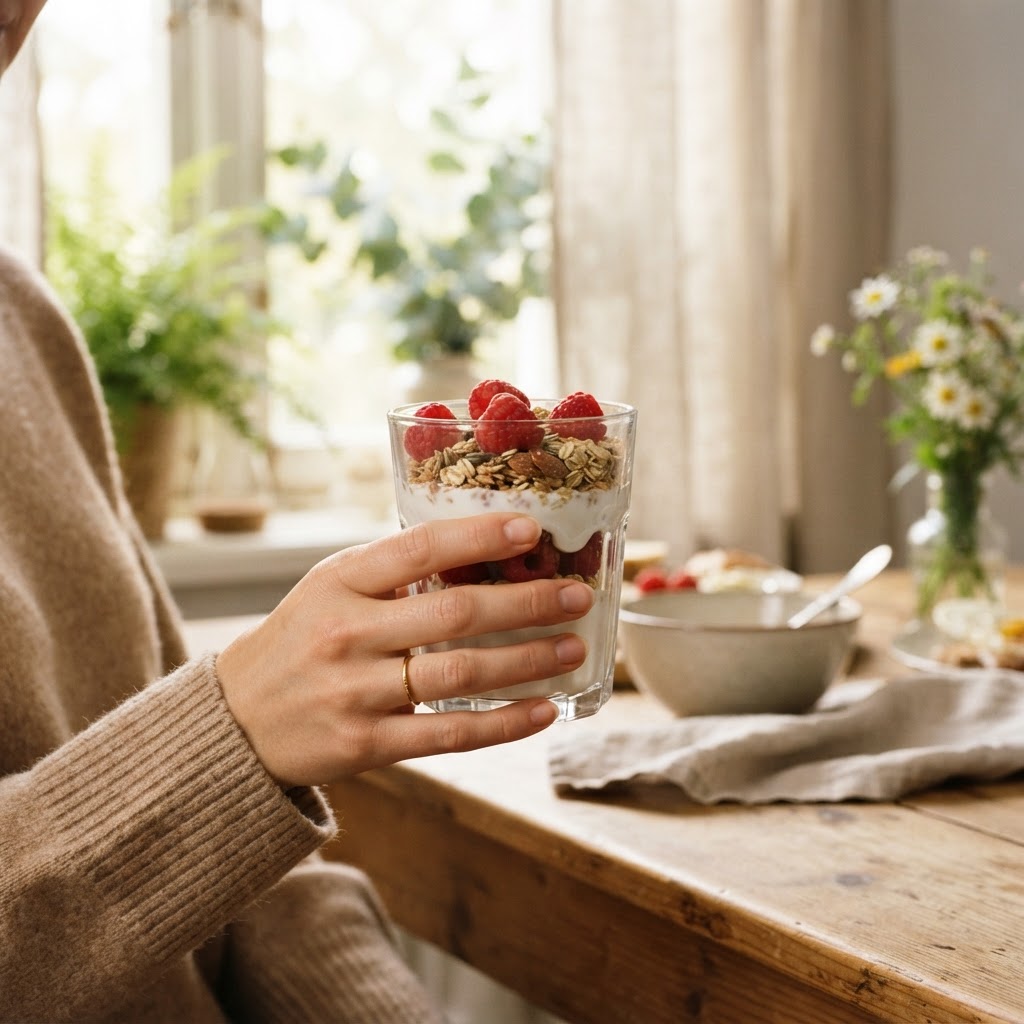
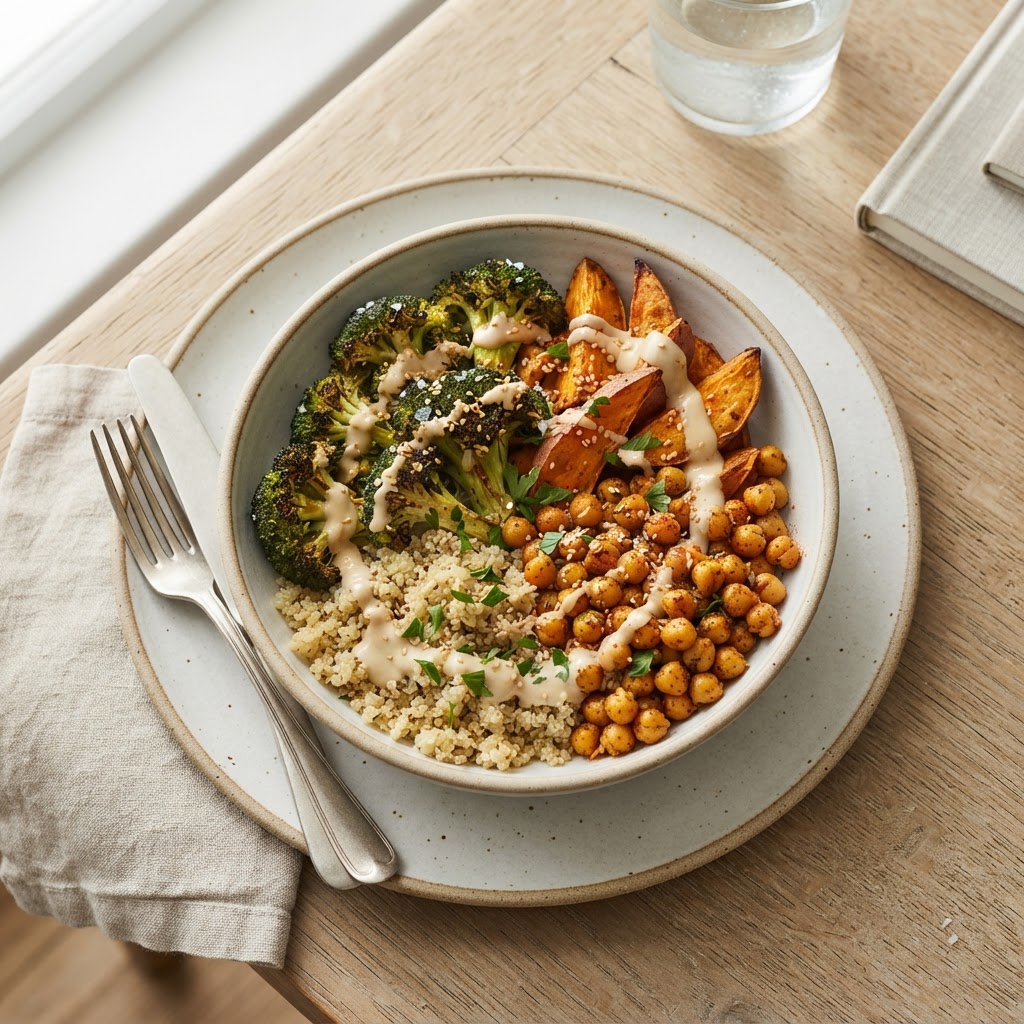
- ▶Breakfast: oatmeal made from ½ cup dry oats (about 4–5g) with a cup of raspberries (8g) and a tablespoon of chia stirred in (about 3–4g for a tablespoon) — roughly 15g before 9 a.m.
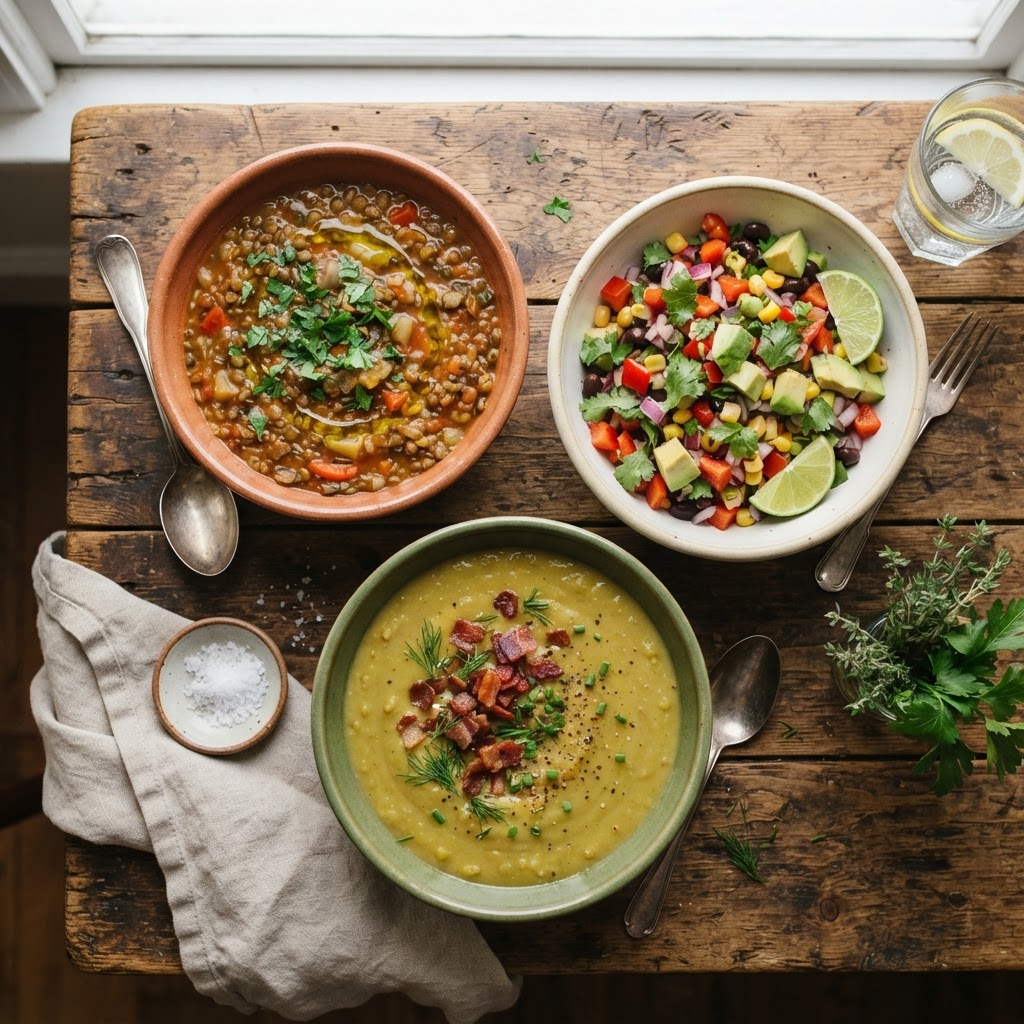
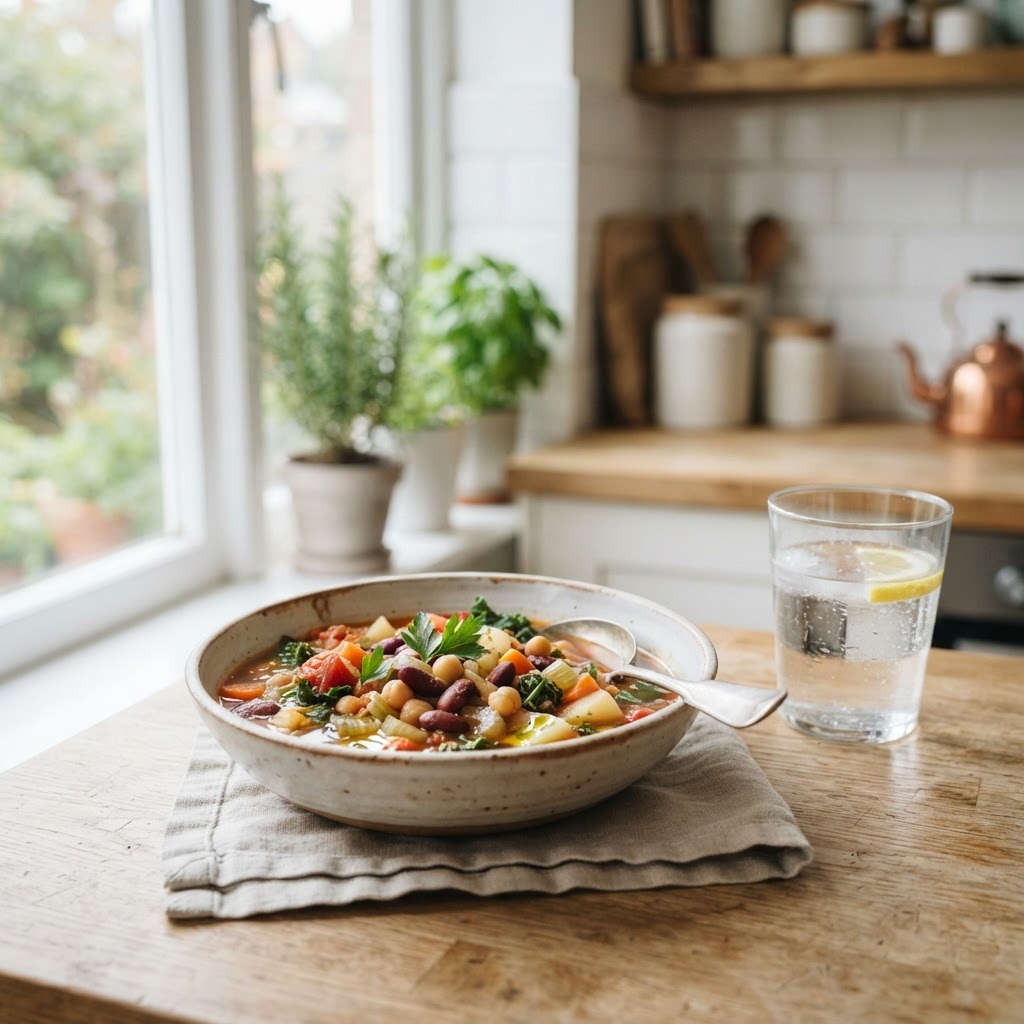
- ▶Lunch: a big lentil soup, or a black-bean burrito bowl with vegetables (about 10–13g).
- ▶Snack: a pear, skin on (about 5–6g).
- ▶Dinner: even a modest fiber contribution — broccoli, a sweet potato, a quinoa side (about 7–9g combined).
Total: comfortably past 30 grams, on food that costs less than the average takeout lunch. The pattern to copy is not the menu; it is the structure — a bean or lentil anchor once a day, berries or fruit with skin, and a seed sprinkled where it will not be noticed. The foods for constipation guide goes deeper on the digestion side of the same foods, and the high-volume, low-calorie list is this article's closest cousin — volume eating from the calorie side.
Scan your meals free at foodidentifier.com and watch the fiber column — most people are surprised which meal is the weak one.
Scan Your Plate Free →The four mistakes that ruin a high-fiber plan
- ▶1. Going from 15 to 40 grams overnight. Your gut bacteria need time to adjust; a sudden flood is the classic recipe for bloating and giving up by Friday. Add about 5 grams a week.
- ▶2. Adding fiber without water. Fiber does its work with fluid. More fiber and the same low water intake is how people conclude, wrongly, that "fiber doesn't agree with me."
- ▶3. Trusting the front of the box. "Made with whole grains" bars and cereals can carry 1–2 grams of fiber and a dessert's worth of sugar. The label's fiber line — not the marketing — is the number. When in doubt, scan it: that is what the barcode scanner is for.
- ▶4. Counting supplements as the strategy. A fiber gummy is 2–3 grams and no volume, no protein, no meal satisfaction. Food first; a supplement, if you use one, is the gap-filler, not the plan.
What about fiber and blood sugar, hunger hormones, and the rest?
You will see fiber credited with everything from hormone resets to miracle gut transformations. The grounded version: fermentable fibers feed gut bacteria that produce short-chain fatty acids, which are genuinely involved in how the body handles appetite and glucose. Higher-fiber eating patterns are consistently associated with better weight outcomes in population research. That is a real, worthwhile effect — delivered at the speed of a dietary pattern, not a pill. Anyone promising you a number of pounds by a date from fiber alone is inventing it, and we do not invent numbers here.
The practical verdict
- ▶Anchor once a day on beans, lentils or split peas. That single habit is worth 10–15 grams and most of the benefit.
- ▶Make berries your default sweet. Eight grams a cup at snack-level calories is unmatched.
- ▶Keep the skins on. Pears, apples, potatoes — the peel is not packaging, it is the point.
- ▶Climb slowly, drink water, read labels. Five grams more per week, a glass of water with meals, and the fiber line checked before the health claim.
- ▶Expect weeks, not days. Fiber helps weight loss the way compound interest helps savings: quietly, and then noticeably.
Scan today's meals free at foodidentifier.com — most people find their gap in one day of scanning.
No app, no account, no card.
👉 Scan Free at FoodIdentifier.com →Scan a Photo Instead →Frequently asked questions
⚠️ Medical Disclaimer
This is not medical advice — talk to your doctor about digestive conditions, medication, or any major diet change.
📚 Related Tools & Guides
Related Searches