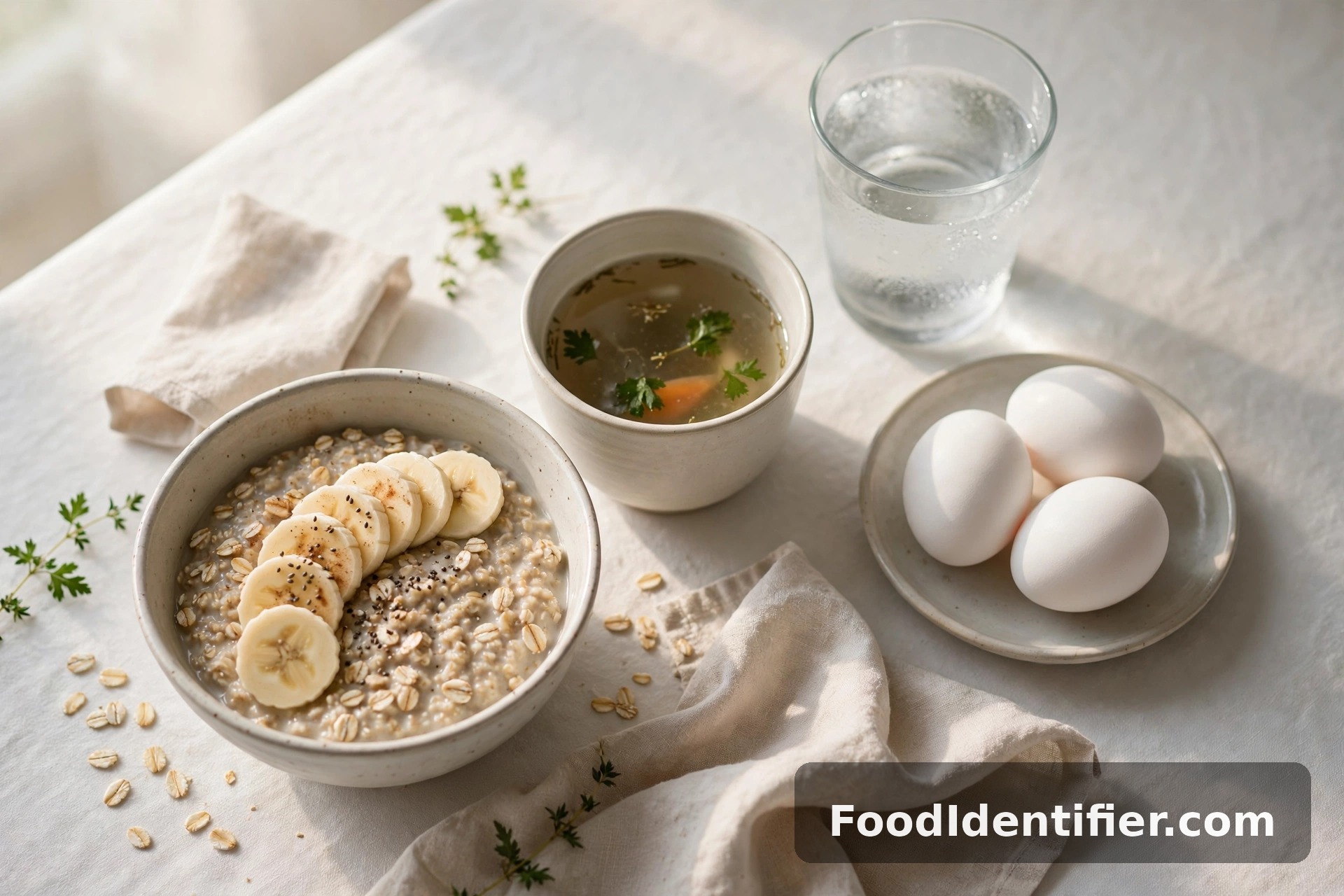
What to Eat After Ozempic Shot Day: Before, During & After
*This page is informational only — not medical advice. Talk to your doctor before changing how you eat on GLP-1 medication.*
Every week has a shot day. And if you're on a GLP-1 medication, you know shot day isn't just an injection — it's a 72-hour eating event. The day before matters. The day itself matters most. And the 24–48 hours after, when the medication peaks, can make or break your week.
Most advice covers "what to eat on Ozempic" generally. But if you're searching what to eat after ozempic shot day specifically, you need the full 72-hour timeline — not vague principles. This is different: a concrete timeline for the full window — what to eat the day before your shot, the day of, and the day after — with actual meals, not vague principles. Because nausea doesn't care about principles. It cares about what was on the plate.
Shot day today? Scan your meal before you eat it at foodidentifier.com — check the protein and spot trigger foods first. Free, no app.
The short answer: what should I eat around my Ozempic shot?
Day before: eat normally with extra protein and hydration. Shot day: small, bland, low-fat meals — never on an empty stomach; avoid greasy, spicy, and very sweet foods. Day after (peak effect): soft proteins, broths, cooked vegetables, fluids between meals. Scan every meal first to check protein and flag triggers, free at foodidentifier.com.
Why shot day hits different: the 72-hour window
GLP-1 medications don't hit all at once — blood levels rise over 24–72 hours after injection, peak, then gradually decline until the next dose. That means:
- Day before (T-1): levels are at their lowest. Appetite may be slightly higher. This is your loading day — protein, hydration, fiber.
- Shot day (T+0): the injection itself plus rising levels. Many people feel fine for hours, then the appetite suppression deepens through the evening.
- Day after (T+1 to T+2): peak effect for most people. Smallest appetite, highest nausea risk, lowest tolerance for rich food. This is where eating strategy matters most.
- Days 3–6: gradual return toward baseline. Normal GLP-1 eating resumes.
The mistake most people make: eating shot day like any other day — a normal-sized dinner, something a little rich — and then spending the next 36 hours regretting it. The 72-hour plan below prevents that.
Day before: set yourself up (T-1)
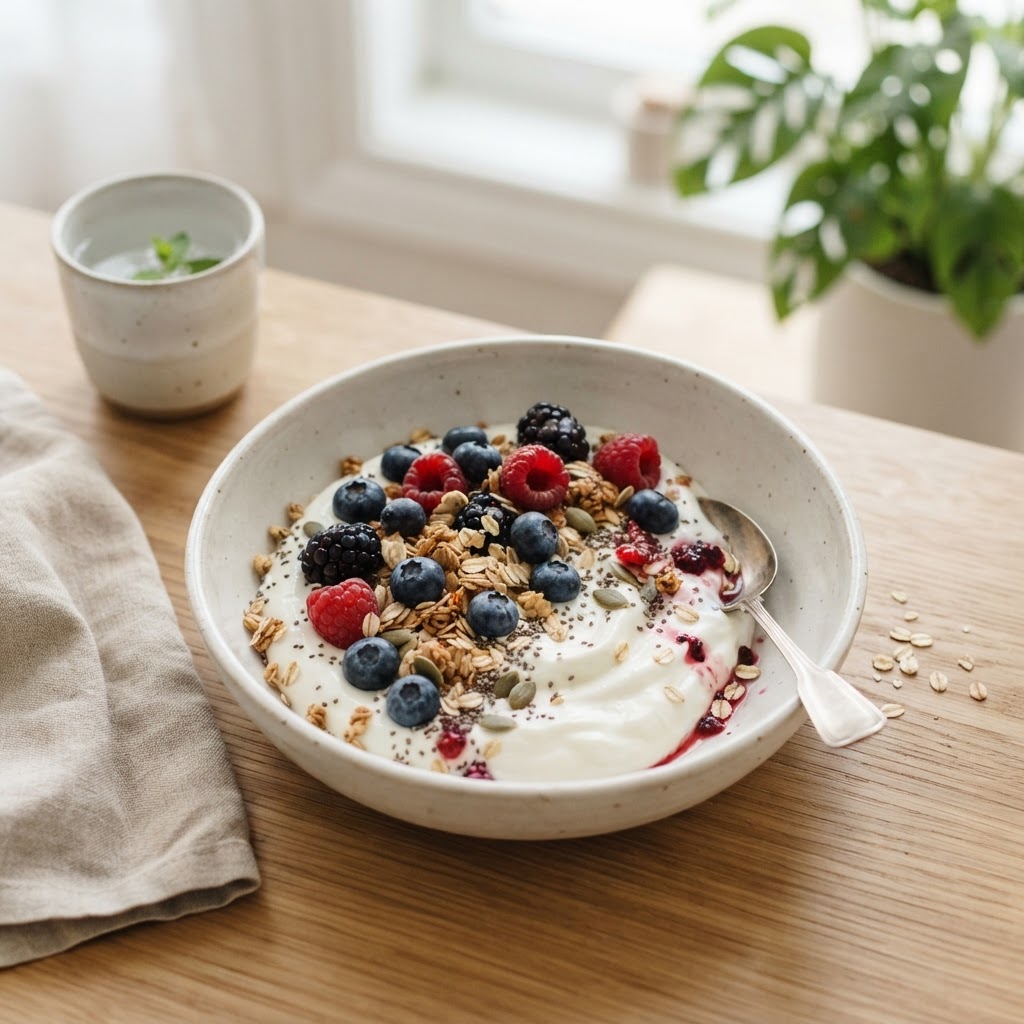
Think of this as filling the tank before a stretch where you won't want much fuel.
Do:
- Front-load protein. Aim for your full protein target today — chicken, fish, eggs, Greek yogurt, tofu. Tomorrow you won't feel like eating much, so today's protein protects your muscle.
- Hydrate deliberately. Water, herbal tea, broth — steady through the day. Dehydration amplifies every side effect.
- Get your fiber in. Vegetables, fruit, oats — today's the day for the big salad, because tomorrow raw vegetables may feel impossible.
- Eat at normal times. Keep your meal rhythm stable; don't "pre-fast" or skip meals to "save room."
Sample T-1 day:
- Breakfast: Greek yogurt with berries and oats
- Lunch: Big salad with grilled chicken, olive oil dressing
- Snack: Apple with peanut butter
- Dinner: Salmon, roasted vegetables, rice
- Fluids: water and tea throughout
Shot day: the gentle plan (T+0)
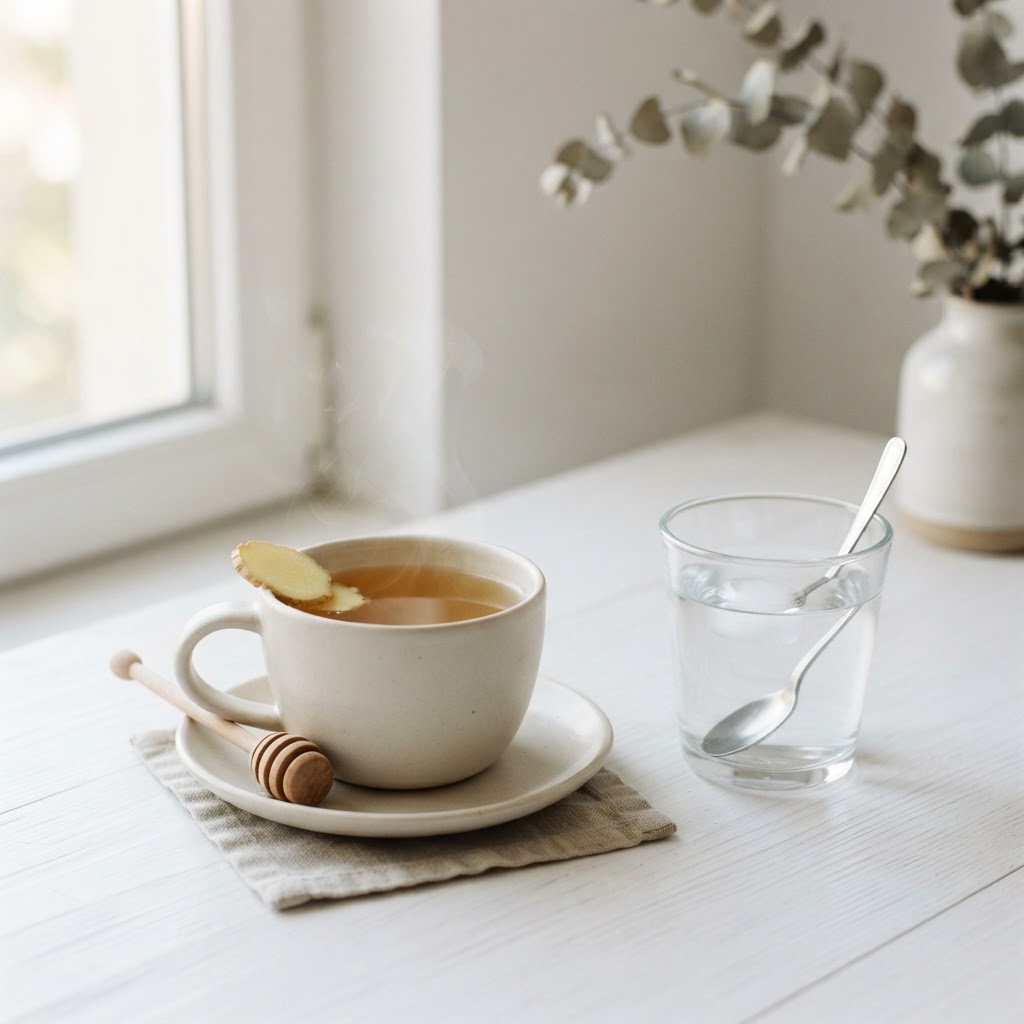
The golden rule: never take the shot on a completely empty stomach. Have a small, bland meal or snack 30–60 minutes before — something like toast, oatmeal, or a banana. An empty stomach plus the injection is the most common nausea setup people report.
Morning (pre-shot): small and bland. Oatmeal with banana. Toast with a little peanut butter. Nothing fried, nothing spicy, nothing ambitious.
Take the shot (per your prescriber's instructions — timing of day is personal; many prefer evening so the peak effect lands during sleep, but follow your doctor's guidance).
Lunch: half-portions of gentle food. Broth-based soup with soft vegetables. A small bowl of rice with steamed chicken. If appetite is already fading, don't force a full meal — a protein-rich snack (Greek yogurt, boiled egg) counts.
Dinner: the danger zone. This is where people eat normally out of habit and pay for it. Keep it small, soft, and boring: mashed sweet potato, soft scrambled eggs, plain rice with broth. Stop at comfortable fullness — "I could eat more" is your cue to stop, not continue.
All day: sip fluids between meals, not gallons with them. Ginger tea is the folk remedy with the most fans — worth having on hand.
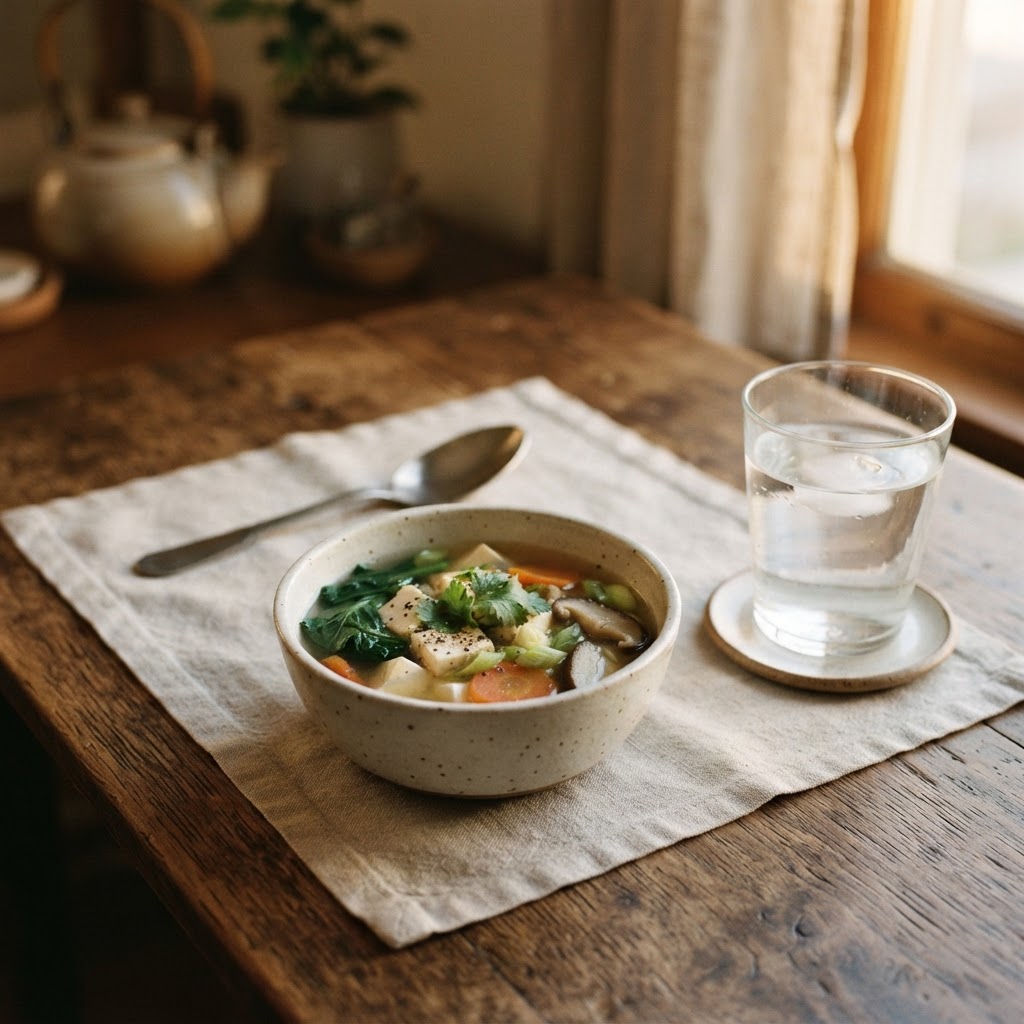
Day after: the soft landing (T+1 to T+2)
Peak effect. Smallest appetite, touchiest stomach. The goal today isn't nutrition optimization — it's getting enough protein and fluids without triggering nausea.
The template that works:
- Breakfast: Greek yogurt (small cup) or a boiled egg with toast. Protein first, always.
- Mid-morning: Applesauce or a banana. Something is better than nothing.
- Lunch: Broth soup with soft chicken or tofu. Sip slowly.
- Afternoon: Cottage cheese (small portion) or a protein shake if solids feel like too much.
- Dinner: Soft scrambled eggs or mashed sweet potato with a little butter. Boring wins.
- Fluids: water, herbal tea, broth — constant gentle sipping.
What to avoid for the full 48 hours: fried food, fast food, spicy dishes, rich creamy sauces, large raw salads, carbonated drinks, alcohol, and very sweet desserts. These are the most commonly reported nausea triggers, and peak-effect days are not the time to test your limits.
Protein math on low-appetite days: you won't hit your full target — accept that. Aim for "as much as comfortably possible," prioritizing the protein anchor at each small meal. Two eggs (12g), a yogurt cup (15g), some chicken in soup (20g) — that's nearly 50g from tiny meals. Scan each one to see the grams add up; "some chicken" is not a measurement, especially when every bite counts.
5 shot-day meal templates (copy these)
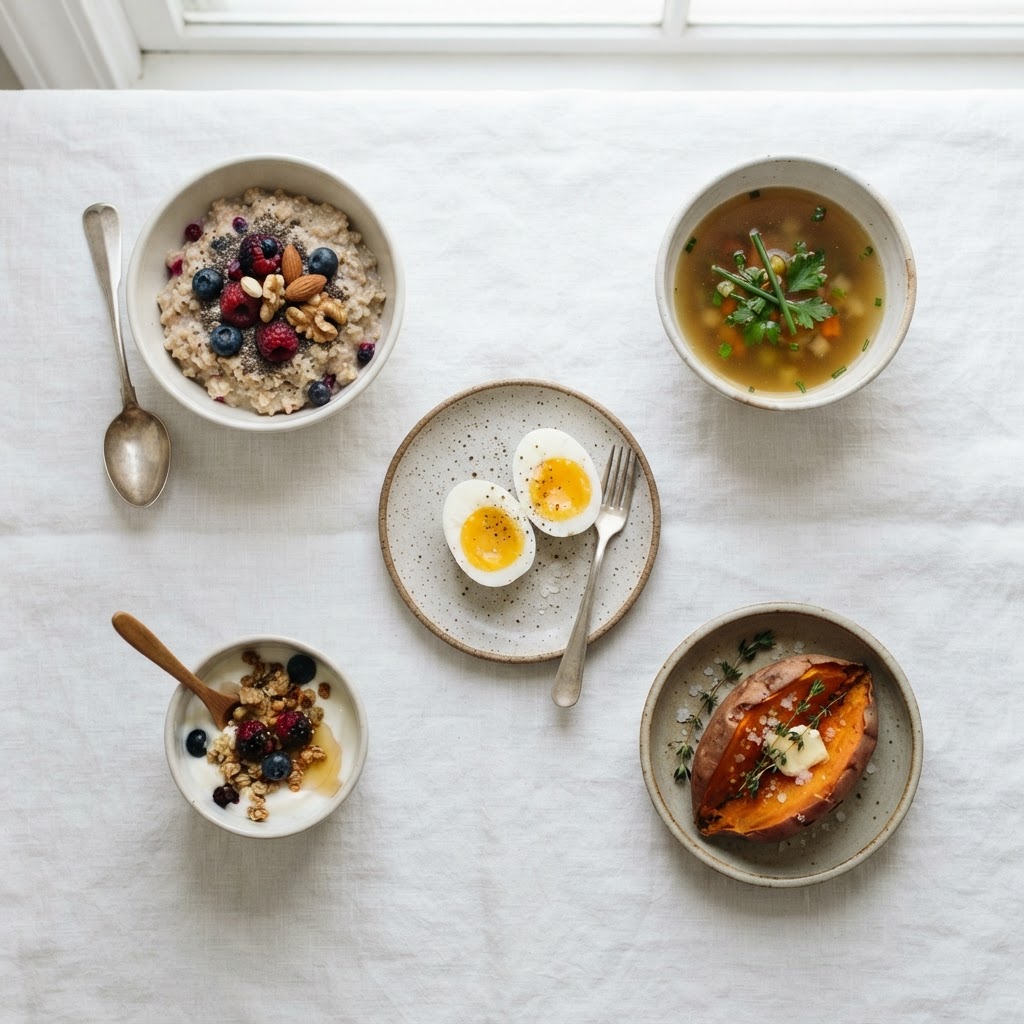
Template 1 — The Oatmeal Morning
Small bowl oatmeal + half banana + spoonful of peanut butter. Bland, warm, protein-flecked. The pre-shot classic.
Template 2 — The Broth Lunch
2 cups chicken or vegetable broth + soft cooked carrots and zucchini + shredded chicken or tofu. Hydrating, gentle, protein-carrying.
Template 3 — The Egg Plate
Two soft-scrambled eggs + one slice of toast + a few avocado slices. Fifteen minutes, minimal smell (important — strong cooking smells trigger nausea for many), real protein.
Template 4 — The Yogurt Rescue
Greek yogurt cup + applesauce + drizzle of honey. For the hours when chewing feels like work. Cold, smooth, no cooking smells.
Template 5 — The Sweet Potato Night
One baked sweet potato, mashed, with a little butter and salt + side of cottage cheese. Comforting, soft, and the cottage cheese quietly adds 14g of protein.
The scan-it-first routine
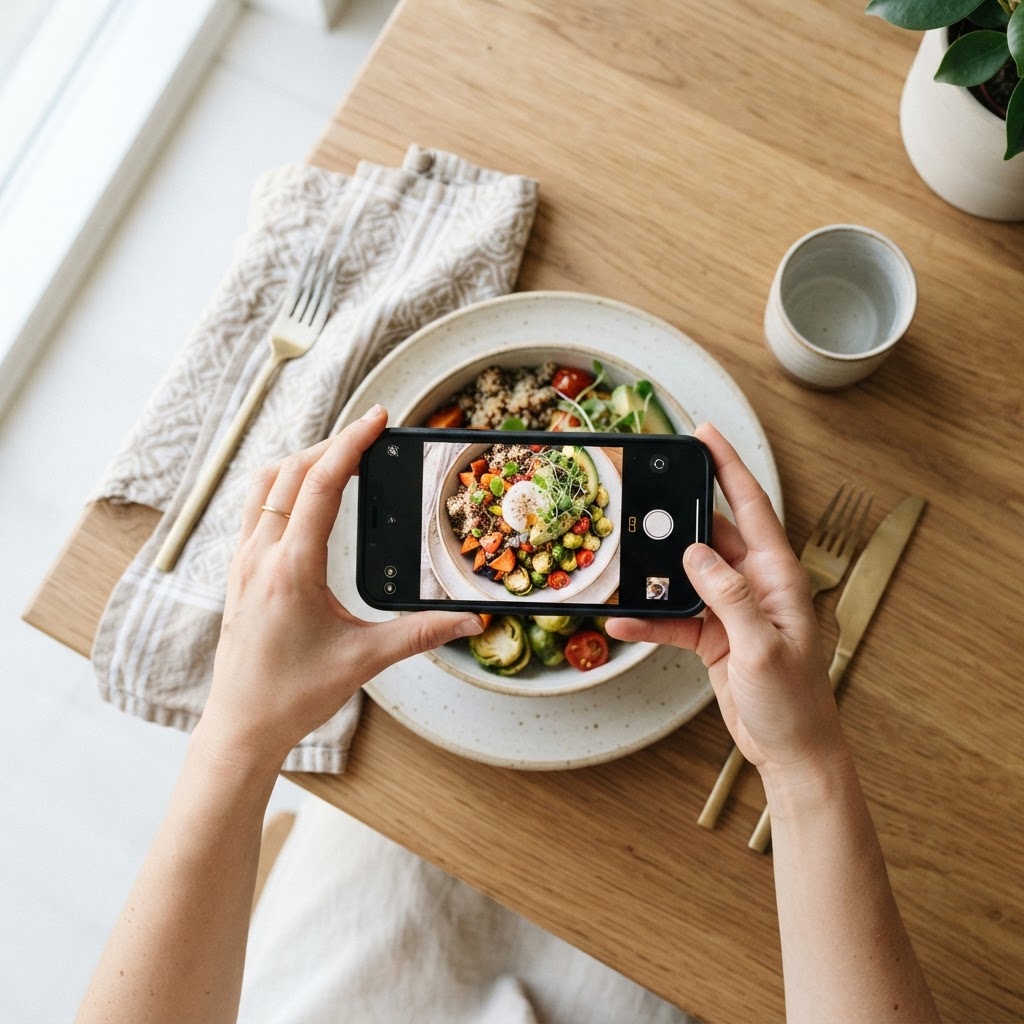
On shot day and the two days after, make this your ritual: photograph the meal before the first bite. Not after — before. You're checking two things:
- Protein: does this small plate carry enough? The scan shows grams per meal. On low-appetite days, every meal is a budget decision.
- Triggers: anything fried, greasy, or suspiciously rich visible? The scan identifies the foods — a second pair of eyes when your judgment is foggy.
It takes five seconds and it has prevented more bad shot-day decisions than any amount of willpower. Try the GLP-1 mode — it scores every scan for protein-first fit and flags nausea triggers automatically.
Shot day or day-after? Scan your next meal free at foodidentifier.com before you eat — check the protein, dodge the triggers.
FAQ
Should I eat before my Ozempic shot?
Yes — a small, bland meal or snack 30–60 minutes before is the most common advice from patient communities. An empty stomach plus the injection is a frequent nausea setup. Follow your prescriber's specific instructions.
What if I feel too nauseous to eat at all?
Don't force full meals — switch to tiny amounts of gentle foods (broth, applesauce, yogurt) and prioritize fluids. Persistent inability to eat or drink, vomiting, or severe pain warrants a prompt call to your doctor. This is general information, not medical guidance.
Does it matter what time of day I take the shot?
Many people prefer evening so the strongest effect lands during sleep, but this is personal — and your prescriber may have specific guidance. Consistency (same day each week) matters more than the hour.
Can I drink alcohol around shot day?
Alcohol is one of the most commonly reported nausea triggers on GLP-1, and it adds empty calories while lowering food inhibitions. Most patient communities strongly recommend skipping it, especially in the 48-hour peak window. Discuss with your doctor.
What about the day before — should I eat extra?
Not "extra" as in a binge — but do hit your full protein target and hydrate well, since the next two days you'll eat less. Think of it as loading, not stuffing.
I'm constipated around shot day too — related?
Very likely — slowed digestion affects the whole tract. Our guide on foods that help Ozempic constipation covers the fiber strategy in detail.
Can the scanner really tell if a meal will cause nausea?
It identifies the foods and flags known trigger categories (fried, greasy, very sweet, spicy) — a useful second opinion, not a prediction. Your own history is the best guide: note what bothered you and avoid it next shot day. The GLP-1 companion mode automates the flagging.
Is this medical advice?
No. Everything here is general information from patient-community patterns. Your prescriber's instructions come first, always — and any concerning symptoms deserve a doctor's input, not a blog post.
Make shot day boring — in the best way. Scan every meal free at foodidentifier.com for the full 72 hours. No app, no account, no card.
*This page is informational only — not medical advice. Talk to your doctor before changing how you eat on GLP-1 medication, and follow your prescriber's instructions for your injection.*