GLP-1 Companion: The Food Scanner Built for Appetite on Medication
This is not medical advice — talk to your doctor.
The short answer: When your appetite shrinks on GLP-1 medication, every bite has to carry its nutrition. This GLP-1 food scanner photographs each small meal, scores it for protein-first fit, and flags common nausea triggers before you eat. It's an informational eating aid — not medical guidance — free at foodidentifier.com.
Small appetite? Make every bite count — scan your next meal free at foodidentifier.com. No app, no sign-up.
Scan FreeThe small-appetite problem nobody warns you about
Here's what changes on GLP-1 medication: food stops calling to you. Meals you used to finish easily now feel like too much halfway through. That's the medication doing its job — but it creates a new problem most people don't expect.
When you can only eat a little, what you eat matters more than ever. A small bowl of pasta fills your limited stomach space with mostly carbs and leaves almost no room for protein. A small piece of chicken with some vegetables delivers far more nutrition in the same few bites. Every bite has to pull its weight now, because there are so few of them.
This is where most general nutrition advice falls apart. It assumes a normal appetite — three full meals, snacks, plenty of room to "eat a balanced diet." You don't have that room anymore. You need guidance built for the appetite you actually have.
Protein-first fit scoring for small meals
Every scan scores your meal for protein-first fit: does this plate put protein where your shrunken appetite can reach it?
The logic is simple. With a small appetite, the first few bites are the ones you're guaranteed to finish. If those bites are protein — chicken, fish, eggs, Greek yogurt, tofu — you've secured the most important nutrient before fullness stops you. If the first bites are bread or fries, the protein at the edge of the plate may never get eaten.
The scanner looks at your photo and tells you plainly: is the protein front and center, or buried? If it's buried, it suggests a reorder — eat the chicken first, the rice last. Same plate, completely different nutrition outcome. For someone eating half portions, that reorder can be the difference between enough protein and not nearly enough.
Nausea trigger flags before you eat
Some foods are more likely to cause discomfort when your stomach empties slowly. The scanner flags the usual suspects so you can spot them before the first bite:
Greasy and fried foods. Heavy oil is the most common complaint — fried chicken, greasy burgers, anything dripping. The scan flags visible grease and suggests a baked or grilled version of the same craving.
Very sweet foods and drinks. Concentrated sugar on a sensitive stomach is a bad combination. Desserts, candy, and sugary drinks get flagged, with a nudge toward a smaller portion or a less sweet alternative.
Spicy foods. Heat that never bothered you before can bother you now. The scan notes heavily spiced dishes so you can decide if today's the day.
Large portions. Sometimes the trigger isn't the food — it's the amount. An overflowing plate can feel overwhelming before you start. The scan notes when a portion looks large for a reduced appetite and suggests boxing half before you begin.
None of this is a rule about what you can or can't eat. It's a heads-up, so nothing ambushes you mid-meal.
Portion guidance for a reduced appetite
"Eat less" is not useful advice when eating less is already the problem. What helps is structure — knowing what a right-sized meal looks like now.
A good target for most people on GLP-1 medication is a meal you can finish comfortably in 15–20 minutes without forcing it. For many, that's roughly half to two-thirds of what they ate before — but the exact amount is personal, and your doctor or dietitian is the right person to set your targets.
The scanner helps by showing you the meal's totals — protein, calories, and the main nutrients — so you can see whether a small plate is actually carrying enough nutrition, or whether it's small and empty. Small and empty is the trap. Small and dense is the goal.
The 3 rules
If you remember nothing else, these three carry you:
1. Protein first. Every meal, every time. Eat the protein before anything else on the plate. With limited bites, order is everything.
2. Small and frequent. Three tiny meals plus one or two small snacks usually works better than two normal meals you can't finish. The scanner's sample day below shows what this looks like.
3. Hydrate between meals, not during. Big gulps of water with food fill your limited stomach space faster. Sip during the meal, drink properly between meals. Dehydration sneaks up when you're eating less, so this one matters more than it sounds.
Eating less but want every bite to count? Scan your plate free at foodidentifier.com — protein-first scoring in five seconds.
Scan FreeA sample day: 5 small protein-first meals
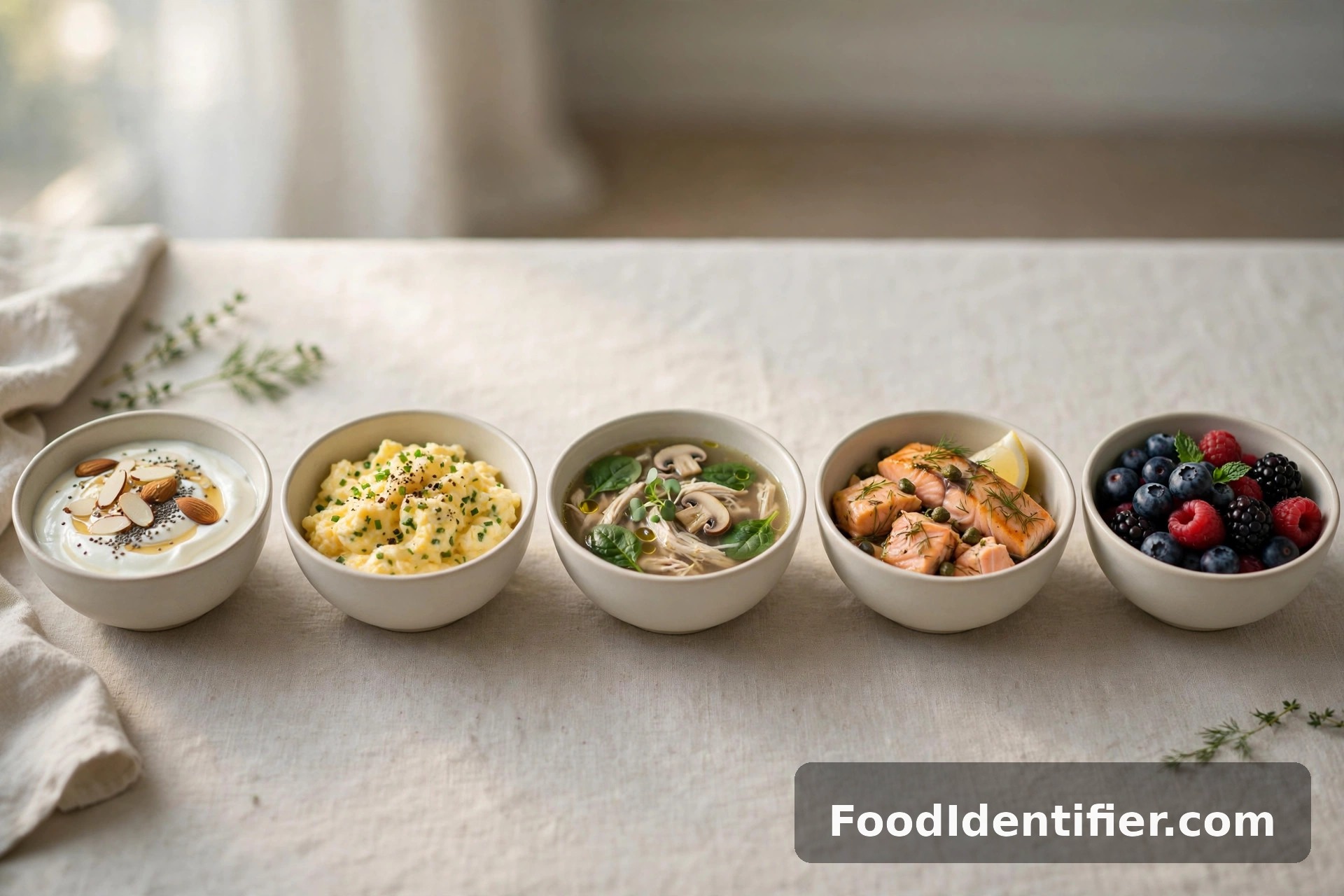
Here's what a day can look like. Portions are illustrative — adjust to your own appetite and your doctor's guidance.
Breakfast: Greek yogurt (about a cup) with a small handful of berries. Protein-forward, gentle, easy to finish. Scan it: high protein-first fit, no nausea flags.
Mid-morning: A boiled egg and a few cheese cubes. Tiny, portable, almost pure protein. This is the snack that keeps the day's protein total alive.
Lunch: A small bowl of chicken soup with soft vegetables — or half a turkey sandwich on thin bread. Warm, soft foods tend to sit well. Eat the chicken first.
Afternoon: A small protein shake or a handful of nuts. Liquids and small solids work when even a "small meal" feels like too much.
Dinner: A palm-sized piece of baked salmon with a few spoonfuls of soft vegetables. Eat the fish first, vegetables second, and stop when you're comfortably done — not when the plate is empty.
Notice the pattern: protein leads every eating occasion, portions stay small, and nothing on the day is greasy, very sweet, or huge. That's the whole strategy.
FAQ
Is this medical advice?
Can the scanner tell me what dose to take or whether to stay on medication?
What if I can't hit the protein the scanner suggests?
Does the scanner work for small snacks too?
Why does the scanner flag foods I used to eat fine?
I feel fine on my medication. Do I still need this?
Make every bite count. Scan your next small meal free at foodidentifier.com — no app, no account, no card.
Scan FreeThis is not medical advice — talk to your doctor.