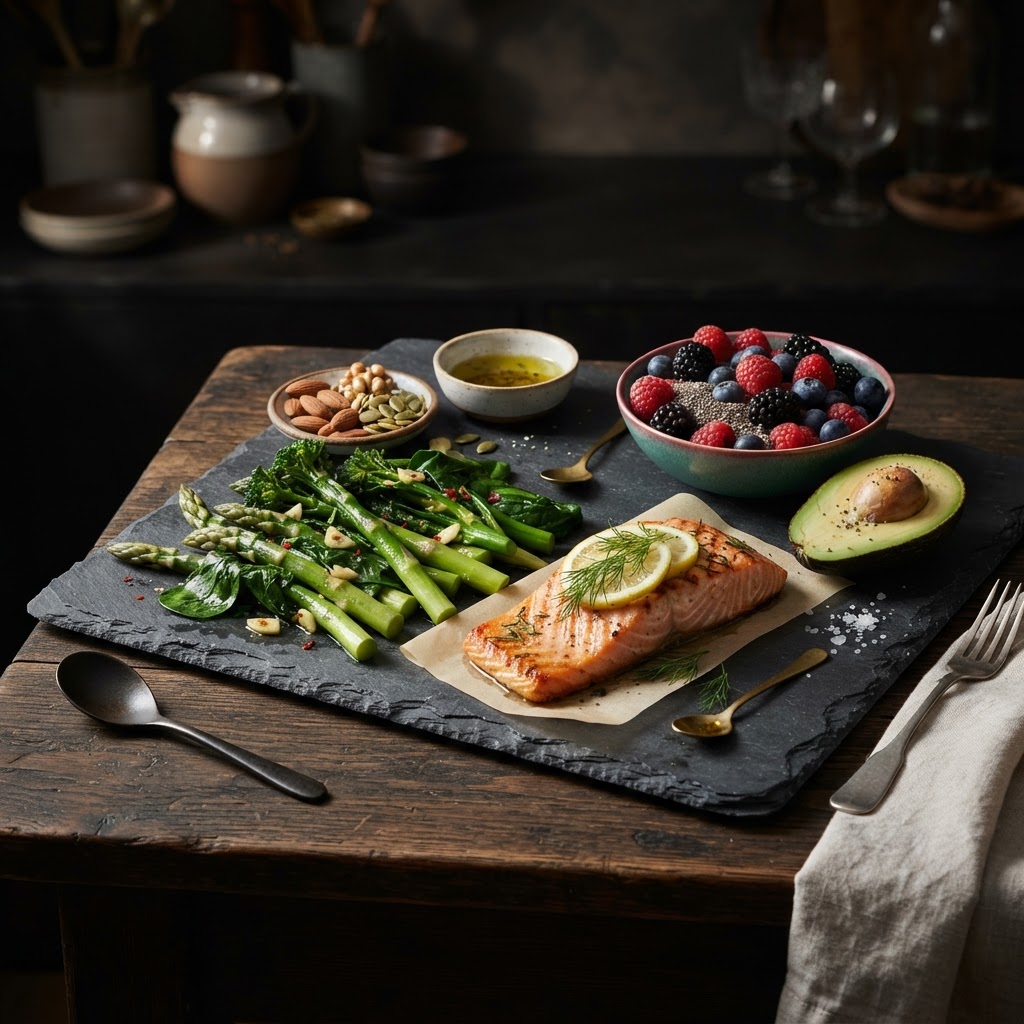
You were losing weight steadily on Ozempic — and then the scale stopped moving. This is one of the most frustrating experiences for anyone on a GLP-1 medication, but it is also completely normal. The good news: most plateaus break with the right dietary adjustments.
Before you assume the medication has stopped working, look at what is on your plate. Here is exactly why plateaus happen and what to eat to break through.
Disclaimer
Why Plateaus Happen on Ozempic
Weight loss plateaus on GLP-1 medications happen for several overlapping reasons:
- Metabolic adaptation: As you lose weight, your body requires fewer calories. The deficit that produced weight loss at 220 lb may not produce loss at 190 lb.
- Reduced appetite suppression over time: Some people notice appetite returns somewhat after several months, leading to gradual portion creep.
- Muscle loss: If protein intake is inadequate, you lose muscle along with fat. Less muscle means a slower resting metabolism.
- Calorie creep: "Healthy" foods — nuts, olive oil, avocado, smoothies — are calorie-dense. A handful of almonds is 170 calories. These add up fast.
- Reduced movement: As you lose weight, everyday movement may decrease (less body mass to carry), slightly lowering calorie burn.
A plateau is not a sign that the medication has stopped working. It means your body has reached a new equilibrium — and you need to shift it.
The Protein-First Strategy (Most Important)
If you change only one thing, make it this: increase your protein intake. Protein does three things that break plateaus:
- Preserves muscle — which keeps your metabolism higher. Losing muscle is one of the biggest plateau triggers.
- Increases the thermic effect of food — your body burns more calories digesting protein (20–30%) than carbs or fat (5–10%).
- Increases fullness — protein is the most satiating macronutrient, helping you eat less without feeling deprived.
Target: 0.8 to 1.0 grams of protein per pound of your target body weight daily. For most adults, that is 80–140g per day.
| Target Weight | Daily Protein | Example Sources |
|---|---|---|
| 140 lb | 110–140g | Chicken, Greek yogurt, eggs, protein shake |
| 160 lb | 130–160g | Salmon, cottage cheese, turkey, tofu |
| 180 lb | 145–180g | Lean beef, fish, eggs, whey protein |
| 200 lb | 160–200g | Add a second protein shake or larger portions |
Calories Without Obsession
You do not need to count every calorie forever, but if you have plateaued, honestly track everything you eat for 5–7 days. Most people are surprised by what they find:
- The "small" handful of nuts is 200+ calories
- The "healthy" smoothie is 400–600 calories
- The olive oil drizzle is 120 calories per tablespoon
- The second helping at dinner adds 300+ calories
Your target is a modest deficit of 300–500 calories below your maintenance level. Going too low (under 1,200 calories for most people) can backfire by slowing metabolism and causing muscle loss.
Don't go too low
Foods That Help Break Plateaus
High-protein, low-calorie foods (eat more)
- Chicken and turkey breast (25g protein, ~165 cal per 3 oz)
- White fish like cod, tilapia, tuna (20–25g protein, ~100 cal per 3 oz)
- Egg whites (3.5g protein, ~17 cal each)
- Plain nonfat Greek yogurt (15–20g protein, ~100 cal per cup)
- Cottage cheese (low-fat) — 12g protein, ~90 cal per half cup
- Tofu (firm) — 15g protein, ~140 cal per half cup
High-volume, low-calorie vegetables (fill up)
- Leafy greens, zucchini, cucumber, cauliflower, broccoli, asparagus, peppers
- These let you eat a large volume of food for very few calories — key when your appetite returns.
Foods that support metabolism
- Lean protein (thermic effect of food)
- Green tea and coffee (mild metabolism boost; check with your doctor re: caffeine)
- Spicy foods with capsaicin (modest, temporary effect)
- High-fiber foods that stabilize blood sugar (prevents cravings)
Foods That May Be Stalling You
| Food | Why It Stalls You | Better Choice |
|---|---|---|
| Granola | Calorie-dense, added sugar | Plain oats with berries |
| Smoothies with lots of fruit | 300–600 cal, easy to overconsume | Greek yogurt + 1/2 cup berries |
| Nuts (large portions) | 170+ cal per ounce | Measured 1 oz portion or skip |
| Protein bars | Often high-sugar, 200+ cal | Real food protein or plain shake |
| Dried fruit | Concentrated sugar, easy to overeat | Fresh fruit instead |
| Olive oil (free pouring) | 120 cal per tablespoon | Measure with a spoon |
| Cheese | Calorie-dense, easy to overeat | Measured 1 oz or cottage cheese |
| Alcohol | Empty calories, lowers inhibitions | Sparkling water with lime |
Meal Timing and Movement
Two non-food factors that help break plateaus:
Meal timing
- Consider a 12-hour overnight fast (e.g., 7am–7pm eating window) — this is gentle and sustainable
- Front-load calories earlier in the day when possible
- Avoid eating within 2–3 hours of bedtime
Movement (especially resistance training)
- Resistance training 2–3 times per week is the single most effective exercise for breaking plateaus — it preserves and builds muscle
- Add daily walking (aim for 7,000–10,000 steps)
- Even 10-minute walks after meals improve blood sugar and calorie burn
When to Talk to Your Doctor
If you have made the dietary changes above consistently for 6–8 weeks and the scale still has not moved, it is time to talk to your prescribing doctor. They can:
- Review whether your current dose is still appropriate
- Check for other factors (medications, thyroid, sleep, stress)
- Order labs to rule out underlying issues
- Determine if a dose adjustment or different medication makes sense
Never stop or change your dose on your own
The Bottom Line
An Ozempic plateau is normal, not a failure. The most effective way to break through: increase protein to 80–140g daily, honestly track your intake for a week, cut calorie-dense "healthy" foods, and add resistance training. If the plateau persists beyond 6–8 weeks despite consistent changes, talk to your doctor about whether a dose adjustment is right for you.
Get the free printable cheat sheet
Join thousands of readers getting weekly, evidence-based nutrition insights. No spam, unsubscribe anytime.
Quick Answers
Scan any food. Know your score instantly.
Get instant calories, macros, health score, and better alternatives — free.