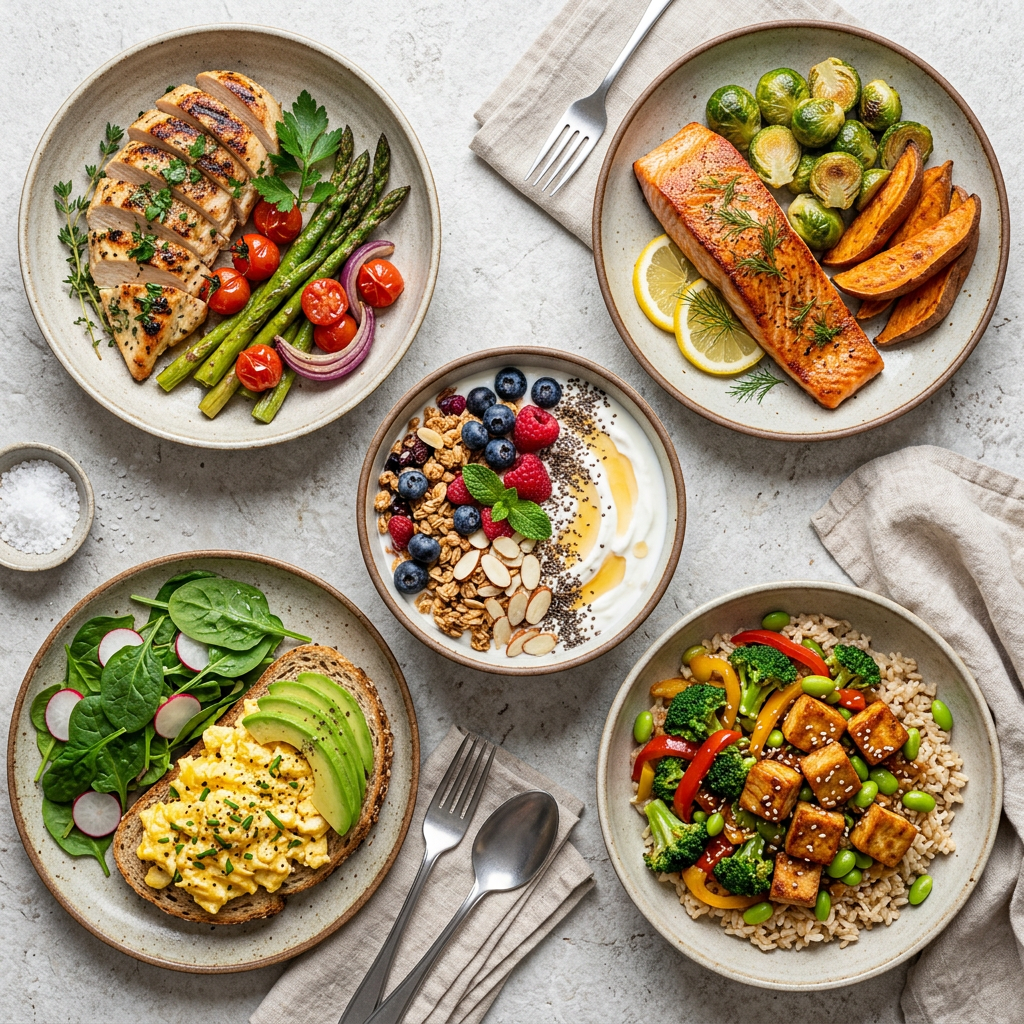
Mounjaro (tirzepatide) is currently the most effective weight loss medication available, producing average weight loss that exceeds other GLP-1 medications in clinical trials. But the medication is only half the equation — what you eat while taking it determines how much weight you lose, how you feel, and whether you keep the weight off.
This guide covers everything: how Mounjaro works, what to eat (and avoid), protein targets, managing side effects, and a sample day you can follow. The principles also apply to Zepbound (the same drug at a weight-loss dose).
Disclaimer
How Mounjaro Works
Mounjaro contains tirzepatide, which is unique because it activates two hormone receptors: GLP-1 (glucagon-like peptide-1) and GIP (glucose-dependent insulinotropic polypeptide). Ozempic and Wegovy only target GLP-1.
This dual action means Mounjaro:
- Slows gastric emptying (you feel full longer)
- Reduces appetite and food cravings
- Improves blood sugar control
- Produces greater average weight loss than GLP-1-only medications in trials
Because it slows digestion so effectively, your food choices matter more than ever — the wrong foods sit in your stomach longer and cause more discomfort.
What to Expect in the First Weeks
When you start Mounjaro (and each time your dose increases), you may experience:
- Nausea, especially in the first 2–3 days after injection
- Reduced appetite — sometimes dramatic
- Feeling full very quickly when eating
- Constipation or, less commonly, diarrhea
- Acid reflux or burping
- Fatigue as your body adjusts
These usually improve within 1–2 weeks at each dose. Eating the right foods makes a major difference in how tolerable this period is.
Your Protein Target (Critical)
This is the single most important dietary factor on Mounjaro. Rapid weight loss can include significant muscle loss, and GLP-1 medications reduce your appetite so much that many people under-eat protein without realizing it.
Aim for 0.8 to 1.0 grams of protein per pound of your target body weight per day. For most adults, that is roughly 80 to 140 grams daily.
| Body Weight (target) | Daily Protein Target |
|---|---|
| 140 lb | 110–140g |
| 160 lb | 130–160g |
| 180 lb | 145–180g |
| 200 lb | 160–200g |
| 220 lb | 175–220g |
If you struggle to eat enough protein due to reduced appetite, a daily protein shake (whey or plant-based) is an easy way to add 25–30g without feeling stuffed.
Best Foods by Category
Lean proteins (eat at every meal)
- Chicken and turkey breast — about 25g protein per 3 oz
- Fish (salmon, tuna, cod, tilapia) — 20–25g per 3 oz, plus omega-3s
- Eggs — 6g each, easy to digest
- Greek yogurt (plain, nonfat or low-fat) — 15–20g per cup
- Cottage cheese — about 12g per half cup
- Tofu and tempeh — 15–20g per serving
- Lean beef (sirloin, flank) — 25g per 3 oz, in moderation
Non-starchy vegetables (fill half your plate)
- Leafy greens, broccoli, cauliflower, zucchini, peppers, asparagus, green beans, mushrooms, tomatoes, cucumber
- These provide fiber, vitamins, and volume with very few calories — perfect when you can only eat small portions.
Fruits (1–2 servings daily)
- Berries (highest fiber, lowest sugar), apples, pears, citrus, kiwi
- Limit very sweet fruits like bananas, grapes, and dried fruits if you have blood sugar concerns.
Whole grains (moderate portions)
- Oats, quinoa, brown rice, whole-grain bread — 1/2 cup cooked or 1 slice per meal max
- Choose these over white bread, white rice, and refined cereals.
Healthy fats (small amounts)
- Avocado, olive oil, nuts, seeds, fatty fish
- Fats are calorie-dense — keep portions small, especially if weight loss has slowed.
Foods to Limit or Avoid
| Food | Why to Limit |
|---|---|
| Fried foods | High fat slows digestion, worsens nausea |
| Ultra-processed foods | Low nutrients, high calories, worsen side effects |
| Sugary drinks & desserts | Empty calories, blood sugar spikes |
| Large portions of cheese | High fat, constipating for some |
| Alcohol | Worsens nausea, lowers blood sugar, adds calories |
| Very spicy foods | Can trigger acid reflux on GLP-1 meds |
| Carbonated drinks | Can worsen bloating and fullness |
Managing Side Effects with Food
For nausea
- Eat small, frequent meals instead of 3 large ones
- Choose bland foods: toast, rice, crackers, broth, plain chicken
- Cold foods often help (less smell than hot food)
- Try ginger tea or ginger candies
- Avoid strong-smelling, greasy, or very sweet foods
For acid reflux
- Don't lie down for 2–3 hours after eating
- Avoid citrus, tomatoes, spicy food, chocolate, and mint
- Eat smaller portions — a full stomach worsens reflux
For constipation
- Increase fiber gradually to 25–35g daily
- Drink 8+ glasses of water daily
- Include pears, berries, chia seeds, and leafy greens
Sample Day Meal Plan
A day that hits roughly 120g protein, 30g fiber, and plenty of vegetables:
| Meal | Food | Protein |
|---|---|---|
| Breakfast | Greek yogurt with berries and 1 tbsp chia seeds | 20g |
| Snack | 2 hard-boiled eggs | 12g |
| Lunch | Grilled chicken salad with mixed greens, avocado, olive oil | 35g |
| Snack | Protein shake (1 scoop) or cottage cheese | 25g |
| Dinner | Baked salmon with roasted broccoli and quinoa (1/2 cup) | 30g |
| Total | ~122g protein |
The Bottom Line
Mounjaro is a powerful tool, but it works best when paired with the right food. Prioritize lean protein at every meal, fill half your plate with vegetables, choose whole grains in moderation, and avoid ultra-processed and fried foods. Stay hydrated, eat smaller meals, and talk to your doctor if side effects are severe or persistent.
Get the free printable cheat sheet
Join thousands of readers getting weekly, evidence-based nutrition insights. No spam, unsubscribe anytime.
Quick Answers
Scan any food. Know your score instantly.
Get instant calories, macros, health score, and better alternatives — free.