 FoodIdentifier
Is Sourdough Bread Healthy? What Fermentation Actually Changes
Every bakery shelf has gone tangy. Some of that promise is real — fermentation genuinely changes bread. Some of it is marketing wearing a starter's clothes. Here is the honest version.
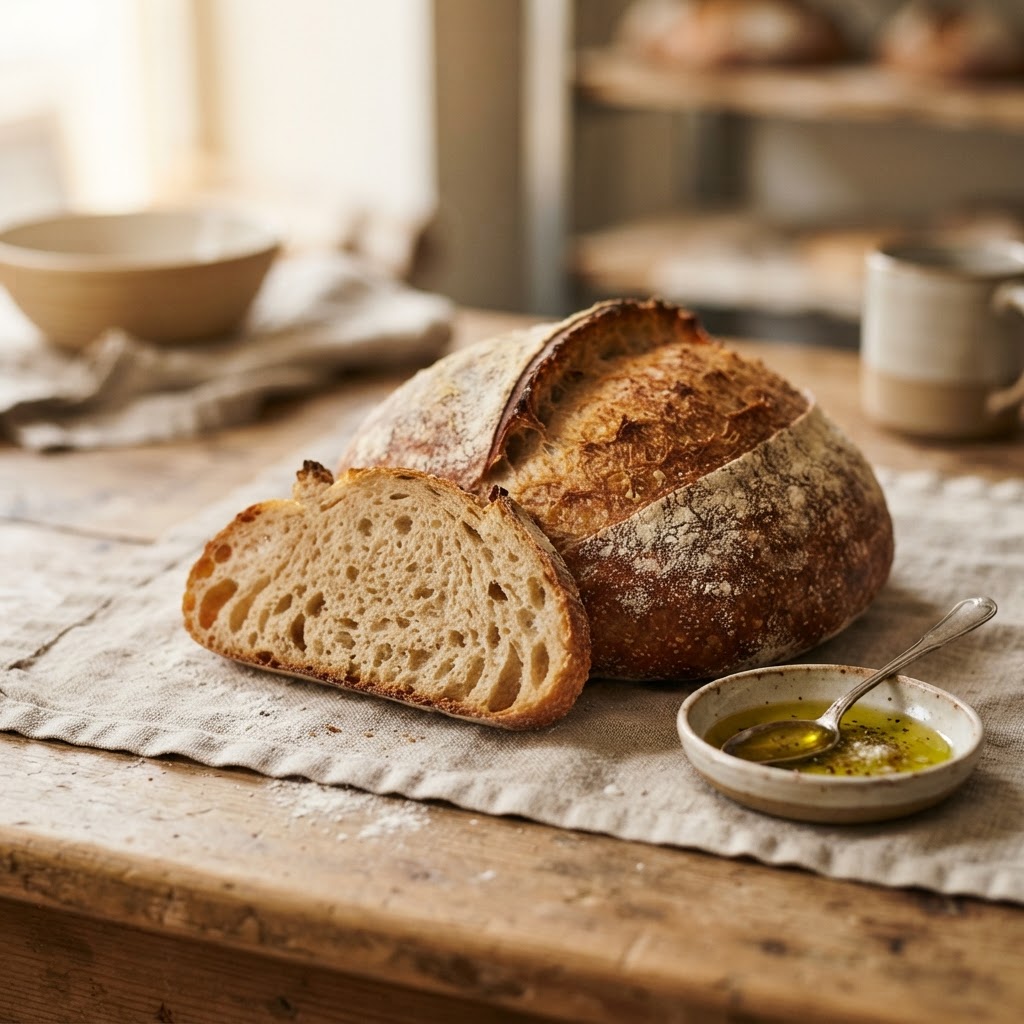
Scan the loaf — and the whole meal — free at FoodIdentifier.com and see the full nutrition picture in seconds.
Every bakery shelf in America seems to have gone tangy. Sourdough is in the sandwich bread, the bagels, the English muffins, even the frozen pizza crust — usually with a higher price and a quiet promise that this bread is somehow different from the bread we were told to feel guilty about.
Some of that promise is real. Fermentation genuinely changes bread. Some of it is marketing wearing a starter's clothes — because in the United States, the word "sourdough" on a package does not, by itself, guarantee the loaf was slowly fermented at all.
So here is the honest version: what sourdough is, what the numbers look like, where it honestly beats regular bread, where it does not, and how to tell a real loaf from a flavored one before you pay bakery prices for it.
Scan the loaf — and the whole meal — free at foodidentifier.com and see the full nutrition picture in seconds. No app, no sign-up, no card.
Scan Your Meal Free →Scan a Label Instead →The short answer: is sourdough bread healthy?
⚡ The Short Answer
Real sourdough — flour, water, salt and a live starter, slowly fermented — is a modest upgrade on regular white bread: similar calories, but typically a gentler blood-sugar rise, somewhat easier digestion, and better mineral availability. Whole-grain sourdough goes further. It is still bread, though: portion and what you put on it matter more than the tang.
What sourdough actually is
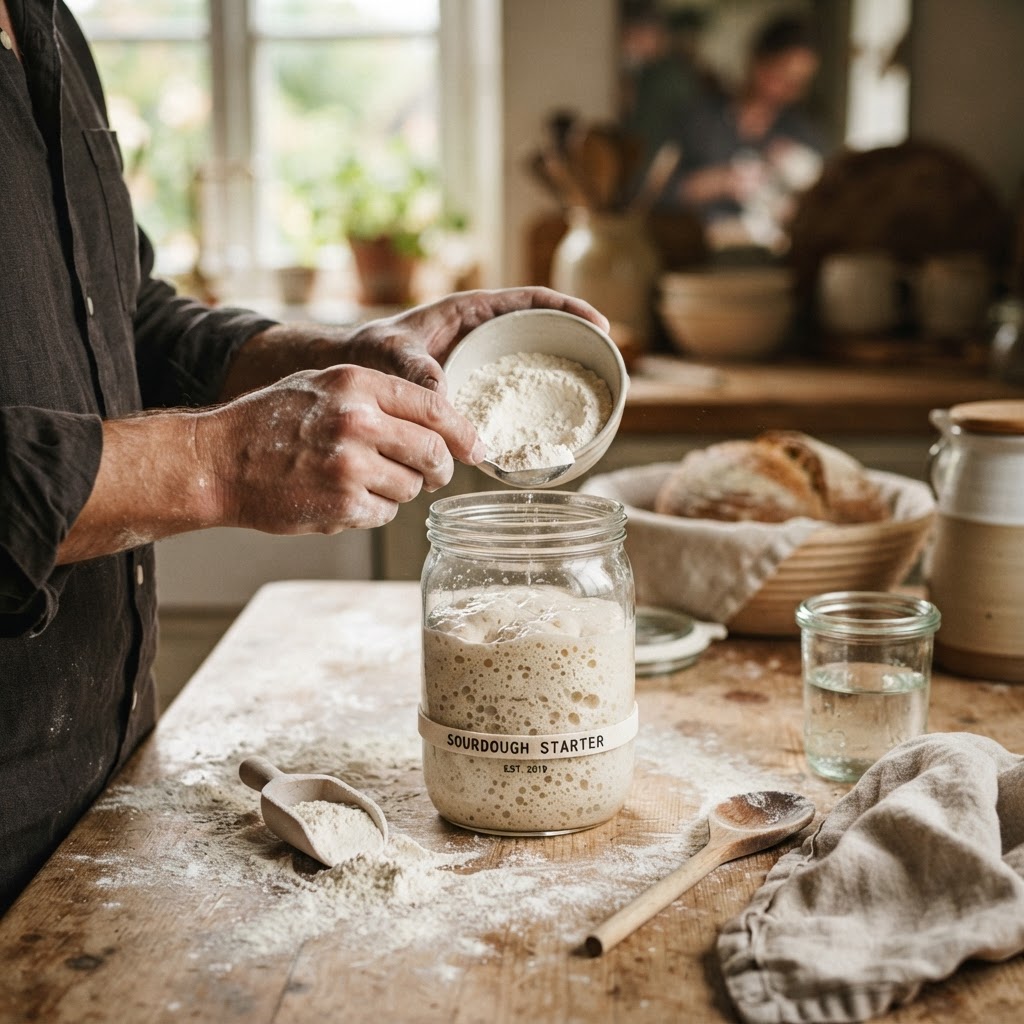
Ordinary bread is raised quickly with commercial yeast. Sourdough is raised by a starter — a living culture of wild yeasts and lactic-acid bacteria kept alive with regular feedings of flour and water. Given time, often many hours, those bacteria produce lactic and acetic acids. That is where the tang comes from, and it is also where most of the real differences come from.
Time is the ingredient that matters. A long, slow ferment gives the bacteria hours to work on the dough. A loaf flavored with a little vinegar or acid and raised in an hour with commercial yeast can taste sour without any of that work ever happening. Bakers call the second kind "sourfaux," and it is more common on supermarket shelves than most shoppers realize.
The nutrition numbers
Per one typical slice of white-flour sourdough (about 50–60 grams), using standard USDA-style reference values:
- ▶Calories: roughly 120–160, depending on slice thickness — bakery slices run large
- ▶Carbohydrates: about 25–32g
- ▶Protein: about 4–5g
- ▶Fiber: about 1–2g for white sourdough; 3g or more for whole-grain versions
- ▶Fat: under 1g
- ▶Sodium: often 250–350mg per slice — the quiet catch, as with most bread
Compare that with a similar slice of ordinary white bread and the headline is underwhelming: calories and carbs are close cousins. If sourdough wins, it does not win on the calorie line. Our white bread breakdown shows the other side of the comparison, and the calorie calculator lets you run your exact loaf and slice size.
That is worth saying plainly, because a lot of sourdough content online quietly implies it is a low-calorie food. It is not. It is a normal-calorie food with a few genuine advantages — which, for a food people actually love eating, is a perfectly good deal.
Advantage one: a gentler blood-sugar rise
This is the best-supported difference. The acids produced during fermentation change how the starch in bread behaves, and sourdough typically produces a slower, lower blood-sugar rise than a comparable white loaf eaten on its own. Researchers usually describe this with glycemic index values: white bread is commonly reported around the low 70s, while sourdough versions are often reported in the 50s. Treat those as ballparks, not promises — recipes, flour and portion all move the number.
What does that mean at your table? Mostly steadier energy and a slower return of hunger after a sandwich, especially when the bread is paired with protein, fat or fiber — which a sandwich usually is anyway. It does not mean sourdough is a free pass for blood sugar, and it is not a treatment for anything. If you manage diabetes or prediabetes, your own clinician's guidance and your own monitoring outrank anything in this article. This is general information, not medical advice — talk to your doctor.
Advantage two: easier work for your stomach
During a long ferment, the culture partially breaks down some of the starches and proteins in the flour before the bread is ever baked. Many people simply find real sourdough more comfortable to eat than fast-raised bread — less of that heavy, bloated feeling after a couple of slices.
Two honest limits. First, "easier for many people" is not "safe for everyone": sourdough made from wheat still contains gluten, and standard sourdough is not safe for people with celiac disease. Second, the live bacteria themselves do not survive the oven. Baked sourdough is not a probiotic food in the way yogurt or kefir is. What fermentation leaves behind — the acids, the partially broken-down starch, and compounds that can feed your existing gut bacteria — is the benefit. Anyone selling you live cultures in a baked loaf is selling you a story.
Advantage three: minerals you can actually absorb
Grains naturally contain phytic acid, a compound that binds minerals like iron, zinc and magnesium and makes them harder to absorb. Fermentation reduces some of that phytic acid, so the minerals already in the flour become somewhat more available to you. Whole-grain sourdough benefits most here, simply because whole grains start with more minerals to unlock.
This is a real but modest effect. It will not fix a deficiency, and it does not turn bread into a supplement. Think of it as sourdough wasting less of what the grain brought with it.
Scan your full plate free at foodidentifier.com — calories, fiber, sodium and protein, before you eat, not after.
Scan Your Plate Free →Where sourdough does not win
A clear-eyed list, because this is where most articles go soft:
- ▶Fiber, in the white version. White sourdough has roughly the fiber of white bread — about 1–2g a slice. A plain whole-wheat loaf with 3–4g a slice beats it on fiber alone.
- ▶Calories. As above: essentially a tie with regular bread. A thick bakery slice can quietly be two supermarket slices.
- ▶Sodium. Bakery and packaged sourdoughs can be salty. Two slices can carry a meaningful share of a day's sensible budget before any filling goes on.
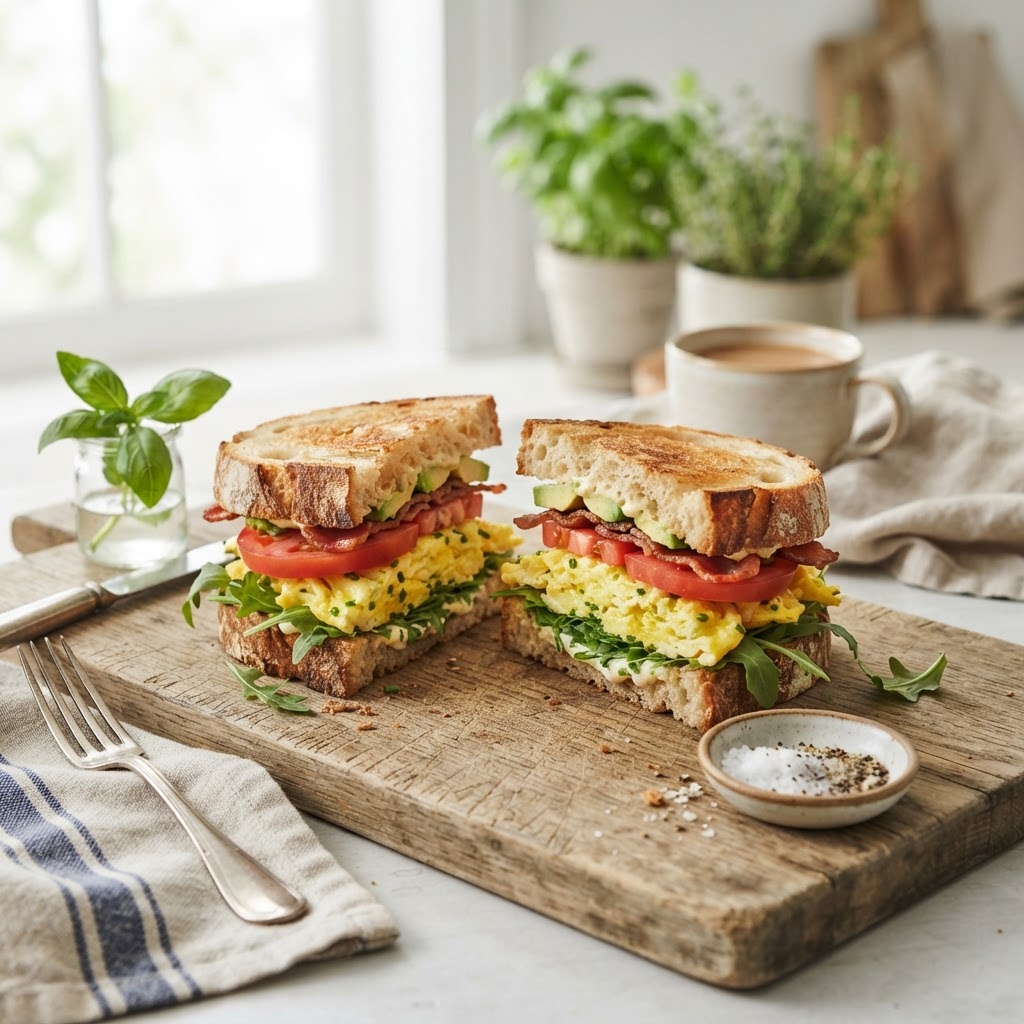
- ▶The health halo at the café. A sourdough grilled cheese is still a grilled cheese. Fermentation does not cancel butter and cheese; it just makes the bread part a little better.
How to buy a real loaf (and dodge the sourfaux)
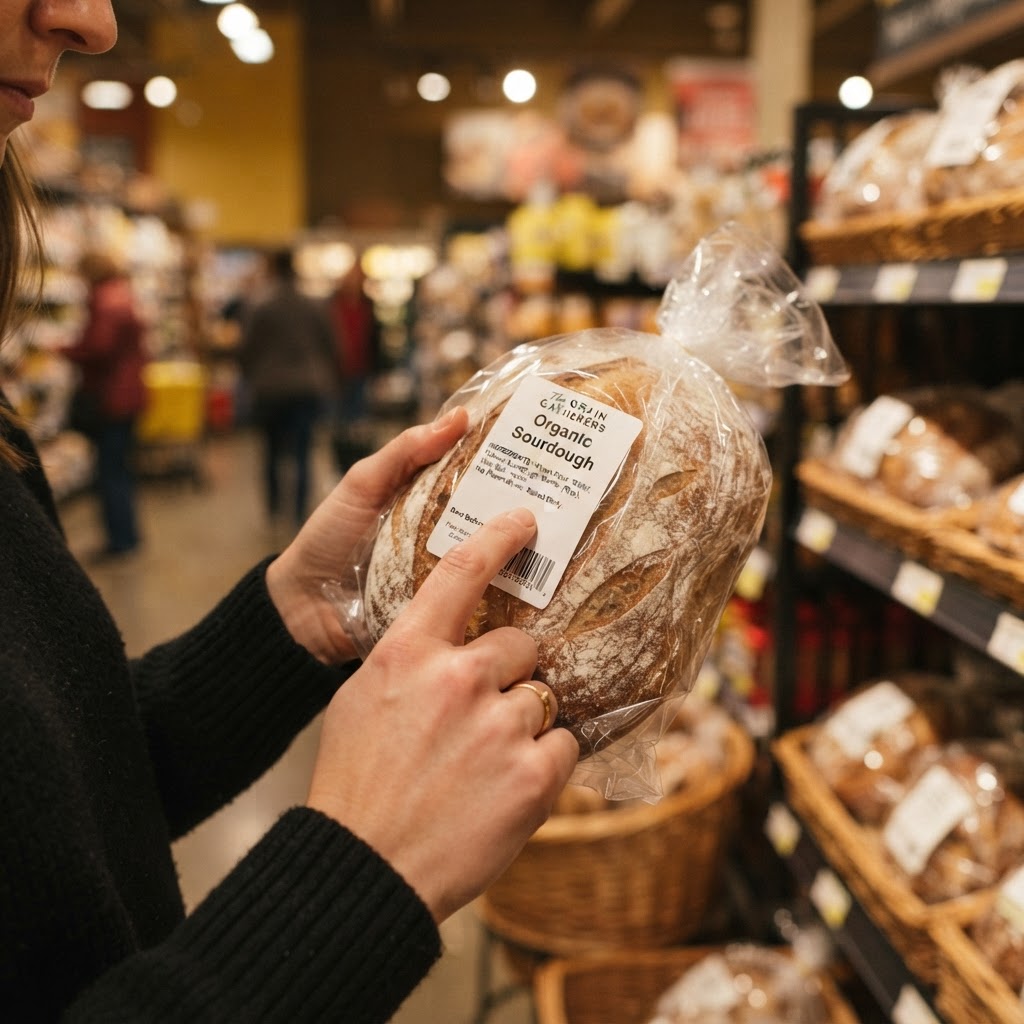
Since the name alone guarantees nothing in the US, read the loaf like a label detective:
- ▶1. Check the ingredient list. A real sourdough needs little: flour, water, salt, and starter or culture. A long list with yeast as the leavener plus added acids or "sourdough flavor" is a flavored bread.
- ▶2. Look for the word "starter" or "culture." Its presence is a good sign; its absence, on a loaf calling itself sourdough, is a tell.
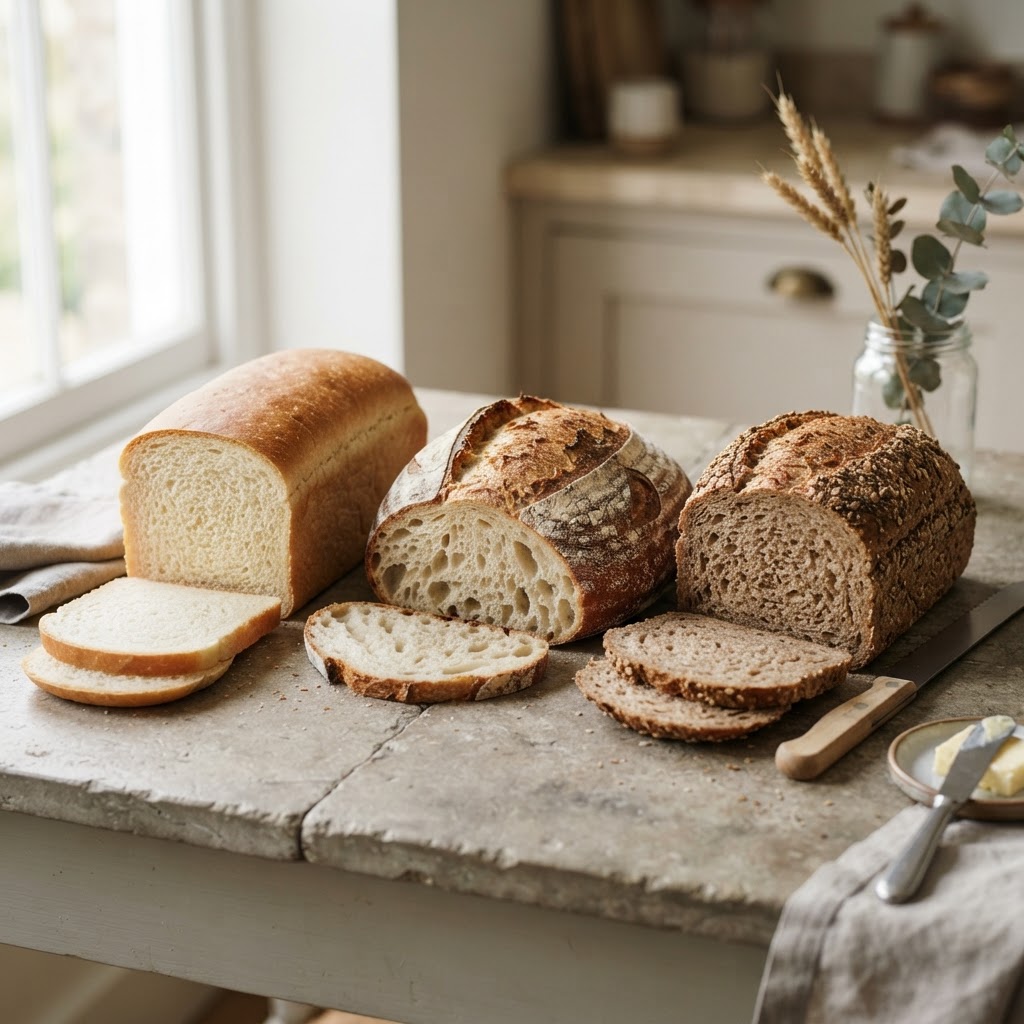
- ▶3. Choose whole-grain when you can. Whole-wheat or rye sourdough keeps the fermentation benefits and fixes the fiber gap — the best of both loaves.
- ▶4. Weigh the slice. Bakery slices are generous. If the loaf matters to your calorie budget, one thick slice, open-faced, often beats two thin ones for satisfaction.
- ▶5. Store it like a baker. Cut side down on the board or in a bread bag at room temperature for a few days; freeze slices for longer. The fridge dries bread out faster.
The practical verdict
- ▶Best choice: whole-grain, genuinely fermented sourdough — gentler on blood sugar, easier to digest for many people, and with fiber that matters.
- ▶Good choice: real white sourdough over regular white bread, for the blood-sugar and digestion edges, at the same calories.
- ▶Just bread: sour-flavored loaves with no real ferment. Enjoy them for taste, not for benefits that were never baked in.
- ▶Always true: what goes on the bread — eggs, beans, vegetables, cheese, spreads — decides the meal more than the loaf does.
Sourdough earned most of its reputation. Just make sure the loaf in your basket did the slow work the reputation was built on.
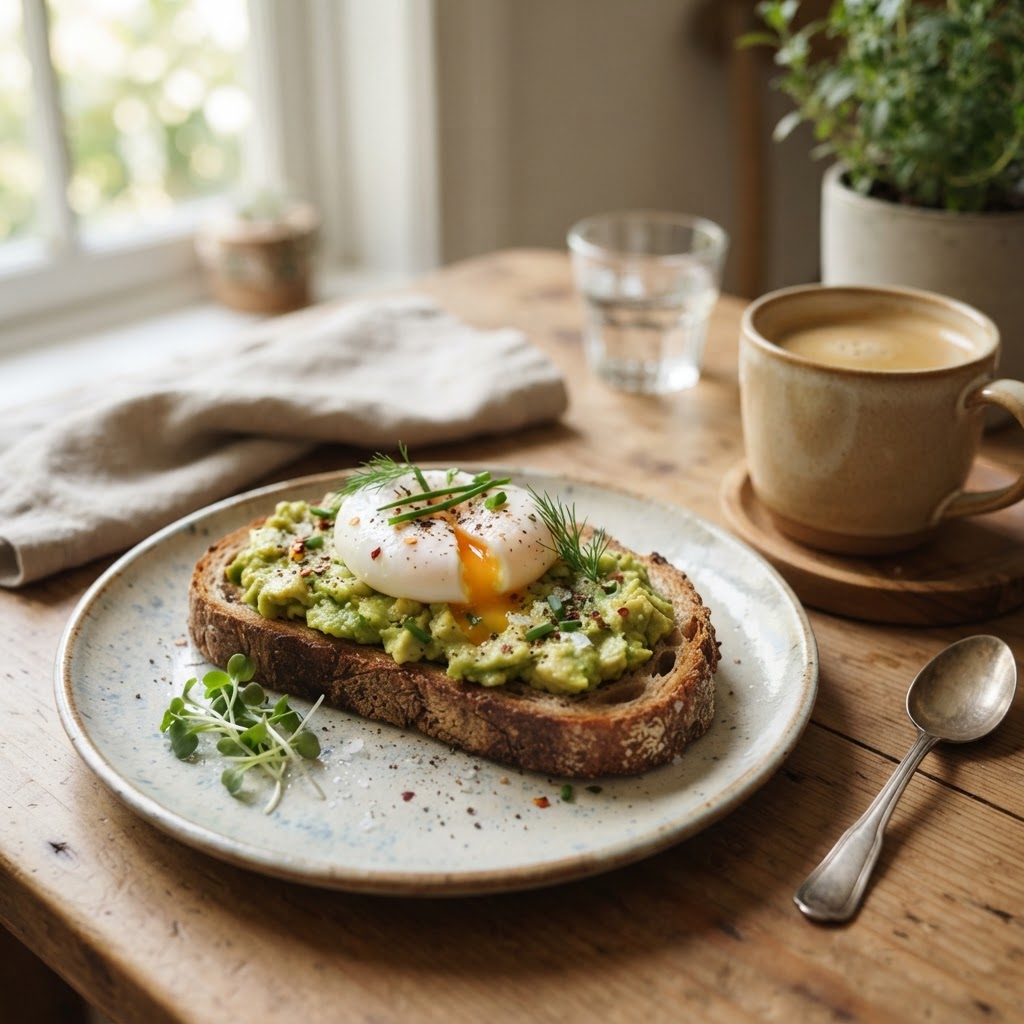
Scan it free at foodidentifier.com and see the numbers — loaf, topping and all.
No app, no account, no card.
👉 Scan Free at FoodIdentifier.com →Scan a Photo Instead →Frequently asked questions
⚠️ Medical Disclaimer
This is not medical advice — talk to your doctor about any health condition, blood-sugar management, or gluten-related concern.
📚 Related Tools & Guides
Related Searches