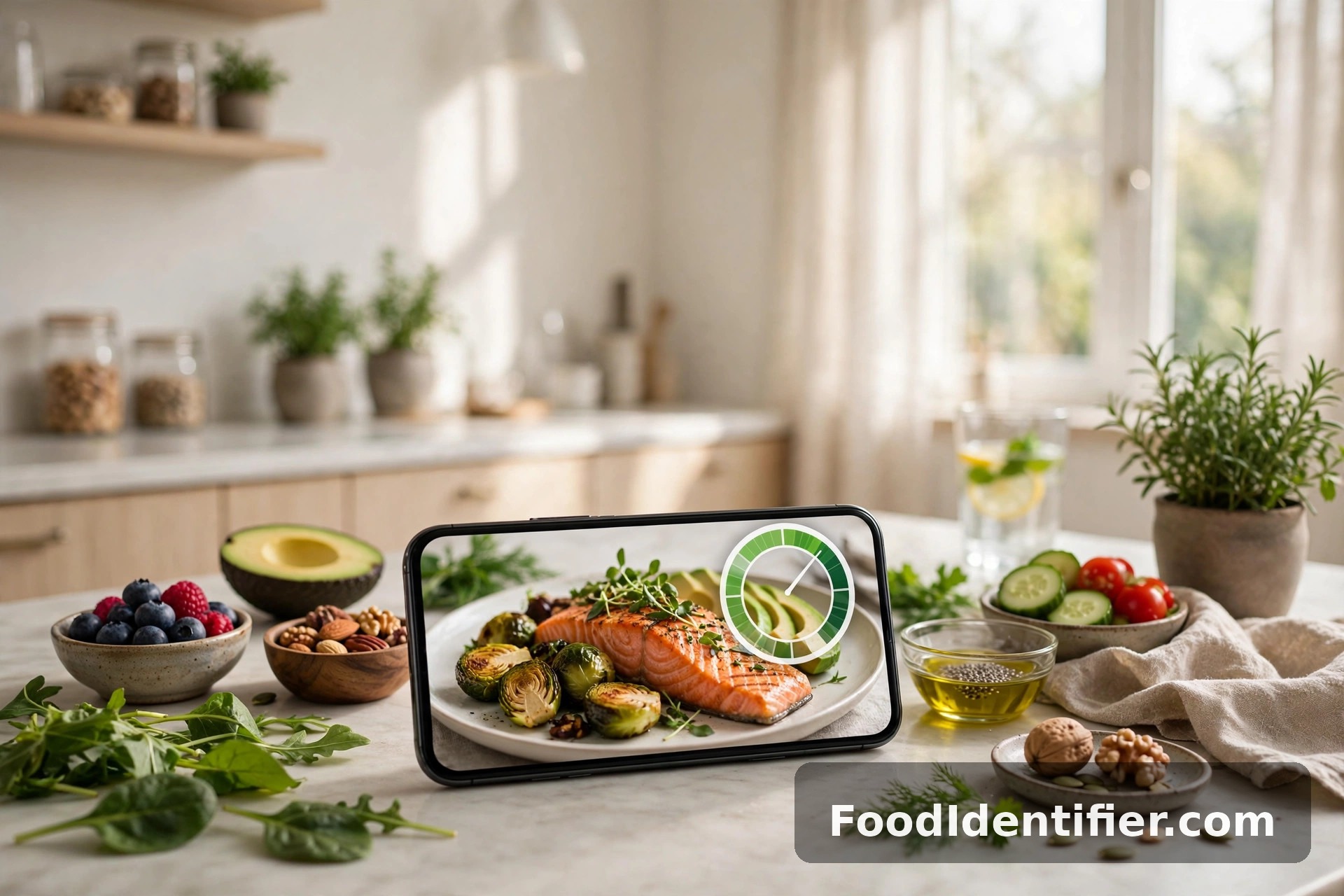
Spike Score: See Your Blood-Sugar Impact Before You Eat
This is not medical advice — talk to your doctor.
The short answer: A blood sugar spike score rates a meal from 1 to 100 based on how much it is likely to raise your blood sugar. Low scores mean steadier energy; high scores flag meals that may leave you hungry again soon. Photograph your plate before eating and get your score in seconds at foodidentifier.com.
Photograph your next meal and see its spike score before the first bite — free at foodidentifier.com. No app, no sign-up.
Scan FreeWhat your 1–100 spike score actually means
Every meal you eat nudges your blood sugar up. That's normal — it's how your body gets energy. The spike score just tells you how big that nudge is likely to be, on a simple 1-to-100 scale.
Under 40 means the meal will probably raise your blood sugar gently and keep it steady. You'll feel satisfied, and that satisfaction lasts. A score between 40 and 70 is the middle zone — fine sometimes, worth watching if it happens at every meal. Anything above 70 is a likely rollercoaster: a fast climb, then a drop that sends you hunting for snacks.
Here's the surprise: the score isn't about "good" or "bad" foods — it's about the whole plate. White rice alone scores high; next to salmon and broccoli it scores much lower. That's why photographing the full plate beats looking up single ingredients.
Photograph it BEFORE you eat (timing is everything)
The spike score only helps if you see it before the first bite. After you've eaten, the information is interesting but useless — you can't un-eat the meal.
So the habit is simple: plate your food, take the photo, glance at the score. It takes about five seconds. If the score comes back high and you have a minute, you can still make a change — add a handful of nuts, eat the protein and vegetables first, or swap the sugary drink for water. Small moves, same meal, lower score.
After a week, most people start predicting the score before the scan finishes — "this one's high, it's all white bread." That instinct is the real prize: the score trains your eye until you barely need it.
The 3 spike drivers it flags
Every scan lists the top drivers pushing your score up. They almost always come from the same three places:
1. Refined carbs with nothing to slow them down
White bread, white rice, regular pasta, pastries, fries. On their own, these break down fast and hit your bloodstream quickly. The scan doesn't tell you to fear them — it tells you when they're flying solo, because that's when they spike hardest. Pair them with protein, fat, or fiber and the same carbs behave much better.
2. Sugary sauces and drinks
This is the sneaky one. The meal itself can look reasonable — grilled chicken, rice, vegetables — and then the teriyaki glaze or the sweet chili sauce quietly doubles the sugar load. Drinks are worse: a regular soda or a sweetened iced tea can carry more sugar than dessert. The scan calls these out by name so you see exactly where the sugar is hiding.
3. Low fiber, low protein
Fiber and protein are your shock absorbers. They slow everything down, which flattens the curve. A meal with almost no fiber and a token amount of protein has nothing standing between the carbs and your bloodstream. If your score is high and you don't see an obvious culprit, this is usually why — the plate is just missing its anchors.
3 lower-spike swaps that actually work
You don't need a new diet. You need three moves you can use anywhere:
Eat in order: protein and vegetables first, carbs last. Starting with the chicken and broccoli before touching the rice changes how your body handles the same plate. Same food, lower spike, steadier afternoon. This one habit alone moves a lot of scores from the 60s into the 40s.
Swap the drink, keep the meal. If you drink soda or sweetened iced tea with lunch, switching to water or unsweetened iced tea is often the single biggest score drop available — sometimes 20 points or more. Nothing on your plate has to change.
Add instead of removing. Throw a handful of nuts on the salad. Add an egg to the ramen. Put Greek yogurt next to the toast. Adding protein, fat, or fiber drags the whole meal's score down, and you didn't have to give anything up.
Two swaps in and curious what your lunch scores? Scan it free at foodidentifier.com — five seconds, no account.
Scan FreeWhy a spike makes you hungry again 2 hours later
Here's the mechanism, plainly: when your blood sugar climbs fast, your body releases a matching surge of insulin to bring it back down. Sometimes it overcorrects, and your blood sugar dips a little below where it started. That dip is what you feel as sudden hunger — the shaky, irritable, "I need something now" kind — even though you ate a full meal two hours ago.
It's not weak willpower. It's chemistry. And it's why the same calories can feel completely different: 600 calories of steady-release food keeps you full for hours, while 600 calories of spike-and-crash food has you raiding the pantry by mid-afternoon. The spike score is just an early warning system for that crash, delivered before you eat instead of after.
What the spike score is NOT
Let's be clear about the limits, because honesty matters here.
The spike score is an informational estimate, not a medical measurement. It is not a glucose meter, it doesn't read your blood, and it can't diagnose or manage diabetes or any other condition. Two people can eat the same meal and respond differently — the score describes the meal, not your body.
If you have diabetes, prediabetes, or any condition where blood sugar matters medically, this tool doesn't replace your meter, your continuous monitor, or your doctor's guidance. Use it as a general awareness aid, and talk to your doctor about any changes to how you eat.
FAQ
How is the spike score calculated?
Is a high spike score dangerous?
Can the score help with weight loss?
Do I need to scan every meal?
Why does the same food score differently on different plates?
Is this medical advice?
See your next meal's score before you eat it. One photo, five seconds, free at foodidentifier.com — no app, no account, no card.
Scan FreeThis is not medical advice — talk to your doctor.