Barcode Scanner: Point at Any Label, Get the Plain-English Verdict
This is not medical advice — talk to your doctor.
The short answer: Point your phone camera at any food barcode and the scanner reads the label, then gives you a plain-English verdict — a 1–100 health score, the top 3 watch-outs, and two better alternatives on the same shelf. No barcode? Photograph the label and the text reader handles it. Free at foodidentifier.com.
In the grocery aisle right now? Scan a barcode free at foodidentifier.com — verdict in seconds, no app.
Scan FreeHow the scan works
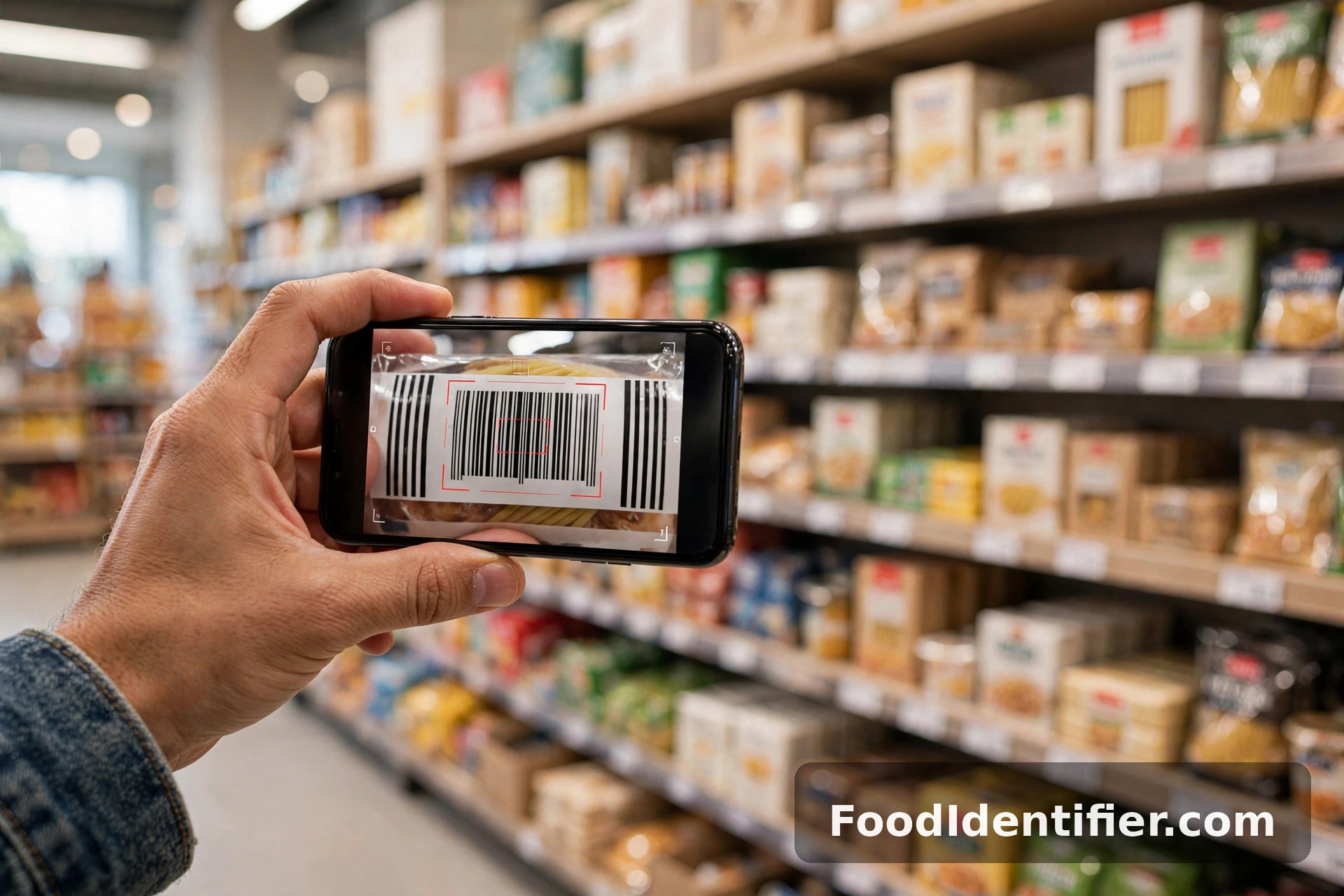
Hold your phone up to the barcode on the package — the striped square near the nutrition label. The camera reads it in a second or two, pulls the product's nutrition data, and builds your verdict card.
No barcode, or it won't scan? Flip the package over and photograph the nutrition label itself. The text reader pulls the numbers straight off the label — calories, macros, sugar, sodium, ingredients — and builds the same verdict. Crinkled packaging, weird angles, dim store lighting: it handles the real world, not just perfect conditions.
Either way, you get an answer while you're still standing in the aisle, holding the product, able to put it back.
The verdict card, explained
Every scan ends in the same simple card. Three parts, no jargon:
Health score: 1–100. One number summarizing the product — higher is better. It's a quick-sort tool: an 82 and a 34 on the same shelf make the decision obvious. The score weighs protein, fiber, added sugar, sodium, and how processed the product is. It's a guide for comparing products, not a medical grade.
Top 3 watch-outs. The three things most worth knowing about this specific product, in plain words. Not a wall of numbers — just "high added sugar," "very salty for the serving size," "contains several ultra-processed ingredients," that kind of directness.
Two better alternatives. For most products, the scanner suggests two similar items on the same shelf that score better — same category, same craving, better numbers. Swap, don't suffer.
The 3 watch-outs you'll see most
Across thousands of packaged foods, the same three flags come up again and again:
Added sugar. The big one. Yogurts, granola bars, cereals, sauces, and drinks routinely carry more added sugar than people expect — a "healthy" granola bar can match a candy bar. The scan shows the grams plainly, so the marketing on the front can't hide the label on the back.
Sodium. Soups, frozen meals, deli meats, and breads are the usual suspects. A single can of soup can carry most of a day's worth. The scan flags when sodium is high for the serving size — and it always shows you the serving size, because that's where the trick lives.
Ultra-processed flags. Long ingredient lists full of things you'd never cook with at home — syrups, modified starches, artificial colors, flavor enhancers. The scan notes how processed a product looks based on its ingredient list, so "made with real fruit" gets checked against what's actually inside.
The 60-second label test (when you don't want to scan)
Sometimes you just want to read the label yourself. Here's the 60-second version:
Protein per 100 calories. Flip to the nutrition panel. Divide protein grams by calories, multiply by 100. Around 8–10g protein per 100 calories is solid (Greek yogurt territory). Under 3g per 100 calories is mostly energy with little staying power (most chips and cookies live here).
Added sugar line. Look for "added sugars" specifically — not total sugars, which includes natural ones from fruit and milk. If added sugar is one of the biggest numbers on the panel relative to serving size, that's your answer.
Ingredient list length. Glance at the ingredients. A short list of recognizable foods is a good sign. A paragraph of syrups, starches, and chemicals is the product telling on itself. You don't need to memorize additive names — length and familiarity tell the story.
That's it. Sixty seconds, three checks, and you know more about the product than the front of the package wants you to.
Holding something right now? Scan its barcode free at foodidentifier.com — no app, no account.
Scan FreeWhy "healthy-looking" packaging lies
The front of the package is advertising. "Natural," "wholesome," "made with whole grains," "no artificial anything" — these words are unregulated vibes, not nutrition facts. A cookie can say "made with real oats" while being mostly sugar and oil.
The back of the package is the truth, but it's written in 6-point font in the language of food science. The scanner's whole job is translating: front-of-package promises checked against back-of-package reality, delivered as a verdict you can act on in the aisle.
You'll develop the instinct fast. After a few dozen scans, you'll start predicting verdicts — "this one's going to flag sugar" — before the camera finishes. That's the point: the scanner trains you until you barely need it.
FAQ
Does it work on every product?
What if the barcode won't scan?
Is the health score a medical rating?
Does it store my scans?
Can it compare two products side by side?
Do I need to download an app?
Stop trusting the front of the package. Scan any barcode free at foodidentifier.com — no app, no account, no card.
Scan FreeRelated tools
This is not medical advice — talk to your doctor.