 FoodIdentifier
Foods High in Creatine: What a Normal Plate Actually Gives You
Creatine used to be a locker-room word. Now it is in gummies, coffee add-ins and grandparent videos — and it was in your food all along. Here is the food-first answer, numbers kept honest.
Scan any plate free at FoodIdentifier.com and see the protein, calories and full breakdown in one photo.
Creatine used to be a word you only heard in locker rooms. Now it is in gummies, in coffee-shop add-ins, in videos aimed at grandparents — and, quietly, it was in your food all along. Your body makes some of its own, and the rest of your supply comes from what you eat, almost entirely from animal foods.
That raises a fair, practical question that the supplement tubs never answer: how much creatine do you actually get from food, which foods carry the most, and can a normal plate ever add up to the amounts people talk about? Here is the food-first answer, with the numbers kept honest — including the part where food alone, for most people chasing a specific target, does not quite get there.
Scan any meal free at foodidentifier.com and check the protein first — creatine rides along with protein-rich plates.
Scan Your Meal Free →Check Your Protein Target →The short answer: which foods are high in creatine?
⚡ The Short Answer
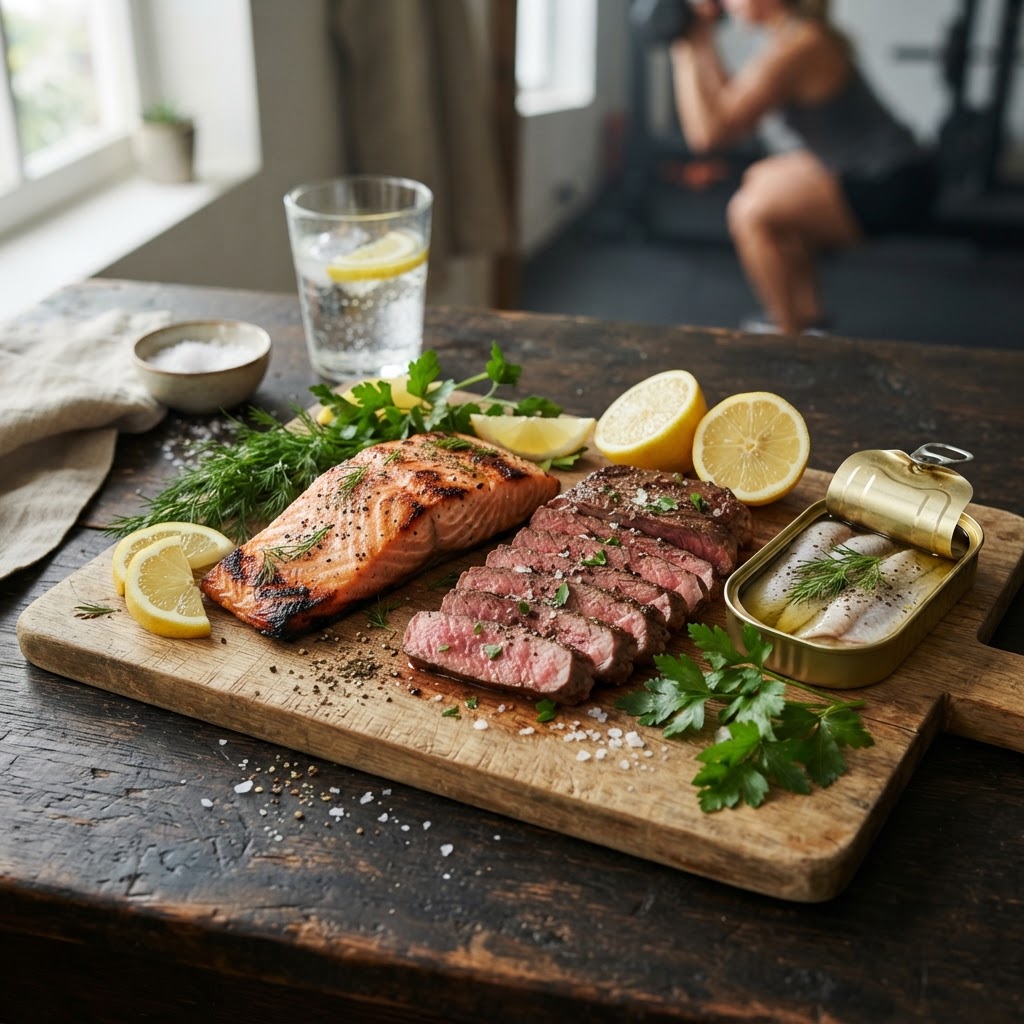
Creatine lives almost entirely in animal muscle, so meat and fish are the sources: herring is the richest common food, followed by beef, pork, salmon, tuna and chicken, at roughly half a gram to about a gram per typical serving. Milk and eggs carry only traces. Plant foods contain essentially none — your body makes creatine from amino acids instead.
What creatine is, in plain terms
Creatine is a compound your muscles store and spend during short, hard efforts — the first seconds of a sprint, a heavy lift, getting up off the floor with something in your arms. Your body produces roughly a gram a day on its own, in the liver and kidneys, built from amino acids you eat. Food from animals supplies most of the rest for people who eat meat and fish, because the creatine in an animal's muscles stays in the meat.
Two consequences follow from that biology. First, people who eat no animal foods run lower creatine stores by default — not dangerously, just measurably; their bodies still manufacture it. Second, heat matters a little: cooking meat loses some creatine into the juices and through heat itself, so the figures below, drawn from commonly reported reference ranges for raw weights, are best read as "about this much" rather than lab results for your dinner.
The list, ranked honestly
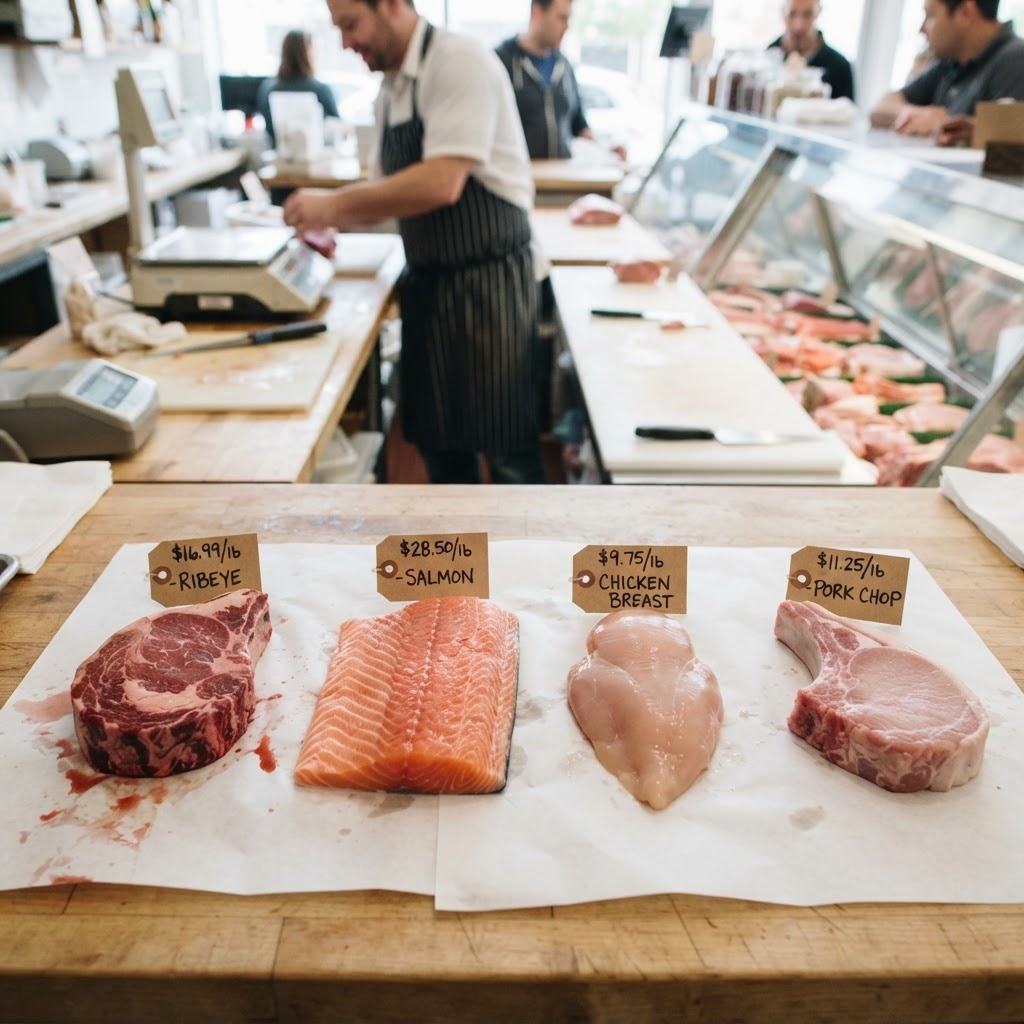
Per roughly 4 ounces (about 113 grams) of raw food, using commonly reported reference ranges. Treat every figure as a range, not a promise:
- ▶Herring: about 0.75–1.1g — the richest everyday source by a clear margin, and one almost nobody eats for this reason.
- ▶Beef: about 0.5g — steady, familiar, and usually the biggest contributor simply because people eat more of it.
- ▶Pork: about 0.55–0.6g — comparable to beef, cut for cut.
- ▶Salmon: about 0.5g — with the bonus of the fats fish is valued for.
- ▶Tuna: about 0.45g — canned tuna counts too, a little lower after processing.
- ▶Chicken: about 0.35–0.5g depending on the cut — thighs tend to edge out breast.
- ▶Cod and other white fish: about 0.3–0.35g — lean, mild, and easy to eat often.
- ▶Milk, eggs, cheese: traces only. They matter for the amino acids your body uses to make its own creatine, not as direct sources.
Notice the scale. A good mixed day — eggs at breakfast, a chicken lunch, salmon at dinner — might deliver somewhere around a gram to a gram and a half from food, on top of the gram or so your body makes. Research and sports-nutrition conversations often discuss supplemental intakes of 3–5 grams a day. To eat 3–5 grams of creatine from food alone, you would need well over a pound of meat or fish every single day — which brings calories, cost and saturated fat problems of its own. That gap is the honest center of this whole topic, and our creatine loading calculator can show you the arithmetic for your own body weight.
Why everyone is suddenly asking
Three currents pushed creatine out of the gym bag. First, the muscle-preservation conversation around weight loss — including GLP-1 medications — made "keep your muscle" a mainstream goal, and creatine is part of that discussion alongside protein and resistance training. Second, aging: muscle mass and strength decline with age, and older adults have become a real audience for anything that supports training. Third, simple familiarity — creatine is one of the most studied sports supplements in existence, so it feels less exotic than the newer powders.
None of that makes creatine magic, and this article is not a recommendation to take it. It explains the food side. Whether a supplement makes sense for you — especially with any kidney condition or medication in the picture — is a conversation for your doctor. This is general information, not medical advice.

The vegetarian and vegan reality
Plant foods contain essentially no creatine. Full stop — no seed, bean or leaf changes that. What plants (and dairy and eggs) do provide are the building blocks — the amino acids arginine, glycine and methionine — from which your body assembles its own supply. Pumpkin seeds, sesame, walnuts, almonds, beans and dairy all contribute those precursors.
So a plant-based eater is not "getting no creatine." They are running entirely on home production, which typically means somewhat lower muscle stores. Some plant-based athletes choose to supplement for exactly that reason; others do not and train perfectly well. Either way, the protein question matters more day to day: use the protein calculator to check your target, and our complete high-protein foods list for the plant-inclusive version of that list.
Whatever your plate looks like, scan your meals free at foodidentifier.com and see the day add up.
Scan Your Plate Free →How to build a creatine-friendly plate (without trying too hard)
You do not need a herring habit. A few ordinary habits move the number:
- ▶1. Eat fish twice a week. Salmon, tuna and other fish are among the better sources, and they bring plenty else with them. Herring — pickled, smoked, or in the Scandinavian style — is the overachiever if you like it.
- ▶2. Keep red meat in the rotation, in sane portions. A 4–6 ounce serving of beef or pork a few times a week contributes more creatine than any supplement-free trick.
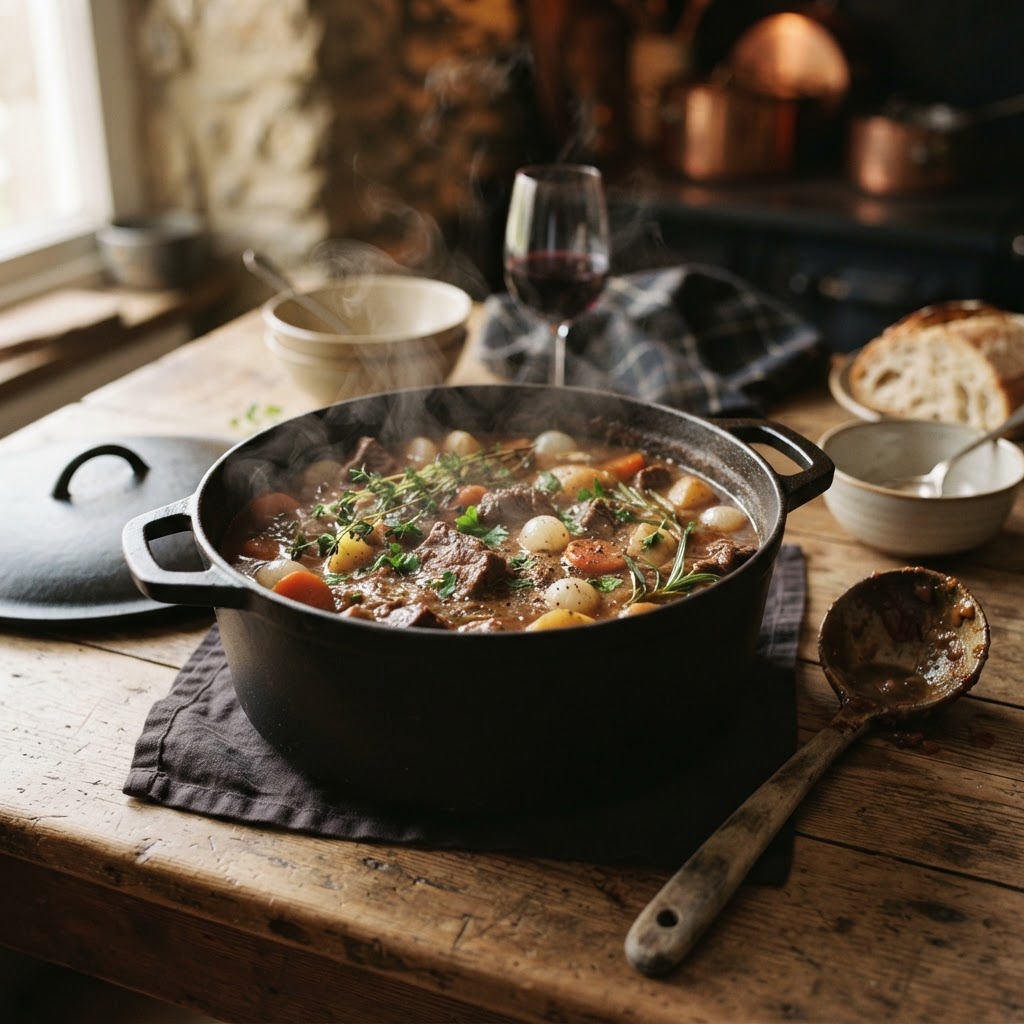
- ▶3. Use the cooking juices. Gravies, pan sauces and stews keep the creatine that grilling drips away. A stew is quietly one of the most efficient ways to eat meat.
- ▶4. Pair it with training. Creatine's whole job is in muscle. Food supports the work; it does not replace it. Even two short resistance sessions a week change what your muscles do with what you feed them.
- ▶5. Do not chase it at breakfast. Eggs and yogurt are wonderful protein foods with almost no creatine. Let breakfast be breakfast.
Food or supplement: the honest comparison
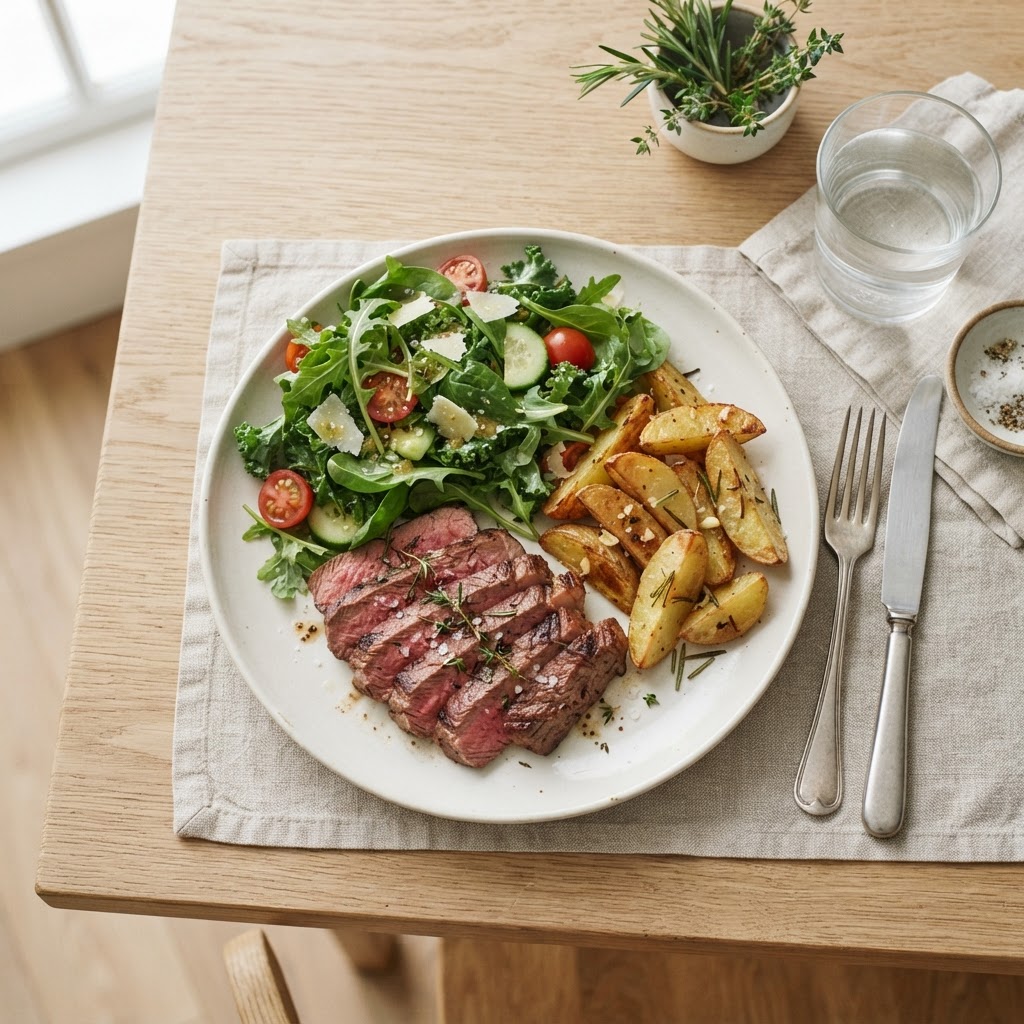
Food gives you creatine packaged with protein, iron, B12, zinc and everything else meat and fish carry — at roughly half a gram a serving. A supplement gives you a measured 3–5 grams with none of those nutrients and none of the calories. They are not really rivals; they answer different questions. If you eat meat and fish regularly and train recreationally, food plus your own production covers ordinary needs for most people. If you eat no animal foods, or you are deliberately pursuing the intakes used in sports research, food alone mathematically cannot get there — and that is a decision to make with full information and, where health conditions are involved, with your doctor.
What food-first thinking does protect you from is the silliest outcome: buying a tub while eating almost no protein. Fix the plate first. It was always the main event.

Scan any plate free at foodidentifier.com — protein, calories and the full breakdown in one photo.
No app, no account, no card.
👉 Scan Free at FoodIdentifier.com →Scan a Photo Instead →Frequently asked questions
⚠️ Medical Disclaimer
This is not medical advice — talk to your doctor before starting any supplement, especially with kidney concerns or medication questions.
📚 Related Tools & Guides
Related Searches