If you started Ozempic, Wegovy, or Mounjaro and suddenly feel like nothing is moving — you are not alone. Constipation is one of the most common side effects of GLP-1 medications, affecting a significant portion of users, especially in the first few months of treatment.
The good news: for most people, it is manageable with the right foods and enough water. This guide covers exactly why it happens, the 15 best foods to eat, what to avoid, and a sample day you can follow today.
Important
Why Does Ozempic Cause Constipation?
GLP-1 receptor agonists like semaglutide (Ozempic, Wegovy) and tirzepatide (Mounjaro, Zepbound) work partly by slowing gastric emptying — the rate at which food leaves your stomach and moves through your digestive tract.
This delayed emptying is exactly what helps you feel full and eat less. But it also means food and waste spend more time in your colon, where water is continuously absorbed. The longer waste sits, the drier and harder it becomes — making it harder to pass.
Other factors that contribute:
- Reduced food intake: Eating less means less stool volume and less stimulation of the gut.
- Lower fluid intake: Many people drink less when they feel full, worsening dehydration.
- Less physical activity: Movement stimulates the bowels; a more sedentary period worsens constipation.
- Dose increases: Constipation often peaks when you titrate up to a higher dose.
How Much Fiber Do You Need?
The general recommendation is 25 to 35 grams of fiber per day for most adults. If you are currently eating far less (many people eat under 15g), do not jump to 35g overnight — that can cause bloating and gas.
Instead, increase by about 5 grams every 3–4 days. Pair every increase with an extra glass or two of water. Fiber without enough fluid makes constipation worse, not better.
| Fiber Target | Who It Suits |
|---|---|
| 20–25g/day | Starting point if you currently eat very little fiber |
| 25–30g/day | Good maintenance target for most adults |
| 30–35g/day | Active goal for constipation relief (with plenty of water) |
15 Best Foods for Ozempic Constipation Relief
These foods combine high fiber, high water content, and gentle digestion. Rotate through them daily:
Fruits (high fiber + high water)
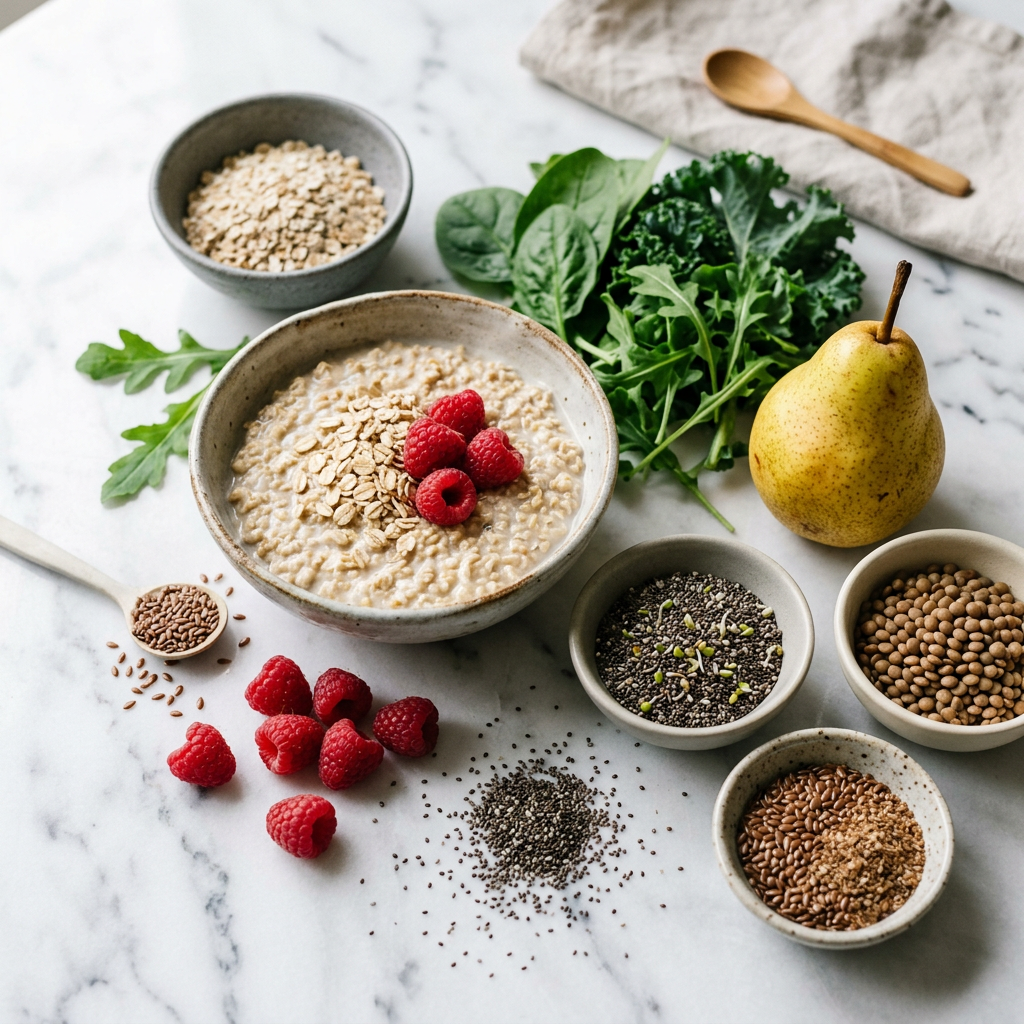
- Pears — about 6g fiber each, plus sorbitol, a natural sugar alcohol that has a mild laxative effect.
- Raspberries & blackberries — roughly 8g fiber per cup, among the highest-fiber fruits available.
- Apples (with skin) — about 4g fiber each; the skin contains most of the insoluble fiber.
- Prunes or prune juice — contain sorbitol and natural compounds that stimulate bowel function.
- Kiwi — 2–3g fiber each plus actinidin, an enzyme that may aid gut motility.
Seeds & grains
- Chia seeds — about 10g fiber per ounce; they form a gel that softens stool. Soak in water or yogurt first.
- Flaxseed (ground) — about 3g fiber per tablespoon; grind fresh for best effect.
- Oats — 4g fiber per cooked cup; beta-glucan supports gut health.
- Whole wheat or bran cereal — one of the most effective breakfasts for regularity.
Vegetables & legumes
- Leafy greens (spinach, kale, chard) — magnesium-rich, which helps draw water into the intestines.
- Broccoli — 5g fiber per cup; also supports gut bacteria diversity.
- Sweet potatoes (with skin) — about 4g fiber each.
- Lentils — about 15g fiber per cooked cup; add gradually to avoid gas.
- Black beans — about 15g fiber per cup; rinse canned beans well.
- Avocado — about 10g fiber each, plus healthy fats that lubricate the gut.
The simplest relief combo
The Hydration Rule (Non-Negotiable)
Fiber absorbs water. If you increase fiber without increasing fluids, the fiber can actually cause constipation by forming a dense mass. On GLP-1 medications, aim for:
- At least 8 glasses (64 oz) of water daily as a baseline.
- 10–12 glasses if you are eating 30g+ fiber or are physically active.
- Warm liquids in the morning (warm water, herbal tea) can stimulate bowel movement.
If plain water is hard to drink when you feel full, try sipping throughout the day rather than chugging, and include water-rich foods like cucumber, watermelon, and soups.
Foods to Avoid or Limit
These foods can worsen constipation or contribute to sluggish digestion:
- Highly processed, low-fiber foods — white bread, white rice, crackers, most fast food.
- Excessive dairy — large amounts of cheese can be constipating for some people.
- Red meat in large portions — high in fat, zero fiber, and slow to digest.
- Fried foods — high fat slows gastric emptying further.
- Iron or calcium supplements — both can be constipating; check with your doctor.
- Bananas (unripe/green) — can be constipating; ripe bananas with spots are fine.
- Excess caffeine or alcohol — both are dehydrating.
Sample Relief Day
A simple day that hits roughly 30g fiber and plenty of fluids:
| Meal | Food | Approx. Fiber |
|---|---|---|
| Morning | Warm water with lemon + 1 tbsp chia seeds soaked | 5g |
| Breakfast | Oatmeal with raspberries and ground flaxseed | 10g |
| Snack | 1 pear + a handful of almonds | 6g |
| Lunch | Lentil soup with a side of leafy greens | 8g |
| Snack | 2 kiwis | 4g |
| Dinner | Grilled chicken with roasted sweet potato and broccoli | 6g |
| Total | ~39g fiber + 8+ glasses water |
When to See a Doctor
Seek medical attention if you experience:
- No bowel movement for 3+ days despite dietary changes
- Severe or worsening abdominal pain
- Vomiting or inability to keep fluids down
- Blood in your stool or black, tarry stools
- A visibly swollen or rigid abdomen
These can be signs of ileus or bowel obstruction — rare but serious known risks of GLP-1 medications. Do not try to manage these at home with diet alone.
For routine constipation that does not respond to diet within a week, your doctor or pharmacist can recommend an appropriate over-the-counter option. Osmotic laxatives (like polyethylene glycol) are generally considered safe and effective for short-term use.
The Bottom Line
Constipation on Ozempic is common, usually temporary, and manageable for most people. The formula is simple: gradually increase fiber to 25–35g per day, drink 8+ glasses of water daily, move your body, and avoid highly processed low-fiber foods. If symptoms are severe or persist beyond a week despite these changes, talk to your doctor.
Get the free printable cheat sheet
Join thousands of readers getting weekly, evidence-based nutrition insights. No spam, unsubscribe anytime.
Quick Answers
Scan any food. Know your score instantly.
Get instant calories, macros, health score, and better alternatives — free.