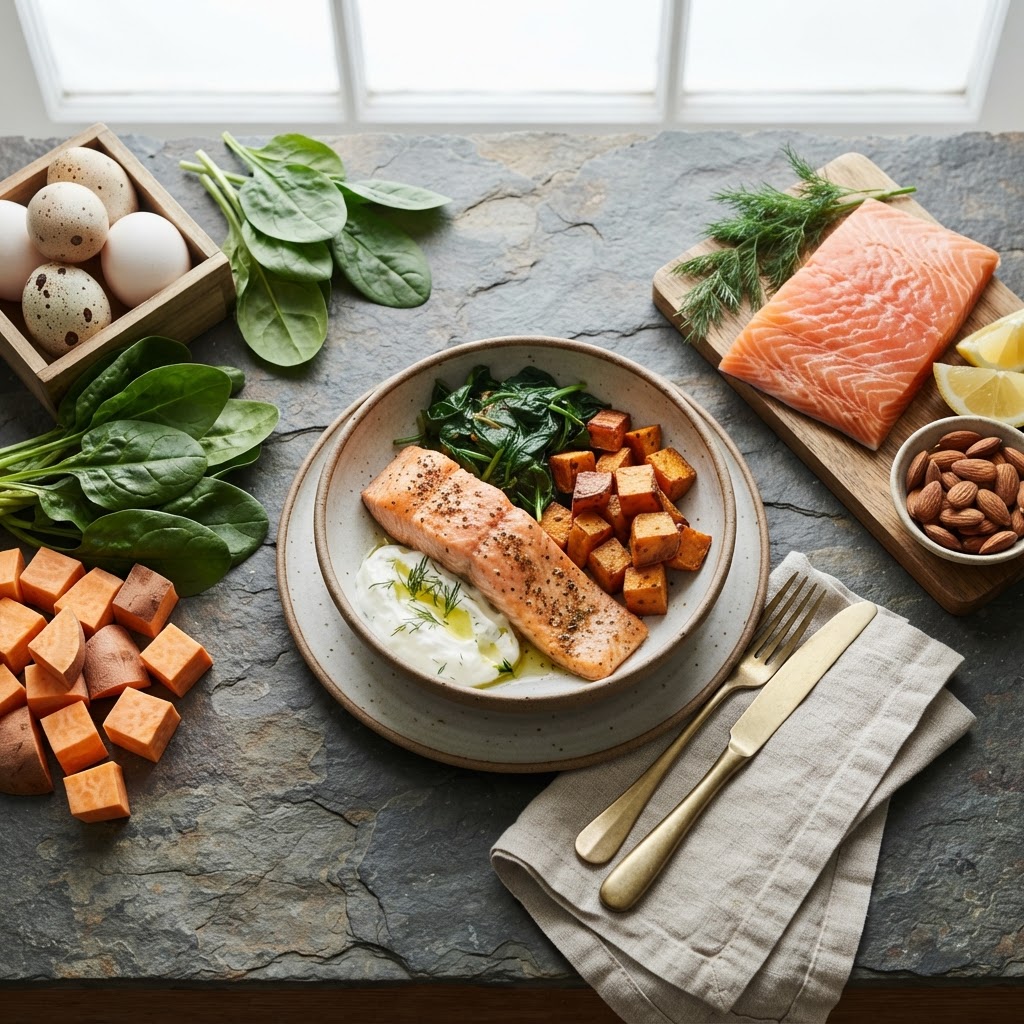
Hair is one of the fastest-growing tissues in your body, and it is also one of the first to suffer when your nutrition is off. Because hair is not essential for survival, your body prioritizes other functions when nutrients are scarce — meaning your hair gets leftovers.
The good news: hair responds well to dietary changes. The catch is that it takes time. Hair grows about half an inch per month, so the hair you see today was grown months ago. Consistent nutrition over 3–6 months is what produces visible results.
When to see a doctor
How Hair Growth Works (and Why Food Matters)
Each hair grows from a follicle — a tiny factory beneath your scalp. The follicle is one of the most metabolically active structures in your body, constantly producing new cells that become hair. This process requires a steady supply of:
- Protein: Hair is 95% keratin, a structural protein. Without enough dietary protein, follicles slow or stop production.
- Iron: Iron carries oxygen to follicles. Iron deficiency is the most common nutritional cause of hair loss, especially in women.
- Zinc: Zinc supports tissue growth and repair. Even mild deficiency can cause hair shedding.
- B-vitamins (especially biotin and folate): These support cell division, which follicles rely on constantly.
- Vitamins A, C, D, and E: These support sebum production, collagen formation, and follicle cycling.
When any of these are deficient, hair growth slows or stops. The follicle may enter a resting phase prematurely, leading to shedding 2–3 months later.
The 12 Best Foods for Hair Growth
1. Eggs
Eggs are the top hair food. They provide high-quality protein and biotin, both essential for hair growth. Biotin deficiency is rare but is linked to hair loss when it occurs. Eggs also contain zinc, selenium, and vitamin D. Aim for 1–2 daily.
2. Salmon and Fatty Fish
Salmon provides omega-3 fatty acids, high-quality protein, and vitamin D. Omega-3s reduce scalp inflammation and support the oil glands that keep your scalp healthy. Two servings per week is a good target.
3. Spinach and Leafy Greens
Spinach is loaded with iron, folate, and vitamins A and C. Vitamin C helps your body absorb iron and produces sebum, your scalp's natural conditioner. One cup of cooked spinach provides a significant dose of all four.
4. Sweet Potatoes
Sweet potatoes are rich in beta-carotene, which your body converts to vitamin A. Vitamin A supports sebum production, keeping your scalp moisturized. One medium sweet potato provides more than your daily vitamin A requirement.
5. Almonds
Almonds provide vitamin E, an antioxidant that protects hair follicles from oxidative stress. A small handful (about 23 almonds) provides nearly 40% of your daily vitamin E. They also contain protein and zinc.
6. Pumpkin Seeds
Pumpkin seeds are one of the best plant sources of zinc. Zinc deficiency is a well-documented cause of hair shedding. They also provide iron, magnesium, and healthy fats. A handful daily is plenty.
7. Greek Yogurt
Greek yogurt is rich in protein and contains vitamin B5 (pantothenic acid), which supports blood flow to the scalp. It also provides calcium, which supports cell signaling in follicles. Choose plain, unsweetened yogurt.
8. Lentils and Beans
Lentils and beans provide plant-based protein, iron, zinc, and biotin. They are especially valuable if you do not eat meat. One cup of cooked lentils provides about 18 grams of protein and a significant iron dose.
9. Avocado
Avocados provide vitamin E and healthy monounsaturated fats that support scalp health. Vitamin E protects the scalp from oxidative stress. Half an avocado a few times per week is plenty.
10. Walnuts
Walnuts provide omega-3s, biotin, and vitamin E. They are also rich in copper, which helps maintain hair color. A small handful daily supports both hair growth and hair pigmentation.
11. Oysters
Oysters are the single best food source of zinc. Six medium oysters provide over 300% of your daily zinc requirement. If you do not eat oysters, pumpkin seeds and beef are good alternatives.
12. Berries
Strawberries, blueberries, and raspberries are rich in vitamin C, which your body uses to produce collagen. Collagen strengthens hair and supports the blood vessels that feed follicles. A cup of strawberries provides more than your daily vitamin C requirement.
Key Hair Nutrients at a Glance
| Nutrient | Role in Hair Growth | Best Food Sources |
|---|---|---|
| Protein | Builds keratin (hair structure) | Eggs, salmon, lentils, Greek yogurt |
| Iron | Carries oxygen to follicles | Spinach, lentils, beef, pumpkin seeds |
| Zinc | Supports tissue growth & repair | Oysters, pumpkin seeds, beef |
| Biotin (B7) | Supports keratin production | Eggs, almonds, sweet potatoes |
| Vitamin C | Produces collagen, aids iron absorption | Berries, citrus, bell peppers |
| Vitamin A | Supports sebum (scalp oil) | Sweet potatoes, carrots, spinach |
| Vitamin E | Protects follicles from damage | Almonds, avocado, sunflower seeds |
| Omega-3s | Reduces scalp inflammation | Salmon, walnuts, chia seeds |
| Folate (B9) | Supports cell division in follicles | Spinach, lentils, beans |
Foods That Can Damage Hair
Some foods can undermine hair health, especially if consumed in excess:
- Sugar: High sugar intake increases inflammation and can disrupt hormone balance, both linked to hair thinning.
- Very low-calorie diets: Crash dieting triggers a shedding condition called telogen effluvium. Your body redirects nutrients away from hair to vital organs.
- Excess vitamin A: Too much vitamin A (from supplements, not food) can actually cause hair loss. Get it from food sources like sweet potatoes instead.
- Mercury-heavy fish: Swordfish, king mackerel, and tilefish are high in mercury, which can harm hair. Choose salmon, sardines, and light tuna instead.
The 90-day rule
When Will You See Results?
Hair growth is slow, and dietary changes take time to show. Here is a realistic timeline:
| Timeframe | What Happens |
|---|---|
| Weeks 1–4 | No visible change. Follicles are receiving better nutrition internally. |
| Months 1–3 | Reduced shedding may be noticeable. New hairs begin growing beneath the scalp. |
| Months 3–6 | New growth becomes visible. Hair may feel thicker at the roots. |
| Months 6–12 | Significant improvement in thickness and growth rate for most people. |
If you see no improvement after 6 months of consistent dietary changes, consult a dermatologist. You may have an underlying condition that diet alone cannot address.
Want to check if your meals have the nutrients your hair needs? Scan any food with our AI scanner to instantly see its protein, iron, and zinc content.
Get the free printable cheat sheet
Join thousands of readers getting weekly, evidence-based nutrition insights. No spam, unsubscribe anytime.
Quick Answers
Scan any food. Know your score instantly.
Get instant calories, macros, health score, and better alternatives — free.