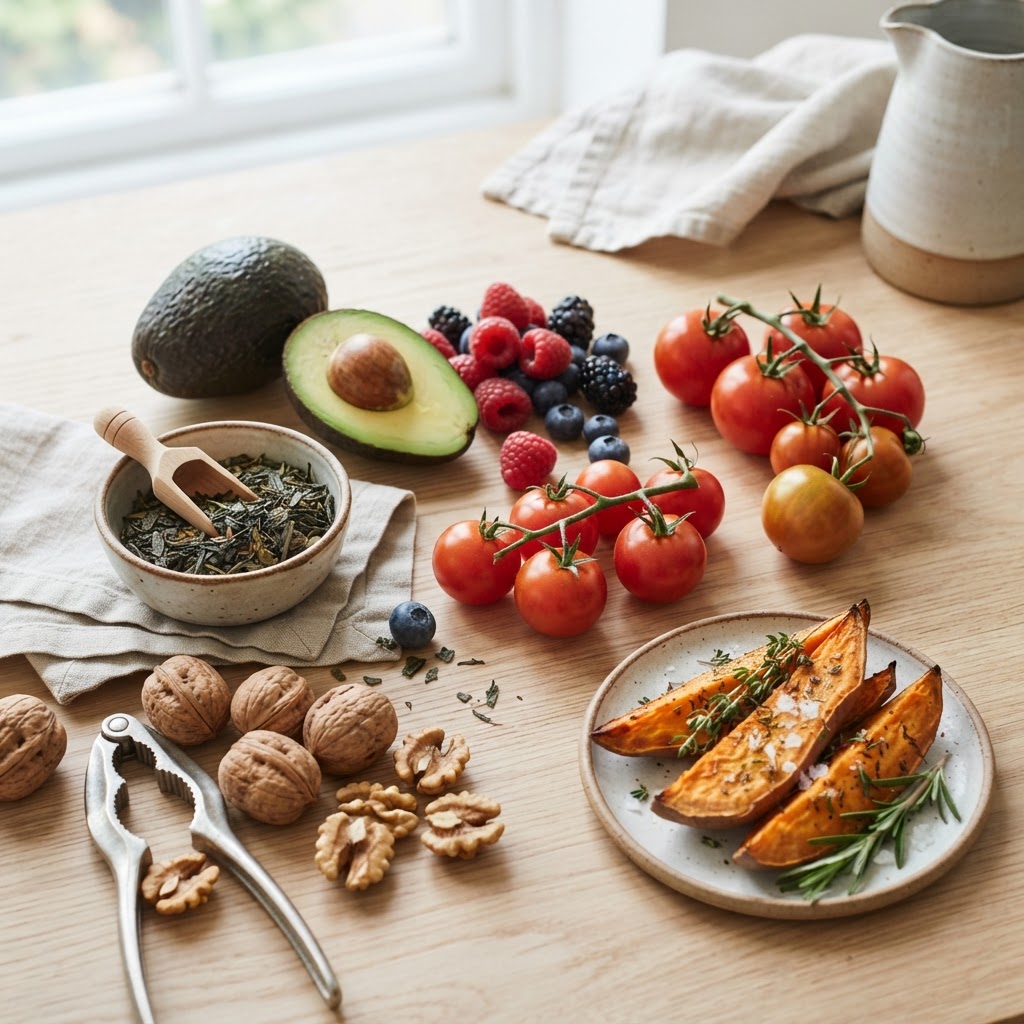
Your skin is your body's largest organ, and it is also its most visible. Every 28 days, your skin replaces itself — and the raw materials for that renewal come from what you eat. Creams and serums can help the surface, but clear, glowing skin starts from within.
Research now clearly shows that certain foods reduce inflammation, protect against sun damage, and support collagen production — while others trigger breakouts and accelerate aging. This guide covers the 10 best foods for skin, the nutrients behind them, and what to avoid.
The evidence
How Food Becomes Your Skin
Your skin has three layers, and each one depends on nutrients from your diet:
- Epidermis (outer layer): This is what people see. It needs vitamin A (for cell turnover), vitamin C (for barrier function), and healthy fats (for moisture retention).
- Dermis (middle layer): Contains collagen and elastin, which give skin its firmness and elasticity. Collagen production requires vitamin C and amino acids from protein.
- Hypodermis (deep layer): Fat layer that cushions skin and keeps it plump. Healthy fats from food support this layer.
When your diet is deficient in key nutrients, your skin shows it — through dryness, breakouts, dullness, or premature aging. When it is well-nourished, skin looks clearer, smoother, and more radiant.
The 10 Best Foods for Clear, Glowing Skin
1. Avocado
Avocados are rich in healthy monounsaturated fats and vitamin E, both of which keep skin moisturized and supple. Vitamin E is a powerful antioxidant that protects skin from oxidative damage. The fats in avocado also help your body absorb fat-soluble vitamins (A, D, E, K) from other foods.
2. Fatty Fish (Salmon, Sardines)
Fatty fish provides omega-3 fatty acids that reduce inflammation throughout the body, including the skin. Omega-3s keep skin thick, supple, and moisturized. They may also reduce the redness and inflammation of acne. Aim for 2 servings per week.
3. Walnuts
Walnuts provide omega-3s, zinc, and vitamin E — a powerful combination for skin health. Zinc supports wound healing and fights bacteria that contribute to acne. Vitamin E protects skin from sun damage. A handful daily is plenty.
4. Sweet Potatoes
Sweet potatoes are loaded with beta-carotene, which your body converts to vitamin A. Vitamin A supports cell turnover, helping shed dead skin cells that can clog pores. It also acts as a natural sun protectant, reducing sunburn risk. One medium sweet potato provides more than your daily vitamin A.
5. Tomatoes
Tomatoes are rich in lycopene, an antioxidant that protects skin from UV damage. Cooking tomatoes with a little olive oil increases lycopene absorption dramatically. Regular tomato intake is associated with reduced sunburn risk.
6. Berries (Blueberries, Strawberries, Raspberries)
Berries are among the most antioxidant-rich foods. They provide vitamin C, which is essential for collagen production. Without enough vitamin C, collagen weakens and skin sags. A cup of strawberries provides more vitamin C than an orange.
7. Green Tea
Green tea contains catechins, powerful antioxidants that protect skin from sun damage and improve moisture retention. Studies suggest drinking green tea daily for 12 weeks can improve skin elasticity and reduce redness. Matcha provides an even higher concentration.
8. Dark Chocolate (70%+ Cocoa)
High-quality dark chocolate provides cocoa flavanols that improve blood flow to the skin, increasing hydration and texture. One study found that consuming high-flavanol cocoa for 12 weeks made skin thicker, more hydrated, and less sensitive to sunburn. Stick to 70% cocoa or higher.
9. Red or Yellow Bell Peppers
Bell peppers are one of the richest sources of vitamin C and beta-carotene. Vitamin C is essential for collagen synthesis, and beta-carotene converts to vitamin A for cell turnover. One cup of red bell pepper provides over 300% of your daily vitamin C.
10. Broccoli
Broccoli contains a powerful combination of skin-supporting nutrients: vitamin C, vitamin A, zinc, and sulforaphane. Sulforaphane protects against sun damage and may help maintain collagen levels. It is one of the most nutrient-dense foods for skin health.
Key Skin Nutrients at a Glance
| Nutrient | What It Does for Skin | Best Food Sources |
|---|---|---|
| Vitamin C | Builds collagen, brightens skin | Bell peppers, berries, citrus, broccoli |
| Vitamin E | Antioxidant, protects from damage | Avocado, almonds, sunflower seeds |
| Vitamin A (Beta-carotene) | Cell turnover, sun protection | Sweet potatoes, carrots, spinach |
| Omega-3s | Reduces inflammation, keeps skin moist | Salmon, walnuts, chia seeds |
| Zinc | Heals skin, fights acne bacteria | Oysters, pumpkin seeds, beef |
| Lycopene | Protects from UV damage | Tomatoes (cooked), watermelon |
| Polyphenols | Antioxidant, anti-inflammatory | Green tea, dark chocolate |
| Sulforaphane | Protects from sun damage | Broccoli, Brussels sprouts |
Foods That Cause Breakouts and Dull Skin
Just as some foods improve skin, others actively harm it. The most consistent dietary triggers for acne and dull skin are:
- High-glycemic foods: Sugar, white bread, white rice, and sugary drinks spike insulin, which increases oil production and inflammation. This is the most well-supported dietary link to acne.
- Dairy (especially skim milk): Multiple studies link milk consumption to acne severity. The hormones in milk may trigger breakouts. Try eliminating dairy for 8–12 weeks to see if your skin improves.
- Ultra-processed foods: These are typically high in refined carbs, unhealthy fats, and additives that increase inflammation.
- Excess alcohol: Alcohol dehydrates skin and depletes vitamin A levels. It also disrupts sleep, which is when skin repairs itself.
- Refined seed oils: High omega-6 intake (from soybean, corn, and sunflower oils) can increase inflammation. Balance with omega-3-rich foods.
The dairy-acne link
Sample Skin-Clear Day
Here is a day of eating that hits all the key skin nutrients:
- Breakfast: Greek yogurt with blueberries, walnuts, and a drizzle of honey. Green tea.
- Mid-morning: Red bell pepper slices with hummus.
- Lunch: Salmon with roasted sweet potato and steamed broccoli.
- Snack: 2 squares of dark chocolate (70%+) and a handful of almonds.
- Dinner: Tomato and avocado salad with olive oil, grilled chicken, and quinoa.
This day provides omega-3s from salmon and walnuts, vitamin C from bell peppers and berries, beta-carotene from sweet potatoes, lycopene from tomatoes, and antioxidants from green tea and dark chocolate.
Want to know if your meals are skin-friendly? Scan any food with our AI scanner to instantly check its nutrient profile and health score.
Get the free printable cheat sheet
Join thousands of readers getting weekly, evidence-based nutrition insights. No spam, unsubscribe anytime.
Quick Answers
Scan any food. Know your score instantly.
Get instant calories, macros, health score, and better alternatives — free.