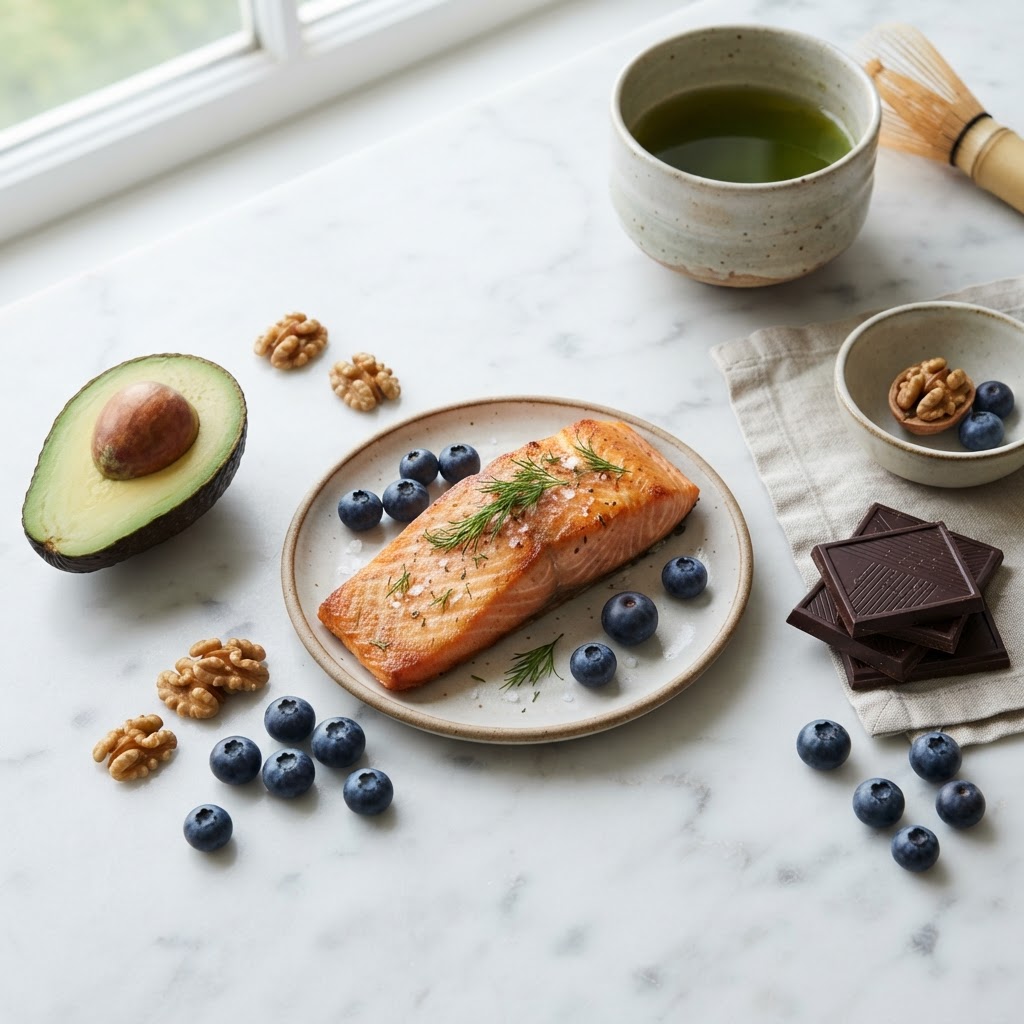
Your brain is the most energy-hungry organ in your body. Despite being only 2% of your body weight, it consumes roughly 20% of your daily calories. The food you eat directly affects your ability to focus, remember, and think clearly — both today and decades from now.
Research over the past decade has identified specific foods and nutrients that protect neurons, reduce inflammation, and support memory formation. This guide covers the 15 best foods for brain health, the key nutrients behind them, what to avoid, and a sample day of eating you can follow.
The evidence base
Why Food Affects Your Brain More Than You Think
Your brain is not a sealed box. It is built from the nutrients you eat, fueled by the glucose you consume, and protected — or harmed — by the compounds in your food. Three mechanisms connect diet to brain health:
- Structural building blocks: Your brain is 60% fat. DHA, an omega-3 fatty acid, makes up a large portion of neuronal membranes. Without enough DHA, neurons fire less efficiently.
- Inflammation control: Chronic inflammation damages neurons and is linked to depression, brain fog, and cognitive decline. Anti-inflammatory foods calm this process.
- Antioxidant protection: Your brain consumes enormous amounts of oxygen, generating free radicals. Antioxidants from food neutralize them before they damage neurons.
The connection between diet and cognition is now well-established. Large observational studies show that people who eat more fruits, vegetables, fish, and nuts tend to maintain cognitive function longer as they age.
The 15 Best Foods for Brain Health
1. Fatty Fish (Salmon, Sardines, Mackerel)
Fatty fish is the single most important brain food. It is the best dietary source of DHA and EPA, the omega-3 fatty acids that build neuronal membranes and reduce inflammation. People who eat fish 1–2 times per week tend to score higher on memory and cognitive tests. Aim for wild-caught salmon, sardines, or mackerel — they are also low in mercury.
2. Blueberries
Blueberries are packed with anthocyanins, antioxidants that give them their deep blue color. These compounds cross the blood-brain barrier and accumulate in the hippocampus, the brain region central to memory. Studies in older adults show that eating blueberries regularly improves memory and delays cognitive decline.
3. Walnuts
Walnuts are the only nut rich in alpha-linolenic acid (ALA), a plant-based omega-3. They also provide vitamin E, which protects neuronal membranes from oxidative damage. A large study found that regular walnut consumers had better cognitive performance than non-consumers.
4. Dark Chocolate (70%+ Cocoa)
Dark chocolate contains flavonoids, caffeine, and theobromine. The flavonoids in cocoa accumulate in brain regions involved in learning and memory. A small but growing body of research suggests that eating high-flavanol chocolate improves cognitive performance. Stick to 70% cocoa or higher and limit to 1–2 squares per day.
5. Avocado
Avocados provide monounsaturated fats that support healthy blood flow to the brain. They are also rich in vitamin E and lutein, both linked to cognitive health. The healthy fats in avocado also help your body absorb fat-soluble vitamins from other foods.
6. Eggs
Eggs are one of the best sources of choline, a nutrient your brain uses to produce acetylcholine, a neurotransmitter involved in memory. They also contain lutein, which supports cognitive function. Most adults should eat 1–2 eggs daily.
7. Leafy Greens (Spinach, Kale, Collards)
Leafy greens are loaded with vitamin K, folate, and beta-carotene. The MIND diet research found that people who ate leafy greens most frequently had brains that were years younger than those who ate them rarely. Aim for at least one serving per day.
8. Green Tea
Green tea provides L-theanine, an amino acid that increases alpha brain waves, promoting calm focus without drowsiness. Combined with its modest caffeine content, green tea supports sustained attention. Matcha provides an even higher concentration of these compounds.
9. Extra Virgin Olive Oil
Olive oil is the primary fat source in both the Mediterranean and MIND diets. It contains oleocanthal, a compound that helps clear beta-amyloid plaques from the brain — the same plaques associated with Alzheimer's disease. Use it for low-heat cooking and dressings.
10. Pumpkin Seeds
Pumpkin seeds are rich in zinc, magnesium, iron, and copper — all minerals that support nerve signaling and brain function. Iron deficiency, in particular, is linked to brain fog and poor concentration. A handful of pumpkin seeds provides a meaningful dose.
11. Turmeric
Turmeric's active compound, curcumin, has potent anti-inflammatory and antioxidant properties. Research suggests curcumin can cross the blood-brain barrier and may help clear amyloid plaques. Pair turmeric with black pepper to dramatically increase absorption.
12. Broccoli
Broccoli is rich in vitamin K and sulforaphane, a compound that protects neurons from inflammation. Vitamin K is essential for forming sphingolipids, fats that make up brain cell membranes.
13. Oranges (and Other Vitamin C Foods)
Vitamin C is a powerful antioxidant that protects neurons from free radical damage. Adequate vitamin C intake is associated with better cognitive performance. One orange provides your daily requirement, but bell peppers, strawberries, and kiwi contain even more.
14. Tomatoes
Tomatoes are rich in lycopene, an antioxidant that protects brain cells from free radical damage. Cooking tomatoes with a little olive oil increases lycopene absorption significantly.
15. Whole Grains (Oats, Brown Rice, Quinoa)
Your brain runs on glucose, and whole grains provide a steady, slow-release source. Unlike refined grains that spike blood sugar and cause energy crashes, whole grains deliver sustained fuel for focus throughout the day.
The Key Brain Nutrients (and Where to Get Them)
| Nutrient | What It Does | Best Food Sources |
|---|---|---|
| DHA (Omega-3) | Builds neuron membranes, reduces inflammation | Salmon, sardines, mackerel, algae oil |
| EPA (Omega-3) | Reduces brain inflammation, supports mood | Fatty fish, fish oil supplements |
| Anthocyanins | Antioxidant, protects hippocampus | Blueberries, blackberries, cherries |
| Vitamin E | Protects neuronal membranes | Walnuts, almonds, sunflower seeds, avocado |
| Choline | Precursor to acetylcholine (memory) | Eggs, liver, soybeans |
| Vitamin K | Supports brain cell membrane formation | Kale, spinach, broccoli |
| L-theanine | Promotes calm, focused brain waves | Green tea, matcha |
| Flavonoids | Improve blood flow to brain | Dark chocolate, citrus, berries |
| Folate | Supports neurotransmitter production | Leafy greens, lentils, beans |
| Magnesium | Supports nerve signaling | Pumpkin seeds, spinach, almonds |
Foods That Hurt Your Brain
Just as some foods protect your brain, others actively damage it. Limit these:
- Trans fats: Found in some fried and processed foods. Linked to faster cognitive decline.
- Excess added sugar: High sugar intake impairs memory and reduces brain-derived neurotrophic factor (BDNF), a protein essential for learning.
- Ultra-processed foods: Diets high in ultra-processed foods are associated with faster cognitive decline in multiple studies.
- Excess alcohol: Chronic heavy drinking damages the brain. Moderate intake (1 drink for women, 2 for men) appears neutral.
- Refined grains: White bread, white rice, and sugary cereals cause blood sugar spikes followed by crashes that impair focus.
Quick swap
Sample Brain-Boost Day
Here is a simple day of eating that hits the key brain nutrients:
- Breakfast: Oatmeal with blueberries, walnuts, and a drizzle of honey. Green tea.
- Mid-morning: 1 hard-boiled egg and an orange.
- Lunch: Salmon salad with spinach, avocado, cherry tomatoes, and olive oil dressing.
- Snack: A small piece of dark chocolate (70%+) and pumpkin seeds.
- Dinner: Lentil curry with turmeric and black pepper over brown rice. Steamed broccoli on the side.
This day provides omega-3s from salmon and walnuts, antioxidants from blueberries and dark chocolate, choline from eggs, and steady glucose from whole grains. It is also naturally anti-inflammatory.
Want to know if your meals are brain-friendly? Scan any food with our AI scanner to instantly see its nutrient profile and health score.
Get the free printable cheat sheet
Join thousands of readers getting weekly, evidence-based nutrition insights. No spam, unsubscribe anytime.
Quick Answers
Scan any food. Know your score instantly.
Get instant calories, macros, health score, and better alternatives — free.